
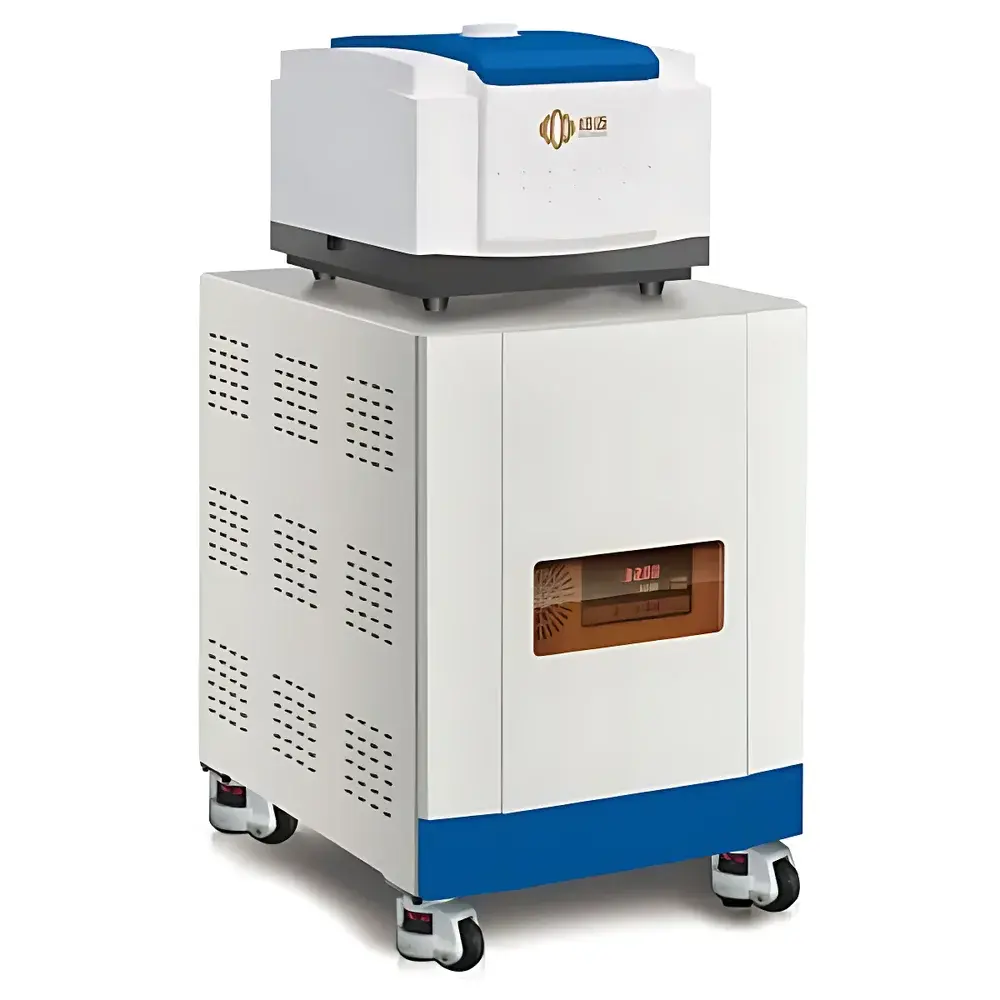
NIUMAG MicroMR-12M Benchtop Low-Field Nuclear Magnetic Resonance Analyzer
| Brand | NIUMAG |
|---|---|
| Origin | Jiangsu, China |
| Manufacturer Type | Authorized Distributor |
| Country of Origin | China |
| Model | MicroMR-12M |
| Instrument Type | Low-Field NMR Analyzer |
| Sample Compatibility | Solid-Liquid Dual-Mode |
| Operating Frequency | 12 MHz |
| Data Acquisition Method | Pulsed Fourier Transform (PFT-NMR) |
| Magnet Type | Permanent Magnet |
| Magnetic Field Strength | 0.28 ± 0.05 T |
| Probe Coil Diameter | 25 mm |
Overview
The NIUMAG MicroMR-12M is a compact, benchtop low-field nuclear magnetic resonance (NMR) analyzer engineered for quantitative oil-in-solid and oil-in-liquid characterization in petroleum core analysis and upstream reservoir evaluation. It operates at a stable Larmor frequency of 12 MHz (corresponding to a static magnetic field of 0.28 ± 0.05 T), utilizing pulsed Fourier transform NMR methodology to detect hydrogen proton (¹H) signal decay in hydrocarbon-bearing samples. Unlike high-field superconducting NMR spectrometers, the MicroMR-12M leverages permanent magnet architecture to deliver robust, maintenance-free operation in field laboratories and core analysis centers—without cryogens or RF shielding rooms. Its measurement principle relies on transverse relaxation time (T₂) distribution analysis, enabling non-destructive, non-invasive quantification of fluid saturation, pore-size distribution, bound vs. movable fluid volumes, and apparent permeability proxies in rock cores—including tight sandstone, shale, and mudstone formations.
Key Features
- Benchtop footprint with integrated magnet, probe, and console—designed for space-constrained core labs and mobile analytical units.
- 25 mm diameter radiofrequency (RF) probe optimized for standard cylindrical rock core plugs (Ø25 × H30–50 mm) and liquid-phase oil samples (e.g., crude, cuttings extracts).
- Permanent magnet system ensures long-term field homogeneity (< 0.1 ppm/h drift) and eliminates dependency on liquid nitrogen or helium.
- Pre-calibrated pulse sequences including CPMG (Carr–Purcell–Meiboom–Gill) for T₂ decay acquisition, inversion recovery for T₁ mapping, and optional diffusion-weighted modules (upgradable on MicroMR-12M).
- Real-time signal-to-noise ratio (SNR) monitoring and automatic shimming support reproducible acquisition across heterogeneous sample batches.
- Compliance-ready firmware architecture supporting audit trails, user access levels, and electronic signature logs aligned with GLP and internal QA/QC protocols.
Sample Compatibility & Compliance
The MicroMR-12M accommodates both solid-phase geological samples (e.g., dried or saturated core plugs, drill cuttings, shale fragments) and liquid-phase hydrocarbon samples (crude oils, distillates, emulsions). Its dual-mode capability supports comparative analysis across sample states—critical for evaluating wettability alteration, waterflood efficiency, and capillary pressure effects. All hardware and firmware comply with IEC 61000-6-3 (EMC emission standards) and IEC 61000-6-2 (immunity). While not certified for FDA 21 CFR Part 11 out-of-the-box, its software platform supports configuration for 21 CFR Part 11 compliance—including role-based permissions, electronic signatures, and immutable audit logs—when deployed under validated laboratory information management systems (LIMS).
Software & Data Management
The proprietary MultiQ NMR software suite provides full control over pulse sequence selection, parameter optimization, and post-processing. Key modules include T₂ spectrum deconvolution using non-negative least squares (NNLS), D-T₂ correlation mapping (with optional diffusion upgrade), and automated calculation of porosity, free fluid index (FFI), bound fluid volume (BFV), and irreducible water saturation (Swirr). Raw FID data are stored in vendor-neutral formats (e.g., .fid, .dat) compatible with third-party MATLAB or Python-based analysis pipelines. Data export supports CSV, Excel, and PDF report generation with embedded metadata (sample ID, operator, timestamp, instrument calibration status). Version-controlled software updates are delivered via secure HTTPS portal with release notes traceable to ISO/IEC 17025-aligned validation documentation.
Applications
- Quantitative porosity and pore-size distribution profiling in unconventional reservoirs (shale, tight gas sands, carbonate vuggy systems).
- Determination of hydrocarbon saturation (So), water saturation (Sw), and gas saturation (Sg) without solvent extraction—preserving native fluid distributions.
- Characterization of clay-bound water (CBW) and capillary-bound water (MICP) fractions via multi-exponential T₂ decay modeling.
- Monitoring fluid displacement dynamics during core flooding experiments (water, CO₂, polymer).
- Screening of enhanced oil recovery (EOR) agent efficacy through changes in T₂ cutoff values and movable fluid saturation.
- Quality control of oil-contaminated soils and drilling mud cuttings in environmental remediation workflows.
FAQ
What is the typical measurement time per core plug?
Acquisition time ranges from 2 to 15 minutes depending on required SNR, sample porosity, and selected echo spacing—optimized via built-in auto-tuning routines.
Can the MicroMR-12M be used for routine QC in production facilities?
Yes. Its ruggedized design, minimal infrastructure requirements, and automated reporting make it suitable for daily core logging and field lab deployment under API RP 40 and ASTM D6970 guidelines.
Is T₂ calibration traceable to national standards?
T₂ reference standards (e.g., doped water phantoms, glycerol mixtures) are supplied with NIST-traceable relaxation time certificates; users may perform in-house calibration verification per ISO 17025 Clause 6.5.
Does the system support remote diagnostics and software updates?
Yes—via encrypted TLS-secured connection to NIUMAG’s support portal, enabling real-time performance diagnostics, log file upload, and version-managed firmware updates.
What training and documentation are provided?
Includes comprehensive operator manual, application notes (e.g., “T₂ Cutoff Determination in Shale”), video tutorials, and on-site or virtual technician certification programs aligned with ISO/IEC 17025 competency requirements.
Related Products





