

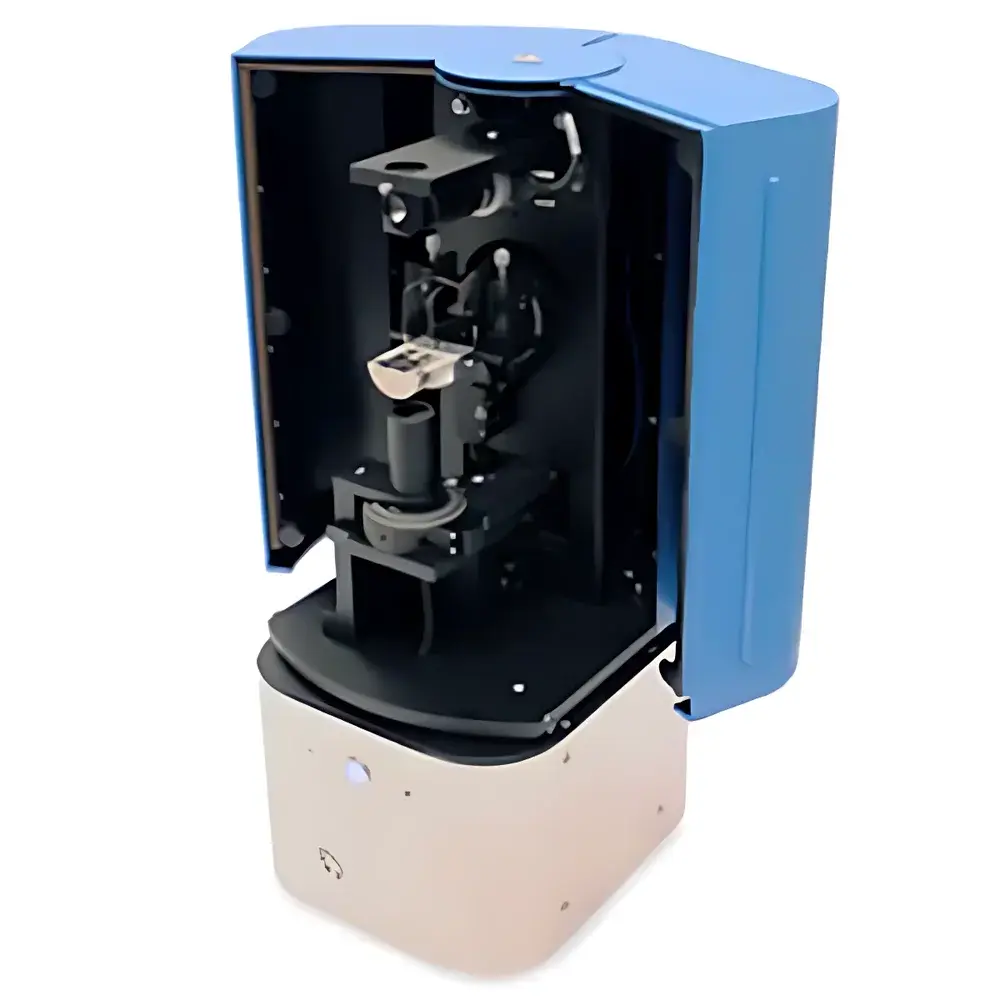
Fluxim PHELOS Angle-Resolved Spectrometer
| Brand | Fluxim |
|---|---|
| Origin | Switzerland |
| Model | PHELOS |
| Angular Range | –90° to +90° |
| Spectral Range | 360–1100 nm |
| Spectral Resolution | 2.5 nm |
| Angular Resolution | < 0.5° |
| SNR | 300:1 |
| Voltage Range | ±20 V |
| Current Range | ±120 mA |
| Current Resolution | < 100 pA |
| Polarizer Rotation | 0–360° (continuous) |
| Sample Stage | 40 × 40 mm² |
| PL Excitation Wavelength | 275–405 nm (default 365 nm) |
| PL Spot Size | 5 × 3 mm² |
| Dimensions | 50 × 29 × 24 cm³ |
| Weight | 18 kg |
Overview
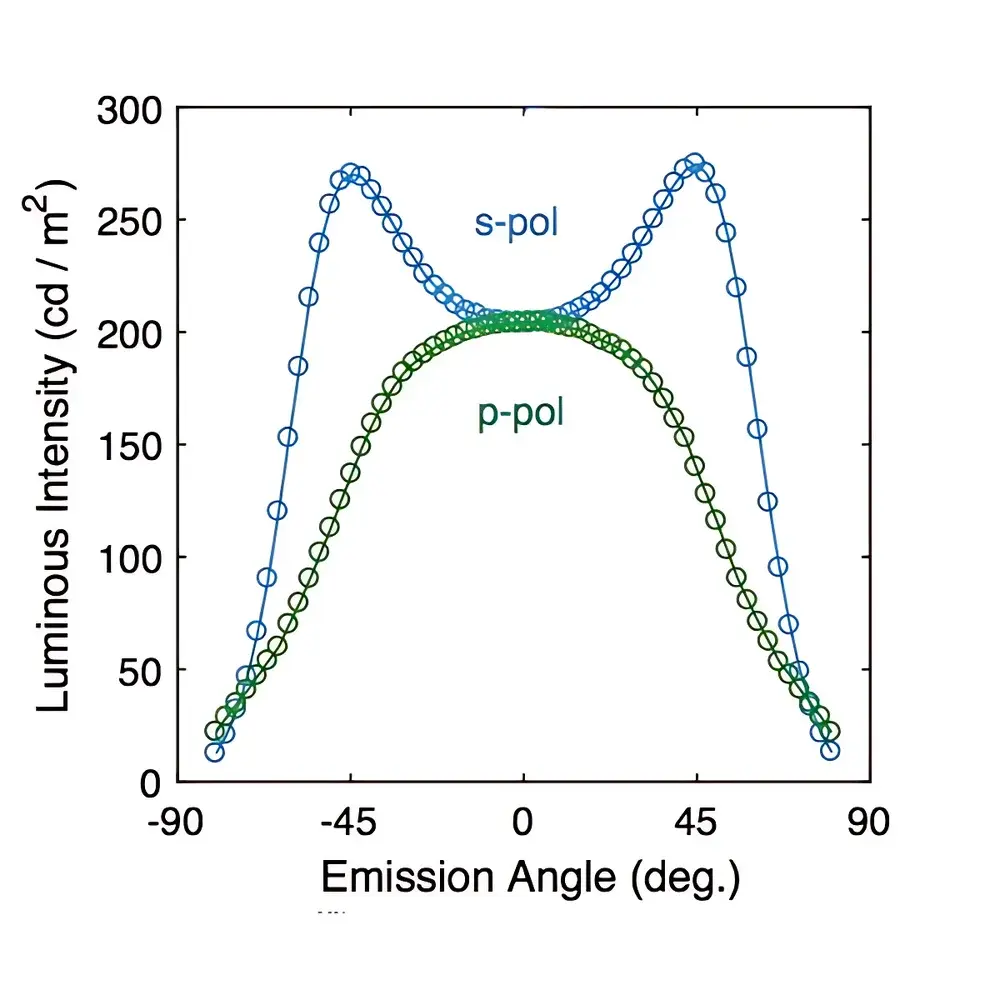
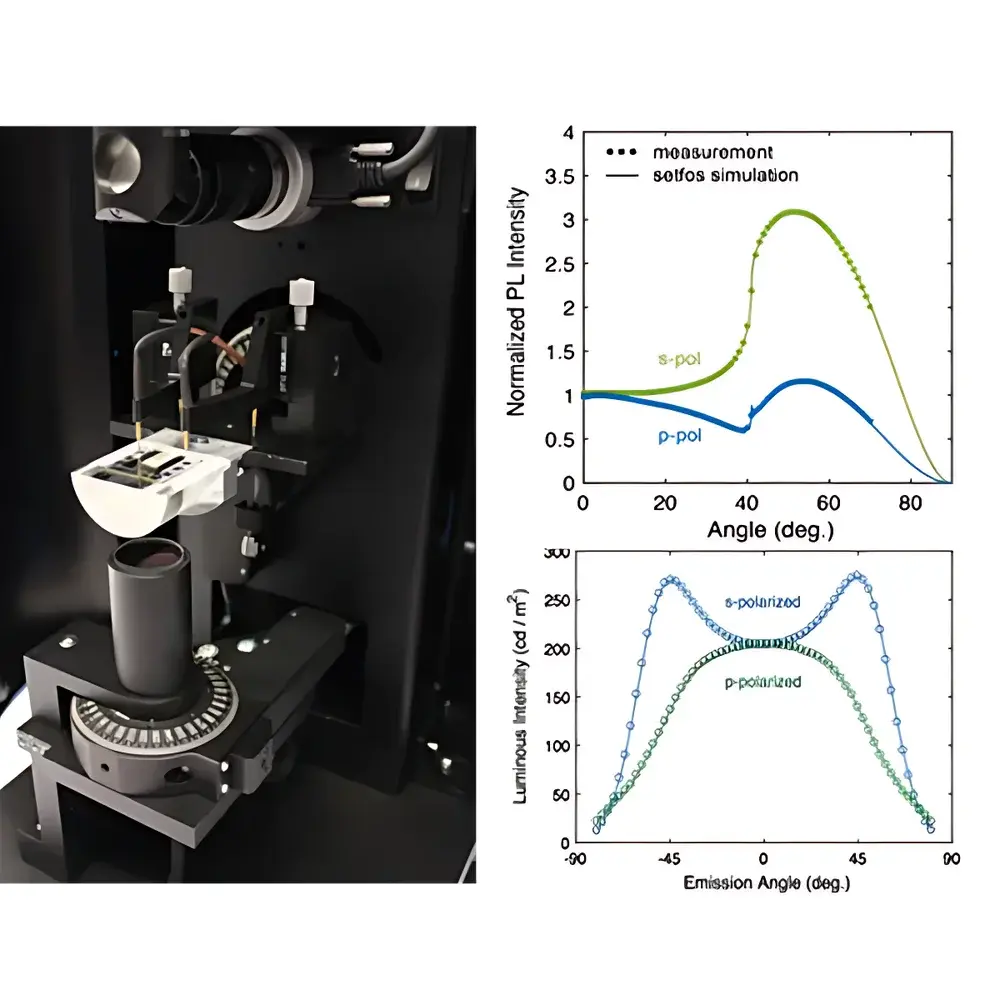
The Fluxim PHELOS Angle-Resolved Spectrometer is a precision-engineered optical characterization platform designed for quantitative, angularly resolved photoluminescence (PL) and electroluminescence (EL) spectroscopy of thin-film emissive devices. Operating on the principle of goniometric spectral radiometry, the system captures spectrally resolved emission intensity as a function of solid angle—enabling rigorous analysis of directional light extraction, dipole orientation, and polarization anisotropy in organic and perovskite light-emitting diodes (OLEDs, PeLEDs), quantum dot LEDs (QD-LEDs), and other planar electroluminescent structures. Unlike conventional integrating sphere-based quantum efficiency measurements, PHELOS preserves angular information across the full hemisphere (±90°), supporting first-principles modeling of outcoupling efficiency and microcavity effects. Its modular optical architecture integrates a calibrated CCD spectrometer, high-precision motorized goniometer, synchronized current/voltage source-measure unit (SMU), and optional rotating polarizer—configured for both top- and bottom-emitting device geometries without mechanical reconfiguration.
Key Features
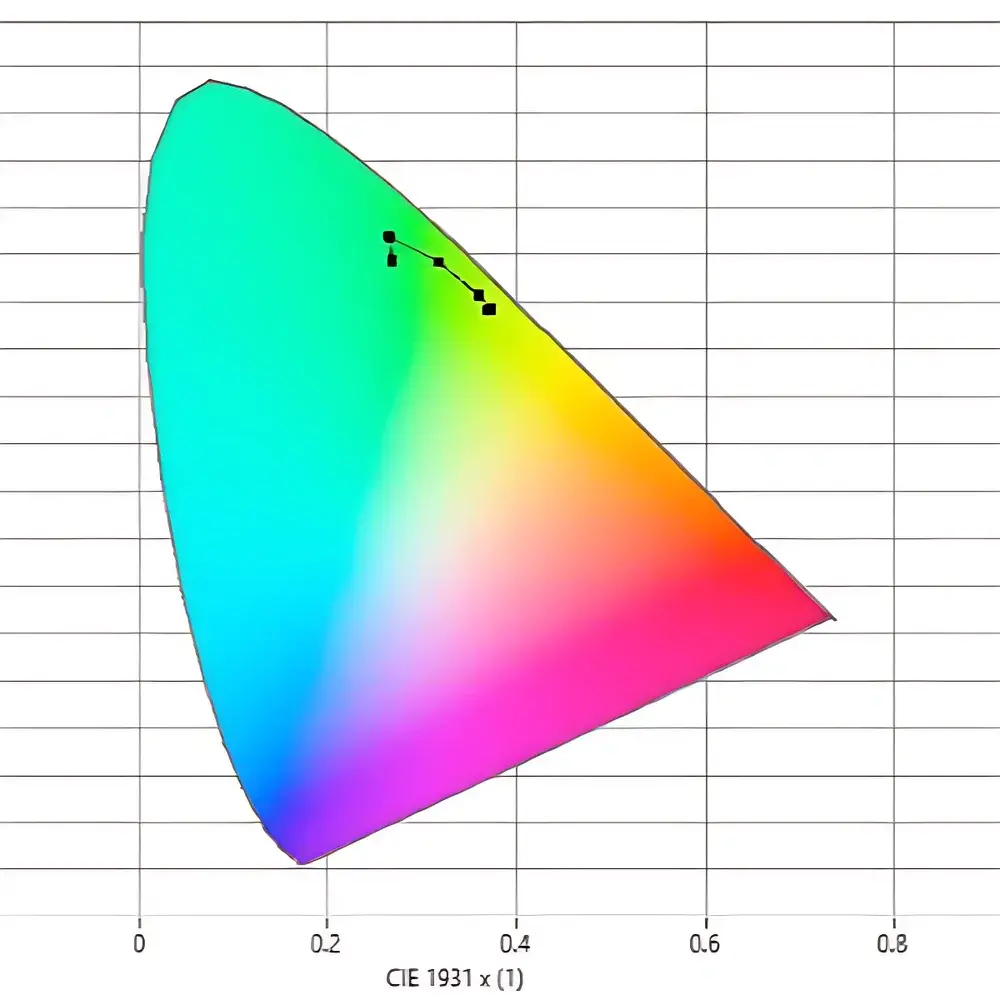
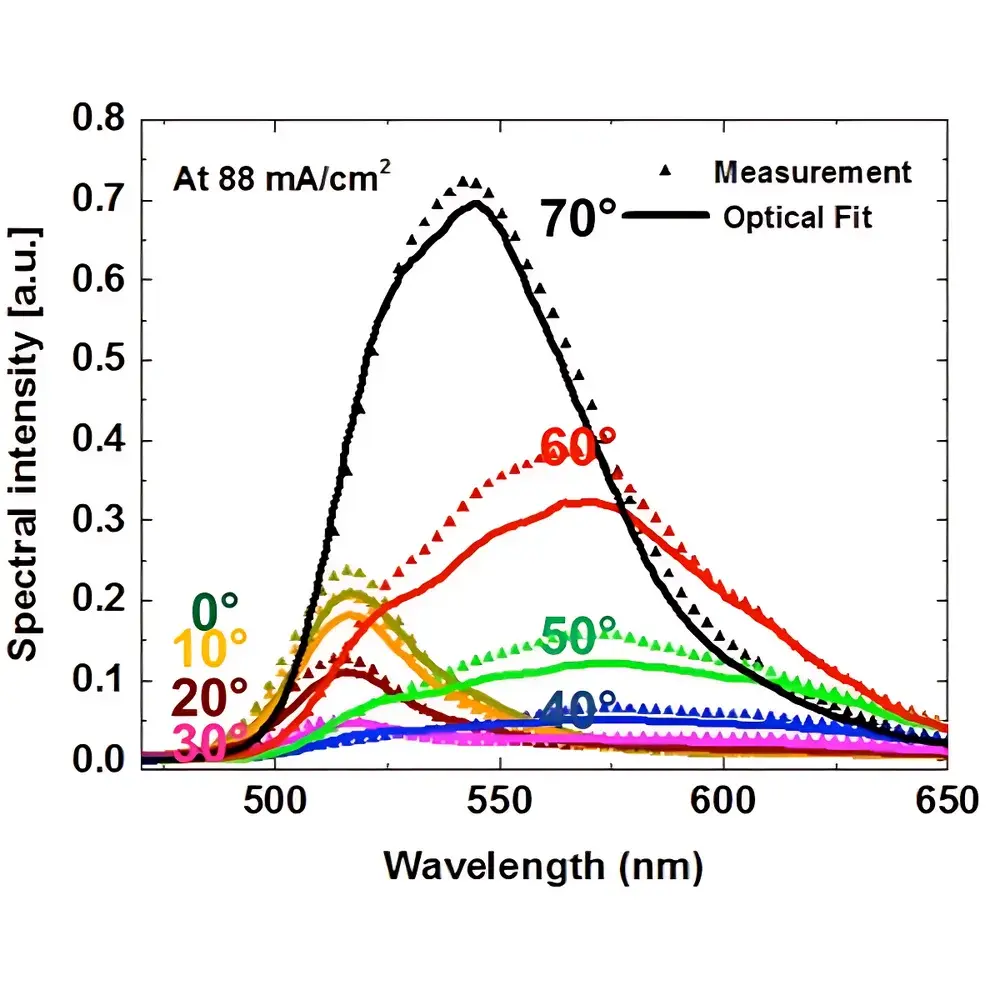
- Full-hemispherical angular mapping from –90° to +90° with angular resolution better than 0.5°, enabling accurate extraction of luminance distribution and viewing-angle-dependent chromaticity.
- Simultaneous acquisition of spectral radiance, polarization state (p- and s-components), and electrical parameters (J–V–L) within a single automated measurement sequence.
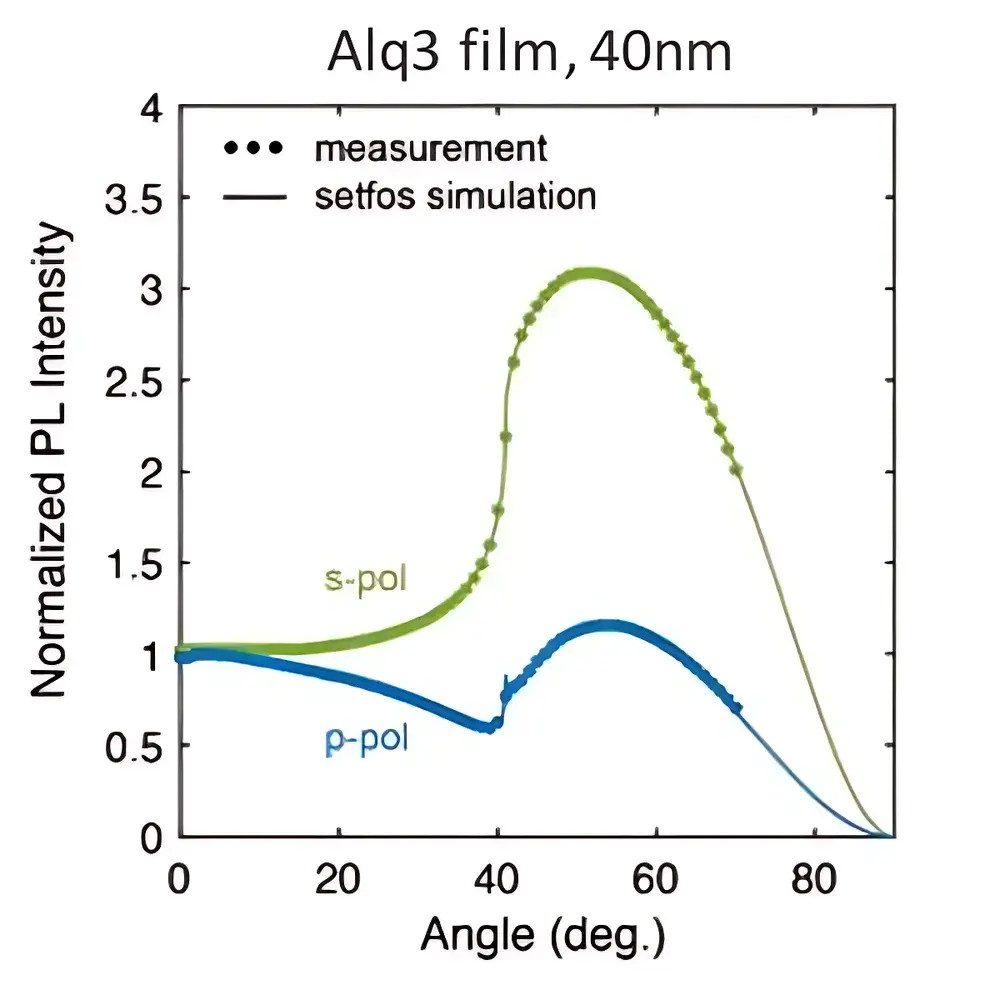
- Integrated rotating half-wave plate and linear polarizer for continuous polarization-resolved angular scans (0–360°), facilitating quantitative dipole orientation analysis via Fourier decomposition of angular emission patterns.
- High-sensitivity current measurement (<100 pA resolution) and low-noise voltage sourcing (±20 V) synchronized with spectral acquisition—essential for low-brightness or high-impedance device characterization.
- PL excitation module with tunable UV–violet LED sources (275–405 nm), default 365 nm, delivering uniform 5 × 3 mm² illumination for spatially homogeneous excitation of thin-film samples.
- Modular sample stage (40 × 40 mm²) with XYZ translation and tilt adjustment, supporting rapid alignment of diverse device formats—from small-area lab-scale pixels to encapsulated commercial-grade substrates.
Sample Compatibility & Compliance
The PHELOS system accommodates rigid and flexible emissive substrates up to 40 mm × 40 mm, including glass, silicon, PET, and metal foil-based OLEDs, PeLEDs, and hybrid heterostructures. Its open optical path and non-contact measurement geometry eliminate constraints imposed by encapsulation layers or shadowing electrodes. The system supports ASTM E308-22-compliant colorimetric calculations (CIE 1931 xy, CCT, CRI, TM-30 Rf/Rg) and enables traceable external quantum efficiency (EQE) determination per IEC 62717 Annex D and ISO/CIE 11664-6:2019. All electrical and optical calibrations are NIST-traceable; raw data logs include metadata required for GLP/GMP audit trails (e.g., timestamp, instrument configuration, calibration certificate IDs).
Software & Data Management
Control and analysis are performed via Fluxim’s proprietary PHELOS Control Suite—a Windows-based application supporting scriptable measurement protocols, real-time spectral/angular preview, and batch processing. The software exports fully annotated datasets in HDF5 format, preserving hierarchical metadata (wavelength, angle, polarization, bias conditions, integration time). Integrated analysis modules compute EQE, luminous efficacy (lm/W), luminance efficiency (cd/A), dipole orientation ratio (Θ), and angular color shift (Δu’v’). Export options include CSV, MATLAB .mat, and industry-standard CIE chromaticity diagrams with confidence ellipses. The suite complies with FDA 21 CFR Part 11 requirements for electronic records and signatures when configured with user access control and audit logging enabled.
Applications
- Quantitative dipole orientation mapping in emissive layers to guide molecular design and vacuum deposition optimization.
- Viewing-angle performance validation for display and lighting applications per IEC 62341-6-3 and ENERGY STAR SSL Program Requirements.
- Microcavity mode analysis and outcoupling enhancement evaluation in tandem and stacked OLED architectures.
- Stability assessment under operational stress (e.g., constant-current aging) with concurrent angular spectral drift tracking.
- Correlation of EL/PL angular profiles to simulate far-field radiation patterns in optical ray-tracing models (e.g., LightTools, Zemax).
- Validation of simulation tools such as SETFOS and OMEGA through experimental angular emission databases.
FAQ
What types of devices can be measured with the PHELOS system?
OLEDs (top- and bottom-emitting), PeLEDs, QD-LEDs, TADF devices, and other planar thin-film electroluminescent or photoluminescent structures.
Is the system compatible with glovebox integration?
Yes—the optical head and sample stage are designed for seamless integration into inert-atmosphere gloveboxes (N₂ or Ar), with feedthrough-compatible cabling and compact footprint.
How is absolute spectral radiance calibrated?
Using NIST-traceable tungsten halogen and LED reference standards; calibration includes angular response correction for the detector and collection optics.
Can the system measure time-resolved angular emission?
Not natively—but when coupled with an external pulsed source (e.g., laser diode or pulsed SMU) and gated ICCD, time-gated angular PL/EL is feasible via custom synchronization.
Does the software support automated compliance reporting for energy labeling?
Yes—it generates pre-formatted reports aligned with ENERGY STAR, EU EPREL, and DLC requirements, including lm/W, CRI, CCT, and viewing-angle uniformity metrics.
Related Products



