
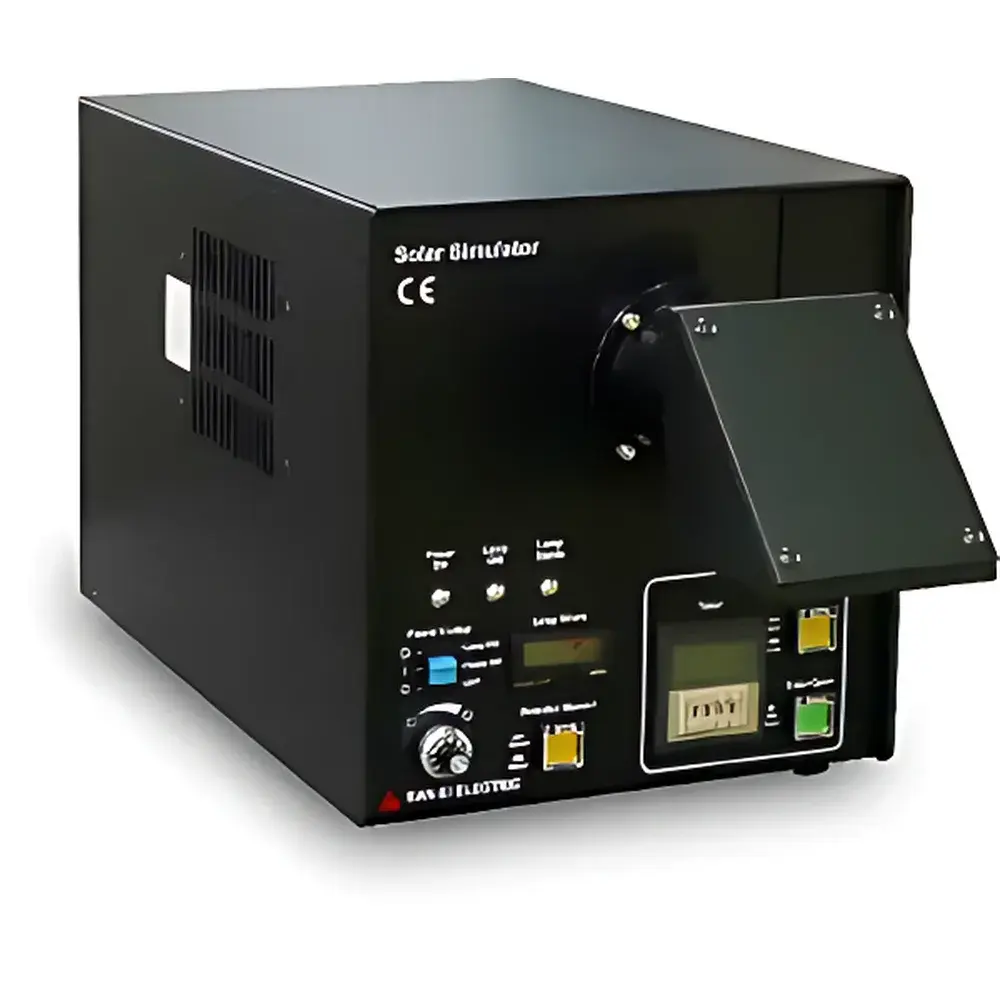
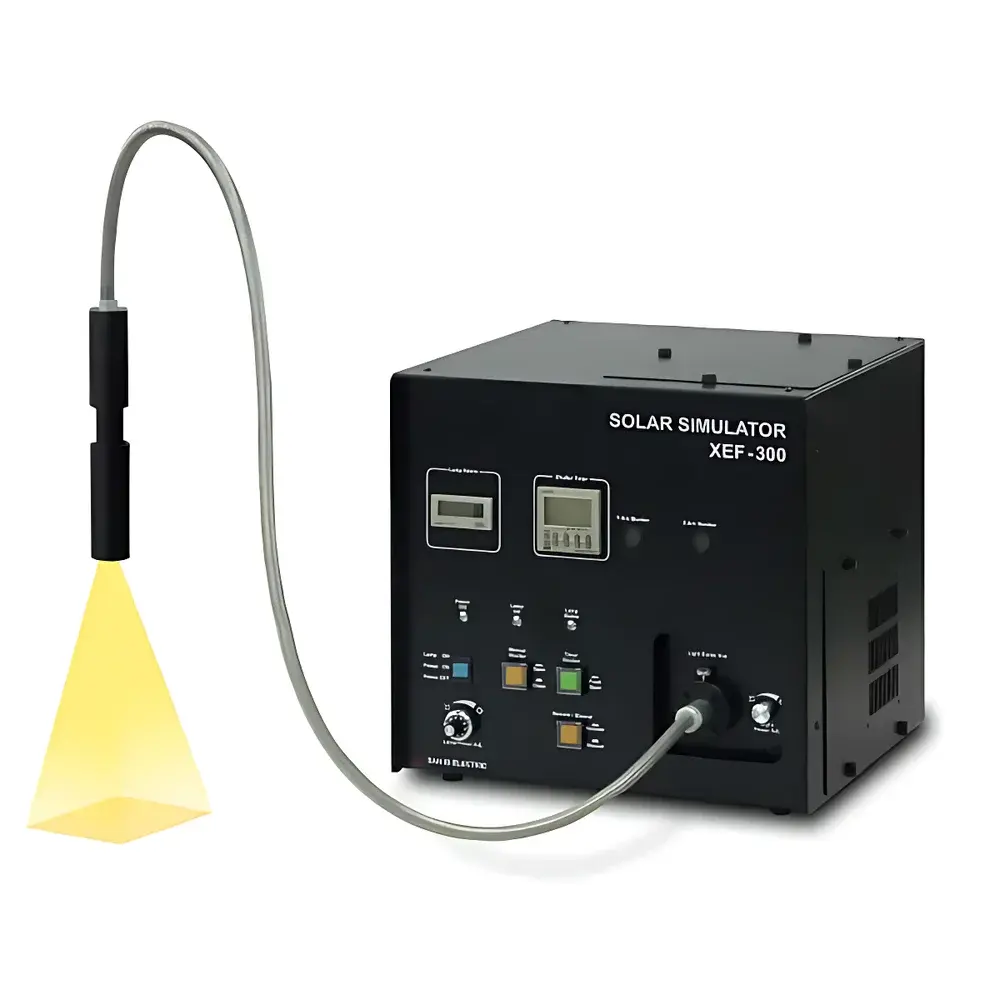
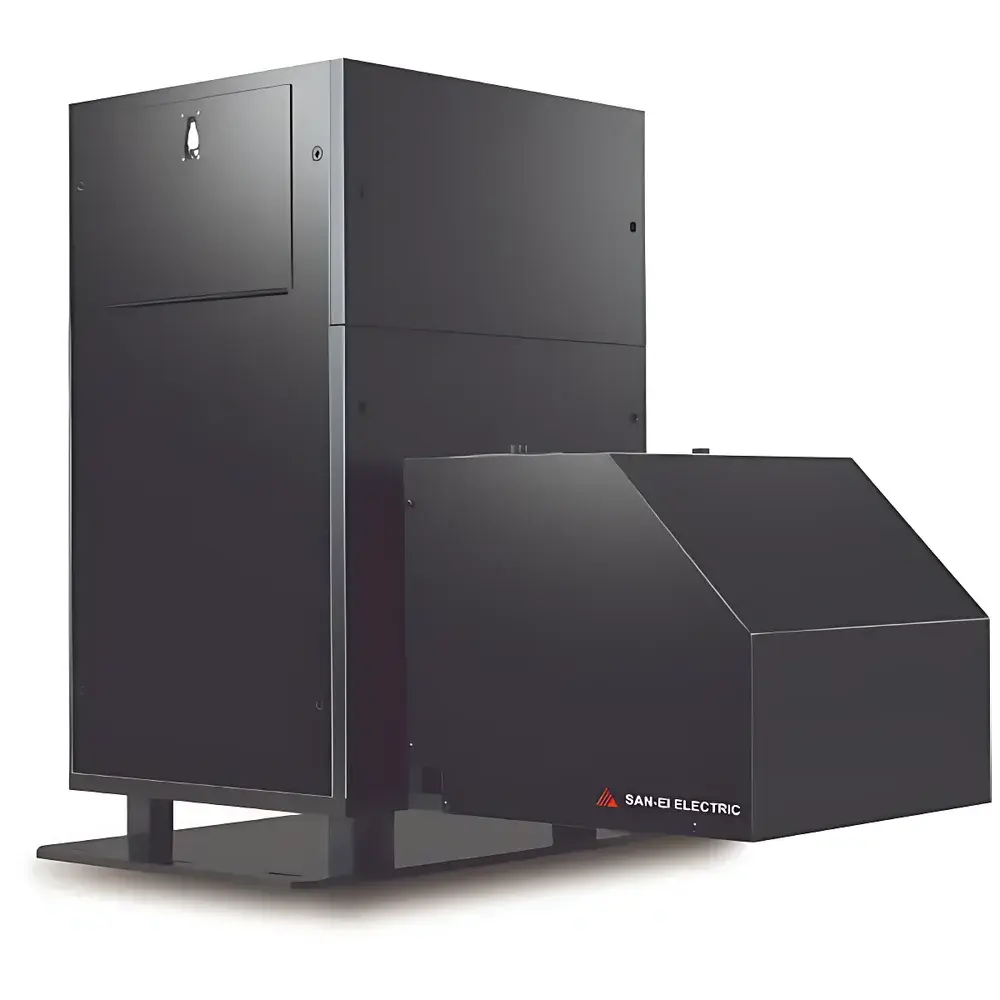
SAN-EI XES-50S1 AAA-Class Steady-State Solar Simulator for Perovskite Photovoltaic Device Characterization
| Brand | SAN-EI |
|---|---|
| Origin | Japan |
| Model | XES-50S1 |
| Classification | AAA-Class (A+A+A) Steady-State Solar Simulator |
| Illumination Area Options | 2″×2″, 4″×4″, 6″×6″, 8″×8″, 10″×10″, 12″×12″, 500 mm × 500 mm (customizable) |
| Spectral Mismatch (AM1.5G) | < ±12.5% (A+ Class) |
| Spatial Non-Uniformity | < 2% (A Class) |
| Temporal Instability | < 1% (A+ Class) |
| Irradiance Range | ≥1.2 suns (adjustable, higher intensities available on request) |
| Light Source | Short-Arc Xenon Lamp (150 W – 10,000 W options) |
| Output Configuration | Quad-directional beam delivery |
| Compliance | ASTM E927-22, IEC 60904-9 Ed. 3 (2020), JIS C 8912:2018 |
| Operating Mode | Continuous (Steady-State) |
Overview
The SAN-EI XES-50S1 is a high-precision, steady-state AAA-class (A+A+A) solar simulator engineered for rigorous photovoltaic (PV) device characterization—specifically optimized for perovskite solar cells (PSCs), organic photovoltaics (OPVs), and emerging optoelectronic materials requiring stable, spectrally accurate illumination. Unlike pulsed or flash-type simulators, the XES-50S1 employs a continuously operated short-arc xenon lamp system, enabling true steady-state current–voltage (I–V) measurements critical for assessing hysteresis-free performance, maximum power point tracking (MPPT), bias-stability, and operational lifetime under sustained irradiance. Its optical architecture meets the most stringent international standards for spectral match (AM1.5G, < ±12.5%, A+), spatial uniformity (< 2%, A), and temporal stability (< 1%, A+), ensuring metrological traceability in academic research and industrial R&D environments.
Key Features
- Quad-directional optical output design facilitates seamless integration with nitrogen- or argon-filled gloveboxes—enabling in situ testing of air-sensitive perovskite devices without exposure to ambient atmosphere.
- Modular lamp power scalability (150 W to 10,000 W) supports both small-area lab-scale cells and large-area modules, with irradiance continuously adjustable across ≥1.2 suns (120 mW/cm²) and beyond upon customization.
- Precision mechanical alignment system allows independent adjustment of lamp position and beam orientation, ensuring optimal collimation and field-of-view coverage for non-planar or tilted samples.
- Integrated lamp-hour counter provides objective lifetime monitoring of the xenon source, supporting preventive maintenance scheduling and data auditability in GLP-compliant labs.
- Compliance with ASTM E927-22 (Standard Specification for Solar Simulation for Photovoltaic Testing), IEC 60904-9 Ed. 3 (2020), and JIS C 8912:2018 ensures cross-laboratory reproducibility and regulatory acceptability for publication and certification workflows.
Sample Compatibility & Compliance
The XES-50S1 accommodates diverse sample geometries and encapsulation states—from bare perovskite thin films on FTO/ITO substrates to fully packaged mini-modules—via configurable illumination apertures and optional sample stages. Standard configurations support active areas from 2″×2″ (50 mm × 50 mm) up to 500 mm × 500 mm, with custom collimators and beam homogenizers available for specialized applications including tandem cell characterization and spectral responsivity mapping. All systems ship with NIST-traceable calibration certificates for reference cell validation. The platform is compatible with certified silicon reference cells (20 mm × 20 mm, KG5/KG2/quartz window options), and supports integration with third-party calibrated pyranometers for absolute irradiance verification. Full compliance with ISO/IEC 17025 documentation requirements is achievable through optional calibration service packages.
Software & Data Management
The bundled IV measurement software provides full control over illumination parameters, scan protocols, and data acquisition timing. Core functions include forward/reverse I–V sweeps, real-time I–t and I–V curve logging, MPPT algorithm execution (with user-defined perturbation step size and convergence criteria), and bias-stability profiling (e.g., T80 degradation analysis). All measurements embed timestamped metadata—including irradiance setpoint, lamp hours, ambient temperature, and operator ID—supporting 21 CFR Part 11–compliant electronic records when deployed with validated software versioning and user-access controls. Raw data exports to CSV, HDF5, and MATLAB-compatible formats ensure interoperability with statistical analysis pipelines and machine learning frameworks used in PV materials informatics.
Applications
- Perovskite solar cell efficiency benchmarking and hysteresis quantification under steady-state illumination
- Operational stability assessment (ISOS-L-1, ISOS-D-1 protocols) via continuous light soaking with simultaneous I–V monitoring
- Spectral response and external quantum efficiency (EQE/IPCE) mapping when coupled with monochromator and lock-in amplifier
- Multi-junction and tandem cell current-matching optimization using spatially resolved irradiance tuning
- Photoelectrochemical and photobiological studies requiring controlled, broadband visible–NIR irradiation
- Quality assurance testing of encapsulated PV modules under accelerated illumination conditions
FAQ
What standards does the XES-50S1 comply with for solar simulation classification?
It meets AAA-class requirements per IEC 60904-9 Ed. 3 (2020), ASTM E927-22, and JIS C 8912:2018—covering spectral match (A+), spatial uniformity (A), and temporal stability (A+).
Can the XES-50S1 be used inside a nitrogen-filled glovebox?
Yes—the quad-directional beam output and compact lamp housing enable direct coupling to glovebox viewports without compromising inert atmosphere integrity.
Is irradiance calibration traceable to national standards?
All systems include factory calibration against NIST-traceable reference cells; optional on-site recalibration services are available with ISO/IEC 17025 accreditation.
What source measurement units (SMUs) are supported for I–V acquisition?
The platform integrates seamlessly with Keithley 2400/2600 Series SMUs and high-power SMUs (e.g., 2651A) for low-noise, high-dynamic-range current sourcing and measurement.
Does the system support automated long-term stability testing?
Yes—software scripting enables unattended multi-day bias-stability runs with periodic I–V acquisition, temperature logging, and automatic pass/fail flagging based on user-defined degradation thresholds.





