
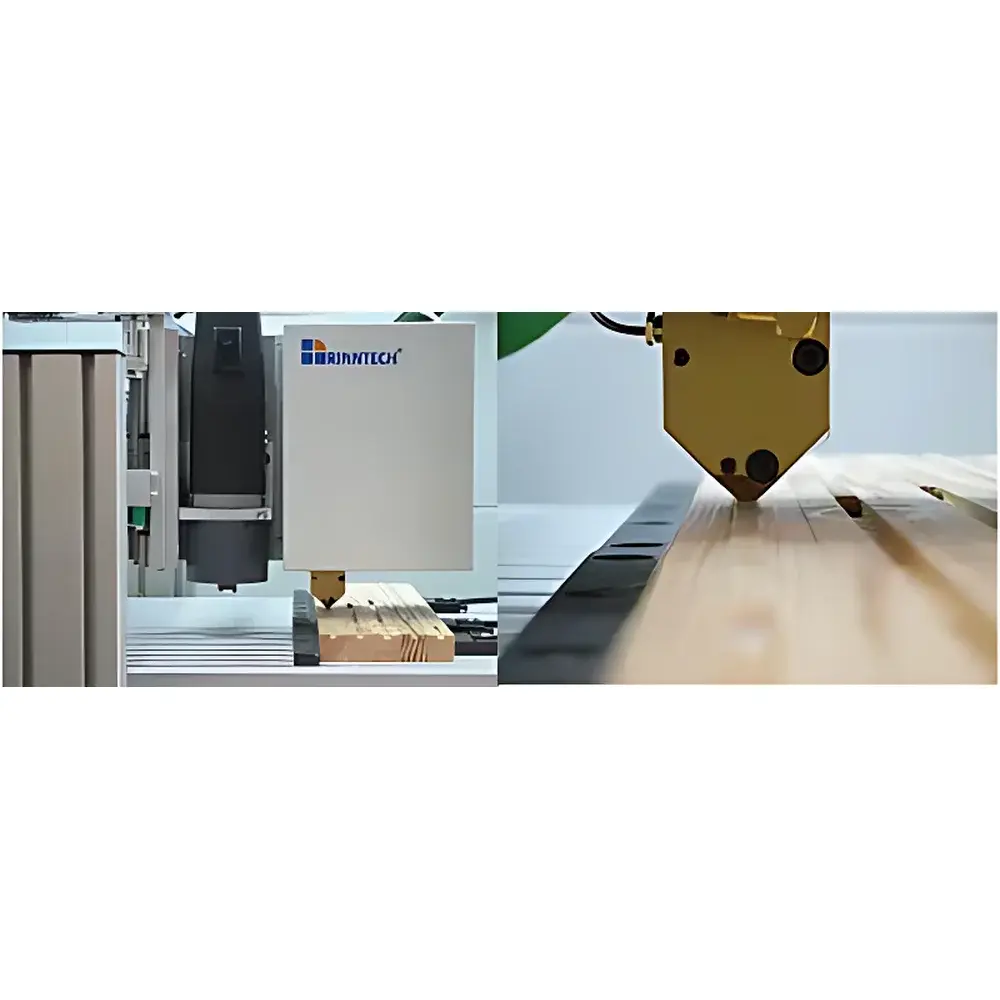
Rinntech LignoStation Tree-Ring Density Analyzer
| Brand | Rinntech |
|---|---|
| Origin | Germany |
| Instrument Type | Forestry-Specific Densitometer & Digital Wood Microstructure Analyzer |
| Measurement Principle | High-Frequency Electromagnetic Sensing (Non-Ionizing) + Optical Micro-Imaging |
| Max Sample Length | 500 mm |
| Spatial Resolution | ≤20 µm |
| Safety Compliance | No ionizing radiation (X-ray-free operation) |
| Core Modules | LignoTrim (precision surface planer), LignoScan (EM density scanner), LignoScop (micro-optical imager), LignoVision (dedicated image analysis software) |
Overview
The Rinntech LignoStation Tree-Ring Density Analyzer is a fully integrated, laboratory-grade system engineered for high-resolution dendrochronological and wood anatomical analysis. Unlike conventional X-ray densitometry systems, the LignoStation employs non-ionizing high-frequency electromagnetic sensing to quantify wood density variations across annual growth rings—enabling precise, repeatable, and safe measurement of earlywood/latewood density gradients, cell wall thickness, and radial density profiles. Coupled with synchronized optical micro-imaging, it delivers co-registered structural and densitometric data from the same sample cross-section. Designed specifically for forestry research, climate reconstruction, timber quality assessment, and ecological physiology studies, the system supports both core samples (e.g., increment borer cores) and cross-sectional discs up to 500 mm in length. Its modular architecture allows flexible configuration based on analytical requirements—whether focused solely on surface preparation and optical imaging or combined density–morphology correlation.
Key Features
- Non-destructive, X-ray-free density measurement using calibrated high-frequency electromagnetic sensors—eliminating regulatory constraints and safety shielding requirements associated with ionizing radiation.
- Sub-20 µm spatial resolution across both optical (LignoScop) and electromagnetic (LignoScan) modalities, enabling detection of intra-annual density fluctuations and microanatomical features such as vessel lumen diameter and ray parenchyma distribution.
- Integrated LignoTrim precision planer ensures reproducible, artifact-free surface preparation—critical for eliminating compression artifacts that compromise density accuracy in softwoods and reaction wood.
- Automated, software-controlled scanning sequence: surface planing → optical imaging → EM density profiling → synchronized data fusion—all executed without manual repositioning.
- Compact, benchtop footprint with vibration-damped optical table design, suitable for shared laboratory environments and field-deployable mobile labs.
- Compliance-ready architecture: audit trails, user access levels, and raw data immutability support GLP-compliant workflows and ISO/IEC 17025 documentation requirements.
Sample Compatibility & Compliance
The LignoStation accommodates standard 5 mm increment cores, resin-embedded or air-dried, as well as unmounted cross-sectional discs up to 500 mm in diameter. It accepts both coniferous (e.g., Picea abies, Pinus sylvestris) and broadleaf species (e.g., Quercus robur, Fagus sylvatica), including challenging materials such as decayed wood, juvenile wood, and tension wood—provided surface integrity is maintained post-planing. All modules comply with EU Machinery Directive 2006/42/EC and EMC Directive 2014/30/EU. The absence of radioactive sources or X-ray emitters exempts the system from national radiation protection licensing in all OECD jurisdictions. Data output formats (TIFF, CSV, HDF5) conform to FAIR principles and are compatible with established dendrochronological databases (e.g., ITRDB, CYCLOPS).
Software & Data Management
LignoVision v5.x is a dedicated, Windows-based application providing full control over acquisition, calibration, segmentation, and quantitative analysis. It includes automated ring detection algorithms trained on multi-species reference libraries, customizable density calibration curves (using gravimetric standards), and batch processing pipelines for large-scale chronology development. All measurement parameters—including sensor gain, exposure time, scan speed, and ROI definitions—are stored with metadata in encrypted project files. Software supports 21 CFR Part 11-compliant electronic signatures, role-based permissions, and automatic generation of PDF reports containing raw scans, annotated density profiles, statistical summaries (mean, std dev, skewness per ring), and exportable time-series datasets. Raw sensor data remains unprocessed and accessible for third-party validation.
Applications
- High-resolution climate proxy development: reconstructing past temperature, precipitation, and drought indices via latewood density–climate correlations (e.g., following Schweingruber et al. methodology).
- Wood quality phenotyping: quantifying fiber length/density relationships in breeding trials for pulp, bioenergy, or construction timber.
- Disturbance ecology: detecting fire scars, insect outbreaks, or windthrow events through abrupt density anomalies and traumatic resin duct formation.
- Carbon allocation modeling: correlating intra-annual density patterns with stable isotope (δ13C, δ18O) measurements from laser-ablation sampling.
- Conservation forensics: verifying provenance and age of historic timber in cultural heritage structures using density fingerprinting.
FAQ
Does the LignoStation require radiation safety certification or licensing?
No. It uses non-ionizing high-frequency electromagnetic fields—not X-rays or radioactive isotopes—and therefore requires no radiation safety officer oversight, shielding, or regulatory permits in any jurisdiction.
Can the system analyze partially decayed or waterlogged wood samples?
Yes, provided the sample surface can be planed to a flat, continuous plane. LignoTrim’s adjustable depth control minimizes removal of degraded material while preserving structural integrity for downstream scanning.
Is LignoVision compatible with third-party statistical packages such as R or Python?
Yes. Export functions generate standardized CSV and HDF5 files with embedded metadata, enabling direct ingestion into R (dplR, dplRtools), Python (pandas, xarray), or MATLAB for advanced time-series analysis and machine learning applications.
What calibration standards are recommended for density traceability?
Rinntech provides NIST-traceable density reference blocks (spruce, oak, beech) with certified mean densities and uncertainty budgets. Users may also establish lab-specific calibrations using gravimetrically measured wood subsamples.
How is data integrity ensured during long-term archival?
LignoVision generates SHA-256 checksums for all acquired scans and stores them alongside raw data. Project files include digital signatures, timestamps, and operator IDs—meeting ISO 16140-2 and FDA 21 CFR Part 11 requirements for regulated environments.




