
LaVision FlameMaster-PIV Flame Flow Field Imaging System
| Brand | LaVision GmbH |
|---|---|
| Origin | Germany |
| Model | FlameMaster-PIV |
| Application Domain | Simultaneous PIV and OH-PLIF in reactive flows |
| Platform Integration | DaVis v10+ Synchronized Acquisition & Processing |
| Compliance Framework | ASTM E2912, ISO 20486 (Optical Diagnostics in Combustion), GLP-aligned Data Audit Trail |
Overview
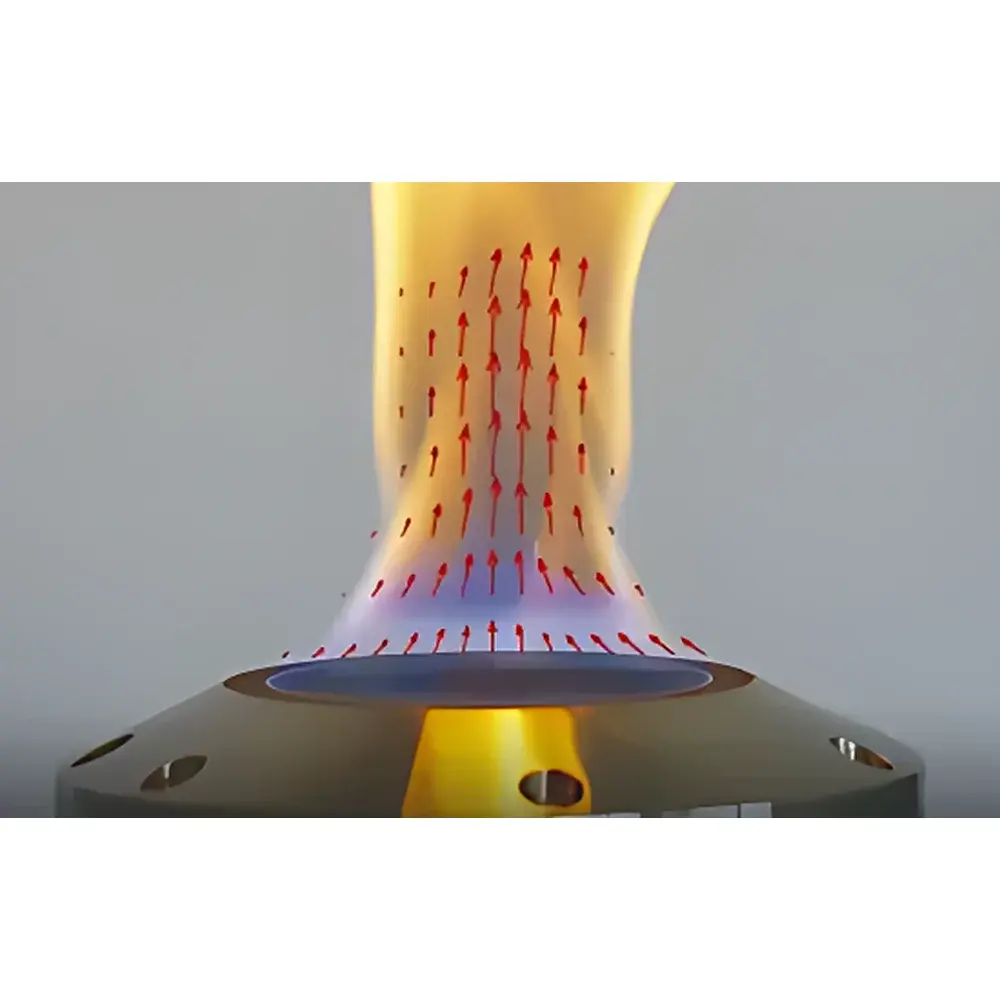
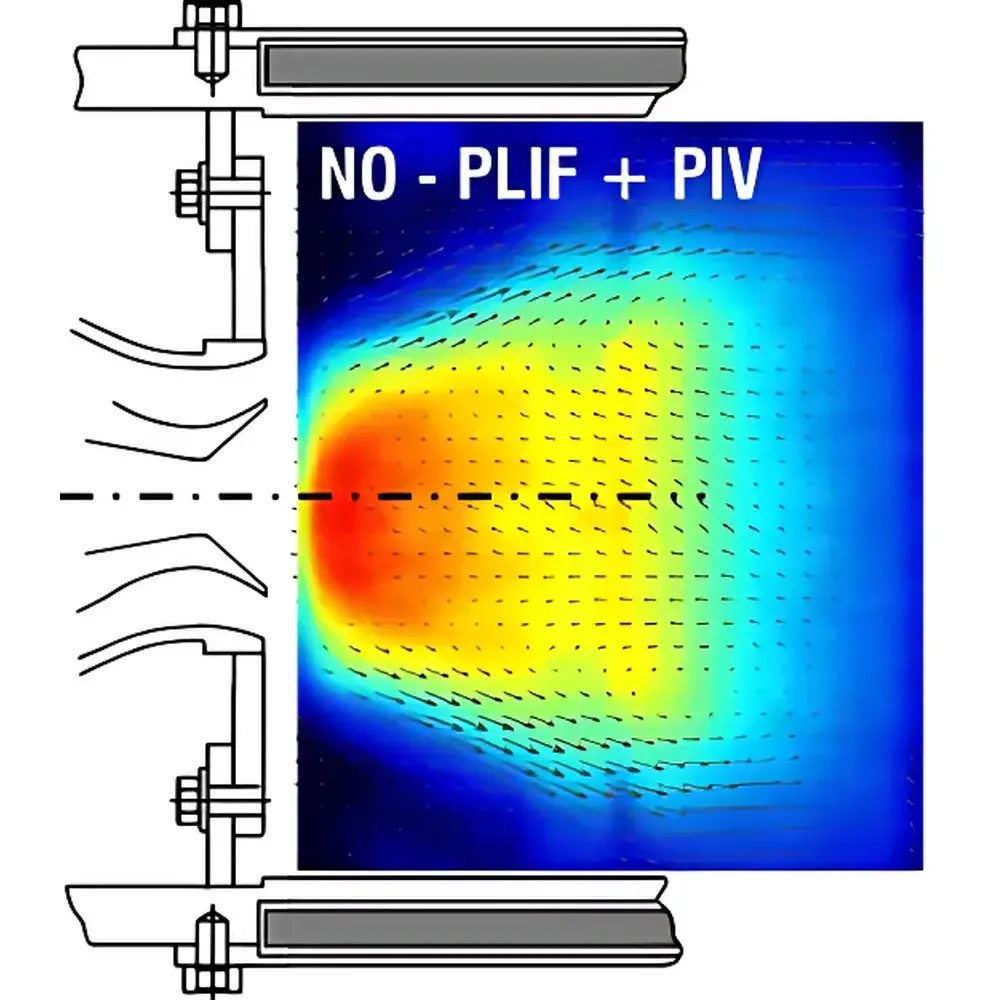
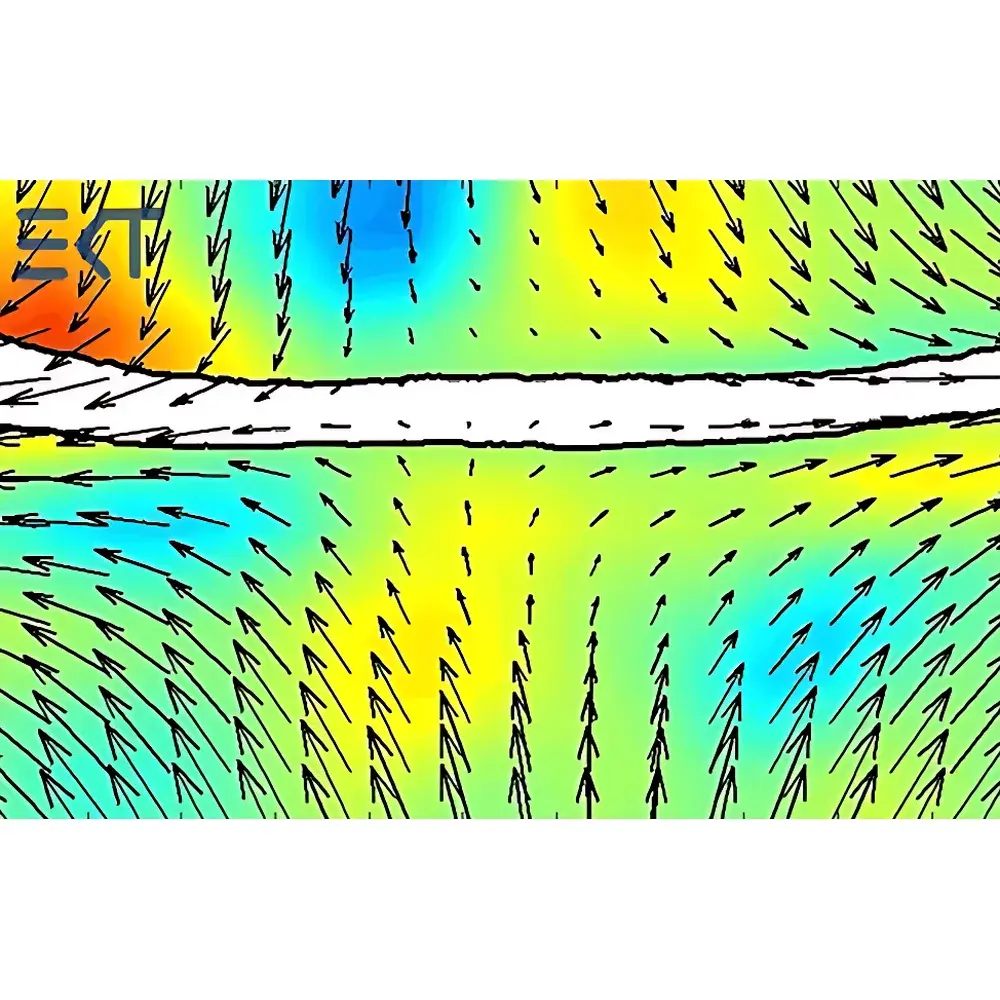
The LaVision FlameMaster-PIV Flame Flow Field Imaging System is a high-precision, time-resolved optical diagnostic platform engineered for quantitative, two-dimensional velocity field measurement within turbulent reacting flows. It operates on the principle of Particle Image Velocimetry (PIV), where dual-pulse laser sheet illumination (typically Nd:YAG, 532 nm or frequency-doubled 266 nm) scatters light from seeded tracer particles (e.g., TiO₂, SiO₂, or oil droplets with sub-micron diameter) entrained in the flow. Cross-correlation analysis of successive particle image pairs—captured by high-speed, high-quantum-efficiency sCMOS cameras—yields instantaneous 2D velocity vector fields with spatial resolution down to 16–32 pixels per mm and temporal resolution governed by laser pulse separation (typically 1–10 µs for flame-scale dynamics). Crucially, FlameMaster-PIV is not a standalone PIV system; it is architecturally integrated with LaVision’s FlameMaster OH-PLIF (Planar Laser-Induced Fluorescence) capability, enabling simultaneous acquisition of flow topology and chemiluminescent flame front structure within the same laser sheet plane—a requirement for rigorously isolating flow-flame coupling mechanisms during ignition, lean blowout, flashback, or local extinction events.
Key Features
- Co-registered PIV/PLIF architecture: Single laser sheet delivery path supports dual-wavelength excitation (e.g., 532 nm for PIV seeding + 283 nm for OH radical excitation) with dichroic beam splitting and spectral filtering at the camera interface.
- DaVis 10+ software platform: Provides hardware-synchronized triggering, real-time PIV cross-correlation (FFT-based with multi-pass window deformation), OH-PLIF intensity normalization (via reference cell or Rayleigh scattering), and joint spatiotemporal post-processing (e.g., conditional averaging on flame position, vorticity–OH correlation maps).
- Modular laser configuration: Compatible with Q-switched Nd:YAG lasers (up to 15 mJ/pulse @ 532 nm, 10 Hz–1 kHz PRF) and tunable OPO systems for OH excitation (282–284 nm), with precise inter-pulse delay control (<10 ns jitter) for velocity gradient estimation.
- High-fidelity imaging train: Includes telecentric PIV optics, narrowband interference filters (Δλ 80% QE at 532 nm) optimized for low-light, high-frame-rate combustion imaging.
- Calibration traceability: Integrated calibration rig with precision translation stage and certified micrometer targets enables in situ spatial scaling (µm/pixel) and out-of-plane depth-of-field verification per measurement plane.
Sample Compatibility & Compliance
FlameMaster-PIV is validated for use in atmospheric and pressurized (up to 10 bar) laminar and turbulent flames—including premixed Bunsen, counterflow, swirl-stabilized, and bluff-body stabilized configurations—as well as spray flames and MILD combustion regimes. Tracer particle selection follows ISO 20486 guidelines: non-reactive, thermally stable, and size-matched to Kolmogorov scales (typically 0.5–2 µm for gas-phase flames). The system complies with ASTM E2912 (“Standard Practice for Optical Diagnostic Techniques in Combustion Research”) and supports GLP/GMP-aligned data integrity through DaVis’ built-in audit trail (user actions, parameter changes, raw frame metadata), electronic signatures, and immutable HDF5-based data storage compliant with FDA 21 CFR Part 11 requirements when configured with optional validation packages.
Software & Data Management
DaVis serves as the unified acquisition, processing, and archival engine. Raw image sequences are stored in HDF5 format with embedded metadata (laser energy, timing stamps, camera gain, calibration parameters). PIV processing includes adaptive interrogation windowing, peak-locking correction, and uncertainty quantification via FFT signal-to-noise ratio (SNR) and peak ratio metrics. OH-PLIF data undergoes background subtraction, laser sheet profile correction, and quenching compensation using known collisional rate constants. Export options include ASCII vector fields, VTK for CFD co-simulation, and MATLAB/Python APIs for custom statistical analysis (e.g., proper orthogonal decomposition of velocity–OH covariance). All processing pipelines are scriptable and reproducible via DaVis’ batch mode.
Applications
- Quantifying strain rate effects on flame surface density in turbulent premixed combustion.
- Mapping vortex-flame interactions during transient extinction in opposed-jet burners.
- Validating LES and RANS turbulence–chemistry closure models using joint velocity–OH probability density functions.
- Characterizing fuel-air mixing dynamics upstream of autoignition kernels in HCCI engines.
- Studying flashback propagation mechanisms in micro-mixing injectors under high-pressure conditions.
FAQ
Can FlameMaster-PIV operate without OH-PLIF capability?
Yes—the system can be configured exclusively for PIV operation, retaining full DaVis synchronization, calibration, and processing functionality. However, its core design advantage lies in the integrated dual-diagnostic architecture.
What tracer particles are recommended for high-temperature flames?
TiO₂ nanoparticles (100–300 nm) and hollow glass spheres (1–2 µm) are commonly used; selection depends on residence time, thermal load, and required Stokes number (Stk ≈ 1 for faithful velocity tracking).
Is remote support and calibration assistance available?
LaVision provides global application engineering support, including remote DaVis troubleshooting, on-site calibration audits, and customized training modules for combustion diagnostics protocols.
Does the system meet requirements for publication-grade data in peer-reviewed journals?
Yes—DaVis-generated PIV uncertainty metrics, raw image archiving, and metadata compliance align with the reporting standards of journals such as Combustion and Flame, Proceedings of the Combustion Institute, and Experiments in Fluids.



