
Ekspla UltraFlux FT2101 Integrated Tunable Femtosecond Laser System
| Brand | Ekspla |
|---|---|
| Origin | Lithuania |
| Manufacturer Type | Authorized Distributor |
| Origin Category | Imported |
| Model | UltraFlux FT2101 |
| Core Technology | OPCPA-based Solid-State + Fiber Frontend |
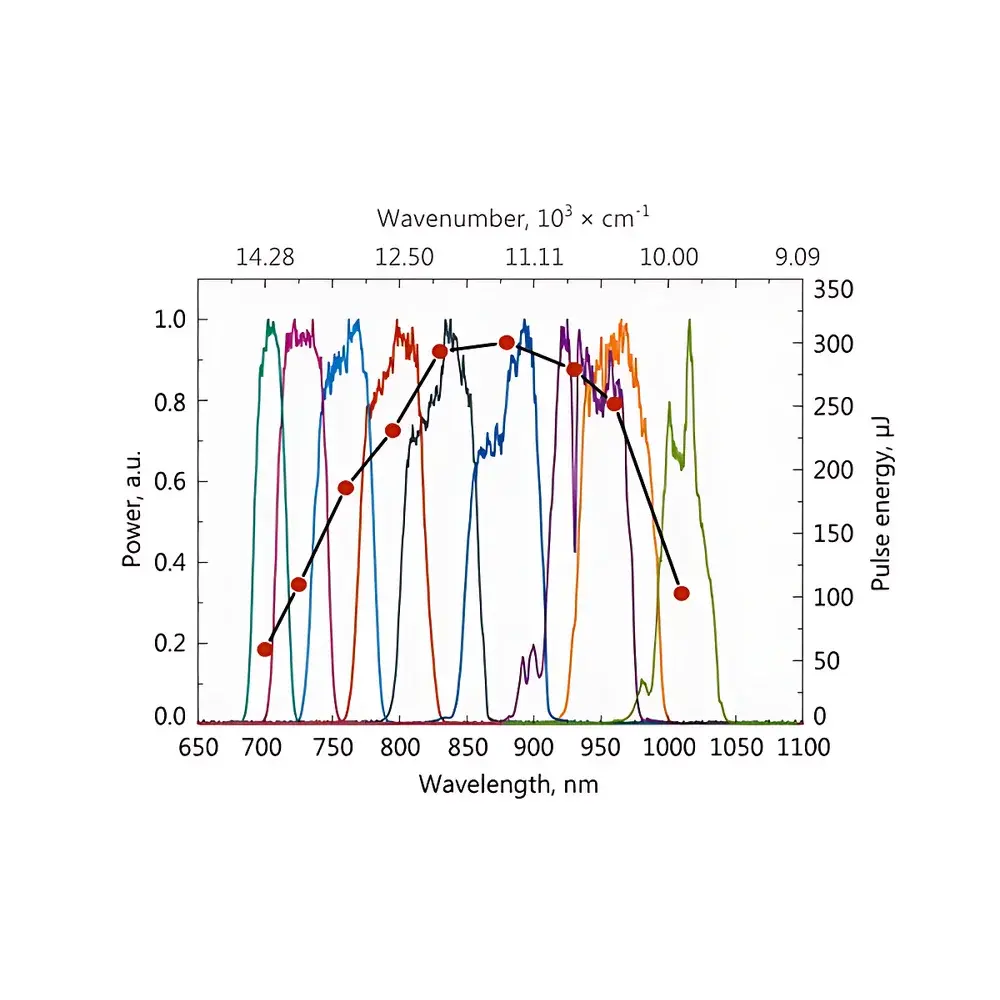
| Pulse Energy | 0.35 mJ |
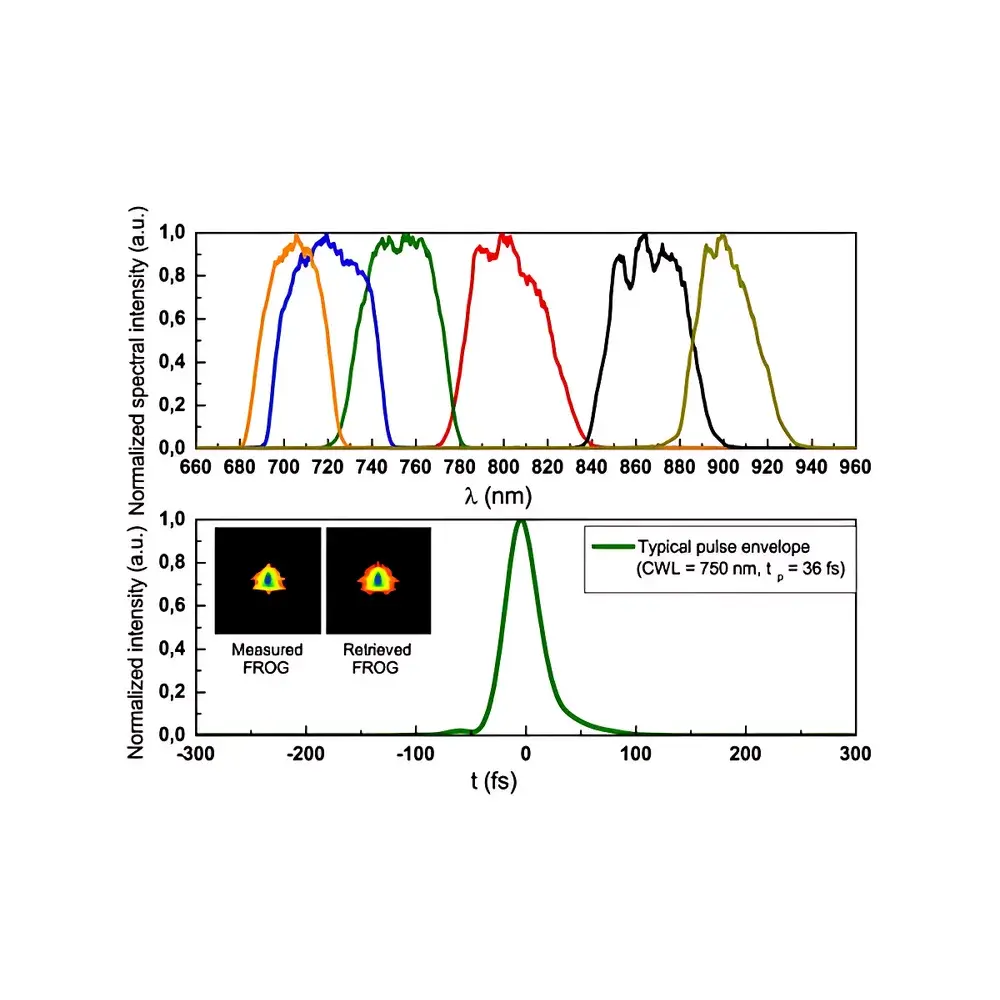
| Tuning Range | 680–960 nm |
| Pulse Duration | 30–50 fs (10 fs optional) |
| Repetition Rate | 1 kHz |
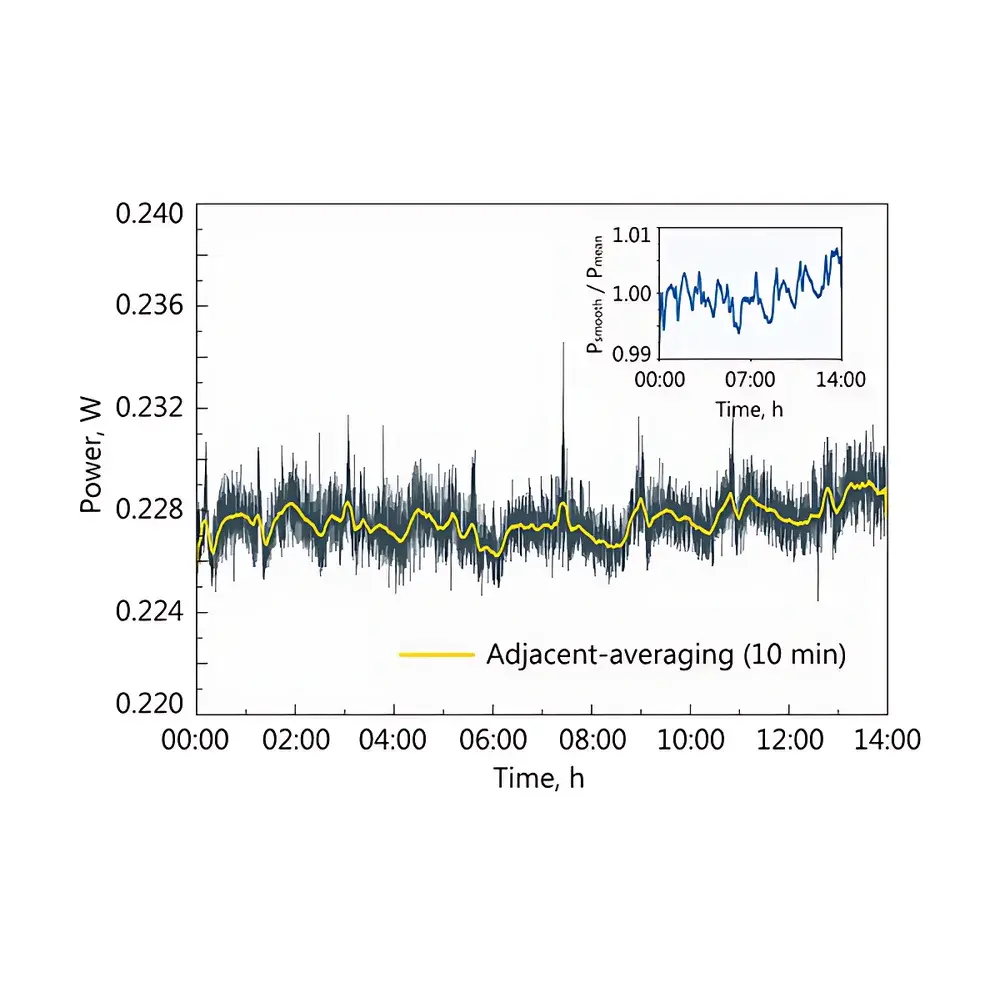
| Pulse Stability | < 1 % rms |
| Footprint | 1.2 × 0.75 m |
| CEP-Stabilized Option | Available |
| Harmonic Outputs | 2ω (345–475 nm), 3ω (235–315 nm), Idler (1200–2200 nm), Supercontinuum (1 μJ, 10 fs, 680–960 nm) |
Overview
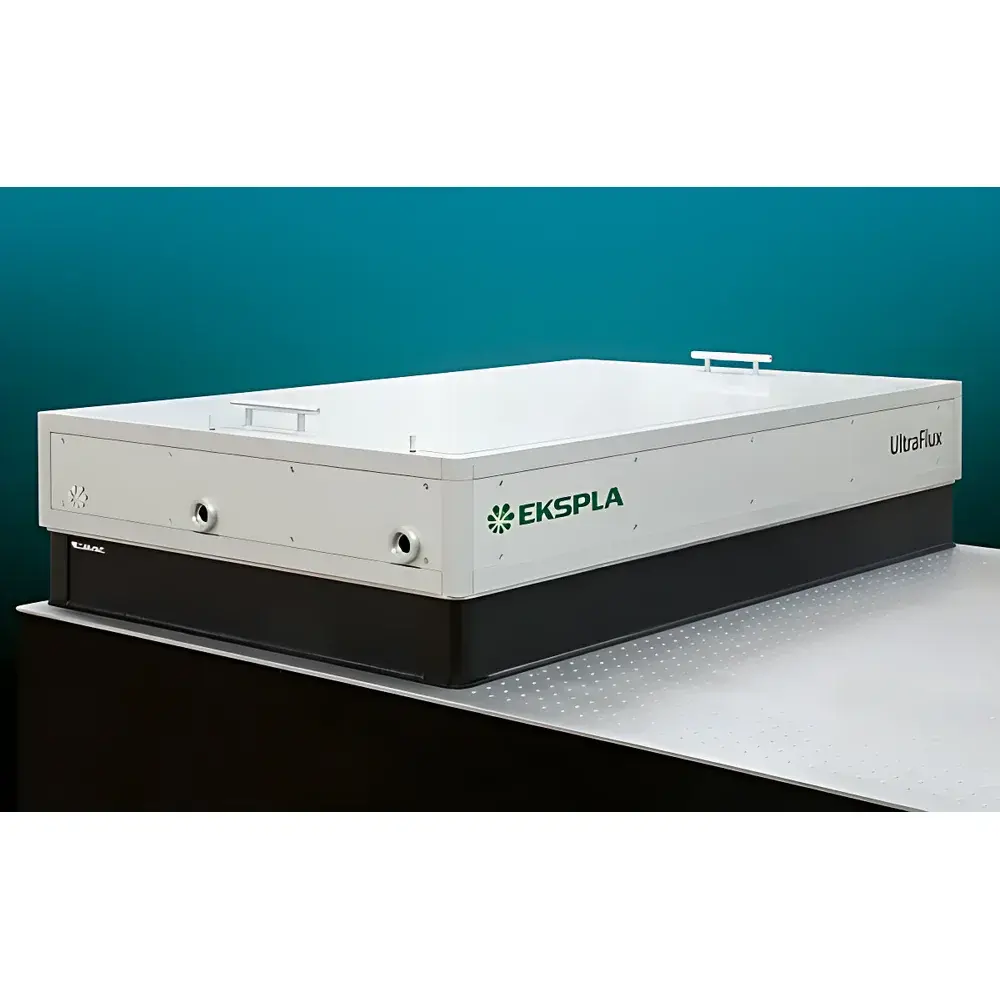
The Ekspla UltraFlux FT2101 is an integrated, turnkey tunable femtosecond laser system engineered for high-precision ultrafast science laboratories. It employs optical parametric chirped-pulse amplification (OPCPA) architecture—combining a patented ultrafast fiber oscillator (EP2924500), picosecond diode-pumped solid-state (DPSS) pump lasers, and non-collinear optical parametric amplifiers—within a single compact enclosure measuring only 1.2 × 0.75 m. Unlike conventional regenerative amplifier-based systems, the UltraFlux eliminates the need for active synchronization between pump and seed pulses, significantly reducing timing jitter and improving long-term stability. Its core design delivers transform-limited pulses with durations of 30–50 fs (with a factory-validated 10 fs option), peak powers exceeding 10 GW, and pulse-to-pulse energy stability better than 1 % rms at 1 kHz repetition rate. The system operates without manual realignment across its full 680–960 nm signal tuning range, enabling rapid experimental iteration in pump-probe, high-harmonic generation (HHG), and attosecond science applications.
Key Features
- Monolithic integration: All critical subsystems—including fiber front-end, picosecond pump lasers, OPCPA stages, spectral compression, and beam delivery—are housed in one vibration-isolated, air-cooled chassis.
- Automated wavelength tuning: Motorized grating and crystal angle control enables software-driven selection across 680–960 nm with ≤0.1 nm resolution and repeatability < ±0.3 nm.
- High temporal contrast: >109 contrast ratio at nanosecond and picosecond delays, achieved via intrinsic OPCPA gain dynamics and absence of regenerative cavity artifacts.
- Low-jitter synchronization: Internal timing distribution supports external triggering with < 100 fs RMS jitter relative to master clock; compatible with standard TTL and LVDS interfaces.
- Modular harmonic generation: Integrated dichroic optics allow simultaneous or selectable output of second harmonic (345–475 nm), third harmonic (235–315 nm), and idler (1200–2200 nm) beams without realignment.
- CEP-stable configuration available: Optional carrier-envelope phase stabilization enables reproducible few-cycle pulse delivery for attosecond metrology and strong-field physics experiments.
Sample Compatibility & Compliance
The UltraFlux FT2101 is designed for use in ISO/IEC 17025-accredited research laboratories and complies with IEC 60825-1:2014 Class 4 laser safety requirements. Its fully interlocked enclosure meets EN 60204-1 for electrical safety and incorporates redundant shutter control, beam dump monitoring, and emergency stop circuitry. All optical paths are sealed and purged to minimize atmospheric dispersion and nonlinear absorption—critical for consistent HHG efficiency and broadband supercontinuum generation. The system supports GLP-compliant operation through hardware-enforced audit trails in its control firmware, including timestamped parameter logs, user authentication, and session-based configuration snapshots.
Software & Data Management
Control is managed via Ekspla’s proprietary UltraSoft v4.x platform, a Windows-based application supporting both local GUI and remote TCP/IP API access (Python, MATLAB, LabVIEW drivers included). All tuning parameters—including crystal angles, compressor grating positions, pump energy, and harmonic selection—are stored as XML-based experiment profiles with version history. Data acquisition integrates seamlessly with common oscilloscopes and spectrometers via SCPI commands or direct USB3.0 streaming. Firmware updates preserve calibration integrity through cryptographic signature verification, and all system diagnostics—including thermal drift compensation logs, pump diode aging metrics, and OPCPA gain uniformity maps—are exportable in HDF5 format for traceability under FDA 21 CFR Part 11 and EU Annex 11 requirements.
Applications
- Femtosecond pump-probe spectroscopy: Sub-50 fs time resolution enables direct observation of coherent phonon dynamics, exciton dissociation, and intersystem crossing in perovskites, 2D materials, and organic semiconductors.
- High-harmonic generation (HHG): Stable 0.35 mJ pulses at 1 kHz drive efficient soft-XUV photon flux (>1010 photons/s) from gas jets, supporting tabletop attosecond pulse train generation.
- Nonlinear microscopy: Tunable near-IR output enables label-free multiphoton excitation of NAD(P)H, FAD, and collagen SHG with optimized penetration depth and reduced photodamage.
- Ultrafast electron diffraction (UED): Synchronized THz and optical pulses enable time-resolved structural probing of photoinduced phase transitions in quantum materials.
- Mid-IR parametric seeding: Idler output (1200–2200 nm) serves as a stable seed for difference-frequency generation (DFG) sources covering 3–20 µm spectral regions.
FAQ
What is the minimum pulse duration achievable with the UltraFlux FT2101?
The standard configuration delivers pulses of 30–50 fs FWHM; a factory-qualified 10 fs option is available with pre-compensated hollow-core fiber compression and adaptive pulse shaping.
Does the system support automated wavelength scanning during data acquisition?
Yes—UltraSoft enables synchronized wavelength sweeps with step sizes down to 0.1 nm and dwell times configurable from 10 ms to 10 s per point, with real-time spectral feedback from integrated reference spectrometers.
Is remote operation supported for multi-user facility environments?
The system includes dual Ethernet ports: one for instrument control (TCP/IP), another for isolated network management (SNMP v3), allowing secure role-based access control and audit logging compliant with institutional IT policies.
How is long-term pulse energy stability maintained?
Stability is ensured through closed-loop monitoring of pump diode current and temperature, real-time gain normalization via split-beam photodiode feedback, and automatic recalibration of compressor grating alignment every 24 hours.
Can the UltraFlux be integrated into existing vacuum beamlines for HHG experiments?
Yes—the output beam is delivered via a kinematically mounted, UHV-compatible (10−9 mbar) flange-mounted port with adjustable divergence and pointing stability < 2 µrad over 8 hours, meeting standard CF100 and KF40 interface specifications.





