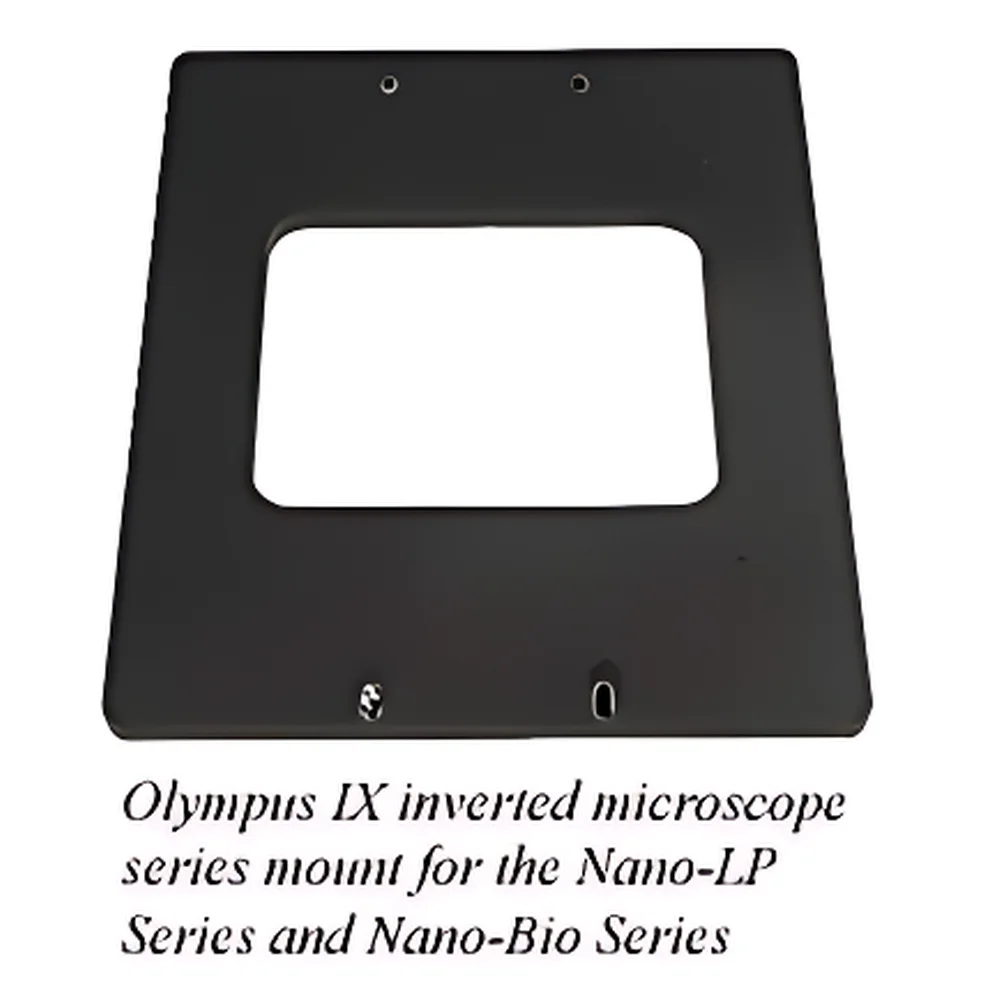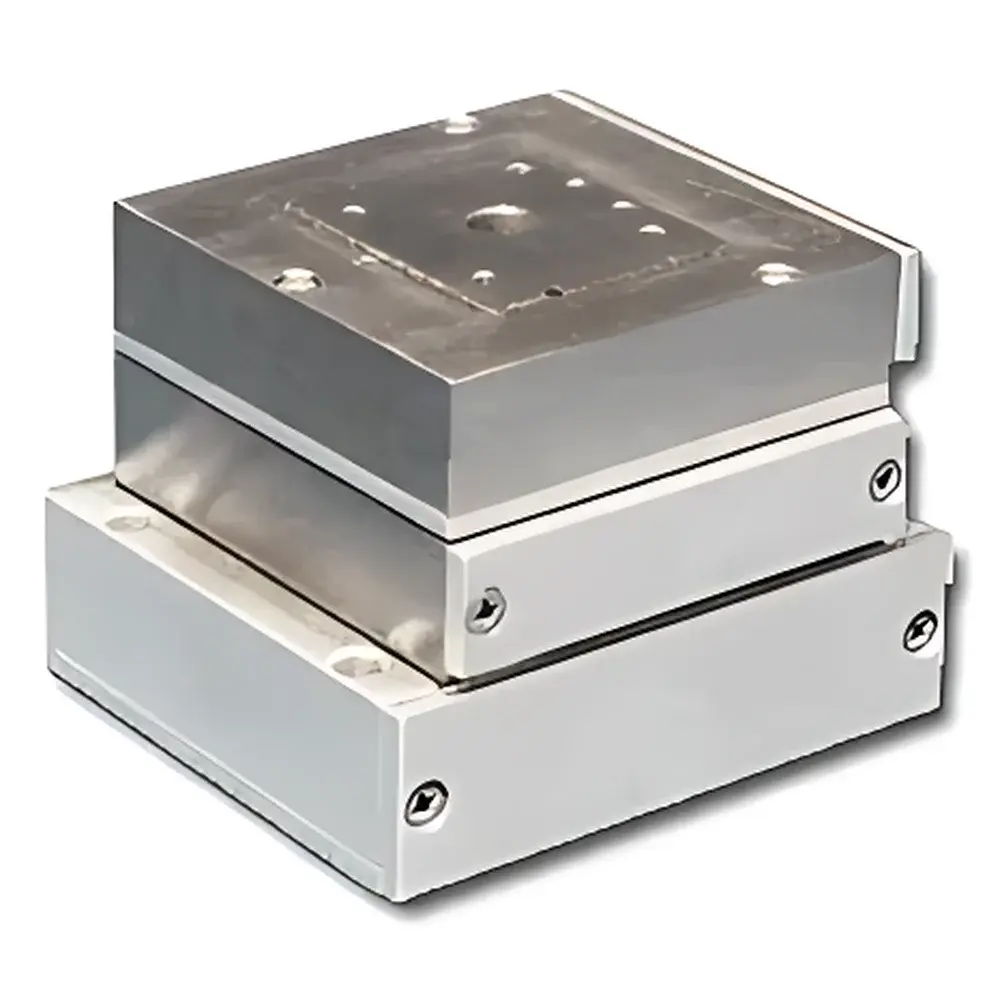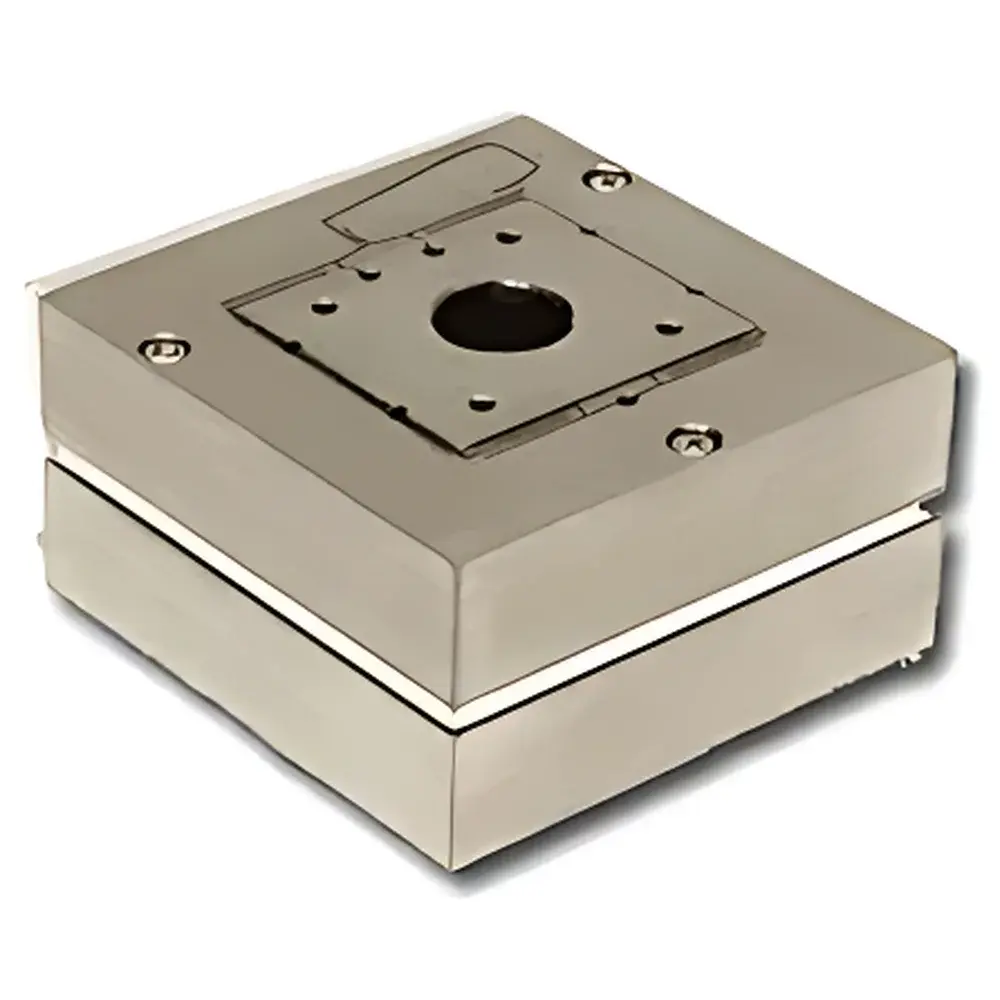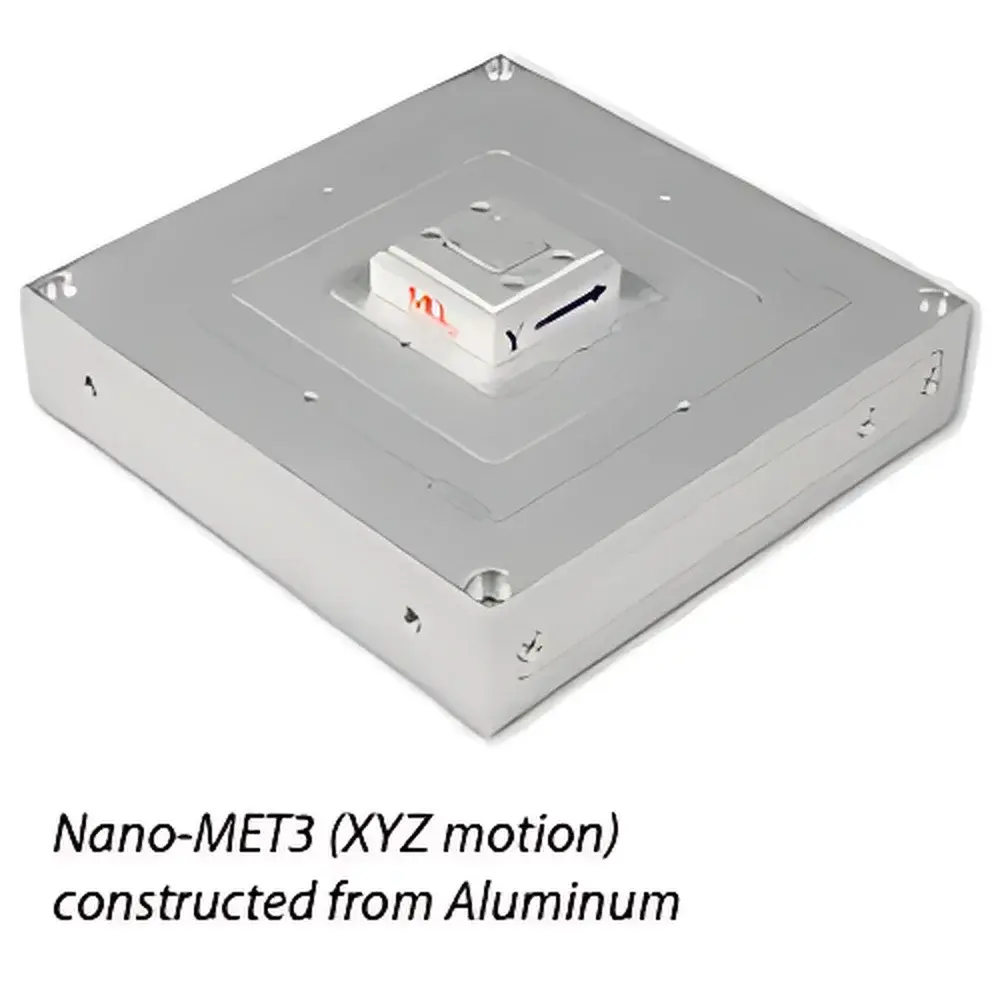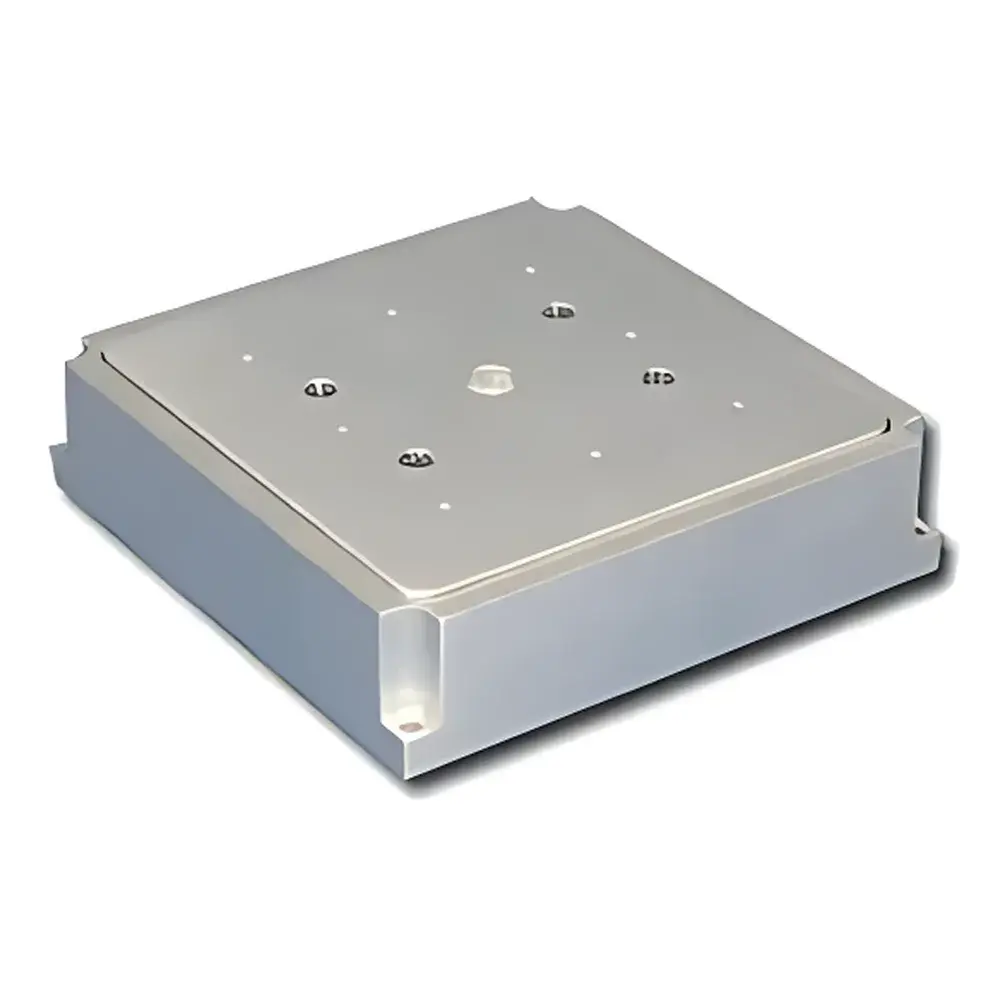
MCL Think Nano Nano-CZ500 Closed-Loop Piezoelectric Z-Translation Stage

| Brand | MCL Think Nano |
|---|---|
| Origin | USA |
| Model | Nano-CZ500 |
| Motion Axis | Z-axis only |
| Travel Range | 500 µm |
| Resolution | 1.0 nm |
| Resonant Frequency | 200 Hz ±20% |
| Stiffness | 1.0 N/µm |
| Max Load (horizontal) | 0.5 kg |
| Max Load (vertical) | 0.1 kg |
| Body Material | Aluminum |
| Control | Closed-loop with integrated PicoQ® position sensor |
| Optional Center Aperture | Up to 0.5 in diameter |
| Controller | Nano-Drive® |
Ask about pricing, availability and specifications.
Overview
The MCL Think Nano Nano-CZ500 is a high-precision, single-axis (Z-direction) piezoelectric translation stage engineered for nanometer-scale vertical positioning in demanding optical and metrological applications. It operates on the principle of electrostrictive actuation coupled with proprietary PicoQ® capacitive sensing technology, enabling absolute, drift-free position measurement without reliance on homing or reference marks. Unlike open-loop piezo stages, the Nano-CZ500 integrates a monolithic ceramic actuator and an embedded position sensor within a compact aluminum housing—delivering closed-loop performance with sub-nanometer resolution and exceptional long-term repeatability. Its design prioritizes mechanical stability, thermal robustness, and minimal hysteresis, making it suitable for integration into vacuum-compatible optical tables, confocal microscope z-focus systems, interferometric alignment platforms, and scanning probe microscopy (SPM) sample scanners where axial precision and static holding rigidity are critical.
Key Features
- 500 µm closed-loop travel range in the Z-axis—among the longest linear ranges available in compact piezoelectric stages of comparable footprint
- True 1.0 nm resolution with full closed-loop feedback; position data is continuously monitored and corrected in real time
- PicoQ® capacitive position sensing provides absolute positioning capability—no power-loss-induced positional uncertainty or need for recalibration
- Resonant frequency of 200 Hz ±20%, supporting stable step-and-settle operation at moderate scan speeds (e.g., <50 µm/s) while maintaining dynamic stiffness of 1.0 N/µm
- Optically transparent configuration option: center aperture up to 0.5 inches (12.7 mm) diameter enables through-path beam routing for collinear optical setups
- Orientation-agnostic mechanical design—fully functional in upright, inverted, or horizontal mounting configurations
- Aluminum body with precision-machined kinematic flexure guidance ensures minimal parasitic motion (<50 nrad tip/tilt over full stroke) and high thermal conductivity for ambient drift mitigation
Sample Compatibility & Compliance
The Nano-CZ500 is designed for laboratory-grade integration and conforms to standard mechanical and electrical interfaces common in optical instrumentation ecosystems. It complies with RoHS directives and meets CE marking requirements for electromagnetic compatibility (EMC) and low-voltage safety. While not certified for medical or industrial automation use out-of-the-box, its closed-loop architecture and deterministic response behavior support validation under GLP and ISO/IEC 17025-compliant calibration protocols. When paired with the Nano-Drive® controller, the system supports configurable analog voltage input (±10 V), digital USB 2.0 communication, and optional TTL-triggered step sequencing—facilitating synchronization with lock-in amplifiers, DAQ systems, or OEM motion controllers. All firmware implements non-volatile memory for user-defined zero-offsets and scaling factors, aiding traceable metrology workflows.
Software & Data Management
The Nano-CZ500 is fully supported by MCL’s Nano-Drive® software suite (v4.2+), a Windows-based application providing intuitive GUI control, waveform generation (sine, triangle, custom LUT), and real-time position logging at up to 1 kHz sampling rate. The software exports timestamped position data in CSV and HDF5 formats, enabling direct import into MATLAB, Python (NumPy/Pandas), or LabVIEW environments. For regulated environments, the Nano-Drive® firmware implements audit-trail functionality—including user login tracking, parameter change logging, and session timestamps—aligning with FDA 21 CFR Part 11 expectations when deployed with appropriate system-level access controls. API libraries (C++, C#, .NET) are provided for embedded integration, supporting deterministic latency-critical sequences in automated optical testing stations.
Applications
- Precision optical cavity alignment—fine-tuning mirror separation in Fabry–Pérot interferometers and external-cavity diode lasers
- Z-scanning in near-field optical microscopy (NSOM) and photoluminescence mapping systems
- Active focus stabilization in super-resolution fluorescence microscopes (e.g., STED, PALM)
- Calibration artifact positioning in coordinate measuring machines (CMMs) and laser interferometer test benches
- Probe-to-sample approach control in atomic force microscopy (AFM) and scanning tunneling microscopy (STM) pre-scan routines
- Beam height adjustment in multi-wavelength optical coherence tomography (OCT) source modules
FAQ
What is the difference between open-loop and closed-loop operation on the Nano-CZ500?
The Nano-CZ500 operates exclusively in closed-loop mode using its integrated PicoQ® sensor. Open-loop control is not supported—it lacks the internal hardware to bypass feedback, ensuring all positioning commands are validated and corrected in real time.
Can the Nano-CZ500 be used in vacuum environments?
Yes—the stage contains no outgassing elastomers or lubricants; aluminum construction and ceramic actuators are UHV-compatible up to 10⁻⁷ Torr when baked at ≤80°C. Optional vacuum-rated cabling and feedthroughs are available upon request.
Is the center aperture optically coated or AR-treated?
No—the standard aperture is mechanically defined only. Anti-reflection coatings or custom bore geometries (e.g., conical, stepped) can be specified as a factory option.
Does the Nano-CZ500 require periodic recalibration?
No—PicoQ® sensing is inherently absolute and non-drifting. However, users performing ISO 10110 or JIS B 7153-compliant metrology may elect annual verification against traceable interferometric standards.
How is thermal drift managed during extended hold periods?
The aluminum body provides rapid thermal equilibration; combined with low-power hold current (<5 mA at zero motion), typical positional drift remains below ±2 nm over 1 hour at stable ambient conditions (±0.5°C).