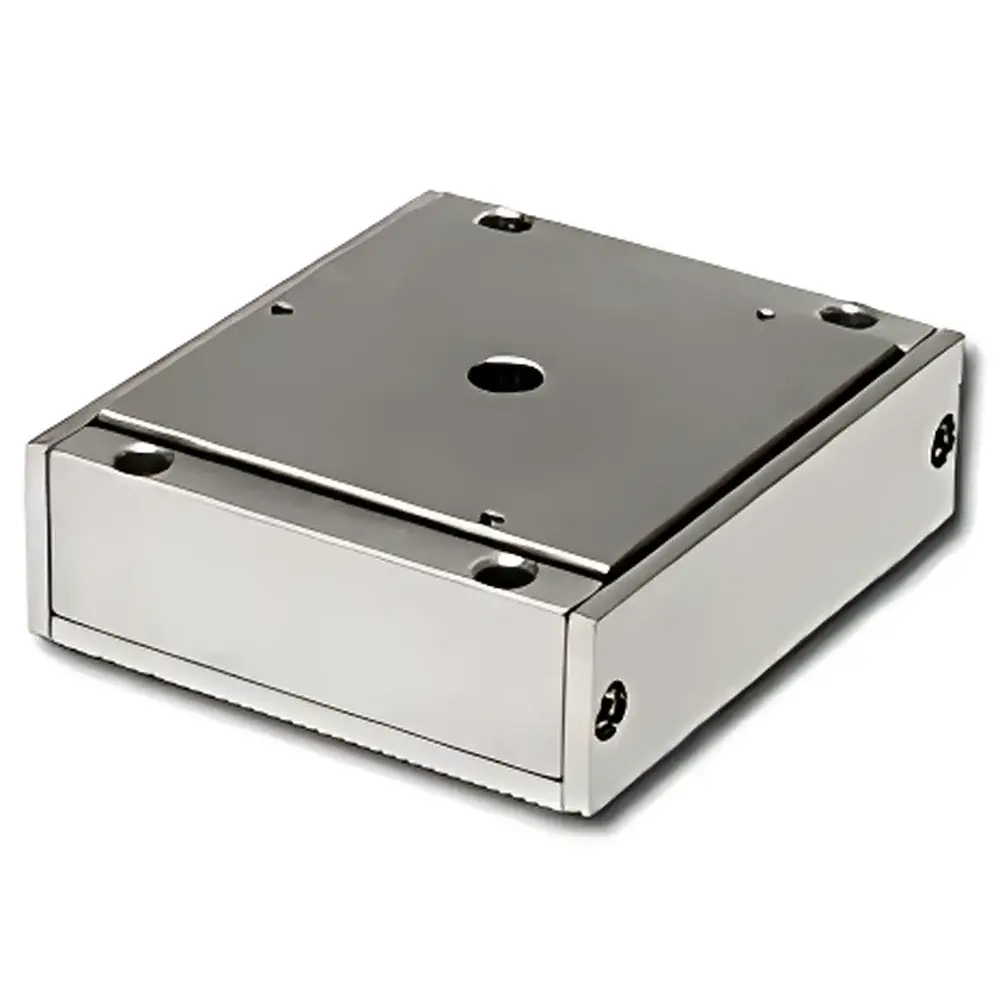
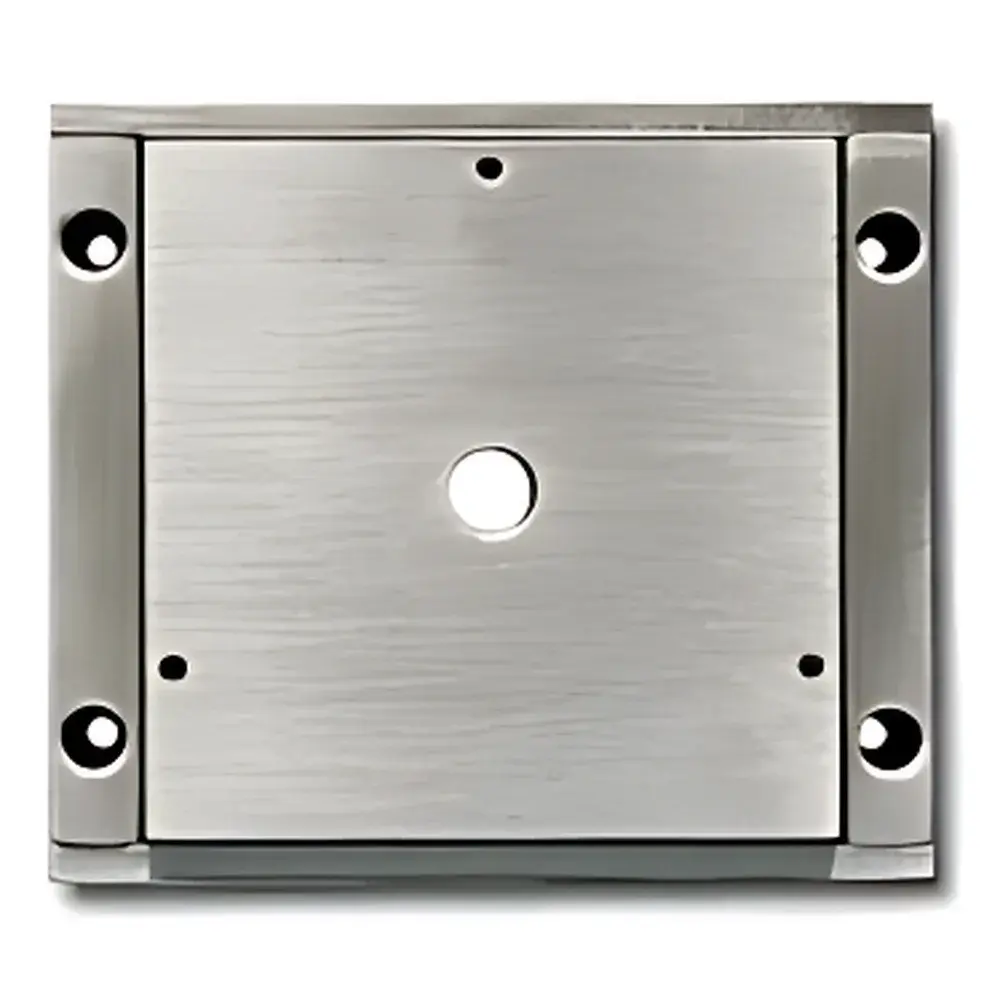
MCL Think Nano Nano-M3Z Compact Tri-Axis Z-Tip-Tilt Nanopositioning Stage

| Brand | MCL Think Nano |
|---|---|
| Origin | USA |
| Model | Nano-M3Z |
| Product Type | Motorized Nanopositioning Stage |
| Motion Axes | Z, θX, θY |
| Center Aperture | 0.25" (6.35 mm) diameter |
| Height | 0.8" (20.3 mm) |
| Closed-Loop Control | Yes |
| Position Sensing Technology | PicoQ® capacitive sensors |
| Body Material Options | Aluminum or Invar |
| Z Range | 25 µm |
| θX / θY Range | ±1 mrad each |
| Z Resolution | 0.05 nm |
| θX / θY Resolution | 2 nrad each |
| Resonant Frequency | 700 Hz ±20% |
| Stiffness | 1.0 N/µm |
| Max Horizontal Load | 0.5 kg |
| Max Vertical Load | 0.2 kg |
Ask about pricing, availability and specifications.
Overview
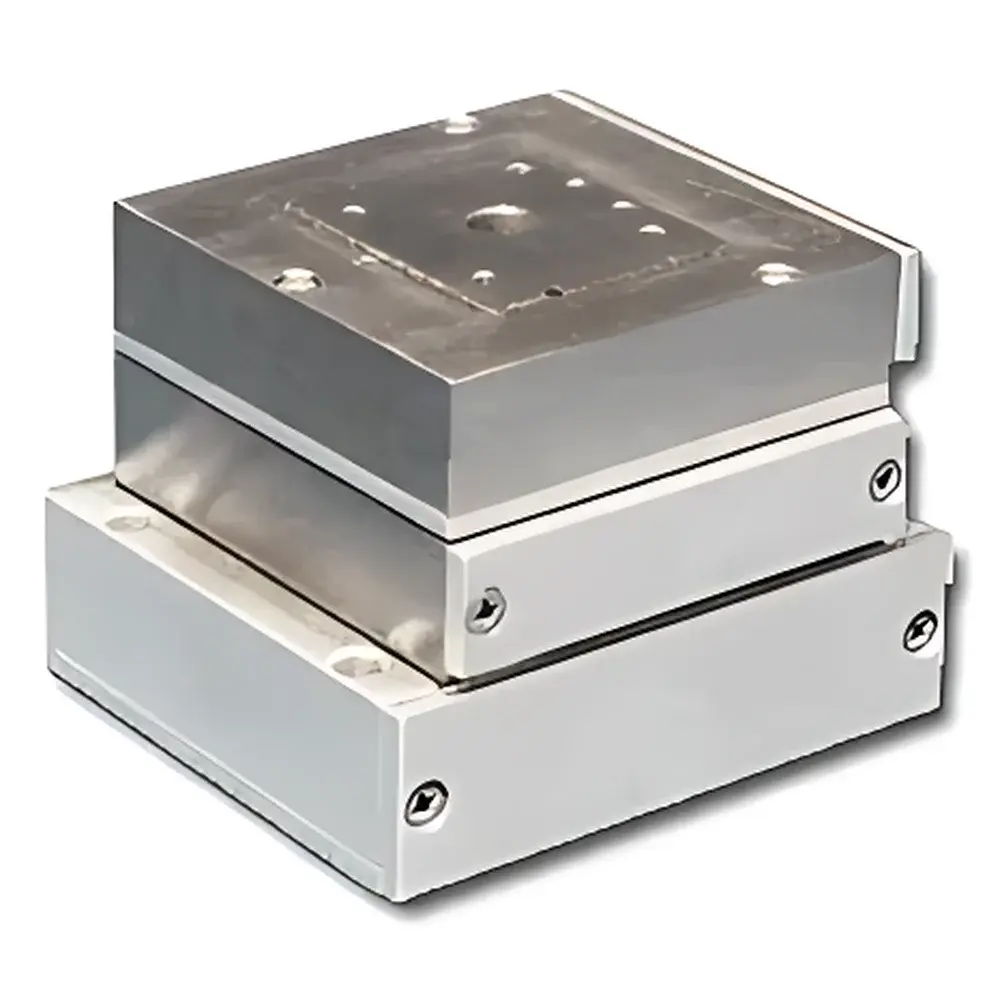
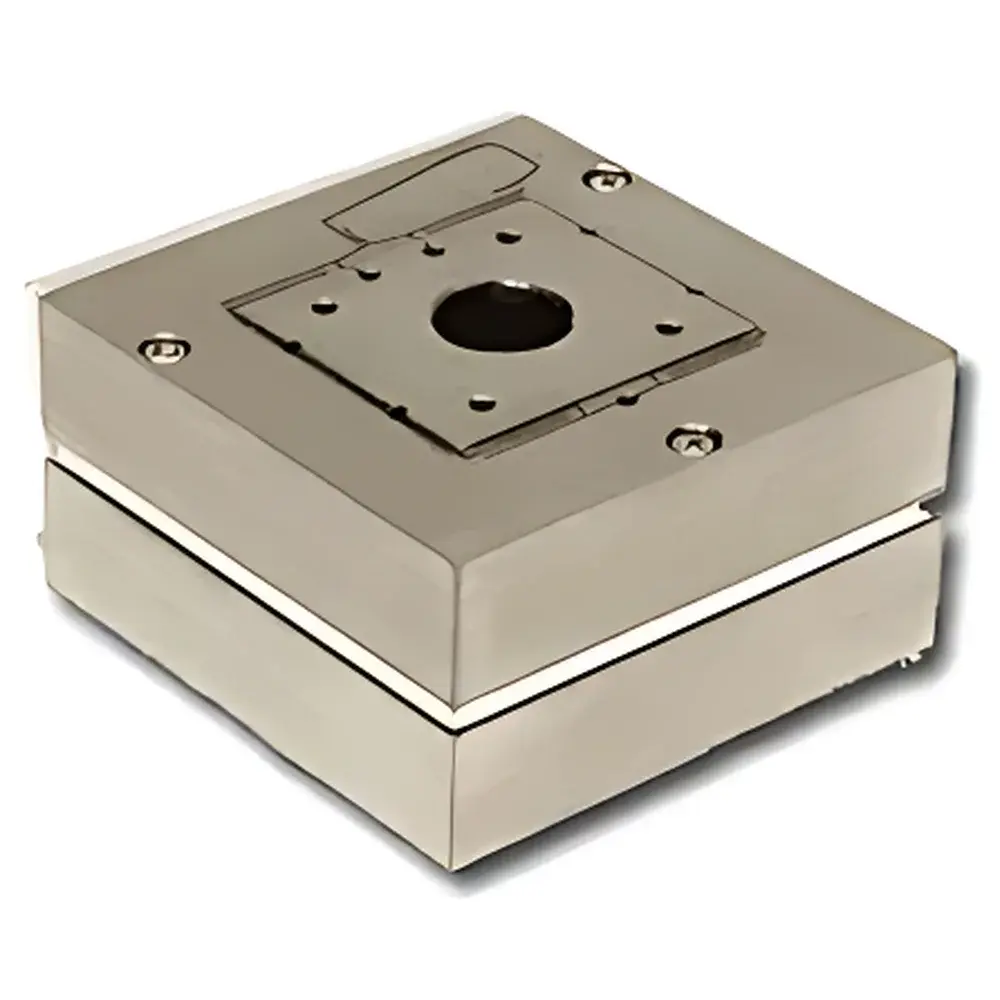
The MCL Think Nano Nano-M3Z is a high-precision, compact tri-axis nanopositioning stage engineered for sub-nanometer Z-axis translation combined with independent tip (θX) and tilt (θY) motion. Designed around a monolithic flexure architecture and driven by piezoelectric actuators, the Nano-M3Z operates on the principle of electro-mechanical displacement amplification with integrated capacitive position sensing. Its core functionality enables dynamic, real-time alignment of optical components—particularly critical in applications where beam path stability, interferometric feedback, or nanoscale mechanical coupling must be maintained under active control. With a total height of only 0.8 inches and a central 0.25-inch optical aperture, the stage is purpose-built for integration into space-constrained vacuum chambers, cryogenic probe stations, scanning probe microscope (SPM) heads, and custom optical benches without compromising mechanical rigidity or thermal stability.
Key Features
- Three degrees of freedom: precise Z-axis linear translation (25 µm range) plus decoupled θX and θY angular adjustment (±1 mrad each)
- True closed-loop operation enabled by proprietary PicoQ® capacitive sensors, delivering absolute position measurement with picometer-level Z resolution (0.05 nm) and nanoradian angular resolution (2 nrad)
- Monolithic aluminum or low-thermal-expansion invar construction to minimize drift during extended thermal cycling or long-duration metrology sessions
- High mechanical bandwidth (700 Hz ±20% resonant frequency) and stiffness (1.0 N/µm), supporting stable servo performance in active feedback loops
- Optically transparent center aperture (6.35 mm diameter) compatible with collimated laser beams, interferometric readout, or through-stage imaging
- Low-profile form factor (20.3 mm tall) enabling stackable or nested integration within multi-axis positioning systems
Sample Compatibility & Compliance
The Nano-M3Z is designed for compatibility with standard optical mounting interfaces (e.g., 4-40 and M3 threaded holes) and integrates seamlessly with industry-standard motion controllers—including the dedicated Nano-Drive® controller platform. While not certified to specific regulatory frameworks (e.g., FDA, ISO 13485), its design adheres to engineering best practices for laboratory instrumentation: traceable calibration protocols, repeatable hysteresis compensation, and deterministic open/closed-loop response profiles suitable for GLP-compliant metrology workflows. The use of invar variants meets ASTM E228 requirements for dimensional stability under ambient temperature fluctuations. All materials comply with RoHS Directive 2011/65/EU and are non-outgassing in UHV environments when specified.
Software & Data Management
Control is facilitated via the Nano-Drive® controller, which provides analog (±10 V) and digital (USB 2.0, Ethernet) interfaces. Firmware supports real-time streaming of sensor data at up to 10 kHz, enabling synchronization with external acquisition systems such as lock-in amplifiers, CCD frame grabbers, or AFM controllers. The accompanying Nano-Drive GUI includes scripting support (Tcl/Tk), programmable waveform generation (sine, ramp, step), and built-in PID tuning tools optimized for nanopositioning dynamics. Audit-trail logging—recording timestamped setpoints, actual positions, error signals, and environmental metadata—is available for traceability in regulated research environments. Export formats include CSV and HDF5, ensuring interoperability with MATLAB, Python (NumPy/Pandas), and LabVIEW-based analysis pipelines.
Applications
- Active alignment of fiber-optic couplers, photonic integrated circuits (PICs), and free-space optical interconnects
- Z-height stabilization and tip/tilt correction in scanning near-field optical microscopy (SNOM) and atomic force microscopy (AFM) systems
- Nanolithography mask alignment and wafer-level overlay correction in maskless direct-write systems
- Laser cavity mode matching and intracavity mirror optimization in ultrafast oscillator design
- Calibration reference stages for coordinate measuring machines (CMMs) and nano-CMMs operating under ISO 10360-2
- Thermal drift compensation in cryo-optical setups using invar-bodied units
FAQ
What controller is required to operate the Nano-M3Z?
The Nano-M3Z requires the Nano-Drive® controller (sold separately), which provides high-voltage piezo drive, sensor signal conditioning, and real-time closed-loop servo processing.
Can the Nano-M3Z be used in vacuum or cryogenic environments?
Yes—standard aluminum versions are rated for UHV (10−9 Torr) operation; invar variants with gold-plated electrodes and ceramic-insulated cabling are available for 4 K cryogenic integration upon request.
Is there hysteresis compensation built into the closed-loop firmware?
Yes—the Nano-Drive® implements real-time hysteresis inversion using a Preisach-based model calibrated per unit, reducing residual positioning error to <0.02% of full scale.
How is thermal drift mitigated in long-duration experiments?
Invar construction reduces coefficient of thermal expansion to ~1.2 × 10⁻⁶/°C; additionally, the PicoQ® sensors provide continuous in-situ position feedback, allowing software-based thermal drift correction algorithms to maintain sub-nanometer stability over hours.
Are custom mounting configurations or electrical interfaces available?
Yes—MCL Think Nano offers OEM engineering support for mechanical redesign (e.g., flange adaptation, vacuum feedthrough integration) and interface customization (e.g., LVDS output, TTL trigger I/O, EtherCAT).