
LaVision FlameMaster Tunable LIF Imaging System
| Brand | LaVision GmbH |
|---|---|
| Origin | Germany |
| Model | FlameMaster Tunable LIF |
| Application | Planar Laser-Induced Fluorescence (PLIF) imaging of diatomic flame species and radicals |
| Laser Type | Tunable pulsed dye laser integrated with Nd:YAG pump laser |
| Wavelength Range | Typically 210–800 nm (dependent on dye and harmonics) |
| Control Interface | Fully integrated with DaVis 10+ software platform |
| Calibration | Automated spectral calibration via LIF-excitation scan |
| Quantification Support | Reference burner-based concentration calibration |
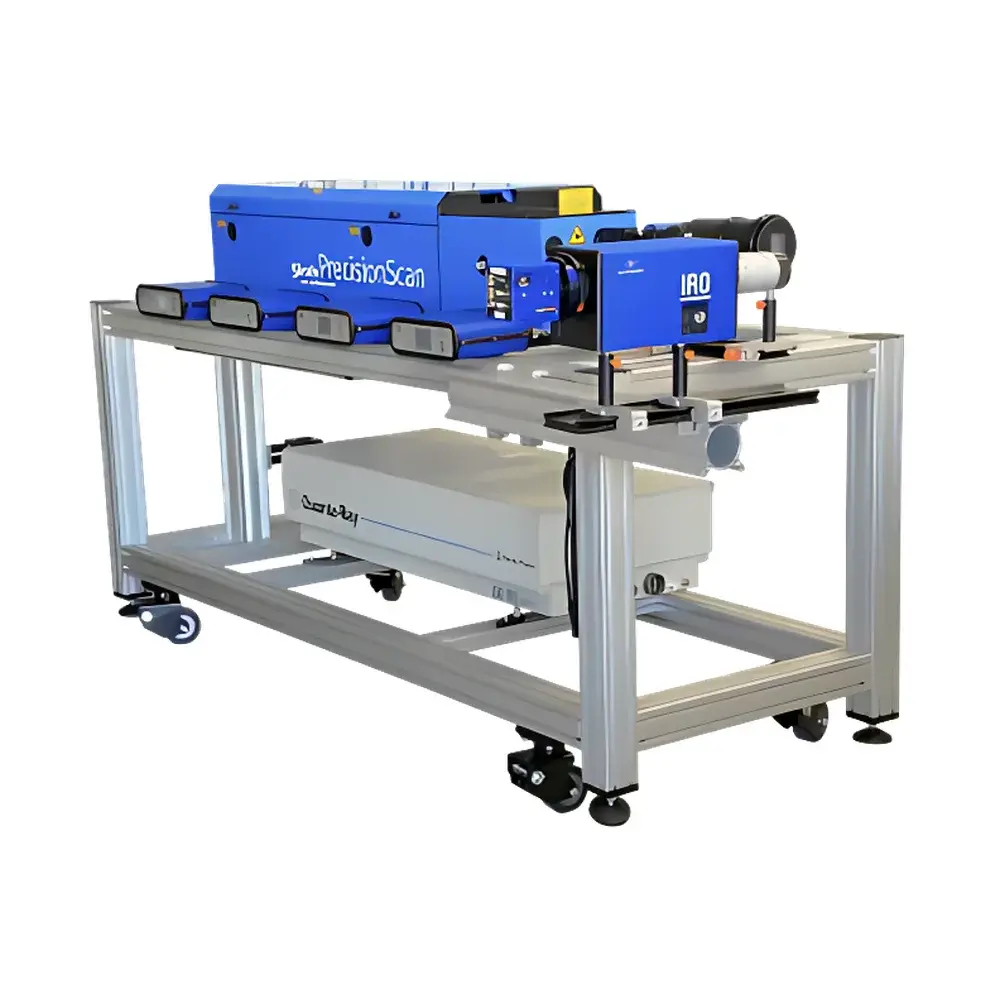
| System Mounting | Modular rail-mounted configuration for flexible optical alignment |
Overview
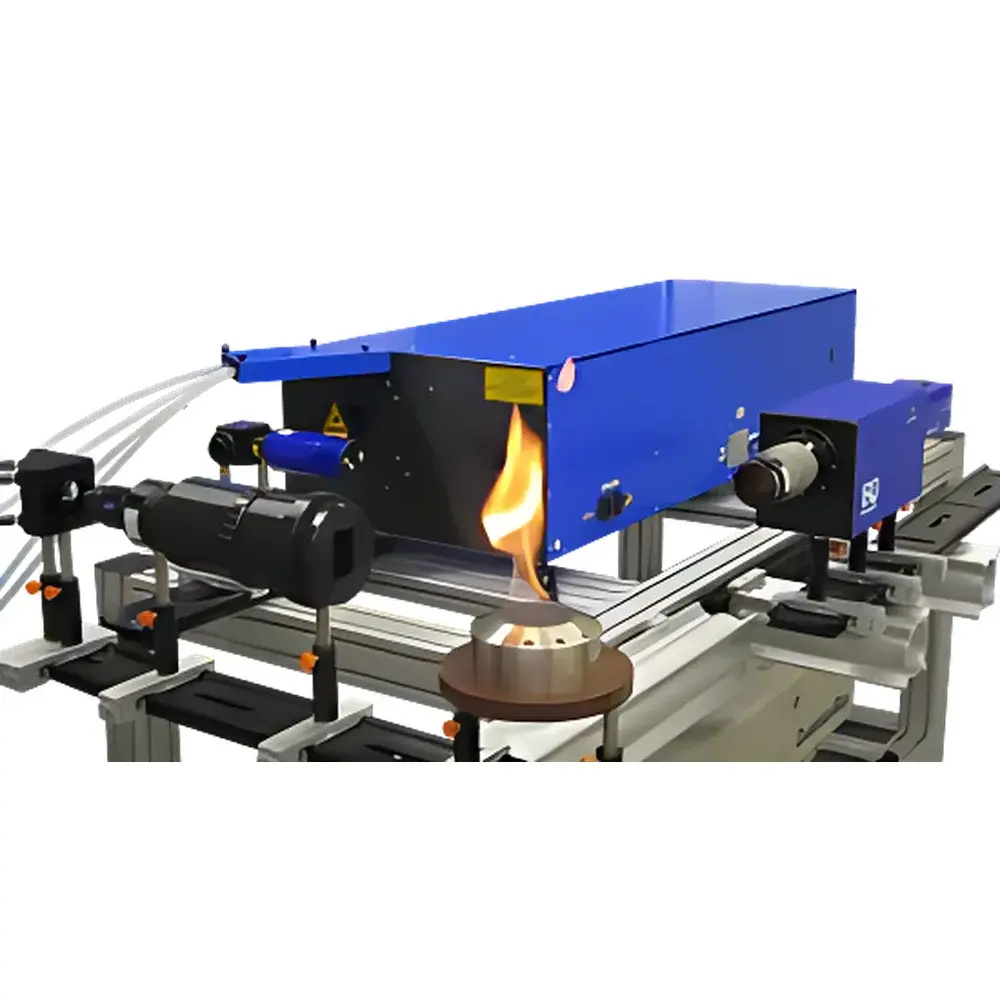
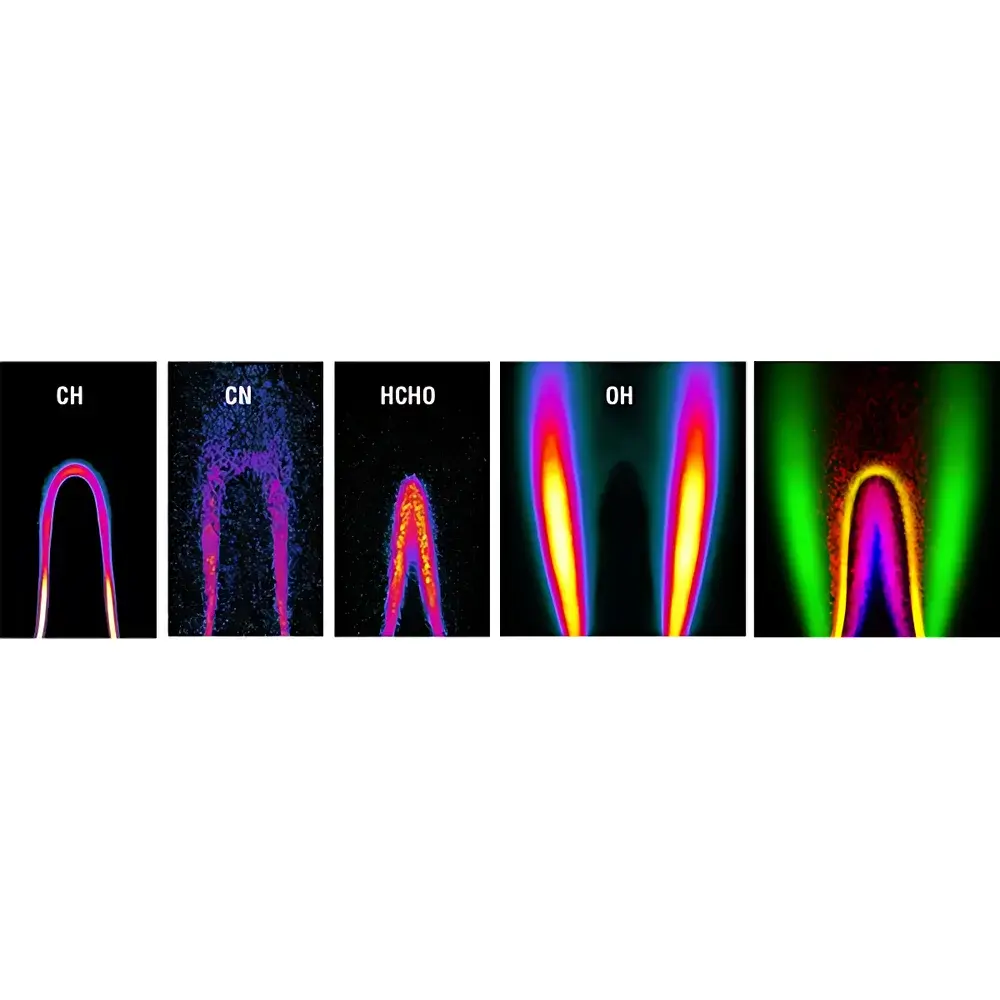
The LaVision FlameMaster Tunable LIF Imaging System is a high-precision, modular planar laser-induced fluorescence (PLIF) platform engineered for quantitative, spatially resolved detection of key diatomic flame intermediates and radicals—including OH, NO, CH, CN, and CO—in combustion research environments. Built upon LaVision’s industry-standard FlameMaster architecture, this system integrates a tunable pulsed dye laser (pumped by a frequency-doubled or tripled Nd:YAG laser) with synchronized intensified CCD (ICCD) or scientific CMOS (sCMOS) cameras, high-stability optics, and precision timing electronics. The core measurement principle relies on resonant excitation of electronic-vibrational transitions in target species, followed by detection of the resulting planar fluorescence emission. This enables two-dimensional, single-shot or multi-cycle acquisition of species distributions with sub-millisecond temporal resolution and micron-scale spatial fidelity—critical for studying flame front dynamics, extinction mechanisms, ignition kernels, and pollutant formation pathways in laminar and turbulent flames.
Key Features
- Fully automated wavelength tuning and peak-finding: DaVis software controls dye laser grating position, cavity alignment, and harmonic generation to precisely target specific LIF transitions (e.g., OH A–X (1,0), NO A–X (0,0), CH B–X (0,0)) without manual intervention.
- Real-time spectral calibration: Integrated reference cell or molecular jet scanning enables automatic wavelength calibration traceable to atomic line standards (e.g., iodine absorption lines), ensuring long-term spectral accuracy within ±0.05 cm⁻¹.
- Multi-species adaptability: Rapid reconfiguration between OH, NO, CH, CN, and CO imaging via interchangeable dyes, optics, and bandpass filters—minimizing downtime between experimental campaigns.
- Modular rail-mounted design: The FlameMaster Tunable LIF system is mounted on a rigid, motorized optical rail structure, enabling repeatable positioning, height adjustment, and beam-height matching across multiple diagnostics (e.g., simultaneous PLIF + PIV or Raman).
- Robust synchronization architecture: Nanosecond-level jitter (<1 ns RMS) between laser pulses, camera gating, and auxiliary diagnostics ensures phase-locked acquisition for time-resolved reaction zone analysis.
- Thermal and mechanical stability: All optical mounts and beam paths are constructed from low-expansion Invar and housed in vibration-damped enclosures to maintain alignment over extended acquisition sessions (>8 hours).
Sample Compatibility & Compliance
The FlameMaster Tunable LIF system is compatible with laboratory-scale premixed and non-premixed burners (Bunsen, McKenna, flat-flame, swirl-stabilized), shock tubes, rapid compression machines (RCMs), and optically accessible internal combustion engines (OACEs) equipped with quartz windows. It supports both atmospheric and pressurized (up to 5 bar) combustion environments. All hardware and firmware comply with CE marking requirements for electromagnetic compatibility (EMC Directive 2014/30/EU) and low-voltage safety (LVD Directive 2014/35/EU). Data acquisition workflows support audit-trail logging and user-access control per ISO/IEC 17025:2017 clause 7.7 and are configurable for GLP-compliant documentation when used in regulated emissions or fuel development studies.
Software & Data Management
Control, acquisition, and post-processing are unified within LaVision’s DaVis 10.x software suite—a validated, Windows-based platform supporting scripting (Python API), batch processing, and metadata embedding (EXIF-compatible). DaVis provides real-time spectral feedback during tuning, auto-thresholded image registration, background subtraction using dark-field and pre-laser reference frames, and pixel-wise intensity normalization. For quantitative analysis, the software supports calibration curve import from reference burner measurements, quenching correction models (based on local T/P and collision partner concentrations), and export to HDF5, TIFF, or MATLAB .mat formats. Raw data and processed results are stored with full provenance: laser energy logs, timing parameters, calibration timestamps, and operator IDs—ensuring full traceability required under FDA 21 CFR Part 11 for regulated combustion validation studies.
Applications
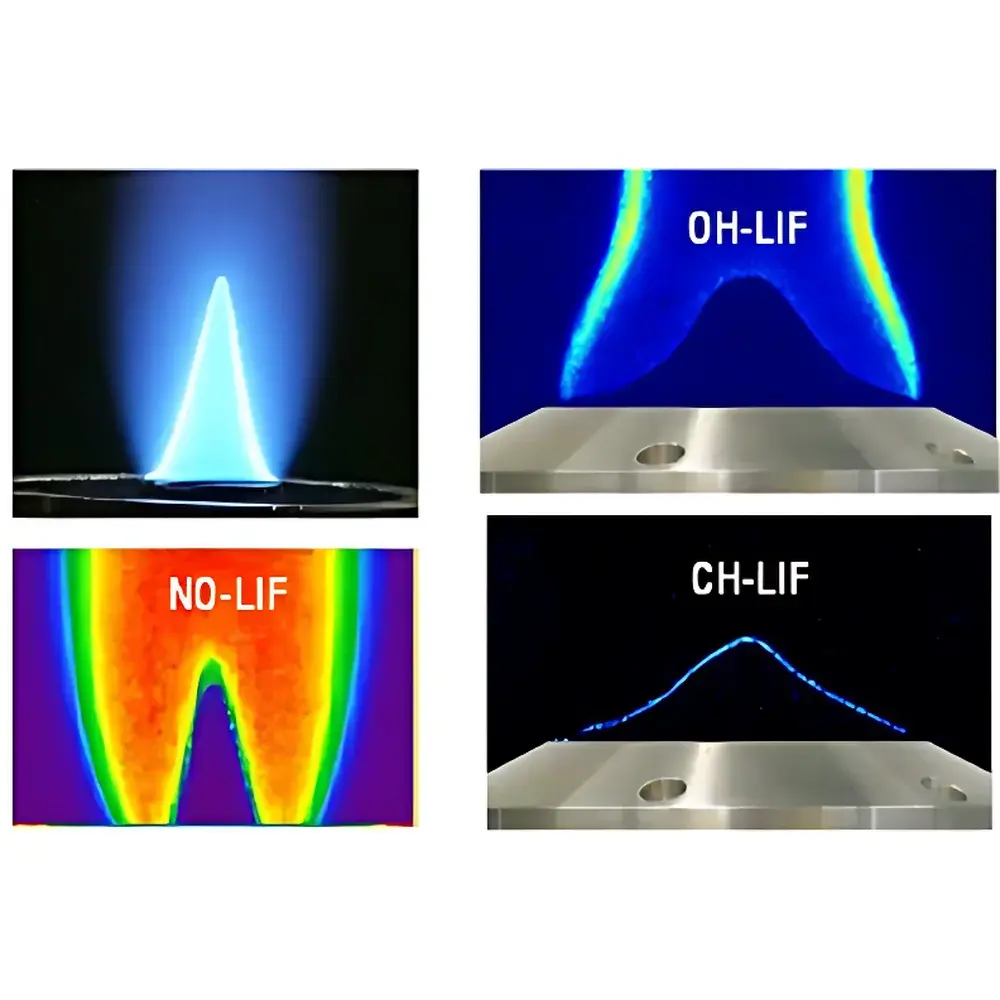
- Quantitative OH-PLIF mapping for flame front identification and local heat release rate estimation in gas turbine model combustors.
- NO-PLIF imaging to investigate thermal and prompt NO formation zones under lean-diesel and H₂-blended conditions.
- CH-PLIF combined with acetone-PLIF for dual-species visualization of reaction progress and fuel-air mixing in stratified-charge engines.
- Time-resolved CN and CO imaging in sooting flames to correlate radical pool evolution with polycyclic aromatic hydrocarbon (PAH) inception.
- Validation of high-fidelity CFD simulations (e.g., LES with finite-rate chemistry) through direct comparison of 2D species fields at defined axial stations.
- System integration with FlameMaster Raman and fuel-LIF modules for simultaneous temperature, composition, soot volume fraction, and major species concentration mapping.
FAQ
What diatomic species can be imaged with this system?
OH, NO, CH, CN, and CO are routinely imaged; additional species (e.g., NH, C₂) may be accessed with appropriate dye selection and spectral filtering.
Is absolute concentration quantification supported?
Yes—via calibrated reference burner measurements and quenching-corrected LIF models, enabling mole-fraction mapping with ±15% uncertainty under well-characterized conditions.
Can the system be upgraded from a standard FlameMaster base unit?
Yes—the Tunable LIF module is designed as a field-installable upgrade path for existing FlameMaster Multifunctional or FlameMaster Raman systems.
What laser safety class applies to the integrated dye laser?
The complete system operates as Class 4 laser equipment per IEC 60825-1; full interlock integration with enclosure doors and beam shutters is standard.
Is remote operation and monitoring supported?
DaVis supports secure remote desktop access and RESTful API endpoints for status polling and script triggering—compatible with institutional IT security policies.



