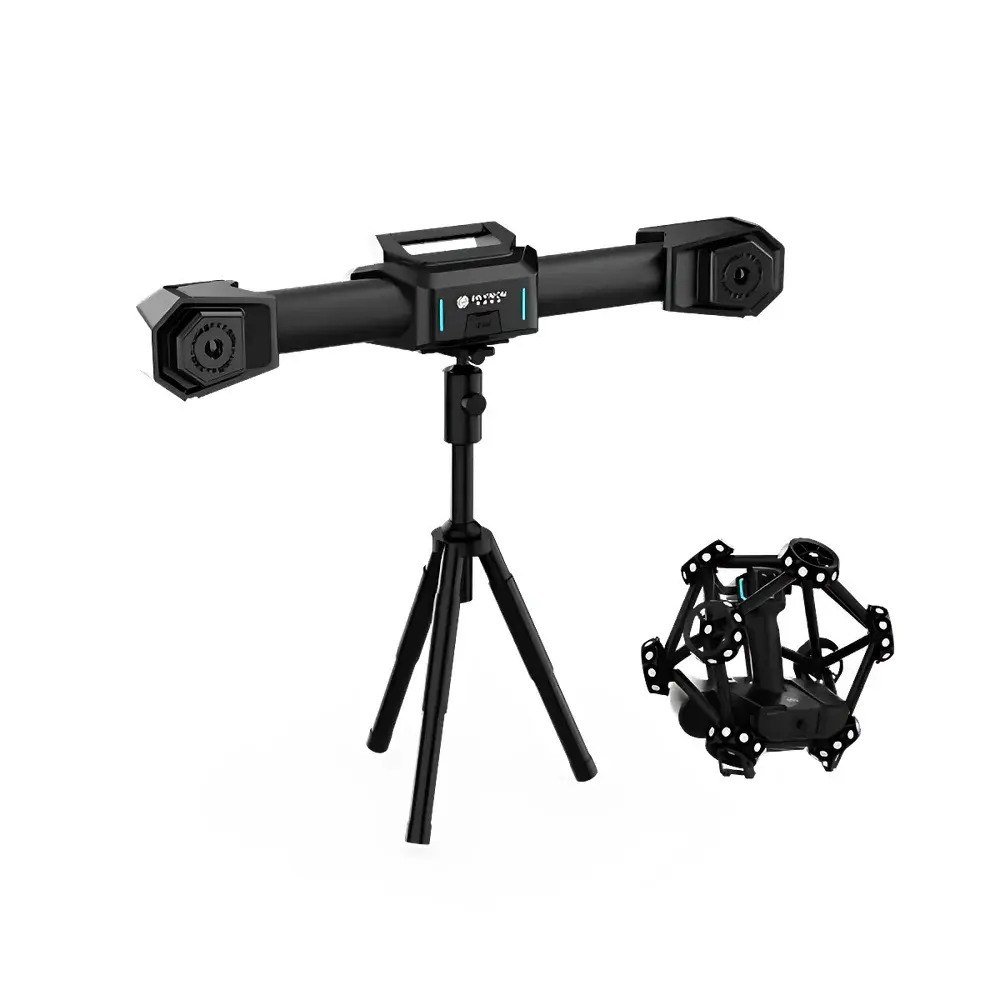
LaVision FlowMaster FSI Fluid-Structure Interaction Measurement System
| Brand | LaVision GmbH |
|---|---|
| Origin | Germany |
| Model | FlowMaster FSI |
| Measurement Capability | 3D3C (Three-Dimensional, Three-Component) |
| Frame Rate | >100 Hz |
| Velocity Range | 0–1000 m/s |
| Accuracy | ±1% of measured value |
| Measurement Volume | 1000 mm × 1000 mm × 1000 mm |
| Technique Integration | Synchronized Particle Image Velocimetry (PIV) and Digital Image Correlation (DIC) |
Overview
The LaVision FlowMaster FSI Fluid-Structure Interaction Measurement System is an engineered platform for high-fidelity, non-intrusive, full-field experimental analysis of coupled fluid and solid mechanical behavior. It operates on the physical principle of optical correlation—leveraging time-resolved laser illumination, high-speed imaging, and cross-correlation algorithms—to simultaneously resolve fluid velocity fields (via PIV) and structural surface displacement/strain fields (via DIC). Unlike sequential or decoupled measurement approaches, FlowMaster FSI enforces strict temporal synchronization between imaging modalities using hardware-triggered acquisition, enabling true spatiotemporal coupling at sub-millisecond resolution. This architecture is essential for capturing transient aeroelastic instabilities, pulsatile biofluid dynamics, or highly unsteady biological locomotion—phenomena where phase lag between fluid forcing and structural response governs system stability and energy transfer.
Key Features
- Modular, optomechanically aligned platform supporting interchangeable PIV and DIC configurations—including 2D, stereo (2D3C), tomographic (3D3C), and volumetric DIC setups
- Hardware-synchronized dual-camera acquisition with programmable inter-frame delays down to 100 ns, ensuring phase coherence across fluid and solid domains
- Real-time PIV processing engine with adaptive interrogation windowing and sub-pixel peak fitting for robust vector field reconstruction under high deformation gradients
- High-resolution DIC analysis incorporating subset-based displacement tracking, strain tensor computation, and mesh-free deformation mapping
- Integrated POD (Proper Orthogonal Decomposition) and DMD (Dynamic Mode Decomposition) modules for reduced-order modeling and modal identification of coupled dynamics
- Calibration traceability compliant with ISO 17025-accredited procedures; support for multi-point volumetric calibration using calibrated target volumes and ray-tracing correction
Sample Compatibility & Compliance
The FlowMaster FSI system accommodates a broad range of test specimens—from rigid airfoils and flexible composite wings to soft-tissue phantoms and live insect preparations—provided optical access and seeding/scattering conditions are maintained. Seeding requires neutrally buoyant tracer particles (e.g., silver-coated hollow glass spheres, DEHS droplets) for PIV, and stochastic surface patterns (e.g., speckle coatings, inkjet-printed random textures) for DIC. The system meets requirements for GLP-compliant experimental workflows through audit-trail-enabled software logging, user-access controls, and electronic signature support per FDA 21 CFR Part 11. All calibration documentation, uncertainty budgets, and validation reports adhere to ISO/IEC 17025:2017 standards for testing laboratories.
Software & Data Management
DaVis 10.1+ software suite serves as the unified control, acquisition, and analysis environment. It provides synchronized hardware triggering, real-time PIV/DIC preview, batch processing pipelines, and export to HDF5, MATLAB (.mat), and Paraview-compatible VTK formats. Data provenance is enforced via embedded metadata (timestamp, laser energy, camera gain, calibration ID, operator ID). For regulated environments, optional DaVis Audit Trail Module logs all parameter changes, file exports, and analysis steps with immutable timestamps and user attribution—fully compatible with GMP and ISO 9001 quality management systems.
Applications
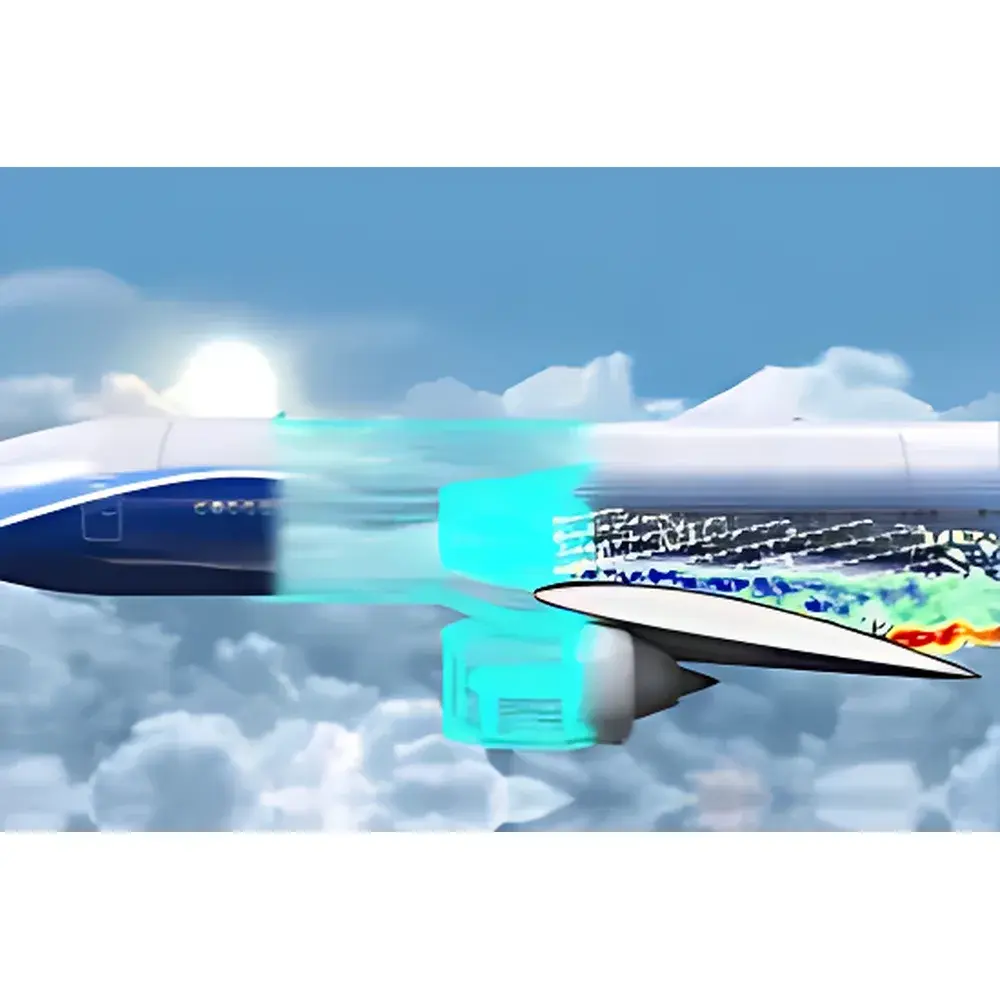
- Aeroelasticity studies: Flutter onset detection, limit-cycle oscillation characterization, and active flow control validation on scaled wind tunnel models
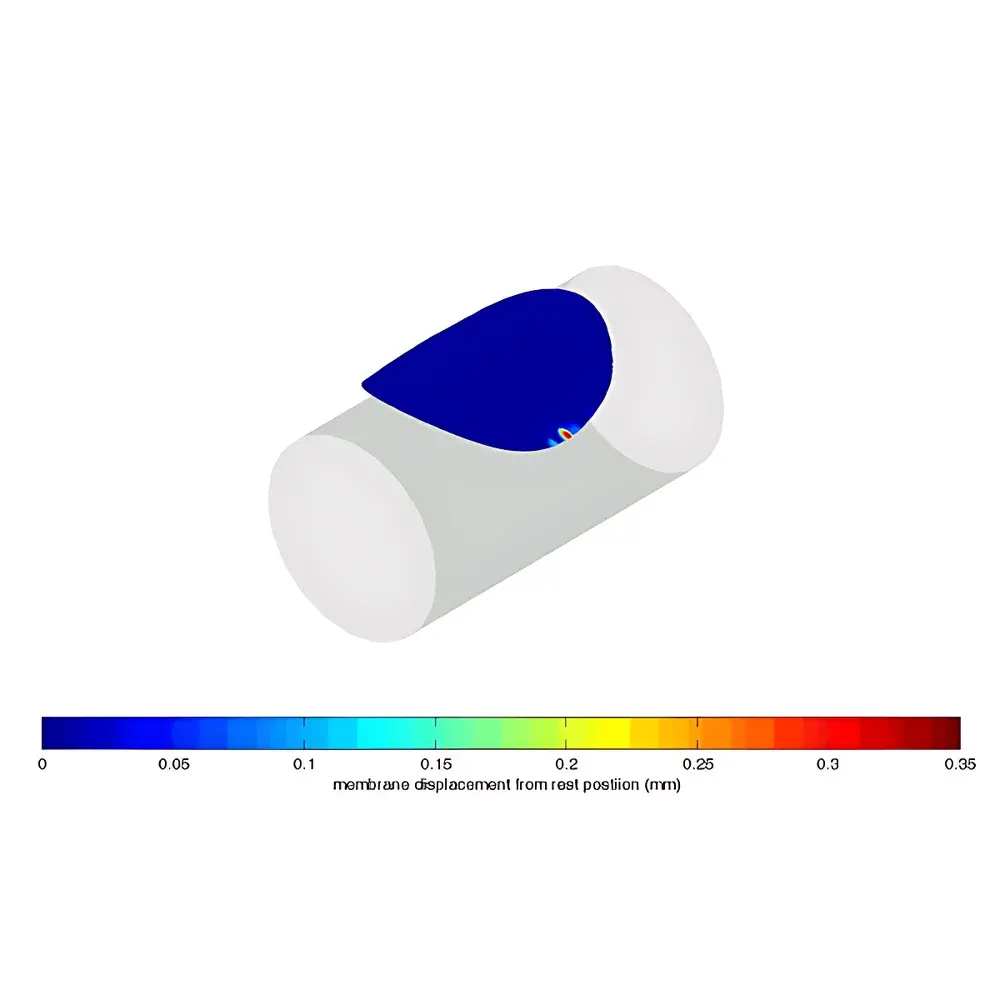
- Cardiovascular biomechanics: Pulse wave propagation analysis in silicone aortic phantoms, wall shear stress–strain coupling in stented arteries, and valve leaflet dynamics under physiological flow waveforms
- Bio-inspired flight research: Wing kinematics and wake-vortex interaction mapping in tethered locusts, hummingbirds, and robotic flapping-wing platforms
- Energy systems: Turbine blade vibration–flow coupling under unsteady inflow, heat exchanger tube bundle fluidelastic instability assessment
- Industrial packaging: Deformation dynamics of thin-walled containers subjected to internal pressure pulses or external impact loading
FAQ
What is the minimum resolvable displacement in DIC mode?
Typical displacement resolution is 0.01–0.05 pixels depending on image SNR, subset size, and pattern quality—translating to ~0.1–1 µm for standard 12-bit CMOS cameras with 4 µm pixel pitch.
Can FlowMaster FSI be used in water tunnels or high-pressure environments?
Yes—optical access windows, laser delivery optics, and camera housings can be configured for submerged operation up to 10 bar; custom pressure-rated enclosures are available upon request.
Is third-party software integration supported?
Native Python API (PyDaVis) enables direct control and data ingestion into NumPy, SciPy, and scikit-image workflows; MATLAB and LabVIEW drivers are also provided.
How is measurement uncertainty quantified for coupled PIV-DIC outputs?
Uncertainty propagation follows the ISO/IEC Guide 98-3 (GUM) framework, combining repeatability estimates from ensemble averaging, calibration-induced errors, and correlation confidence metrics—reported per dataset in compliance-ready PDF reports.
Does the system support long-duration measurements (e.g., >1 hour)?
Yes—continuous acquisition is enabled via ring-buffer memory management and automated disk streaming; thermal drift compensation routines are applied during post-processing for extended runs.