
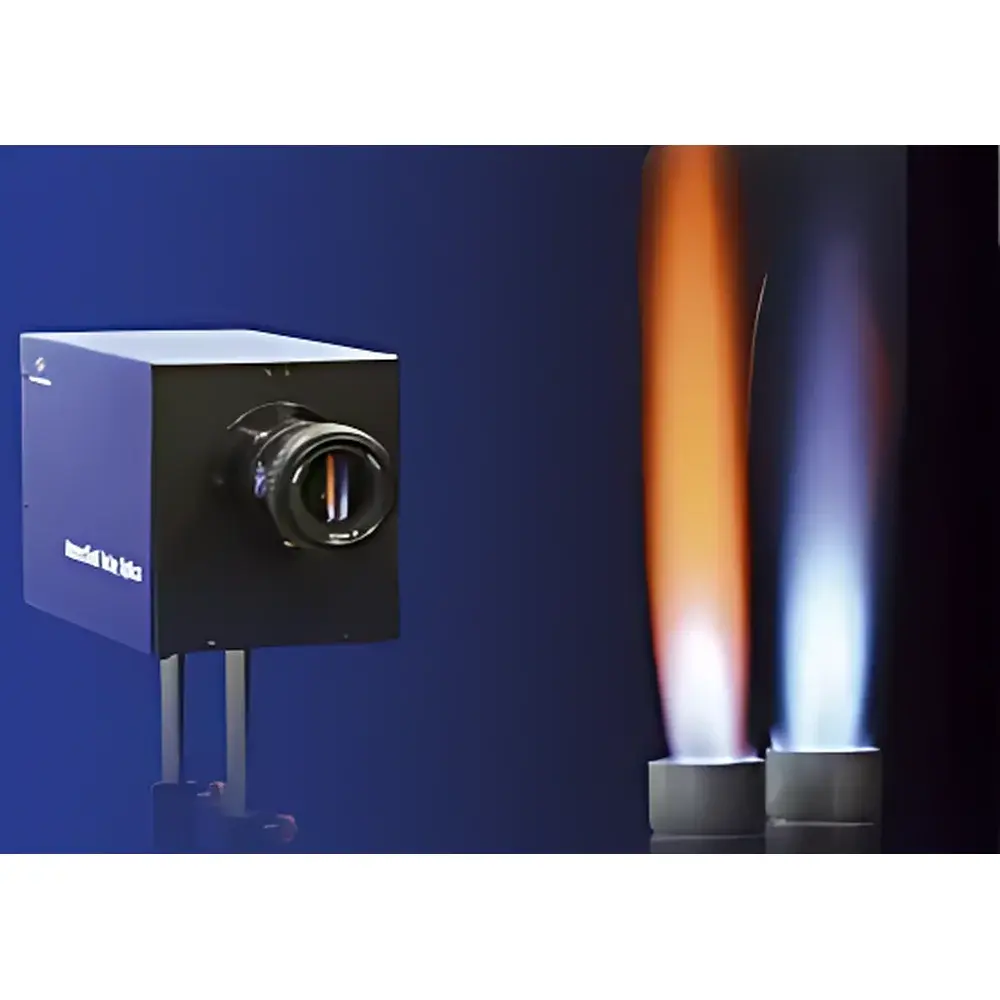
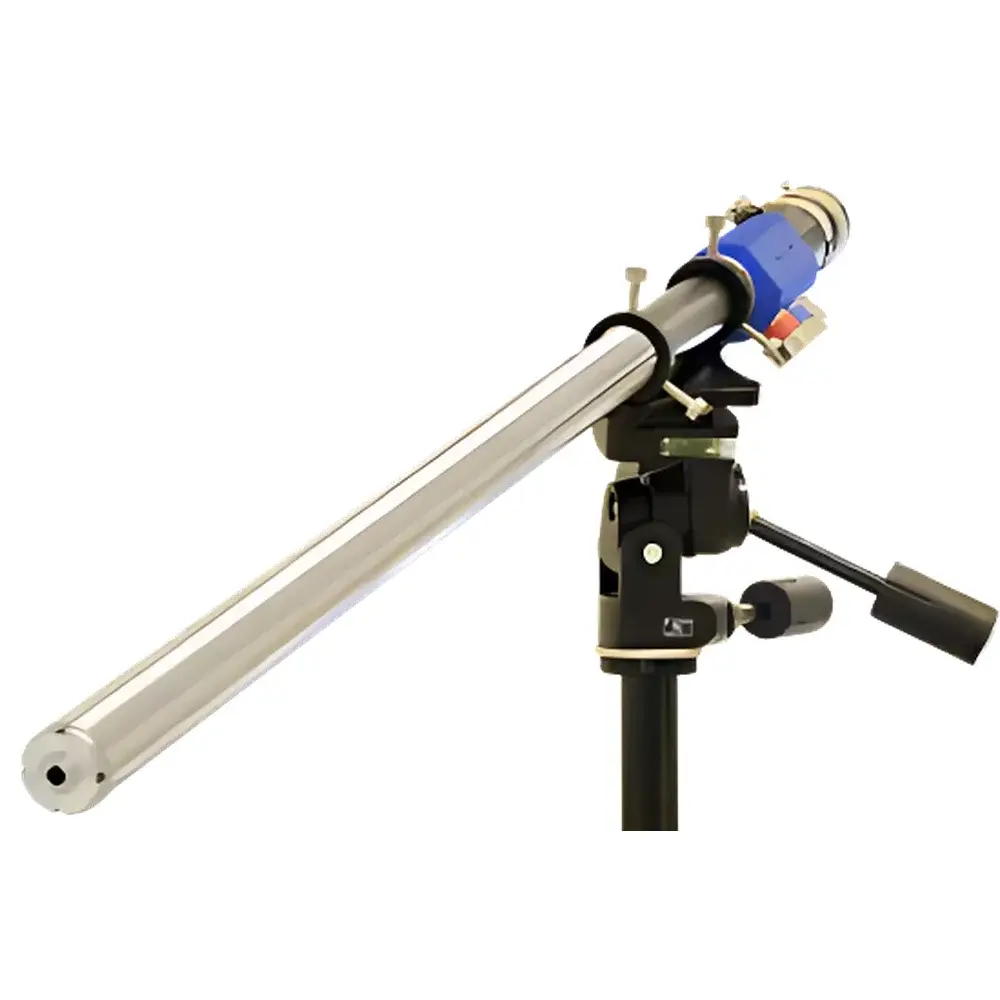
LaVision FlameMaster inspex Flame Imaging and Combustion Diagnostics System
| Brand | LaVision GmbH |
|---|---|
| Origin | Germany |
| Model | FlameMaster inspex |
| Application | Optical diagnostics of combustion processes via chemiluminescence imaging, two-color pyrometry, Abel-inverted 2D reconstruction, endoscopic high-temperature imaging, and high-speed flame dynamics analysis |
| Compliance | Designed for research-grade combustion laboratories compliant with ISO/IEC 17025-aligned measurement traceability and compatible with GLP/GMP-relevant data integrity frameworks (e.g., audit-trail-enabled software logging) |
Overview
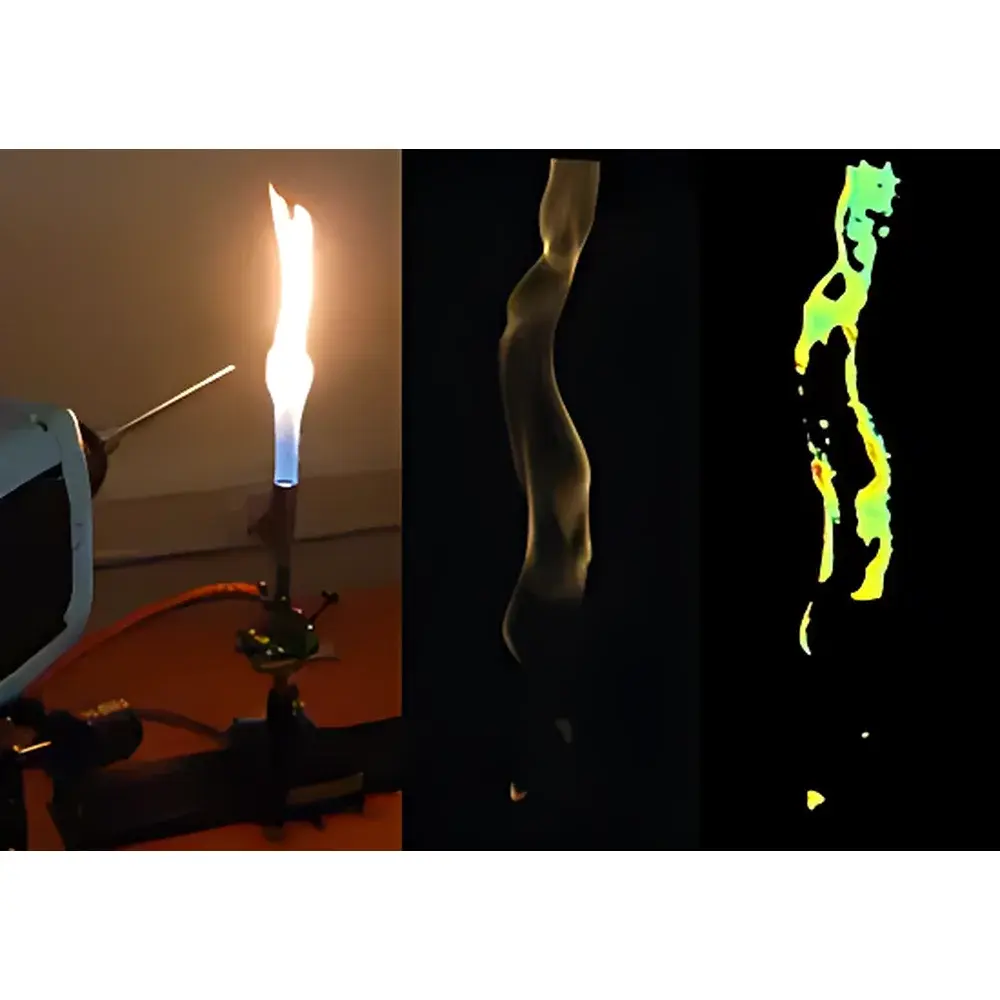
The LaVision FlameMaster inspex is a modular, research-grade optical diagnostic platform engineered for quantitative, non-intrusive characterization of combustion phenomena in laboratory burners, gas turbines, internal combustion engines, and industrial furnaces. It operates on three complementary physical principles: (1) chemiluminescence imaging of electronically excited radicals (OH*, CH*, C₂*) to map reaction zones and infer local equivalence ratios; (2) two-color pyrometry based on Planck’s blackbody radiation law to reconstruct temperature fields in sooting flames; and (3) background-oriented schlieren (BOS) for density gradient visualization in clean, axisymmetric flames. As a line-of-sight integrating technique, flame emission imaging provides spatially resolved intensity projections that—when combined with Abel inversion algorithms—yield radially symmetric 2D distributions of species concentration, temperature, and soot volume fraction (via KL-factor quantification). The system supports both direct-view and endoscopic configurations, enabling access to confined or high-temperature environments such as boiler interiors, combustor liners, and afterburner sections.
Key Features
- Modular optical architecture supporting interchangeable detection modes: chemiluminescence imaging, two-color pyrometry, BOS, and high-speed flame front tracking
- Endoscopic imaging capability with water-cooled, sapphire-windowed endoscopes rated for continuous operation up to 1600 °C
- Image-doubling optics for simultaneous dual-wavelength acquisition (e.g., OH* at 310 nm and CH* at 431 nm) without temporal misregistration
- High-speed CMOS camera integration (up to 100,000 fps with reduced ROI) for transient event capture including ignition delay, flame lift-off, blow-off, and flashback dynamics
- Software-controlled filter wheels and motorized spectrograph coupling for flexible spectral band selection and multi-species correlation
- Ruggedized mechanical design compliant with EN 61326-1 for electromagnetic compatibility in industrial test cell environments
Sample Compatibility & Compliance
The FlameMaster inspex accommodates a broad range of combustion configurations—including premixed and diffusion flames, swirl-stabilized burners, laminar and turbulent jet flames, and spray combustion systems. Its optical path is compatible with standard quartz viewports (≥25 mm clear aperture), fused silica windows, and custom-engineered sight ports. For regulatory alignment, the system supports metadata-rich image acquisition meeting ASTM E2918 and ISO 13571 requirements for flame stability assessment. Data provenance—including exposure time, gain, lens focus position, filter ID, and environmental sensor timestamps—is embedded in TIFF/IEEE 1394-compliant file headers. When deployed in GxP-regulated R&D settings, optional software modules provide 21 CFR Part 11–compliant electronic signatures and audit trails for image processing workflows.
Software & Data Management
DaVis 10.1+ software suite serves as the unified control and analysis environment. It enables real-time camera synchronization, hardware-triggered acquisition sequences, and batch-mode post-processing including background subtraction, flat-field correction, spectral unmixing, Abel inversion (with Tikhonov regularization), and spatiotemporal FFT analysis for instability mode identification. All raw and processed datasets are stored in HDF5 format with embedded SI-unit metadata, ensuring interoperability with MATLAB, Python (h5py), and commercial CFD post-processors. Export options include CSV (for time-series intensity profiles), VTK (for 3D flame surface reconstruction), and standardized DICOM-RT extensions for thermal field archiving.
Applications
- Quantitative mapping of OH*/CH* emission ratio gradients to assess local stoichiometry and lean blow-out limits
- Two-color pyrometric temperature profiling in diesel and kerosene-fueled sooting flames
- Endoscopic monitoring of flame anchoring behavior inside refractory-lined industrial boilers
- High-speed analysis of flame kernel development during spark ignition and laser-induced breakdown ignition (LISI)
- Dynamic mode decomposition (DMD) of flame flicker spectra to identify thermoacoustic coupling frequencies
- Validation of LES and RANS combustion models using experimentally derived 2D scalar fields
- Real-time keyhole imaging during laser-assisted combustion stabilization in hypersonic propulsion test rigs
FAQ
What is the minimum detectable OH* signal-to-noise ratio under typical laboratory burner conditions?
The system achieves SNR > 25:1 for OH* (310 nm) in stoichiometric methane-air flames at 1 kHz framing rate with 10 µs exposure, assuming f/1.4 optics and 1000× intensifier gain.
Can FlameMaster inspex be integrated with existing laser sheet systems for PLIF or PIV?
Yes—the platform includes TTL-sync I/O and programmable delay generators to synchronize external Nd:YAG lasers (266–532 nm) for combined chemiluminescence/laser-induced fluorescence measurements.
Is Abel inversion performed in real time or offline?
Abel inversion is executed offline using DaVis’s parallelized CPU/GPU-accelerated algorithms; real-time preview uses line-integrated projections only.
Does the endoscope support vacuum or pressurized environments?
Standard water-cooled endoscopes are rated for up to 10 bar(g) pressure differential and compatible with vacuum-rated flange adapters (CF-100 or KF-50).
How is calibration traceability maintained for pyrometric temperature measurements?
NIST-traceable blackbody sources (Model BB3500, 500–3500 K) are used for spectral responsivity calibration; emissivity assumptions follow ISO 18434-1 guidelines for sooty flame media.
Related Products



