
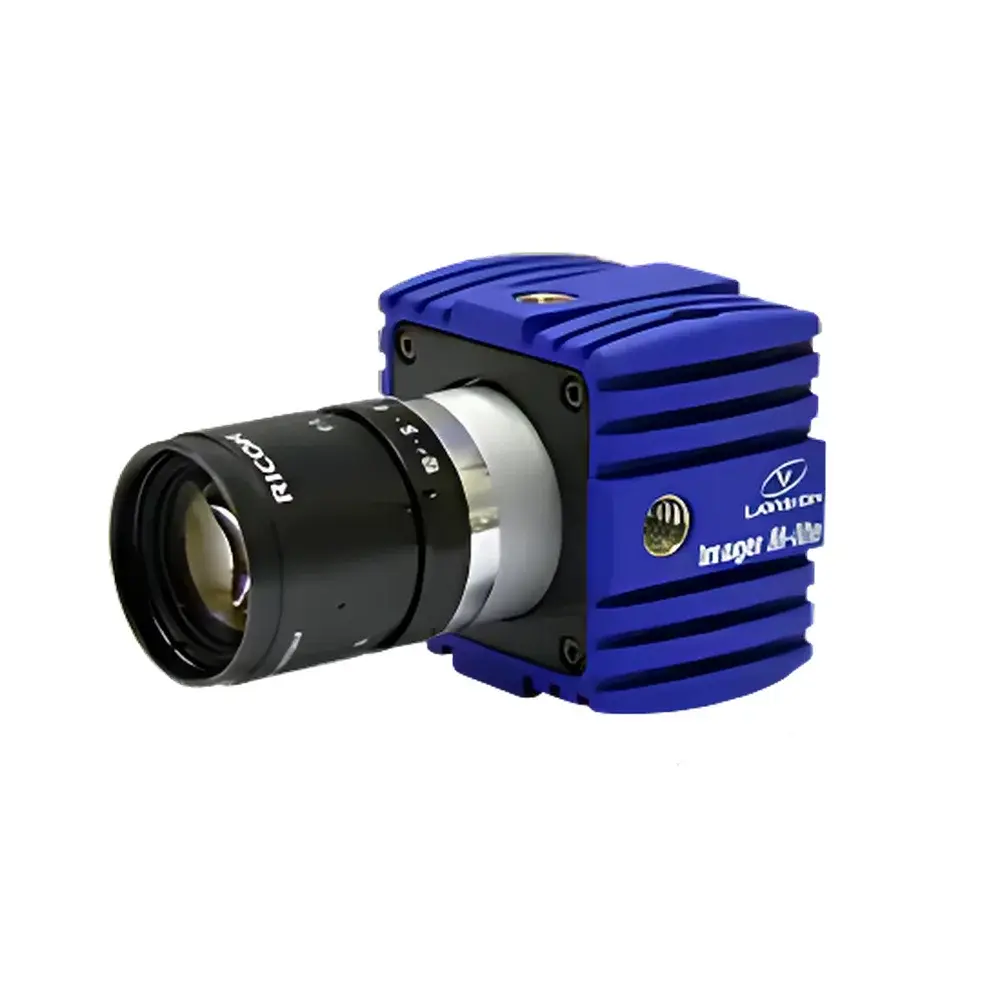
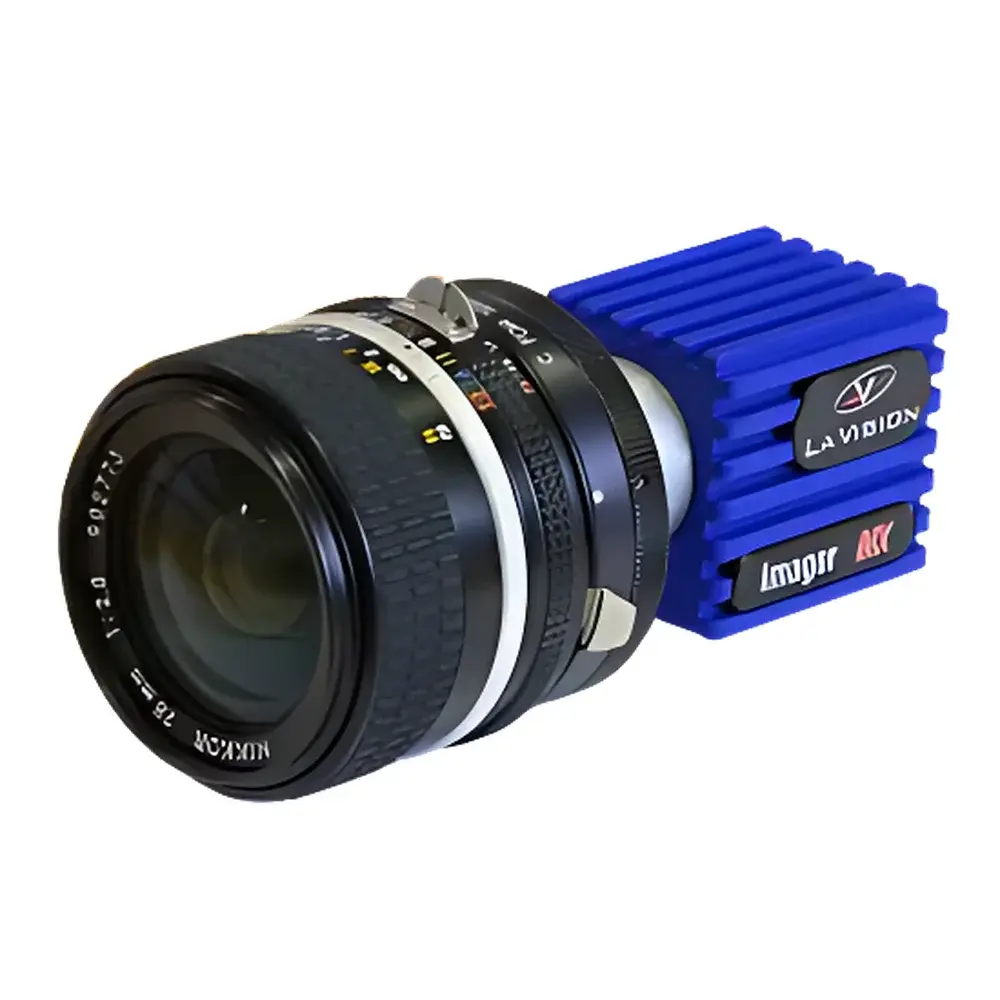
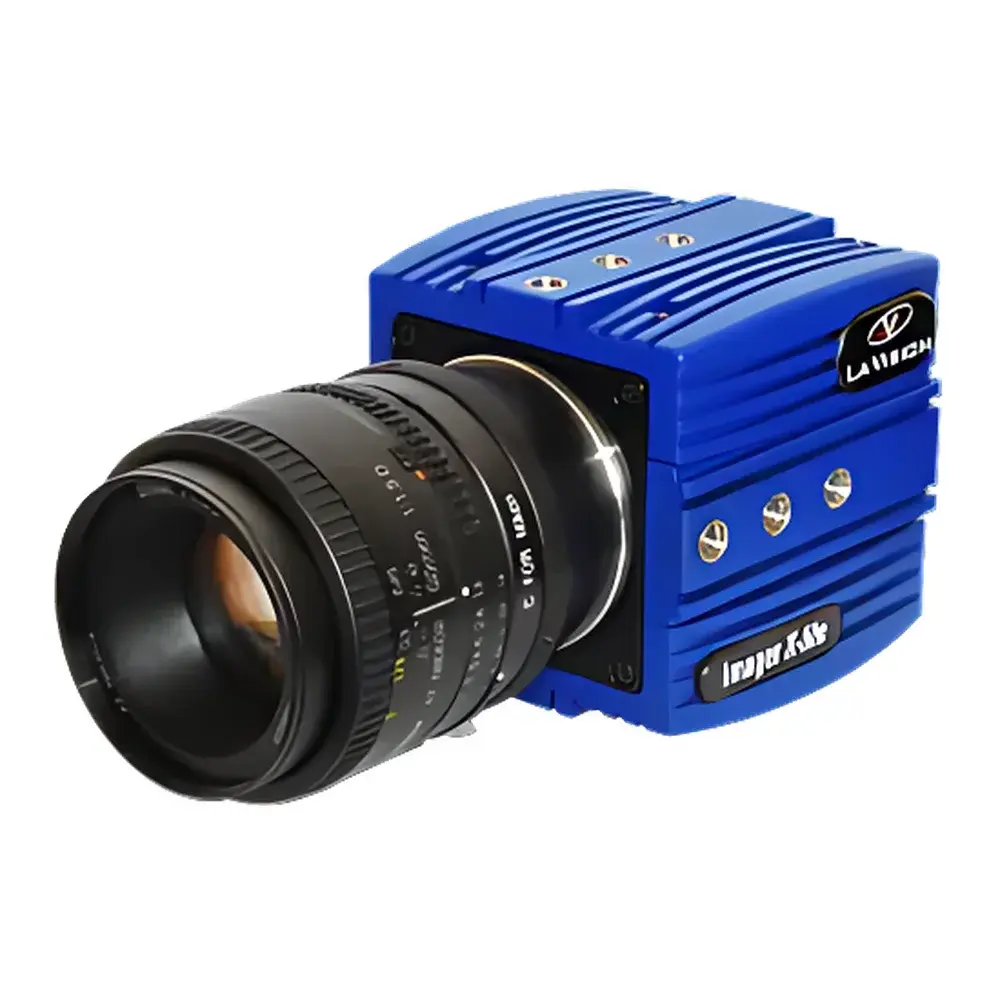
LaVision Imager Series CMOS Cameras for Digital Image Correlation (DIC)
| Brand | LaVision GmbH |
|---|---|
| Origin | Germany |
| Model | Camera-DIC |
| Image Resolution | 1936 × 1216 pixels |
| Pixel Size | 5.86 × 5.86 µm² |
| Sensor Active Area | 11 × 7 mm |
| Readout Speed | 200 MHz |
| Dynamic Range | 12-bit |
| Quantum Efficiency | >70% |
| Interface | USB 3.0 (Imager M-lite series) / Camera Link / CoaXPress (high-speed variants) |
| Cooling | Thermoelectric (Peltier), optional |
| Shutter Type | Global shutter (CMOS), electronic rolling shutter (configurable per model) |
| Onboard Memory | None (host-based acquisition) |
Overview
LaVision’s Imager-series cameras are engineered specifically for high-fidelity Digital Image Correlation (DIC) applications in experimental mechanics, materials science, and structural dynamics. DIC is a non-contact, full-field optical metrology technique that quantifies surface displacement and strain fields by tracking grayscale pattern evolution between successive images. Accurate DIC performance critically depends on spatial resolution, temporal stability, low noise, high quantum efficiency, and precise synchronization—parameters rigorously optimized across the Imager platform. These cameras employ scientific-grade CMOS and CCD sensors with global shutter operation to eliminate motion-induced distortion, ensuring sub-pixel registration accuracy essential for strain computation at microstrain (µε) levels. Designed for integration into LaVision’s DaVis® software environment, they support hardware-triggered acquisition, multi-camera stereo alignment, and real-time image preprocessing—enabling robust, repeatable measurements under static, quasi-static, and dynamic loading conditions.
Key Features
- Scientific CMOS architecture with >70% peak quantum efficiency across visible–NIR spectrum (400–900 nm), maximizing photon capture for low-contrast speckle patterns.
- 12-bit analog-to-digital conversion with calibrated linearity and <0.5% integral nonlinearity, preserving intensity fidelity required for correlation coefficient stability.
- Pixel pitch of 5.86 µm and active sensor area of 11 × 7 mm provide optimal field-of-view-to-resolution balance for macro- and meso-scale DIC (e.g., tensile specimens, composite laminates, additive-manufactured parts).
- 200 MHz readout bandwidth enables low-noise, high-throughput imaging—critical for minimizing frame-to-frame intensity drift during long-duration creep or fatigue tests.
- Thermoelectric (Peltier) cooling available as an option to suppress dark current, improving signal-to-noise ratio (SNR) in extended-exposure or low-light scenarios.
- Hardware-synchronized triggering via TTL/RS-422 supports precise coordination with mechanical actuators, laser illumination pulses, or high-speed data acquisition systems (e.g., strain gauges, accelerometers).
Sample Compatibility & Compliance
The Imager-series cameras accommodate diverse specimen geometries and surface preparation methods used in DIC workflows—including stochastic spray-painted speckles, digital micromirror device (DMD)-projected patterns, and etched microstructures. Their modular lens-mount interface (C-mount/F-mount) allows pairing with telecentric, macro, or zoom optics to adapt magnification and depth-of-field to application requirements (e.g., MEMS-scale micro-DIC or large-component structural testing). All models comply with CE, RoHS, and IEC 61000-6-3 electromagnetic compatibility standards. When deployed within validated DaVis® workflows adhering to ASTM E837 (strain gage calibration) and ISO/IEC 17025-accredited laboratories, these systems support traceable measurement uncertainty budgets required for GLP/GMP environments and third-party audit readiness.
Software & Data Management
Native integration with LaVision’s DaVis® 10+ software provides end-to-end DIC pipeline control—from camera configuration and real-time preview to sub-pixel interrogation, displacement vector mapping, and strain tensor derivation (εxx, εyy, γxy). The software implements advanced correlation algorithms (e.g., Newton–Raphson optimization, zero-mean normalized cross-correlation) and supports batch processing of thousands of frames with automated outlier filtering and smoothing. Raw image data is saved in lossless TIFF or HDF5 formats, preserving bit-depth integrity for post-hoc reanalysis. Audit trails, user access logs, and electronic signatures align with FDA 21 CFR Part 11 requirements when configured in validated mode. Export options include CSV, MATLAB .mat, and VTK for interoperability with FEA postprocessors (e.g., ANSYS Mechanical, Abaqus/CAE).
Applications
- Mechanical testing: Tensile, compression, shear, and torsion experiments on metals, polymers, composites, and biological tissues.
- Dynamic deformation analysis: Impact, blast, drop-test, and crash simulations requiring kHz-rate acquisition (via Imager HS/Phantom variants).
- Thermo-mechanical coupling studies: In-situ heating/cooling stages synchronized with thermal imaging and DIC for CTE and creep characterization.
- Additive manufacturing QA: Layer-wise distortion monitoring, residual stress mapping, and build failure root-cause analysis.
- Microscale mechanics: Integration with SEM/AFM stages for in-situ electron microscopy–DIC hybrid measurements.
FAQ
What distinguishes LaVision’s DIC cameras from generic industrial CMOS cameras?
LaVision cameras feature calibrated radiometric response, factory-characterized pixel non-uniformity correction, and deterministic trigger latency—attributes absent in off-the-shelf sensors but essential for quantitative DIC.
Can these cameras be used in stereo-DIC configurations?
Yes—synchronized dual-camera setups are fully supported via DaVis®’s stereo calibration module, including epipolar geometry correction and 3D point cloud reconstruction.
Is onboard memory necessary for DIC acquisition?
No—host-based streaming over USB 3.0 or Camera Link eliminates bottlenecks while enabling real-time buffering and metadata tagging without firmware-level constraints.
How is measurement uncertainty quantified for DIC results?
DaVis® includes built-in uncertainty propagation tools based on subset size, step size, interpolation method, and image noise metrics—aligned with guidelines in ISO/TS 11654 and ASTM E2751.
Are drivers and SDKs available for custom software integration?
Yes—LaVision provides C/C++, Python, and LabVIEW APIs with full access to exposure, gain, ROI, and trigger parameters for OEM or in-house platform development.






