
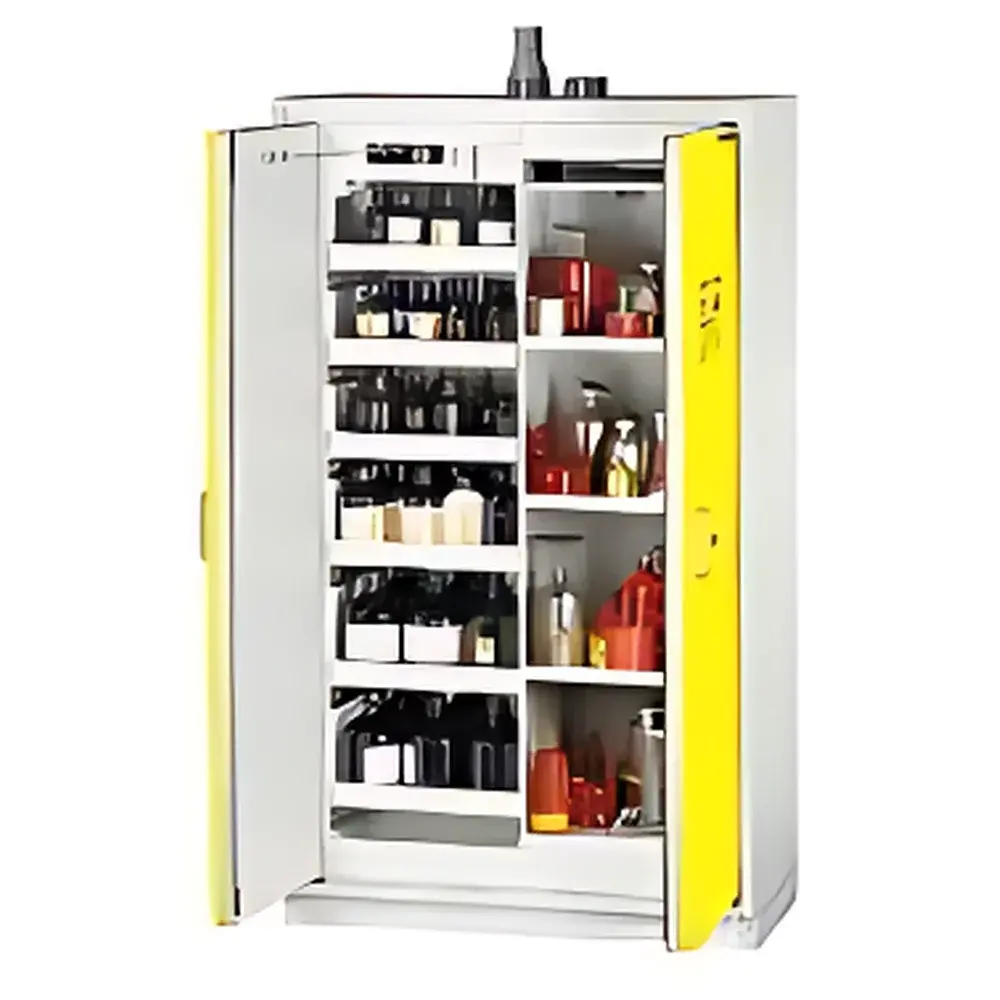
Dueperthal Toxic Substance Storage Cabinet
| Brand | Dueperthal |
|---|---|
| Origin | Germany |
| Type | Hazardous Material Safety Cabinet |
| Fire Resistance Rating | 90 min |
| Construction Material | Steel / Stainless Steel / High-Performance Laminated Composite |
| Door Options | Hinged Wing Doors or Folding Doors |
| Interior Configurations | Adjustable Shelving, Pull-Out Trays, Drawer Systems |
| Compliance | DIN 12927, DIN EN 14470-1, GS Mark, CE Mark, ISO 9001 Certified |
| Application Scope | Storage of Toxic Substances, Corrosives (Acids & Alkalis), Water Pollutants, Pressurized Cylinders, Sensitive Documentation, and Culture Media-Based Samples |
Overview
The Dueperthal Toxic Substance Storage Cabinet is a rigorously engineered safety solution designed for the secure containment and organized storage of hazardous materials in research laboratories, pharmaceutical production facilities, chemical manufacturing sites, and environmental testing centers. Built upon over four decades of German engineering expertise in fire protection, occupational safety, and environmental hazard management, this cabinet operates on the principle of passive fire containment and controlled atmospheric isolation. Its structural integrity relies on multi-layered steel or stainless-steel construction with intumescent fire-resistant insulation, ensuring 90 minutes of certified fire resistance per DIN EN 14470-1 — a critical requirement for mitigating thermal escalation during emergency events. Unlike generic storage furniture, the cabinet integrates vapor-tight sealing, static-dissipative grounding provisions, and corrosion-resistant internal finishes to prevent unintended chemical interaction, leakage, or electrostatic discharge when handling highly toxic, volatile, or reactive substances.
Key Features
- 90-minute fire-resistance rating validated per DIN EN 14470-1 and tested under standardized furnace conditions (ISO 834 fire curve)
- Dual-wall construction with non-combustible, low-smoke, halogen-free intumescent insulation
- Static-dissipative grounding terminals compliant with IEC 61340-5-1 for safe handling of flammable or electrostatic-sensitive toxics
- Corrosion-resistant interior lining options: epoxy-powder-coated steel, 316 stainless steel, or chemically inert laminated composite panels
- Configurable access systems: hinged wing doors with self-closing mechanism (DIN 12927-compliant) or heavy-duty folding doors with gas-spring assist
- Modular interior layout supporting adjustable galvanized steel shelves, stainless-steel pull-out trays, and lockable drawer modules with load-rated suspension
- Integrated spill containment sump (minimum 110% volume capacity of largest container) with removable drip tray for decontamination
Sample Compatibility & Compliance
This cabinet is specifically validated for long-term storage of substances classified under GHS categories including Acute Toxicity (Category 1–3), Skin Corrosion/Irritation (Category 1A/1B), Specific Target Organ Toxicity (STOT), and Environmental Hazards (Aquatic Chronic 1). It accommodates containers ranging from 10 mL vials to 20 L carboys, pressurized gas cylinders (up to 45 cm diameter), and document archives requiring ambient stability. All units undergo third-party verification against DIN 12927 (safety cabinets for hazardous substances), carry GS and CE markings for conformity with EU Machinery Directive 2006/42/EC and Pressure Equipment Directive 2014/68/EU where applicable, and are manufactured within an ISO 9001-certified quality management system. Optional configurations include integrated temperature monitoring (±0.5 °C accuracy), humidity control (30–60% RH), and alarm-triggered ventilation interlocks for GLP/GMP-aligned environments.
Software & Data Management
While the base cabinet is a mechanical safety device, optional digital integration kits support audit-ready operational continuity. These include RFID-tagged shelf modules for inventory tracking, Bluetooth-enabled door-open duration logging (with configurable alerts for >30 s exposure), and optional RS-485 or Modbus TCP interfaces for connection to central laboratory information management systems (LIMS). All electronic components comply with IEC 62443-3-3 for industrial cybersecurity and maintain full traceability per FDA 21 CFR Part 11 requirements — including electronic signatures, immutable audit trails, and role-based access control for authorized personnel only.
Applications
- Secure containment of WHO-listed priority toxicants (e.g., cyanides, organophosphates, heavy metal salts) in analytical QC labs
- Storage of EPA Method 8081/8270 reference standards and calibration solutions under chain-of-custody protocols
- Isolation of cytotoxic drug intermediates in oncology R&D suites meeting USP handling criteria
- Controlled preservation of environmental water samples contaminated with PFAS, PCBs, or dioxins prior to GC-MS analysis
- Archiving of irreplaceable regulatory documentation, SOP binders, and batch records in compliance with ISO/IEC 17025 clause 8.4.3
- Supporting dual-use scenarios in biosafety Level 2+ facilities where chemical and biological hazards coexist
FAQ
Does this cabinet meet OSHA and NFPA requirements for toxic substance storage in the United States?
Yes — while not UL-listed by default, the cabinet’s DIN EN 14470-1 certification aligns with NFPA 30 Chapter 12 and OSHA 1910.1200(h) performance criteria for secondary containment and fire separation. Custom UL 1275 listing is available upon request.
Can it be installed in a cleanroom environment?
Yes — stainless-steel variants with electropolished surfaces and zero-VOC epoxy coatings meet ISO 14644-1 Class 5 compatibility; optional HEPA-filtered recirculation kits are available.
Is grounding mandatory for operation?
Yes — permanent grounding to facility earth (≤10 Ω resistance) is required per IEC 61340-5-1 and is verified during commissioning.
What maintenance intervals are recommended?
Visual inspection quarterly; hinge/latch function test semiannually; full fire-resistance revalidation every 5 years via accredited third-party testing lab.



