
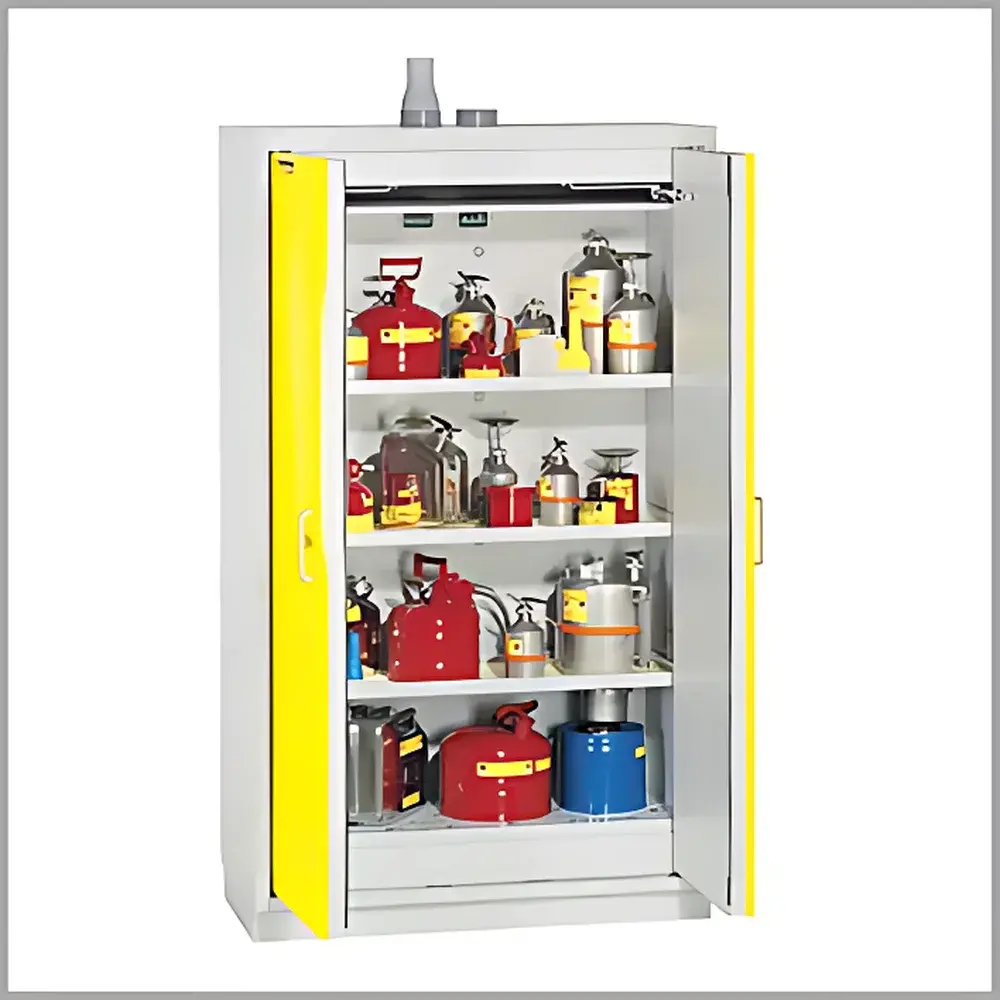
Dueperthal Fire-Resistant Safety Cabinet
| Brand | Dueperthal |
|---|---|
| Origin | Germany |
| Type | Fire-Resistant Safety Cabinet (90-Minute Fire Rating) |
| Construction Material | Steel / Stainless Steel / High-Performance Laminated Composite |
| Door Configuration | Hinged Wing Doors or Folding Doors |
| Mounting Style | Freestanding Vertical or Under-Counter |
| Interior Options | Adjustable Shelving, Pull-Out Trays, Drawer Systems |
| Compliance | DIN 14470-1, GS Mark, CE Directive 2014/68/EU (PED), ISO 9001 Quality Management System |
| Application Scope | Storage of Flammable Liquids, Corrosives (Acids & Alkalis), Toxic Substances, Aqueous Pollutants, Pressurized Gas Cylinders, Sensitive Documentation |
Overview
The Dueperthal Fire-Resistant Safety Cabinet is an engineered containment solution designed for the secure, code-compliant storage of hazardous materials in laboratory, pharmaceutical, chemical manufacturing, and research environments. Built upon over four decades of German expertise in fire protection engineering and occupational safety, this cabinet operates on the principle of passive fire resistance—utilizing thermally insulated double-walled steel construction with intumescent sealing and heat-activated door latches to maintain internal temperature below 180 °C for a certified duration of 90 minutes under standardized fire exposure (DIN 14470-1:2015). Its structural integrity ensures containment integrity during thermal stress events, preventing ignition propagation, vapor release, and secondary combustion—critical for compliance with facility fire safety protocols and risk-based laboratory safety management systems.
Key Features
- 90-minute fire resistance rating validated per DIN 14470-1:2015 for flammable liquids and corrosive substances
- Dual-wall construction with non-combustible mineral insulation and self-closing, heat-activated door mechanisms
- Integrated spill containment sump (standard depth: 50 mm) with corrosion-resistant epoxy-polyester coating
- Static-dissipative grounding terminals compliant with IEC 61340-4-1 for electrostatic hazard mitigation
- Adjustable, load-rated steel shelving (up to 35 kg per shelf) with anti-slip perforated surfaces
- Optional configurations: stainless steel interior lining (for aggressive acid/alkali storage), pull-out trays with roller guides, drawer modules with soft-close dampers
- CE-marked and GS-certified; manufactured under ISO 9001:2015–certified quality management system
Sample Compatibility & Compliance
The cabinet accommodates diverse hazardous material classes including Class I–III flammable liquids (flash point ≤ 93 °C), oxidizing agents, organic peroxides, corrosive acids (e.g., nitric, sulfuric) and alkalis (e.g., sodium hydroxide solutions), aqueous environmental contaminants, low-volatility toxic compounds (e.g., heavy metal salts), pressurized gas cylinders (up to 2 × 50-L capacity with optional cylinder restraint kits), and archival documentation requiring fire-rated protection. All configurations meet statutory requirements under German TRGS 510, EU CLP Regulation (EC No. 1272/2008), and OSHA 29 CFR 1910.106. For GMP-regulated facilities, cabinets may be integrated into documented validation protocols supporting Annex 15 (VMP) and FDA 21 CFR Part 211.142 (storage controls).
Software & Data Management
While inherently mechanical and non-electronic, the Dueperthal Fire-Resistant Safety Cabinet supports digital infrastructure integration via optional accessories: RFID-tagged asset labels for inventory tracking within LIMS or EHS platforms; QR-coded compliance placards linking to digital SDS libraries and inspection logs; and IoT-ready temperature/humidity sensor mounts (external installation) compatible with BMS or cloud-based environmental monitoring systems. Audit trails for maintenance, calibration of grounding continuity, and fire door functionality testing align with GLP/GMP documentation standards and support 21 CFR Part 11–compliant electronic record retention when paired with validated data acquisition software.
Applications
- Centralized storage of flammable solvents (acetone, ethanol, hexane) in analytical chemistry labs
- Segregated containment of incompatible reagents—e.g., acids stored separately from cyanides or peroxides—in synthetic R&D facilities
- Secure archiving of irreplaceable experimental records, regulatory submissions, and SOP binders in QA/QC departments
- Field-deployable storage for environmental sampling campaigns involving contaminated water matrices or pesticide residues
- Integration into cleanroom support zones where fire-rated, particle-controlled storage is required (with optional HEPA-filtered ventilation add-ons)
- Pharmaceutical stability chambers requiring ancillary fire-resilient storage for reference standards and excipients
FAQ
What fire test standard validates the 90-minute rating?
The cabinet undergoes full-scale fire exposure testing per DIN 14470-1:2015, simulating a hydrocarbon pool fire curve (ISO 834) with external temperatures exceeding 1000 °C. Internal temperature rise is monitored at multiple points; certification requires all locations remain below 180 °C for the full duration.
Can this cabinet be used for storing hydrogen peroxide or other organic peroxides?
Yes—when specified with stainless steel interior cladding and dedicated ventilation ducting (optional), it complies with NFPA 432 and TRGS 510 Annex 3 requirements for unstable peroxide storage.
Is grounding mandatory, and how is it verified?
Grounding is required per IEC 61340-4-1 and must be tested annually using a 10-A continuity tester; resistance must not exceed 10 Ω between cabinet body and earth ground point.
Does the cabinet require periodic recertification after installation?
No recertification is mandated by DIN 14470-1 post-installation; however, annual functional verification of door closure, latch operation, and spill sump integrity is recommended per manufacturer’s maintenance schedule and ISO 45001 clause 8.2.



