
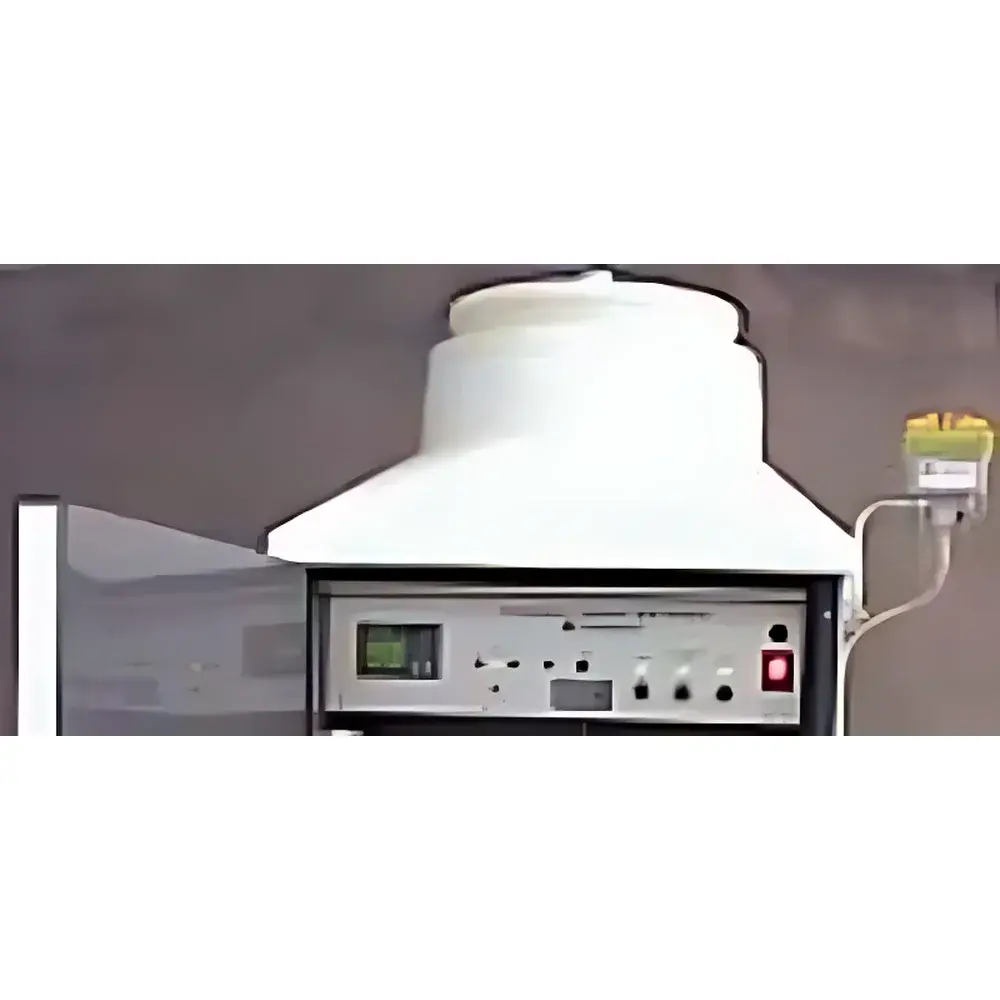
Eigenbrodt Dry and Wet Deposition Sampler and Analyzer Optional Modules
| Brand | Eigenbrodt |
|---|---|
| Origin | Germany |
| Manufacturer Type | Authorized Distributor |
| Product Category | Imported Instrumentation |
| Model | Optional Module Set for UNS130/NSA181/NSA181-K/NMO191 Systems |
| Pricing | Upon Request |
Overview
The Eigenbrodt Dry and Wet Deposition Sampler and Analyzer Optional Modules are engineered for long-term, unattended atmospheric deposition monitoring in compliance with World Meteorological Organization (WMO) guidelines and European standard EN 14211 for ambient air quality measurement. These modules extend the functionality of core Eigenbrodt deposition systems—including the UNS 130, NSA 181, NSA 181/K, and NMO 191—enabling simultaneous quantification of both wet and dry deposition fluxes across diverse climatic zones. The system operates on a dual-mode principle: wet deposition is captured via aerodynamically optimized funnel-and-bottle collection, while dry deposition is measured using time-synchronized passive sampling during dry periods. All optional modules integrate seamlessly into the base platform’s control architecture, supporting automated event-triggered sampling, environmental condition logging, and traceable metadata generation essential for regulatory reporting and scientific publication.
Key Features
- Aerodynamic snow-cap enclosure with optional heating element to prevent snow accumulation and maintain consistent rain catchment efficiency—validated for high-latitude and alpine environments.
- DURAN® borosilicate glass sample bottles and funnels, available as alternatives to standard HD-PE components, minimizing analyte adsorption during organic carbon, DOC, or trace metal analysis.
- PTFE-based distribution manifolds (Type “D” and “S”) ensuring chemical inertness and low background contamination for sensitive ion chromatography or ICP-MS workflows.
- Modular precipitation sensor compatibility: RS 85 (standard heated tipping-bucket with snow probe), NRS 80 (low-snow maritime climates), and IRSS 88 (optoelectronic sensor for high-particulate or coastal environments).
- Thermally galvanized steel mounting base conforming to WMO-recommended installation height (1.5–1.8 m above ground level), enabling spatial separation between precipitation sensors and sampler inlets to reduce turbulence-induced undercatch.
- Heated and non-heated Dry Sediment Collector (DSC) units with motorized lid actuation, synchronized to real-time precipitation detection for unambiguous dry/wet phase discrimination.
Sample Compatibility & Compliance
All optional modules support sample integrity requirements for EPA Method 1631 (mercury), ISO 11929 (uncertainty evaluation), and EU Directive 2008/50/EC Annex IX (deposition monitoring). DURAN® glass components comply with DIN ISO 3585 and are certified for use in GLP-compliant laboratories. The heated snow cap meets IEC 60529 IP65 ingress protection standards. Precipitation sensor outputs adhere to WMO Guide to Instruments and Methods of Observation (CIMO Guide, Chapter 12) and are compatible with national networks operating under EMEP or GAW protocols. Data acquisition firmware supports audit-trail generation per FDA 21 CFR Part 11 when paired with validated software environments.
Software & Data Management
Integrated event data logging records timestamped lid open/close transitions, sensor status flags (precipitation yes/no), distribution pulses, and optional sample chamber temperature (via PT100 sensor). Raw logs are stored onboard and exported via RS-232 serial interface in ASCII format, compatible with MATLAB, Python pandas, and common LIMS platforms. The LCD timer provides local verification of cumulative open-time for QA/QC cross-checks. Digital signal outputs from the isolation board—including discrete TTL-level signals for lid state, precipitation detection, and pulse counting—are compatible with third-party SCADA systems, Campbell Scientific CR-series loggers, or NI DAQ hardware. Firmware updates are performed via secure USB interface with SHA-256 signature validation.
Applications
- Long-term atmospheric chemistry studies tracking nitrogen, sulfur, and heavy metal deposition budgets in forest ecosystems and protected areas.
- Validation of regional chemical transport models (e.g., CMAQ, EMEP MSC-W) requiring speciated wet/dry flux measurements.
- Monitoring of anthropogenic pollution gradients near industrial zones, ports, or urban agglomerations using IRSS 88 optical sensors.
- Carbon cycle research involving dissolved organic carbon (DOC) and total organic carbon (TOC) in precipitation, where glassware minimizes leaching artifacts.
- Calibration and intercomparison campaigns coordinated by EMEP, GAW, or ACTRIS infrastructure nodes.
- Regulatory compliance reporting for national air quality management plans under the UNECE Convention on Long-range Transboundary Air Pollution (CLRTAP).
FAQ
Which base models are compatible with these optional modules?
UNS 130, NSA 181, NSA 181/K, and NMO 191 deposition samplers.
Can the DSC unit operate autonomously without connection to a precipitation sensor?
No—it requires synchronization with the RS 85, NRS 80, or IRSS 88 sensor input to trigger lid actuation based on real-time weather conditions.
Is calibration documentation provided for the precipitation sensors?
Yes—each sensor ships with individual calibration certificate traceable to PTB (Physikalisch-Technische Bundesanstalt) standards, including linearity, threshold, and temperature compensation data.
What is the maximum operational temperature range for the heated snow cap?
–30 °C to +50 °C ambient, with surface heating maintaining ≥+5 °C on the cap interior during snowfall events.
Are firmware updates backward-compatible across module generations?
Yes—Eigenbrodt maintains binary compatibility for all modules released since 2018; update packages include version-locked configuration templates to preserve site-specific settings.







