
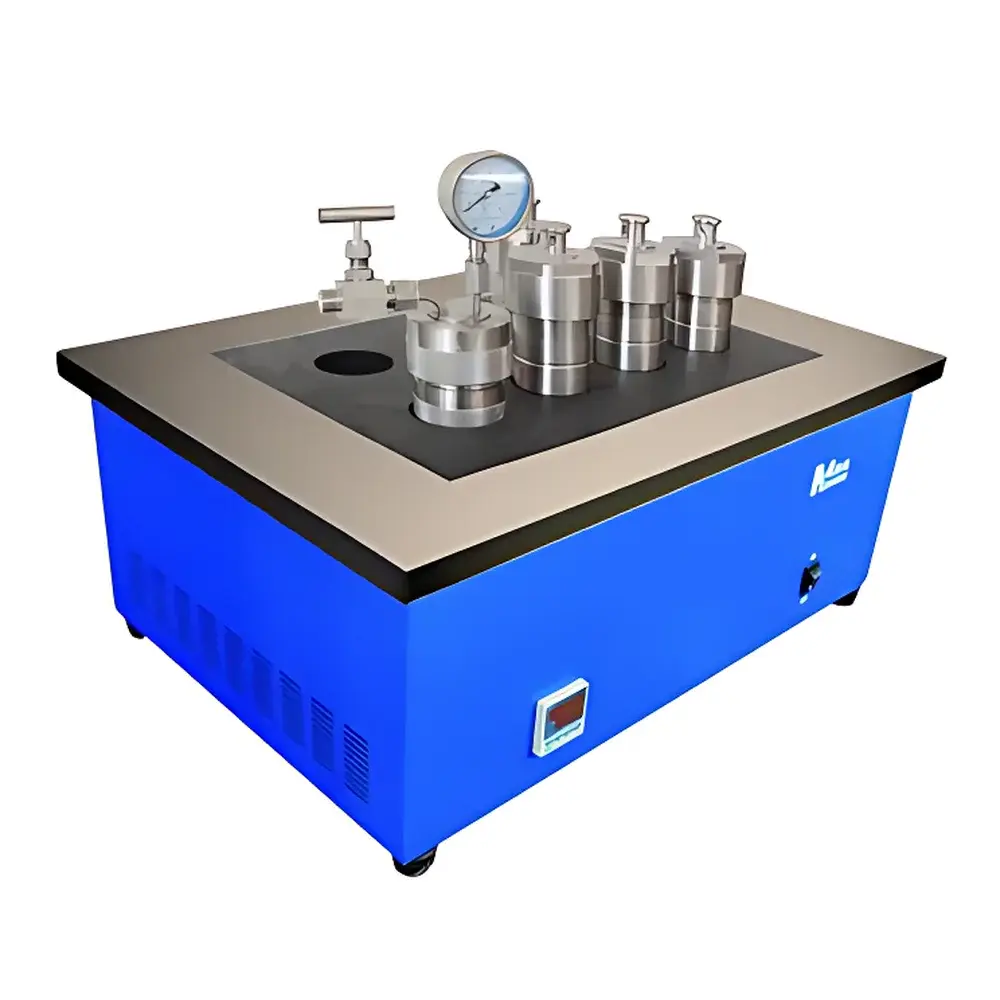
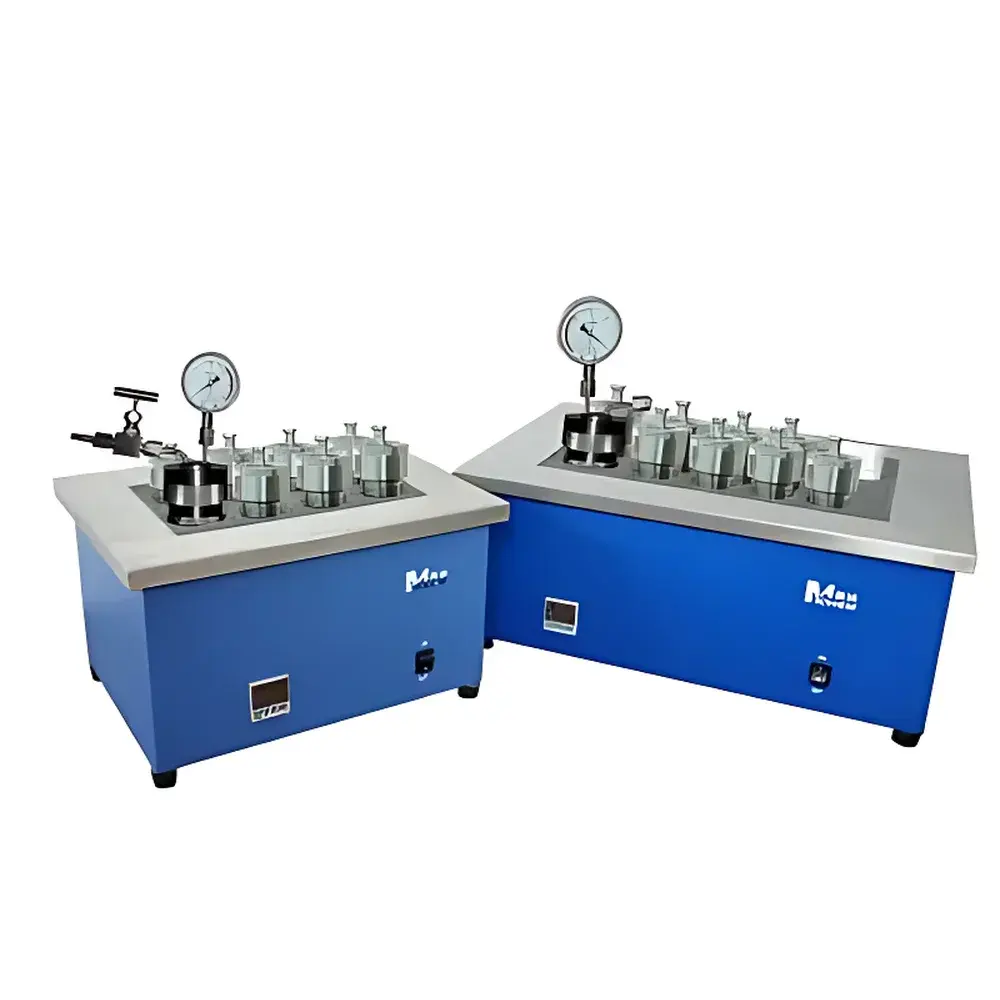
MICHEM FS Series Graphite Block Digestion System for Feed Sample Preparation
| Brand | MICHEM |
|---|---|
| Model | FS Series |
| Type | Graphite Block Digestion Instrument |
| Heating Block Material | High-Purity Graphite with PTFE Coating |
| Max. Temperature | 260 °C |
| Temp. Accuracy | ±0.2 °C |
| Heating Power | 1200 W (FS-I) / 3000 W (FS-II) |
| Programmable Steps | 30 |
| Sample Capacity | 6 × 100 mL (FS-I) / 8 × 100 mL (FS-II) |
| Pressure Rating of Digestion Vessels | 10 MPa |
| Compliance | Meets National Pressure Vessel Standards (China GB/T 150) |
| Power Supply | AC 220 V, 50 Hz, 10 A (FS-I) / 16 A (FS-II) |
| Dimensions (W×D×H) | 470×350×270 mm (FS-I) / 670×460×270 mm (FS-II) |
Overview
The MICHEM FS Series Graphite Block Digestion System is a purpose-engineered instrument designed specifically for the complete and reproducible acid digestion of complex feed matrices—including compound feeds, premixes, raw materials (e.g., soybean meal, fishmeal, corn gluten), and mineral supplements—prior to elemental analysis by atomic absorption spectroscopy (AAS), inductively coupled plasma optical emission spectrometry (ICP-OES), or inductively coupled plasma mass spectrometry (ICP-MS). Unlike conventional muffle furnace ashing—which risks volatilization loss of trace elements such as As, Cd, Pb, Hg, Se, and B—the FS Series employs sealed, high-pressure graphite digestion vessels operating up to 10 MPa, enabling closed-vessel hot-block digestion under controlled thermal profiles. Its core architecture integrates a high-purity graphite heating block with uniform thermal conductivity and a chemically inert PTFE coating, ensuring exceptional temperature homogeneity (±0.2 °C across all wells) and resistance to aggressive reagent mixtures (e.g., HNO₃–H₂O₂–HF, HClO₄–HNO₃). This design directly supports quantitative recovery of volatile and semi-volatile analytes while eliminating cross-contamination and operator exposure to fumes.
Key Features
- High-purity graphite heating block with electropolished surface and imported PTFE anti-corrosion coating—resistant to concentrated acids (including hydrofluoric acid), alkalis, and oxidizing agents.
- PID-based digital temperature control with 30-segment programmable ramp/hold profiles; supports gradient heating, dwell time optimization, and automatic power cutoff upon program completion.
- Dual-layer, pressure-rated digestion vessels certified to national pressure vessel standards (GB/T 150); engineered for safe operation at up to 10 MPa internal pressure during high-temperature acid digestion.
- Thermal uniformity validated across all sample positions—critical for inter-sample comparability in multi-batch feed analysis workflows.
- Modular platform available in two configurations: FS-I (6-position, 1200 W) and FS-II (8-position, 3000 W), both supporting standardized 100 mL digestion tubes compatible with common labware.
- No microwave cavity or magnetron required—eliminates RF interference concerns, reduces maintenance overhead, and ensures compatibility with standard laboratory electrical infrastructure.
Sample Compatibility & Compliance
The FS Series is validated for use with a broad spectrum of animal and aquaculture feed samples, including pelleted, extruded, powdered, and liquid formulations. It accommodates both open-vessel reflux and closed-vessel high-pressure digestion protocols per AOAC Official Method 999.10 (for total arsenic), ISO 6497:2022 (animal feeding stuffs—sampling and sample preparation), and GB/T 13885-2017 (determination of calcium, copper, iron, magnesium, manganese, potassium, sodium, and zinc in feed). All digestion vessels comply with China’s national pressure equipment regulations (GB/T 150.1–150.4), and the system’s temperature logging functionality supports GLP-compliant record retention when paired with external data acquisition systems. While not inherently 21 CFR Part 11 compliant, audit trails and electronic signatures can be implemented via third-party LIMS integration.
Software & Data Management
The FS Series features an embedded LED display with intuitive keypad navigation—no PC dependency required for routine operation. Temperature setpoints, ramp rates, hold durations, and step sequences are stored locally with non-volatile memory. For laboratories requiring traceability, optional RS-232 or USB-to-serial interfaces enable real-time temperature logging to external PCs running custom scripts or commercial data acquisition software (e.g., LabVIEW, MATLAB). Time-stamped temperature logs may be exported as CSV files for inclusion in analytical reports, method validation packages, or regulatory submissions. Firmware updates are performed via USB drive, ensuring long-term adaptability to evolving feed testing protocols.
Applications
- Quantitative determination of macro- and micro-minerals (Ca, P, Cu, Zn, Fe, Mn, Co, I, Se) in commercial feed formulations per AAFCO and EU Regulation (EC) No 1831/2003.
- Heavy metal screening (Pb, Cd, As, Hg) in feed ingredients to meet maximum limits defined in Commission Regulation (EU) 2023/915 and China’s GB 13078-2017.
- Method development and validation for multi-element ICP-MS analysis of fortified premixes and vitamin-mineral concentrates.
- Preparation of reference materials and proficiency testing samples in feed certification laboratories.
- Supporting ISO/IEC 17025-accredited testing procedures where documented thermal profiles and vessel integrity verification are mandatory.
FAQ
Can the FS Series digest samples containing high-fat or high-fiber feed matrices?
Yes—the sealed vessel design and precise temperature ramping minimize charring and foaming, enabling complete digestion of lipid-rich (e.g., fish oil–fortified feeds) and fibrous (e.g., alfalfa hay, beet pulp) samples when using optimized HNO₃–H₂O₂–HF protocols.
Is HF acid compatible with the PTFE-coated graphite block?
The PTFE coating provides robust resistance to hydrofluoric acid at concentrations ≤5% v/v and temperatures ≤220 °C; however, prolonged exposure above these thresholds requires post-digestion cleaning with dilute NaOH followed by thorough deionized water rinsing.
Does the system support method transfer from microwave digestion platforms?
Yes—method translation is straightforward: replace microwave-specific power/time parameters with equivalent temperature/time profiles; typical digestion cycles range from 90 to 180 minutes at 180–220 °C, depending on matrix complexity.
What safety certifications does the instrument carry?
The FS Series conforms to GB 4793.1-2019 (safety requirements for electrical equipment for measurement, control, and laboratory use) and meets CE marking requirements for electromagnetic compatibility (EN 61326-1) and low voltage (EN 61010-1) when supplied with appropriate regional power cords.
How often does the graphite block require recalibration?
No field recalibration is required; temperature accuracy is factory-verified using NIST-traceable thermocouples. Annual verification using a calibrated external thermometer probe is recommended for GLP environments.



