
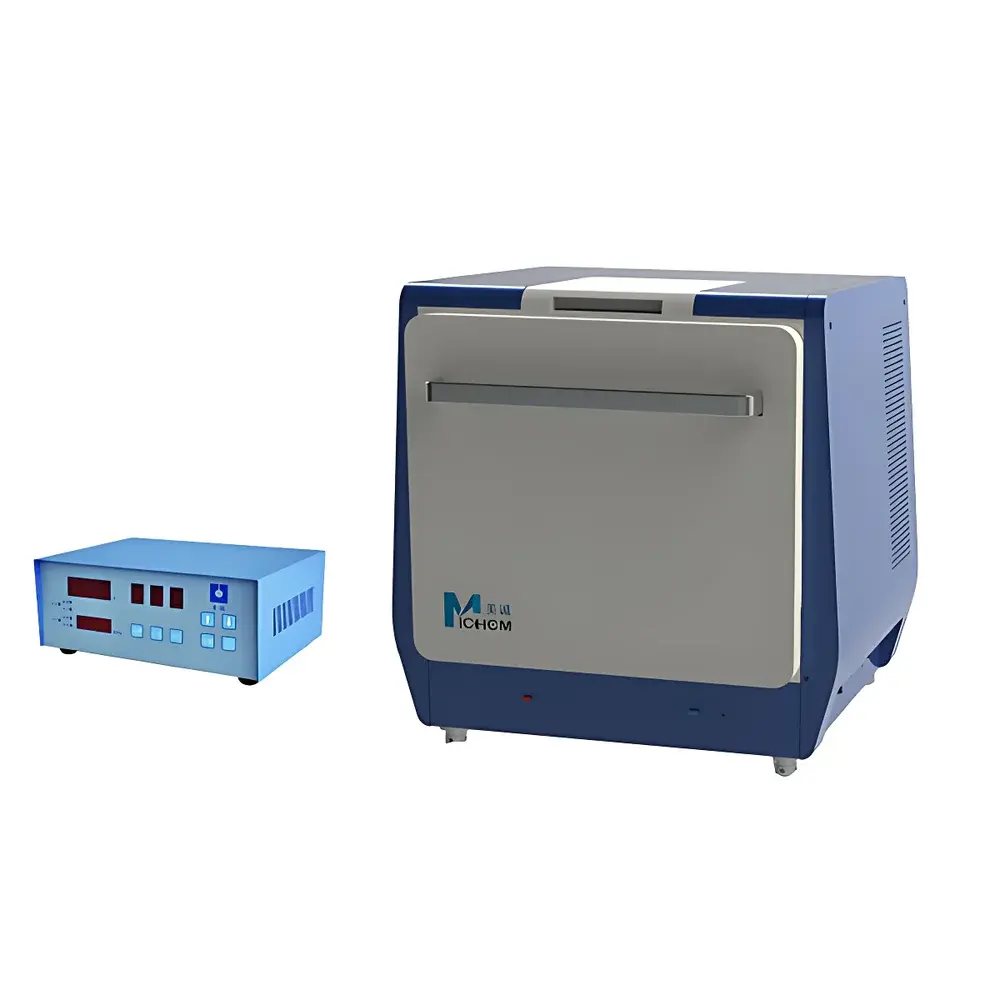
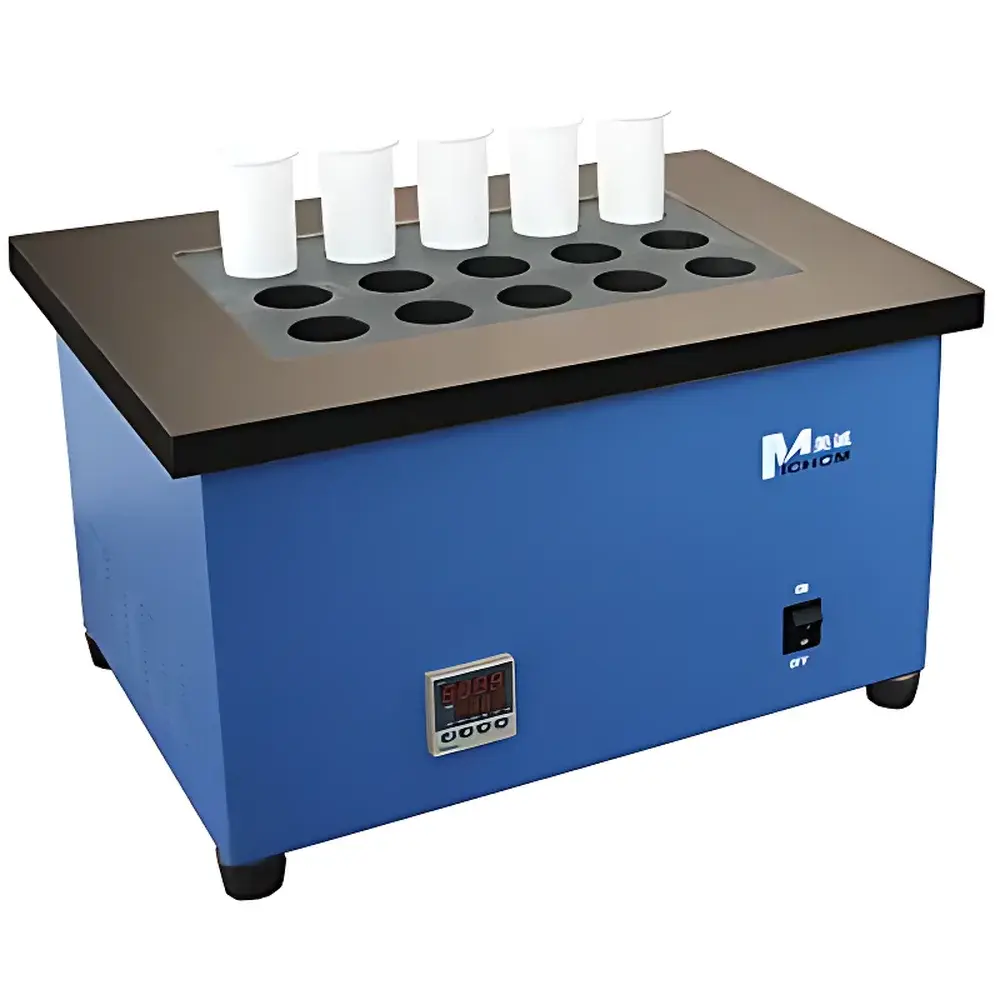
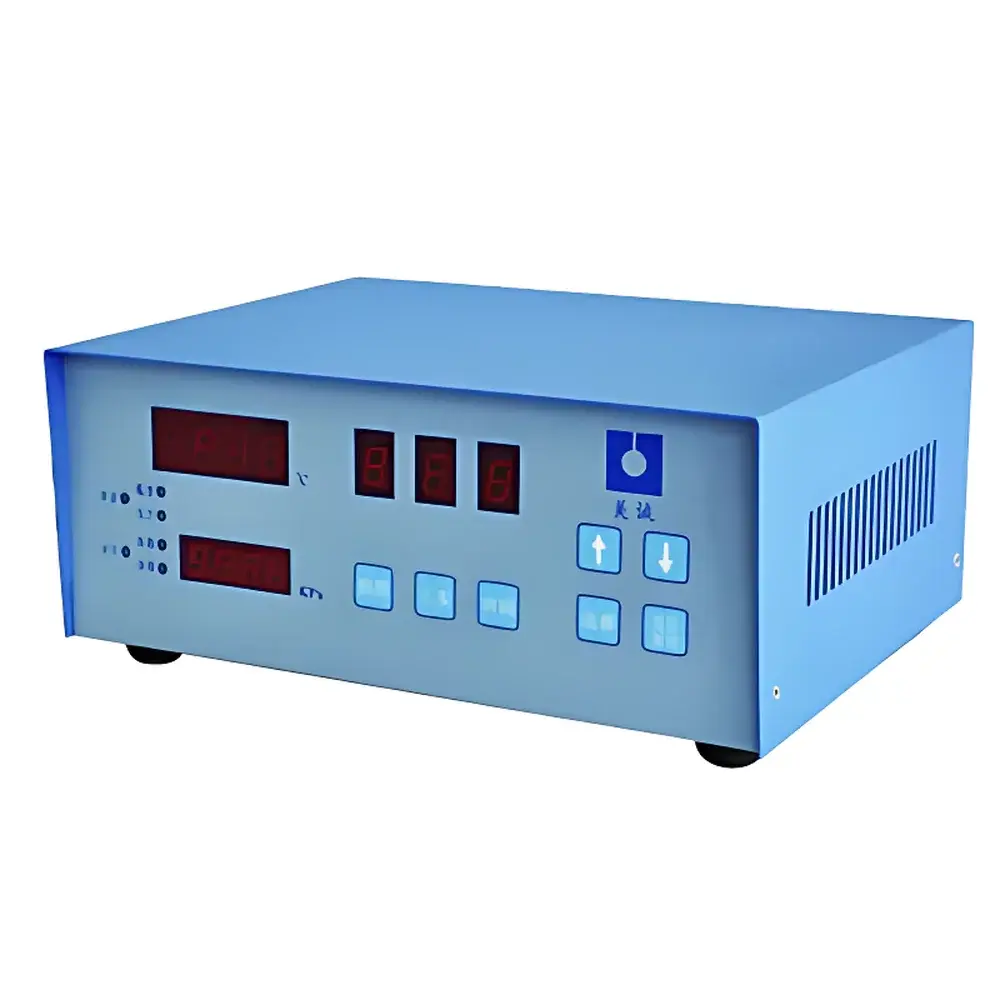
MICHEM MD6C-6H Industrial-Grade Microwave Digestion System
| Brand | MICHEM |
|---|---|
| Origin | Beijing, China |
| Model | MD6C-6H |
| Cavity Rating | Industrial-Grade |
| Sample Capacity | 6 vessels |
| Microwave Source | Single Magnetron |
| Max Temperature | 260 °C |
| Max Pressure | 3000 psi (20.7 MPa) |
| Microwave Frequency | 2450 ±13 MHz |
| Output Power | 1200 W (0–100% PID-controlled) |
| Cavity Volume | 45 L |
| Temperature Control Range | 0–300 °C |
| Temp Accuracy | ±0.5 °C |
| Pressure Control Range | 0–6 MPa |
| Pressure Accuracy | ±0.01 MPa |
| Cavity Lining | PFA-coated (Dupont™) |
| Exhaust Flow Rate | 3 m³/min |
| Microwave Leakage | ≤0.3 mW/cm² |
| Safety Features | Dual-pressure relief membranes (200 psi & 400 psi), patented sliding-lock safety door (ZL 200420032536), Pt100 direct-contact temperature sensing, integrated pressure transducer, real-time dual-parameter (T&P) feedback control |
| Vessel Material | Outer — PEEK (10 wt% filler, rated to 10 MPa / 300 °C) |
Overview
The MICHEM MD6C-6H is an industrial-grade microwave digestion system engineered for high-throughput, trace-level elemental analysis in regulated pharmaceutical and quality control laboratories. Designed specifically to meet the stringent sample preparation requirements of chromium (Cr) quantification in gelatin capsules and hollow capsules—following the 2012 Chinese pharmaceutical safety incident—the MD6C-6H implements a closed-vessel, pressurized microwave-assisted acid digestion protocol based on controlled energy coupling via 2450 MHz magnetron radiation. Its architecture conforms to the fundamental principles of microwave dielectric heating, where polar molecules (e.g., HNO₃, H₂O, HCl) absorb electromagnetic energy and convert it into thermal motion under precisely modulated power delivery. The system supports full compliance with pharmacopeial digestion protocols including USP , EP 2.4.8, and ISO 11885 for heavy metal determination, and is routinely deployed in GLP-compliant QC labs performing ICP-MS, ICP-OES, and AAS analysis of biological macromolecules, excipients, and dosage forms.
Key Features
- Industrial-rated 45 L cavity with Dupont™ PFA interior coating—resistant to concentrated HNO₃, HF, aqua regia, and mixed oxidizing acids at temperatures up to 300 °C
- Single-magnetron 1200 W source with PID-controlled frequency modulation (2450 ±13 MHz), enabling continuous 0–100% power adjustment and reducing standby power consumption by >20% versus fixed-frequency systems
- True dual-parameter real-time monitoring: Pt100 platinum resistance thermometer (±0.5 °C accuracy) and direct-contact pressure transducer (0–6 MPa range, ±0.01 MPa resolution) mounted within each digestion vessel
- 360° bidirectional rotating carousel driven by optically controlled reversible motor—ensures uniform microwave field distribution and inter-vessel temperature homogeneity (<±2 °C across 6 samples)
- Six-layer safety architecture: (1) active slope-controlled ramping to prevent thermal/pressure overshoot; (2) simultaneous T&P cut-off logic; (3) redundant pressure relief membranes (200 psi and 400 psi thresholds); (4) patented sliding-lock safety door (ZL 200420032536) with mechanical overpressure venting; (5) cavity-integrated waveguide attenuator limiting leakage to ≤0.3 mW/cm²; (6) physically isolated control unit with emergency stop circuitry
- Integrated forced-air exhaust (3 m³/min) with external ducting—cools cavity to safe opening temperature within 20 minutes post-run
Sample Compatibility & Compliance
The MD6C-6H accommodates standard 6-position rotor configurations using high-performance composite vessels: outer sleeves fabricated from reinforced PEEK (10 wt% thermally stable filler, burst-rated to 10 MPa) and inner liners made of TFM™ fluoropolymer—chemically inert to aggressive digestants including hydrofluoric acid, hot concentrated nitric acid, and perchloric acid mixtures. It is validated for digestion of gelatin-based matrices (capsules, tablets, powders), botanicals, animal tissues, and polymer excipients per ASTM D5630, EPA Method 3052, and ISO 15587-1. All operational parameters—including ramp time, hold temperature/pressure, and cooling profiles—are programmable in 8-step sequences across 15 stored methods, supporting audit-ready traceability under FDA 21 CFR Part 11 when paired with compliant data logging software.
Software & Data Management
The MD6C-6H operates via a C-type microcontroller platform with LED numeric display and non-volatile memory for method storage. While the base configuration features standalone operation, optional RS232/USB interface enables integration with LIMS or third-party laboratory informatics systems. Each run logs timestamped T&P profiles, power output history, and fault codes. For regulated environments, optional validation packages include IQ/OQ documentation, calibration certificates for Pt100 and pressure sensors (traceable to NIST standards), and electronic audit trail generation aligned with GLP and GMP Annex 11 expectations.
Applications
- Pharmaceutical QC: Chromium speciation in bovine/hydrolyzed porcine gelatin capsules per CP2020 and ChP 2020 supplement requirements
- Food safety testing: Pb, Cd, As, Hg, and Cr quantification in collagen-rich foods (e.g., gummy candies, bone broth, marine supplements)
- Environmental analysis: Total metal recovery from soil, sludge, and sediment per EPA SW-846 Method 3052
- Clinical research: Digestion of hair, nail, and tissue biopsies prior to ICP-MS multi-element profiling
- Materials science: Decomposition of polymer composites and ceramic precursors for elemental impurity screening
FAQ
What types of acids are compatible with the MD6C-6H digestion vessels?
TFM™ inner vessels are fully resistant to HF, HNO₃, HCl, H₂SO₄, H₃PO₄, and aqua regia at temperatures up to 260 °C. PEEK outer vessels provide structural integrity up to 300 °C and 10 MPa.
Is the system compliant with international regulatory standards for pharmaceutical testing?
Yes—the MD6C-6H meets design and performance criteria referenced in USP , EP 2.4.8, and ISO 11885. When operated with documented SOPs and calibrated sensors, it supports data integrity requirements under FDA 21 CFR Part 11 and EU GMP Annex 11.
How does the dual-pressure membrane system function during overpressure events?
Two discrete rupture discs are installed per vessel: a medium-pressure membrane (200 psi) vents minor excursions, while a high-pressure membrane (400 psi) activates only during extreme failure scenarios—providing graded, fail-safe pressure release without catastrophic vessel rupture.
Can the MD6C-6H be integrated into automated lab workflows?
Via optional serial/USB interface and ASCII command protocol, the system accepts remote start/stop commands and exports real-time T&P data streams for synchronization with robotic sample handlers or ELN platforms.
What maintenance is required to sustain long-term calibration stability?
Annual verification of Pt100 sensor drift (±0.3 °C tolerance) and pressure transducer linearity (±0.01 MPa) is recommended. PFA cavity coating inspection and exhaust filter replacement should occur every 500 operating hours.



