
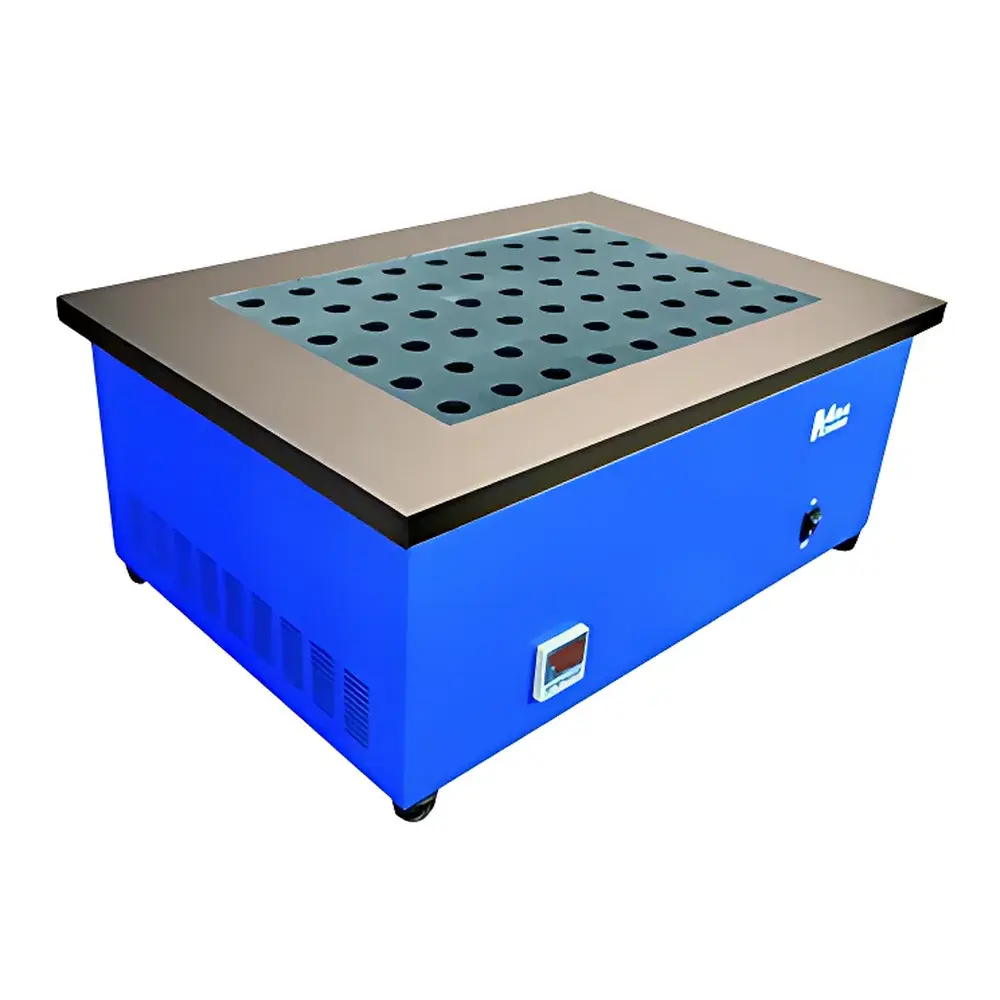
MICHEM DR-Series Graphite Block Digestion System
| Brand | MICHEM |
|---|---|
| Model | DR-15 / DR-24 / DR-54 |
| Heating Material | PTFE-Coated Graphite |
| Max Power | 1200 W (DR-15, DR-24) / 3000 W (DR-54) |
| Control | 30-Step PID Digital Temperature Controller |
| Max Temp | 240 °C |
| Temp Accuracy | ±1.0 °C |
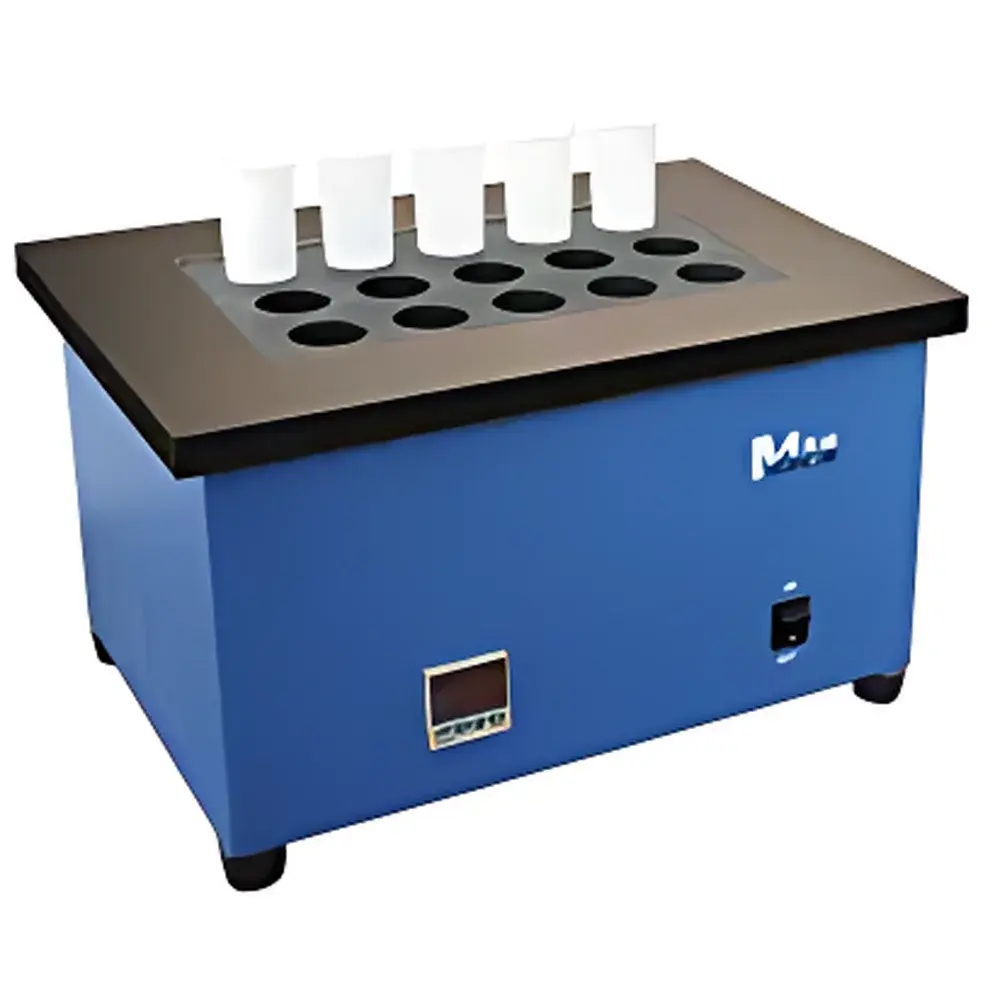
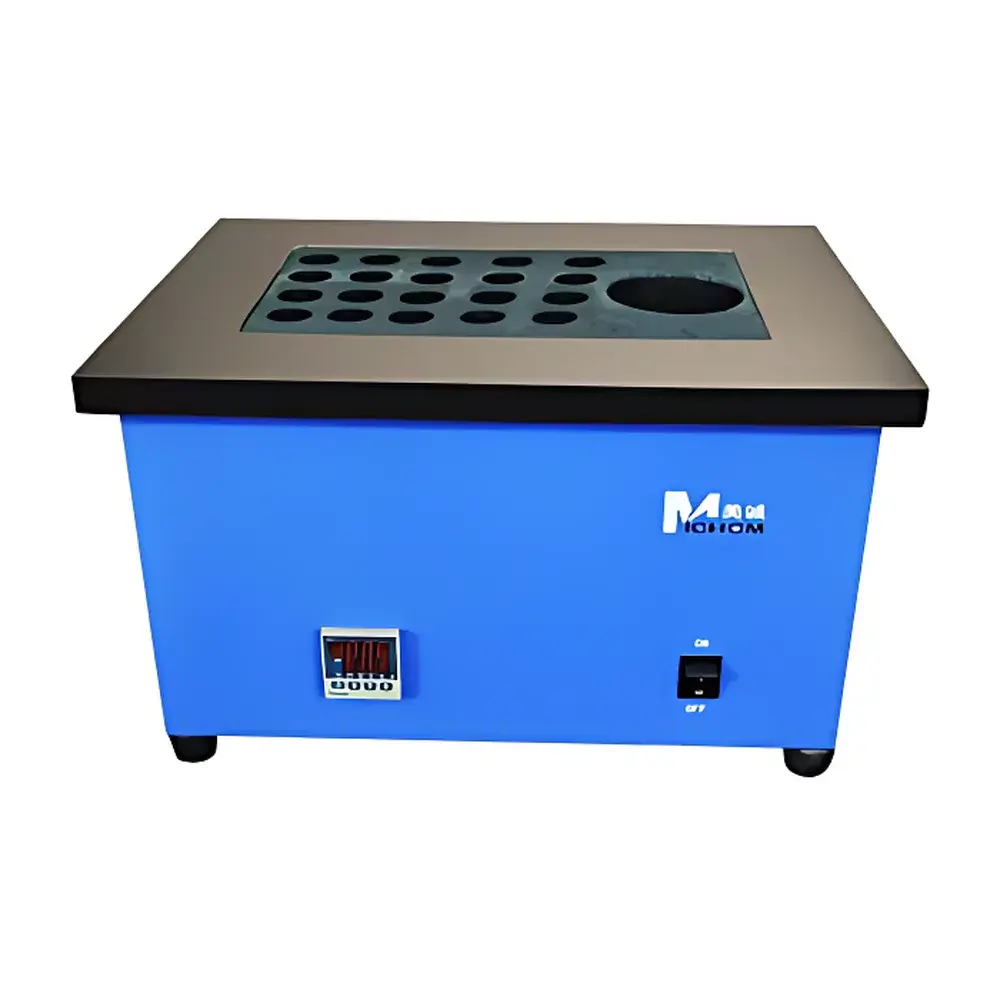
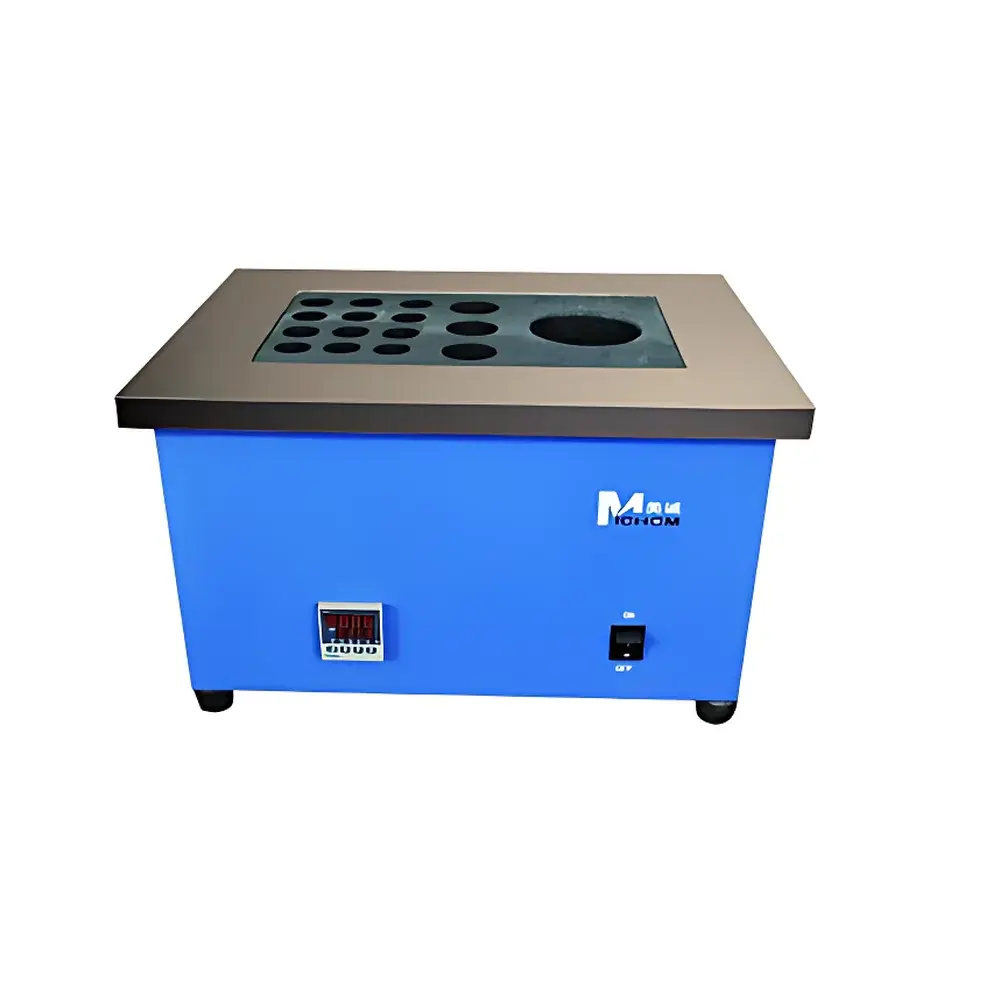
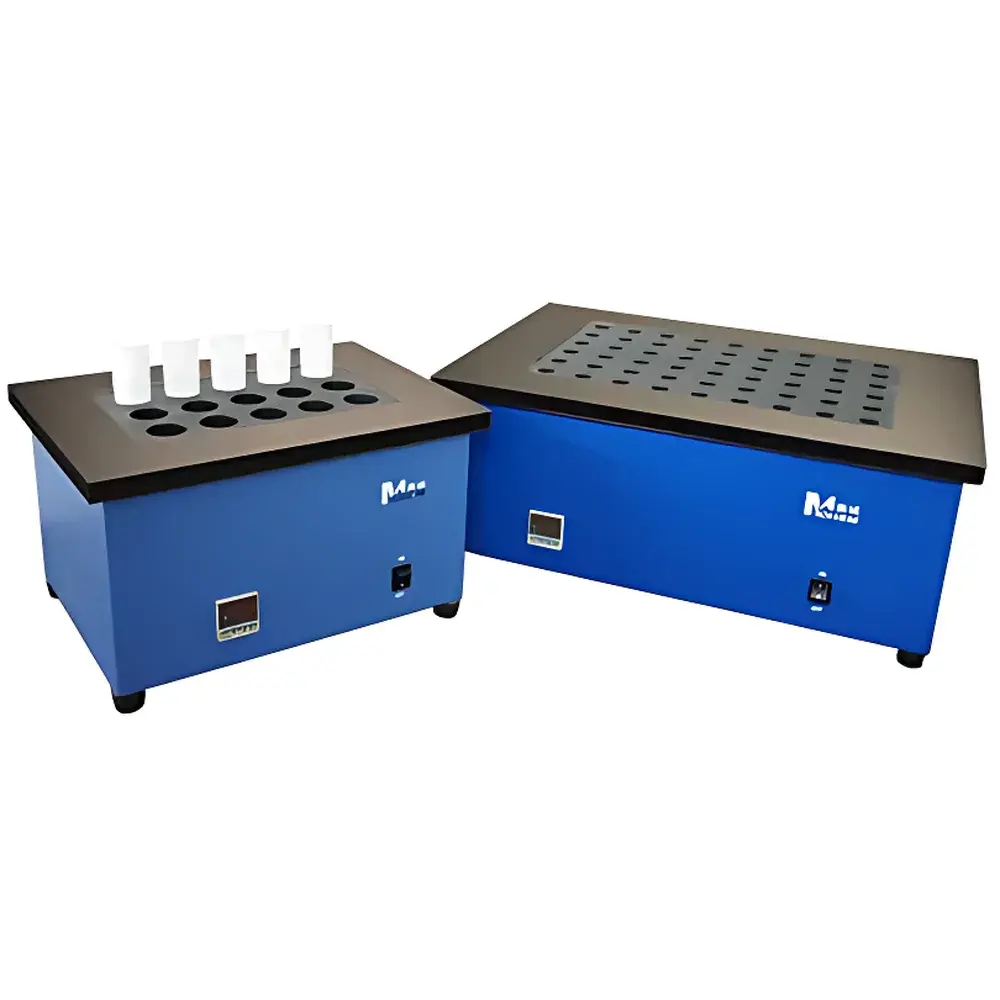
| Sample Capacity | 15×100 mL (DR-15) / 24×50 mL (DR-24) / 54×50 mL (DR-54) |
| Well Dimensions | Φ42×40 mm (DR-15) / Φ26×40 mm (DR-24) / Φ23×40 mm (DR-54) |
| Power Supply | AC 220 V, 50 Hz, 10 A (DR-15/DR-24) / 16 A (DR-54) |
| Dimensions (W×D×H) | 470×350×270 mm (DR-15/DR-24) / 670×460×270 mm (DR-54) |
Overview
The MICHEM DR-Series Graphite Block Digestion System is a precision-engineered electric heating digestion instrument designed for reproducible, high-throughput sample preparation in analytical laboratories. It operates on the principle of conductive heating via a monolithic, PTFE-coated graphite block — a thermally homogeneous medium that ensures uniform heat distribution across all digestion wells. Unlike traditional hot plates or ceramic heaters, this system eliminates radial and axial thermal gradients through optimized thermal mass and surface emissivity control, enabling consistent reaction kinetics across multi-sample batches. The instrument is not intended for closed-vessel high-pressure digestion; rather, it serves as a robust open-vessel platform for acid digestion, post-microwave acid removal (i.e., “acid evaporation” or “赶酸”), and controlled thermal conditioning prior to elemental analysis by ICP-OES, ICP-MS, AAS, or HG-AFS. Its design conforms to standard laboratory safety protocols for handling concentrated mineral acids (e.g., HNO₃, HCl, HF, H₂SO₄) under ambient pressure, and supports GLP-compliant workflows when integrated with documented temperature ramping and dwell sequences.
Key Features
- PTFE-coated graphite heating block engineered for chemical inertness and long-term stability in aggressive acidic and alkaline environments — resistant to corrosion from hydrofluoric acid, aqua regia, and perchloric acid fumes.
- Precision 30-step PID digital temperature controller with programmable ramp rates, hold times, and auto-shutdown functionality — supporting method-defined thermal profiles per ASTM D5177, ISO 11885, and USP <231>.
- Thermal uniformity validated at ≤ ±2.0 °C between wells under steady-state operation at 200 °C, ensuring inter-sample comparability critical for QA/QC batch processing.
- Three scalable configurations (DR-15, DR-24, DR-54) accommodate varying throughput demands without compromising temperature fidelity — each model maintains identical control architecture and calibration traceability.
- Modular well geometry: standardized well diameters and depths allow direct compatibility with common borosilicate glass digestion tubes (e.g., 100 mL tall-form, 50 mL conical), eliminating transfer steps and minimizing contamination risk during volume adjustment or dilution.
- Front-panel LED display with intuitive navigation, overtemperature protection circuitry, and grounded chassis design compliant with IEC 61010-1 for laboratory electrical safety.
Sample Compatibility & Compliance
The DR-Series accommodates a broad spectrum of solid and semi-solid matrices including soil, sediment, biological tissue, food homogenates, polymer ash, and pharmaceutical excipients. It is routinely deployed in environmental testing labs for EPA Method 3050B, 3051A, and 3052 sample preparation; in clinical labs for whole blood and urine digestion per CLIA guidelines; and in materials science for catalyst residue analysis. All models meet CE marking requirements for electromagnetic compatibility (EMC Directive 2014/30/EU) and low-voltage safety (LVD Directive 2014/35/EU). When operated within defined procedural parameters, the system supports audit-ready documentation for ISO/IEC 17025-accredited laboratories and satisfies data integrity prerequisites under FDA 21 CFR Part 11 when paired with validated electronic lab notebook (ELN) integration.
Software & Data Management
While the DR-Series operates via standalone hardware control, optional RS-232 or USB-to-serial interface enables connection to external PC-based logging software for real-time temperature recording, profile archiving, and CSV export. Each unit ships with a NIST-traceable calibration certificate documenting block temperature uniformity and controller accuracy at three setpoints (100 °C, 180 °C, 240 °C). Firmware supports user-defined method storage (up to 10 programs), timestamped event logging (start/stop/ramp/halt), and password-protected parameter modification — features aligned with GMP Annex 11 and EU GMP Chapter 4 data governance expectations.
Applications
- Primary open-vessel digestion of environmental samples prior to heavy metal quantification by ICP techniques.
- Post-microwave acid removal (“acid fuming”) with simultaneous volume reduction and final dilution directly in the same vessel — reducing analyte loss and cross-contamination.
- Controlled thermal decomposition of organic matrices in pharmaceutical stability studies (ICH Q5C).
- Standardized ash leaching procedures per TCLP (EPA Method 1311) and SPLP (ASTM D3987).
- Pre-concentration of trace elements in seawater and groundwater using co-precipitation followed by block heating.
- Calibration standard preparation requiring precise, matrix-matched acid digestion under repeatable thermal history.
FAQ
Can the DR-Series be used with hydrofluoric acid (HF)?
Yes — the PTFE coating provides verified resistance to HF up to 20% v/v at temperatures ≤200 °C. Always use HF-rated glassware and operate within a certified fume hood equipped with HF-specific scrubbing.
Is custom well diameter or depth available?
Yes — MICHEM offers OEM customization of well geometry, maximum temperature rating (up to 280 °C), and power configuration upon formal engineering review and validation protocol agreement.
Does the system support GLP-compliant audit trails?
The base unit does not include internal electronic audit trail functionality; however, when connected to validated third-party data acquisition software with electronic signature and change-control modules, full 21 CFR Part 11 compliance is achievable.
What maintenance is required for long-term performance?
Annual verification of temperature uniformity and controller accuracy using a calibrated reference thermometer (e.g., Fluke 1523/1524) is recommended. No routine lubrication or consumable replacement is required — the graphite block has an operational service life exceeding 5 years under standard usage conditions.
How does the DR-Series compare to ceramic or aluminum heating blocks?
Graphite offers superior thermal inertia and volumetric heat capacity, resulting in lower power cycling frequency, reduced overshoot during ramping, and tighter steady-state stability — particularly critical for volatile element recovery (e.g., As, Se, Hg) where temperature spikes induce analyte loss.
Related Products



