
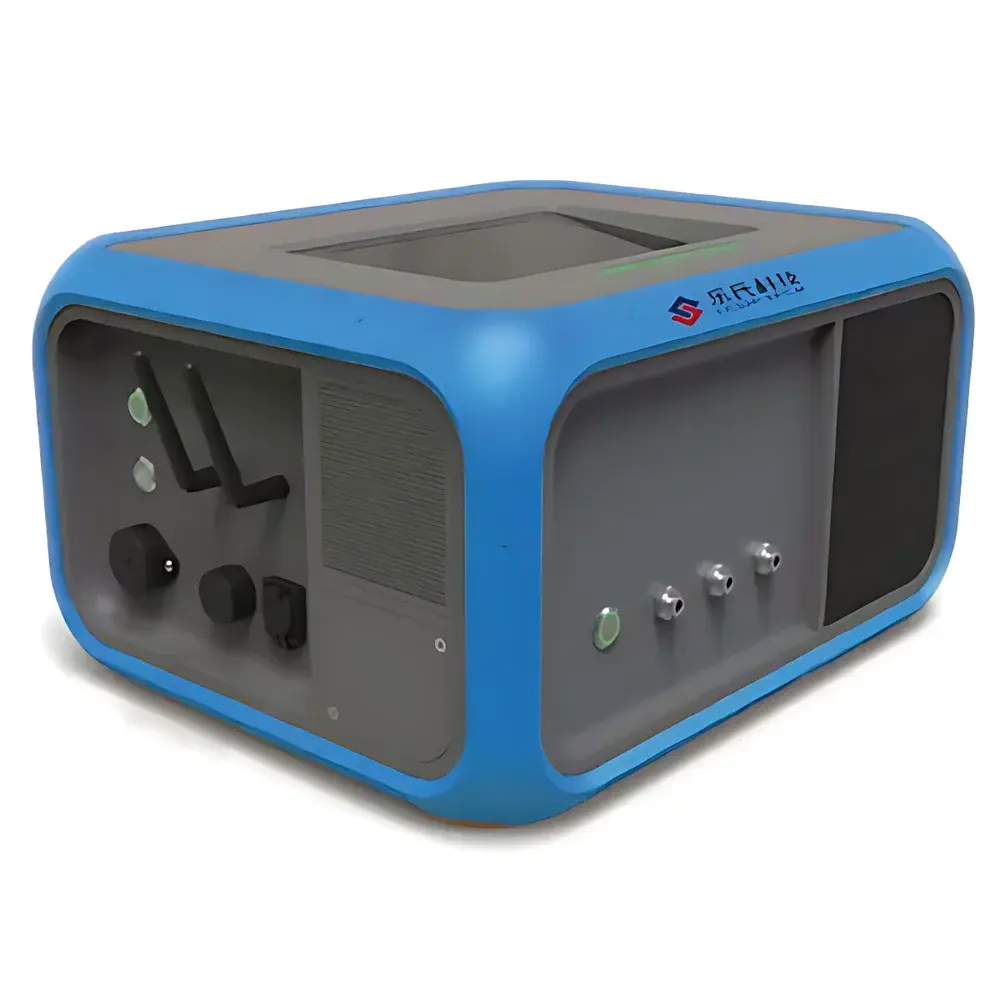
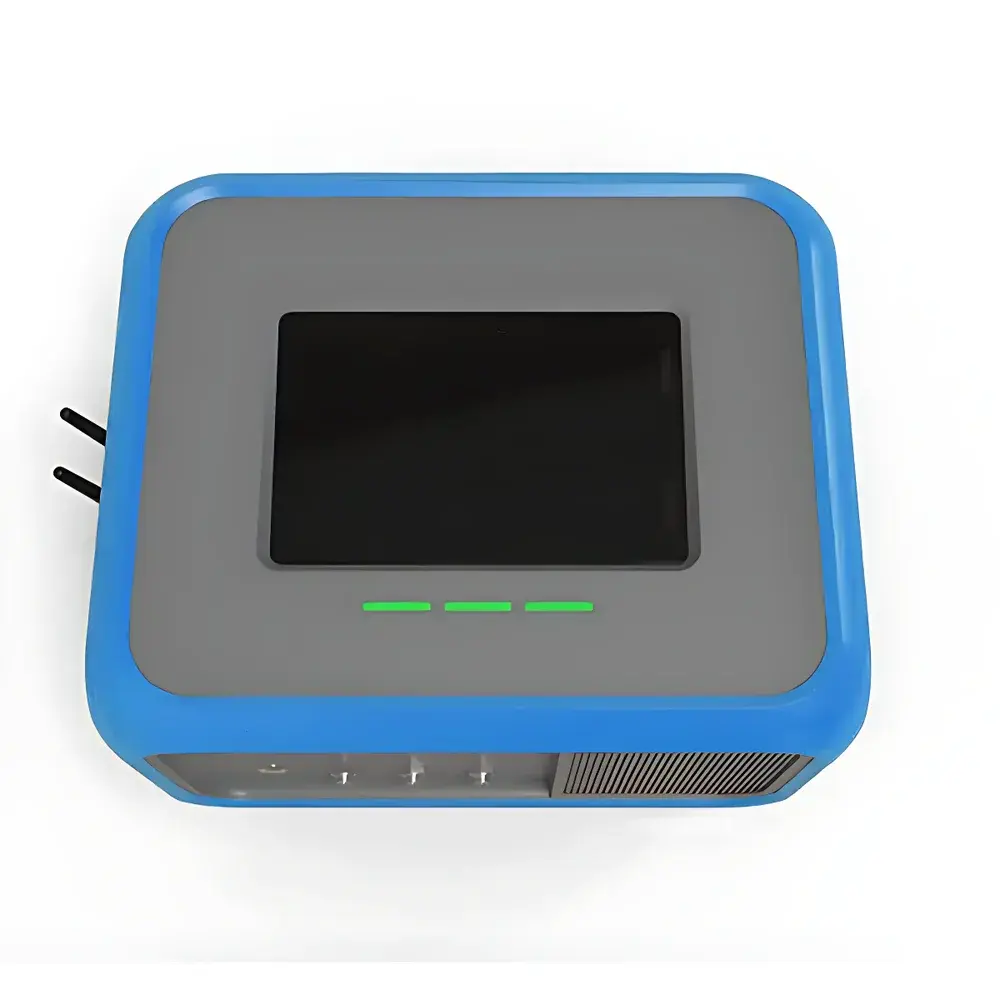
LESHI 9100 ODS High-Precision Ozone-Depleting Substances Analyzer
| Brand | Leshi |
|---|---|
| Origin | Beijing, China |
| Manufacturer Type | Authorized Distributor |
| Origin Category | Domestic |
| Model | 9100 ODS |
| Price Range | USD 365,000 – 408,000 |
| Measurement Principle | Fourier Transform Infrared Spectroscopy (FTIR) |
| Application Domain | Environmental Compliance & Industrial Emissions Monitoring |
| Detection Principle | FTIR Absorption Spectroscopy |
| Accuracy | ≤ ±2% of Full Scale |
| Target Gases | 30 Primary ODS Compounds (e.g., CFC-11, CFC-12, HCFC-22, HCFC-141b, Halon-1211, Halon-1301, CCl₄, CH₃Br, etc.) |
| Response Time | ≤ 120 s |
| Repeatability | < 2% of Full Scale |
Overview
The Leshi 9100 ODS High-Precision Ozone-Depleting Substances Analyzer is an engineered field-deployable FTIR-based gas analyzer designed for regulatory-grade detection and quantification of ozone-depleting substances (ODS) in ambient air, stack emissions, and confined industrial spaces. Built upon a high-resolution Michelson interferometer with thermoelectrically cooled MCT detector and optimized optical path design, the instrument delivers laboratory-grade spectral fidelity in a ruggedized portable platform. It operates on the fundamental principle of Fourier Transform Infrared Spectroscopy—measuring broadband IR absorption signatures across 600–4000 cm⁻¹—with chemometric algorithms trained on NIST-traceable ODS reference spectra to resolve overlapping bands and suppress interferences from H₂O, CO₂, and hydrocarbons. The system is calibrated against EPA Method TO-14/TO-15-compliant standards and validated per ISO 17025 requirements for environmental testing laboratories.
Key Features
- Simultaneous multi-component analysis of up to 30 regulated ODS compounds—including CFCs (CFC-11, CFC-12), HCFCs (HCFC-22, HCFC-141b, HCFC-123), halons (Halon-1211, Halon-1301), carbon tetrachloride (CCl₄), methyl bromide (CH₃Br), and 1,1,1-trichloroethane—without hardware reconfiguration.
- Open spectral library architecture enabling user-defined method development for emerging or region-specific ODS analogues, supported by integrated peak-fitting and baseline correction tools.
- Robust mechanical design compliant with IP65 ingress protection, operational across -10 °C to +50 °C and 10–95% RH (non-condensing), validated for use in refrigeration plant rooftops, foam-blowing chambers, cold storage facilities, and mobile monitoring vehicles.
- Integrated rechargeable Li-ion battery pack providing ≥8 hours of continuous operation under typical sampling conditions (1 L/min flow, 30-s averaging), with hot-swappable capability and external DC input support.
- Real-time interference compensation using dynamic water vapor and CO₂ subtraction algorithms, minimizing cross-sensitivity during high-humidity measurements without requiring cryogenic drying or chemical scrubbers.
Sample Compatibility & Compliance
The 9100 ODS accepts direct sampling via heated stainless-steel probe (optional), PTFE-lined tubing, or integrated dilution module for high-concentration source testing (e.g., recovery cylinders, destruction furnace exhaust). Sample introduction supports both extractive and diffusion modes with programmable flow control (0.1–2.0 L/min). All measurement protocols align with key international frameworks: UN Environment Programme (UNEP) ODS phase-out verification guidelines; China’s GB 31571–2015 and GB/T 30441–2013 standards for ODS emission monitoring; and EU F-Gas Regulation (EU) No 517/2014 Annex III reporting requirements. Data integrity meets GLP/GMP traceability criteria, with full audit trail logging compliant with FDA 21 CFR Part 11 for electronic records and signatures.
Software & Data Management
The instrument is operated through Leshi Analytical Suite v4.2—a Windows-based application supporting method configuration, real-time spectral visualization, automated calibration verification, and QC flagging. Raw interferograms and processed absorbance spectra are stored in HDF5 format with embedded metadata (GPS coordinates, operator ID, ambient T/RH, pressure). Export options include CSV, PDF reports (with ISO/IEC 17025-compliant uncertainty statements), and XML for integration into enterprise LIMS or national emission reporting portals (e.g., China’s National Greenhouse Gas Emission Reporting Platform). Remote diagnostics and firmware updates are enabled via encrypted TLS 1.2 over Ethernet or LTE module (optional).
Applications
- Regulatory compliance monitoring at ODS production, blending, and end-use facilities—supporting quarterly reporting under Montreal Protocol national compliance programs and verifying adherence to maximum allowable emission thresholds per local environmental statutes.
- Leak detection and localization in HVAC&R systems, chillers, and refrigerated transport units—leveraging handheld sampling probe and spatial mapping functionality to identify micro-leaks (<50 ppb) in hard-to-access locations such as compressor manifolds, valve stems, and insulated piping joints.
- Waste ODS handling oversight at recycling and destruction facilities—quantifying residual CCl₄, Halon-1301, and other legacy compounds in recovered cylinders prior to thermal oxidation or plasma arc treatment, ensuring destruction efficiency validation per UNEP Technical Options Committee (TOC) benchmarks.
- Forensic environmental investigation—supporting enforcement agencies in attributing unauthorized ODS releases via isotopic ratio-assisted fingerprinting (when coupled with optional δ¹³C-IRMS interface).
FAQ
Does the 9100 ODS require daily calibration?
No. Factory-calibrated with NIST-traceable gas standards, it performs automatic zero/span verification every 24 hours using internal reference cells; manual recalibration is recommended only after sensor exposure to >100 ppm total hydrocarbons or physical shock.
Can it detect ODS at sub-ppb levels?
Detection limits range from 0.5–5 ppb (v/v) depending on compound and path length; sensitivity is optimized for regulatory action levels defined in Annex A–E of the Montreal Protocol.
Is remote data transmission supported out-of-the-box?
Yes—standard Ethernet port enables Modbus TCP and MQTT protocol output; optional 4G/LTE module provides secure cloud upload to Leshi Cloud Analytics or customer-hosted servers.
How is spectral interference from ambient humidity managed?
The system applies real-time, adaptive water vapor subtraction using dual-beam referencing and temperature-compensated absorption modeling, eliminating need for external dryers while maintaining accuracy at 95% RH.
What certification documentation is provided with shipment?
Each unit ships with ISO/IEC 17025-accredited calibration certificate, factory performance test report, CE marking documentation, RoHS declaration, and full traceability matrix linking hardware serial numbers to spectral validation datasets.
Related Products







