
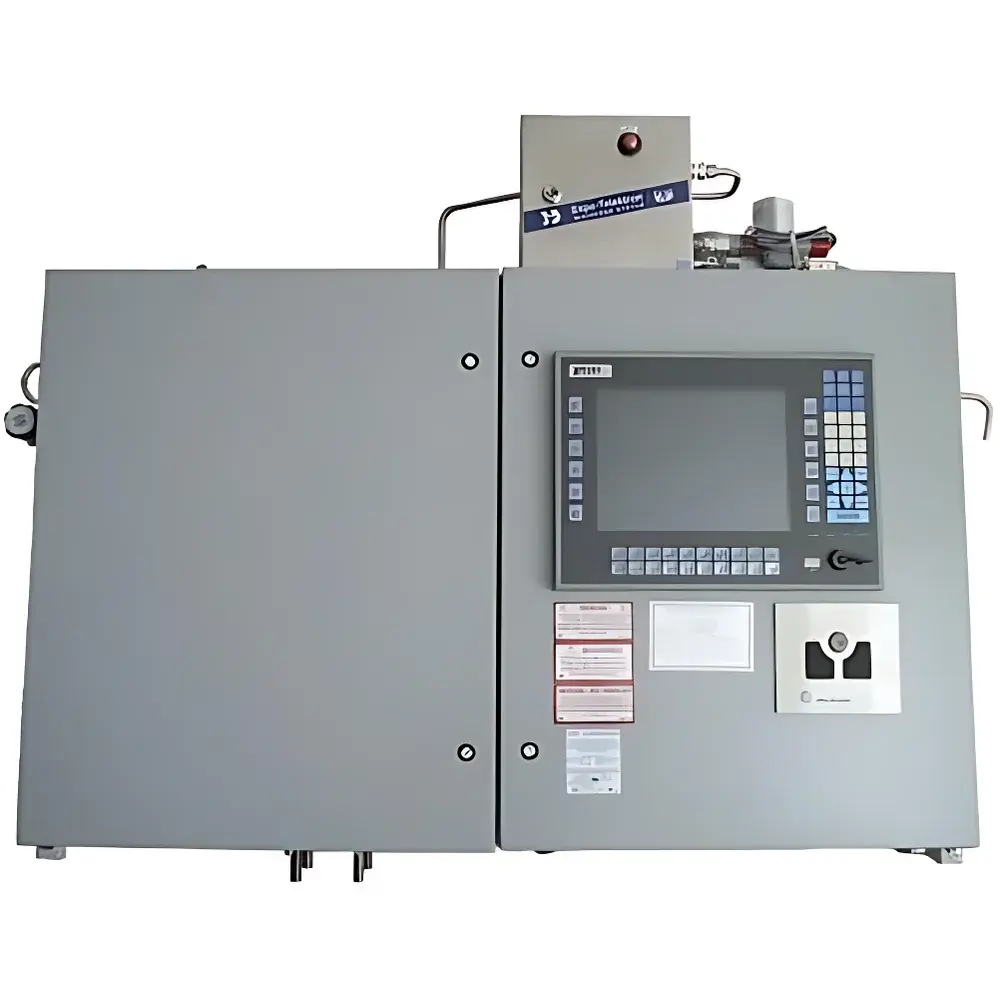
LESHI 943-TGX H₂S/SO₂ Ratio Analyzer
| Brand | LESHI |
|---|---|
| Origin | Canada |
| Manufacturer Type | Authorized Distributor |
| Origin Category | Imported |
| Model | 943-TGX |
| Instrument Type | Online Gas Analyzer |
| Measured Gases | H₂S, SO₂ |
| Response Time | T₉₀ < 10 s (system), < 1 s (analyzer) |
| Accuracy | ±1% FS for H₂S, ±1% FS for SO₂ |
| Measurement Range | H₂S (0–4) vol%, SO₂ (0–2) vol% |
| Detection Principle | UV Absorption Spectroscopy |
| Dimensions | 57″ W × 41.25″ H × 16″ D |
| Enclosure | Two 24″ W × 30″ H × 12″ D cabinets |
| Weight | ~275 lb (with all options) |
| Power | 110/240 VAC, 50/60 Hz, 1100 W |
| Ambient Temperature | 0–50 °C |
| Sample Flow Rate | < 5 ft³/h |
| UV Source | High-stability deuterium lamp |
| Detector | 2048-pixel CCD array |
| Display | 5.7″ LCD (640 × 480), intrinsically safe keypad |
| Output | Four isolated 4–20 mA channels (1 Hz update), relay outputs |
| Data Storage | 1 GB standard (up to 8 GB optional) |
| Zero Drift | < ±0.25% FS/day (auto-zero every 4 h) |
| Linearity & Repeatability | ±1% FS |
| Explosion Protection | Class I, Div 2, Groups C & D, T3 |
| Instrument Air | 22 SCFM @ 80 psi (20 SCFM with cooler) |
| Steam Supply | Probe –50 psi |
| Total Sulfur Range | (H₂S + SO₂) (0–6) vol% |
Overview
The LESHI 943-TGX H₂S/SO₂ Ratio Analyzer is an online ultraviolet (UV) absorption spectrometer engineered for real-time, high-fidelity monitoring of hydrogen sulfide and sulfur dioxide concentrations in Claus tail gas streams. It implements dual-wavelength UV absorption spectroscopy—leveraging the distinct electronic absorption bands of H₂S (~190–210 nm) and SO₂ (~280–320 nm)—to deliver simultaneous, interference-resistant quantification without chemical conversion or catalytic oxidation. Designed specifically for sulfur recovery unit (SRU) ratio control, the system eliminates conventional heated sample lines by integrating a jacketed, steam-heated sampling probe directly mounted to the tail gas duct. This architecture prevents sulfur vapor condensation and ensures representative, thermally stable sample delivery to the optical cell. The analyzer’s core optical path utilizes fiber-optic coupling between the probe and the spectrometer module, decoupling sensitive detection electronics from harsh process environments while maintaining signal integrity and long-term photometric stability.
Key Features
- Direct-mount, steam-jacketed sampling probe operating at >150 psi steam pressure and capable of withstanding –50 psi vacuum conditions—ensuring reliable operation across variable tail gas pressures and temperatures.
- High-stability deuterium UV lamp with broad spectral output (190–400 nm) and extended lifetime (>2,000 h), paired with a 2048-element linear CCD array detector for high-resolution spectral acquisition and baseline drift compensation.
- Auto-zero functionality executed every four hours using internal reference gas pathways, achieving zero drift of < ±0.25% full scale per day—critical for unattended, continuous operation in remote SRUs.
- Dual-cabinet NEMA-4X enclosure design (24″ W × 30″ H × 12″ D each), rated Class I, Div 2, Groups C & D, T3 for hazardous area installation without additional purging or pressurization.
- Integrated 5.7-inch VGA LCD touchscreen with intrinsically safe membrane keypad—supporting local configuration, real-time trend viewing, alarm acknowledgment, and diagnostic status reporting.
- Four isolated 4–20 mA analog outputs (updated at 1 Hz), configurable for H₂S, SO₂, total sulfur (H₂S + SO₂), and ratio (H₂S:SO₂), plus eight programmable relay outputs for interlock signaling and maintenance alerts.
Sample Compatibility & Compliance
The 943-TGX is validated for use with wet, high-sulfur tail gas containing up to 4 vol% H₂S and 2 vol% SO₂, with total sulfur up to 6 vol%. Its steam-heated probe and optical fiber interface accommodate typical Claus off-gas particulate loadings and moisture content without filter clogging or optical fouling. The system meets applicable requirements for industrial emissions monitoring under EPA Method 15/16, ISO 14687-2 (sulfur compounds in fuel gas), and EN 14181 (QAL3 performance verification). All firmware and data handling comply with GLP/GMP principles, supporting audit-ready timestamped event logs, user access controls, and change history tracking. While not certified to FDA 21 CFR Part 11 out-of-the-box, the system supports third-party validation packages for regulated pharmaceutical or biogas applications requiring electronic record integrity.
Software & Data Management
The embedded Linux-based controller provides local data logging to internal flash memory (1 GB standard, expandable to 8 GB). Raw spectra, calibrated concentration values, diagnostic flags (lamp intensity, detector SNR, flow status), and auto-zero timestamps are stored with microsecond precision. A secure Ethernet port enables remote access via industry-standard protocols: Modbus TCP for PLC integration, HTTP(S) for web-based GUI, and OPC UA for enterprise SCADA/MES systems. The optional Remote Computer GUI offers real-time spectral visualization, multi-parameter trending, calibration curve management, and export of CSV/Excel-compatible reports. All data exports include embedded metadata (instrument ID, UTC timestamps, operator login, firmware version) to satisfy traceability requirements in ISO/IEC 17025-accredited laboratories.
Applications
- Claus sulfur recovery units: Real-time H₂S:SO₂ ratio control for optimal catalyst bed conversion efficiency and reduced SO₂ slip.
- Tail gas treating units (TGTUs): Monitoring of amine absorber inlet/outlet streams to optimize solvent regeneration and prevent amine degradation.
- Gas desulfurization plants: Feed gas qualification and product gas certification in natural gas sweetening and refinery fuel gas treatment.
- Fertilizer and syngas facilities: Monitoring of acid gas streams prior to Claus feed conditioning and sulfuric acid production.
- Environmental compliance monitoring: Continuous emission monitoring (CEM) of stack effluents for regulatory reporting under national air quality standards.
FAQ
What detection principle does the 943-TGX employ?
It uses dual-band ultraviolet absorption spectroscopy—measuring absorbance at specific wavelengths where H₂S and SO₂ exhibit strong, non-overlapping electronic transitions.
Is heated sample transport tubing required?
No. The integrated steam-jacketed probe and fiber-optic signal transmission eliminate the need for external heat-traced lines, reducing maintenance and failure points.
How often does the system perform automatic zero calibration?
Every four hours, using internal reference paths—achieving < ±0.25% FS/day zero stability without manual intervention.
Can the 943-TGX operate in Class I, Div 2 hazardous locations?
Yes. Its dual-cabinet enclosure is certified Class I, Div 2, Groups C & D, T3, permitting direct installation adjacent to SRU exhaust ducts.
What data output protocols are supported?
Modbus TCP, HTTP(S), and OPC UA—enabling seamless integration with DCS, historian systems, and cloud-based analytics platforms.
Related Products







