
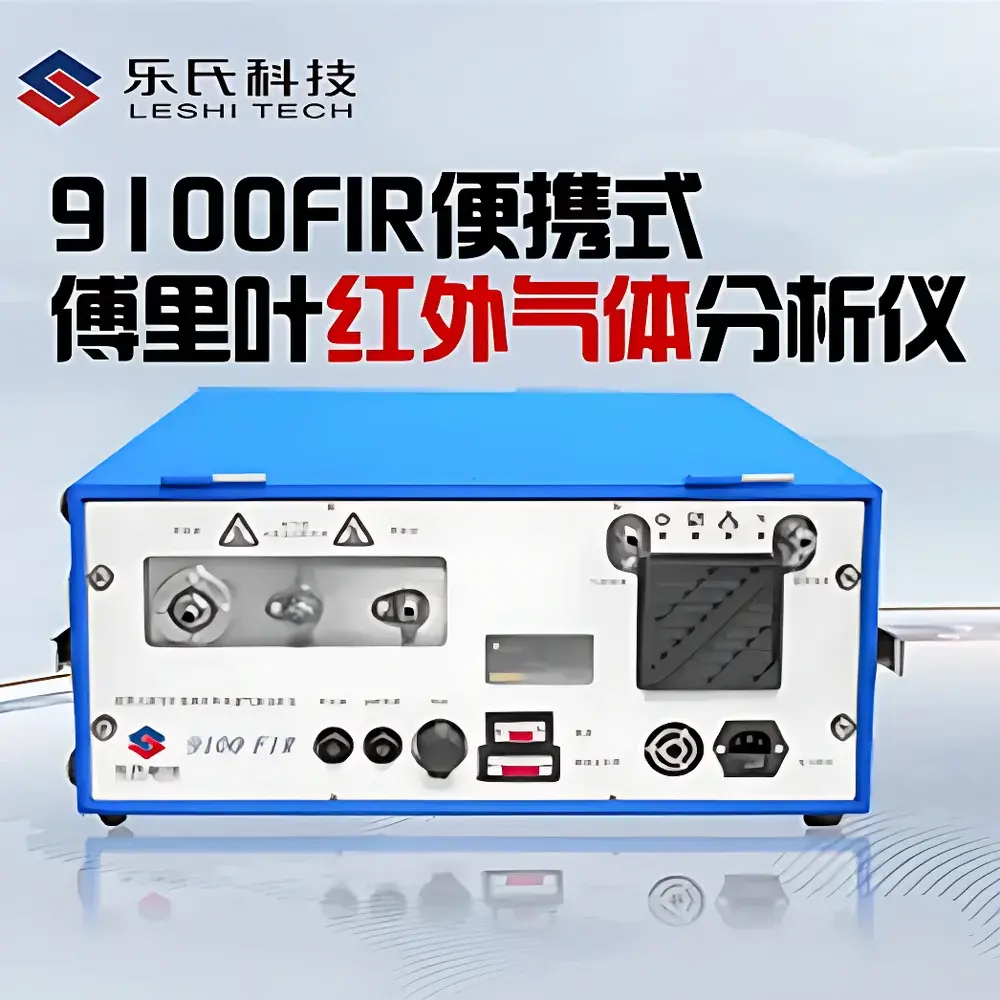
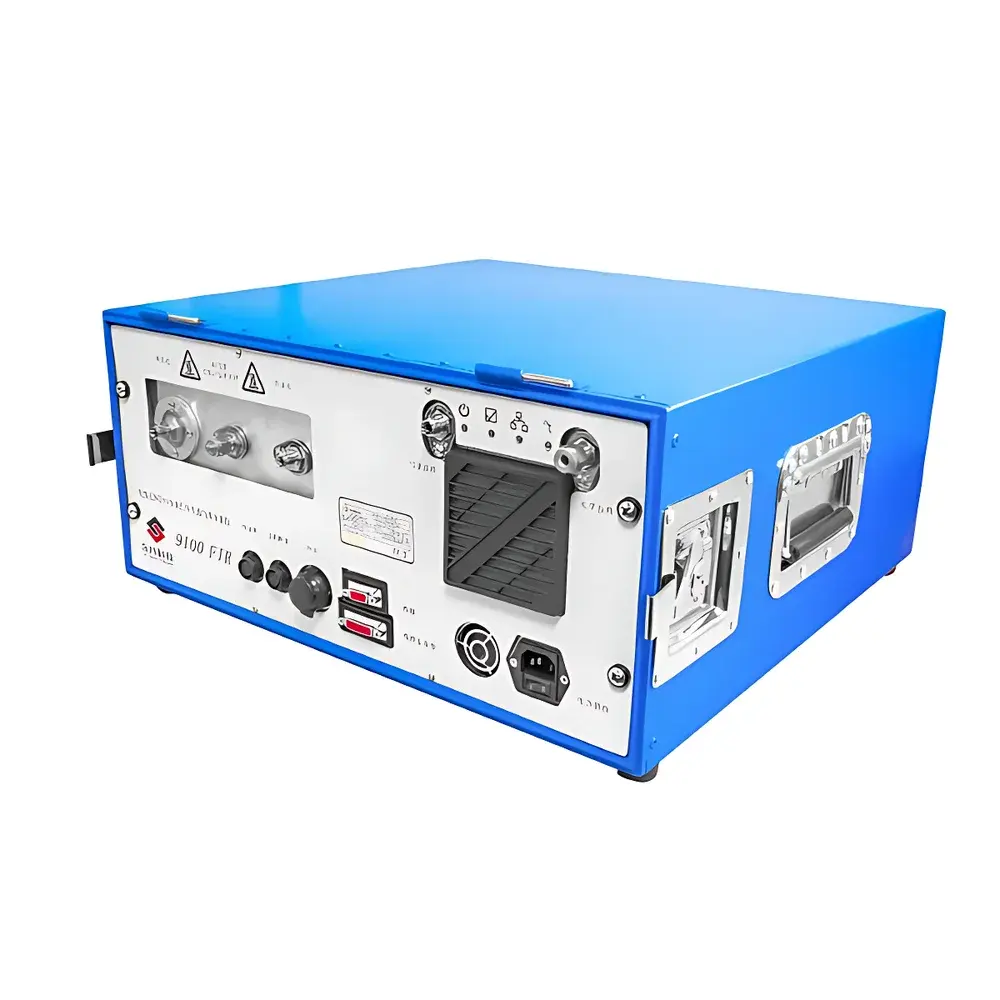
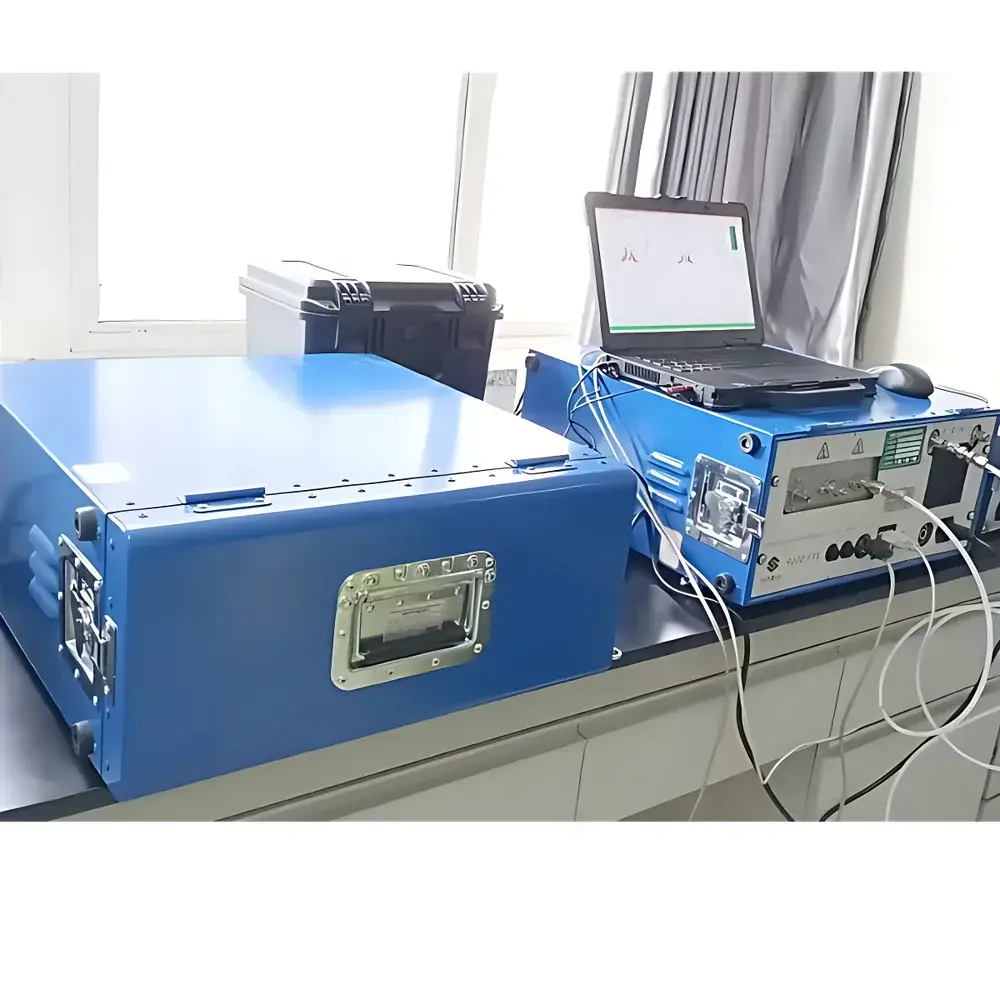
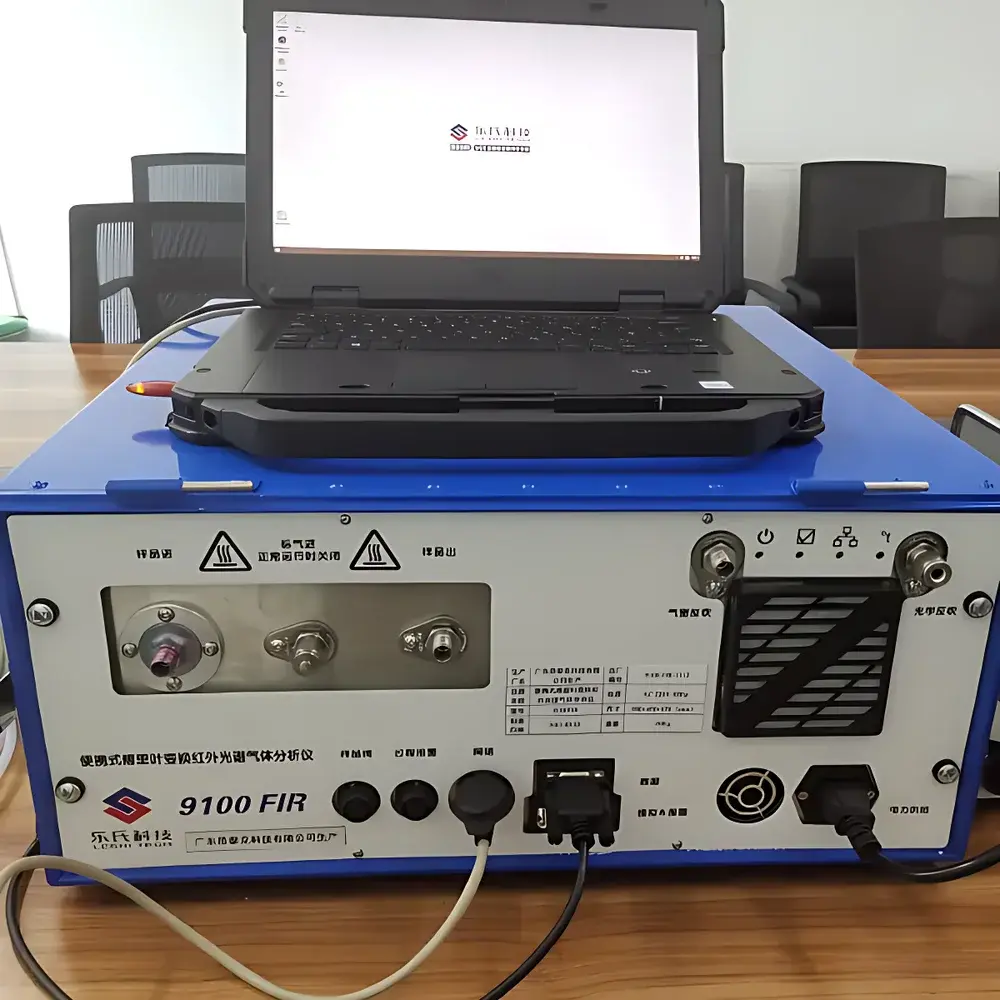
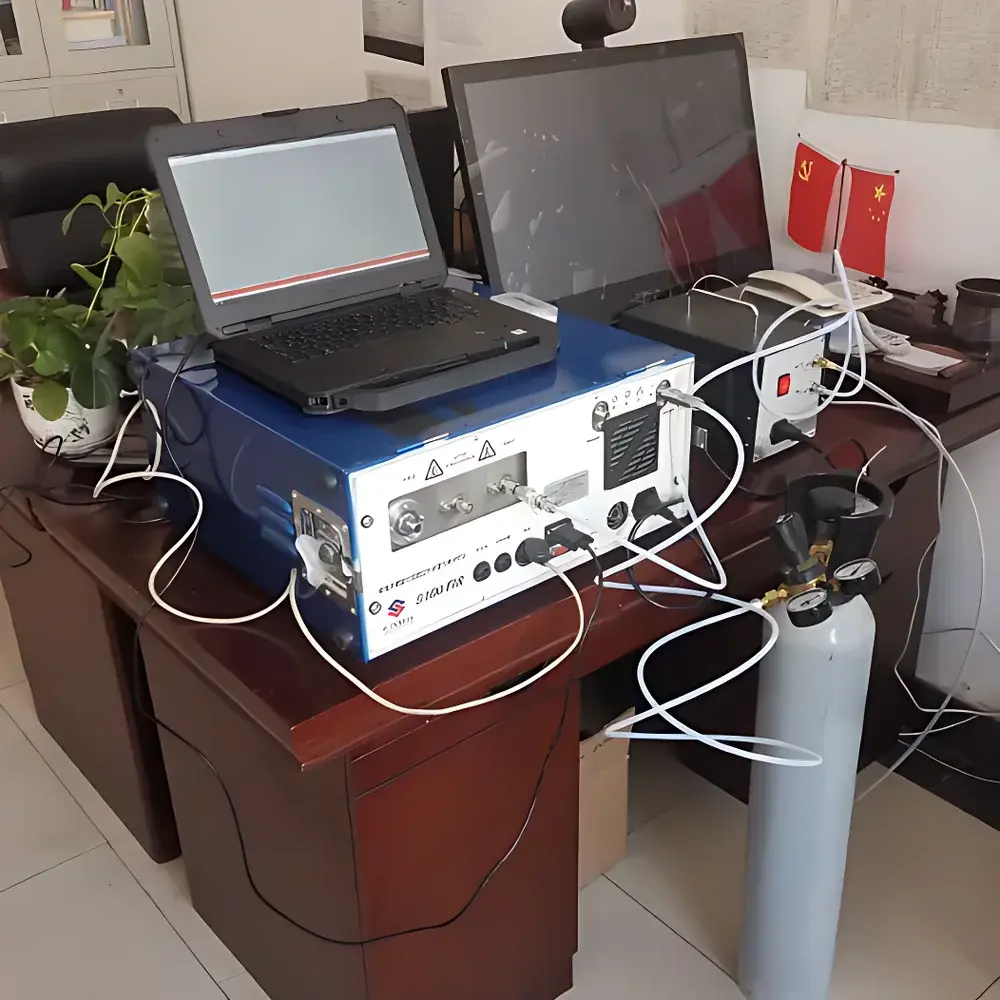
LESHI 9100FIR Portable Fourier Transform Infrared (FTIR) Gas Analyzer
| Brand | Leshi |
|---|---|
| Origin | Beijing, China |
| Model | 9100FIR |
| Instrument Type | Portable FTIR Spectrometer |
| Resolution Options | 0.7 cm⁻¹ (unapodized), 1 cm⁻¹, 2 cm⁻¹, 4 cm⁻¹, 8 cm⁻¹ |
| Scan Speed | Adjustable up to 1 scan/sec (dependent on resolution) |
| Signal-to-Noise Ratio (SNR) | >20,000:1 (peak-to-peak, 60-sec acquisition), >120,000:1 (RMS, 60-sec acquisition) |
| Wavenumber Accuracy | ±0.01 cm⁻¹ |
| Operating Sample Temperature | Up to 180 °C (hot-wet gas analysis) |
| Detector | Room-temperature DTGS |
| Reference Laser | VCSEL-based stabilization |
| Internal O₂ Sensor | Zirconia-based electrochemical sensor |
| Particulate Filtration | Dual-stage, <2 µm |
| Nitrogen Purge Interfaces | Dual-path (sample cell reverse purge + optical path purge) |
| Data Output | Real-time spectral & concentration data, Excel-compatible export |
| Compliance | HJ 919–2017, HJ 920–2017, HJ 1011–2018, HJ 1240–2021, HJ 1330–2023 |
Overview
The LESHI 9100FIR is a field-deployable Fourier Transform Infrared (FTIR) gas analyzer engineered for quantitative and qualitative multi-component analysis of complex gaseous mixtures under real-world industrial and environmental conditions. Based on Michelson interferometry, the instrument acquires full mid-infrared spectra (typically 600–4000 cm⁻¹) in a single measurement, enabling simultaneous detection of organic and inorganic species without prior separation. Unlike dispersive or electrochemical sensors, the 9100FIR applies fundamental spectroscopic principles—absorption cross-sections, Beer–Lambert law modeling, and multivariate calibration—to resolve overlapping spectral features with high specificity. Its design prioritizes hot-wet sampling integrity: integrated 180 °C heated sampling train, high-temperature gas cell, and dual nitrogen purge paths ensure minimal condensation, adsorption loss, or particulate interference—critical for stack emissions, combustion off-gas, and process vent monitoring where sample conditioning compromises accuracy.
Key Features
- True Field-Ready FTIR Architecture: Compact, shock-resistant chassis with IP54-rated enclosure; battery-operated or AC-powered operation supports extended unattended deployment in remote or hazardous locations.
- Variable Spectral Resolution: Software-selectable resolution from 0.7 cm⁻¹ (unapodized) to 8 cm⁻¹—enabling optimized trade-offs between spectral fidelity (for compound identification) and measurement speed (for rapid trend monitoring).
- High-Fidelity Optical Stability: VCSEL (Vertical-Cavity Surface-Emitting Laser) reference source ensures long-term wavenumber calibration stability (<±0.01 cm⁻¹ drift over 12 months); detector lifetime exceeds 10 years without cryogenic cooling.
- Hot-Wet Sampling System: Heated probe, trace-heated transfer line, and temperature-controlled gas cell maintain sample integrity up to 180 °C—eliminating water condensation artifacts and preserving reactive or thermally labile compounds (e.g., HCl, NH₃, formaldehyde).
- Dual Nitrogen Purge Capability: Independent reverse-flow purge for sample cell contamination control and dedicated optical-path purge to maintain beam throughput and signal stability in dusty or corrosive environments.
- Integrated Multi-Parameter Sensing: Onboard zirconia O₂ sensor provides concurrent oxygen concentration reporting—essential for stoichiometric correction and dilution compensation per regulatory protocols (e.g., EPA Method 3A, ISO 14687).
- Intelligent Range Management: Automatic gain switching across multiple concentration ranges ensures linear response from sub-ppb to percent-level concentrations without manual intervention.
Sample Compatibility & Compliance
The 9100FIR is validated for direct analysis of undiluted, humid, particulate-laden gas streams—including flue gas, biogas, syngas, semiconductor process exhaust, and emergency response air samples. Its compliance portfolio aligns with Chinese national standards for environmental and emission monitoring: HJ 919–2017 (VOCs in ambient air), HJ 920–2017 (inorganic toxic gases in emergency scenarios), HJ 1011–2018 (performance requirements for portable FTIR analyzers), HJ 1240–2021 (stack emissions), and HJ 1330–2023 (NH₃ and HCl in stationary sources). While not certified to US EPA PS-15 or EN 15267, its spectral acquisition methodology and chemometric processing framework are fully compatible with ASTM E1655 (multivariate calibration), ISO 12099 (spectroscopic quantification), and UK EA TGN M12 (FTIR stack testing) data validation workflows. All measurements include embedded metadata—temperature, pressure, O₂%, resolution setting, and laser status—for full GLP-compliant audit trails.
Software & Data Management
The proprietary analysis software implements a modular, standards-aligned workflow: raw interferogram collection → phase correction → apodization → Fourier transformation → atmospheric compensation → multivariate regression (PLS, CLS, PCR). It includes automated baseline correction, spectral alignment, and interference subtraction algorithms tailored for high-humidity matrices. Calibration models are stored as encrypted, version-controlled files with full provenance tracking. The system supports FDA 21 CFR Part 11–compliant user access controls, electronic signatures, and immutable audit logs for each spectrum acquisition, model update, and report generation. Data exports retain native spectral resolution and metadata in CSV and HDF5 formats; Excel-compatible reports include time-stamped concentration trends, detection limit (LDL) calculations per ISO 11843, residual error plots, and spectral overlays for method verification. Offline reprocessing allows retrospective quantification of newly added compounds using archived interferograms—no re-sampling required.
Applications
- Continuous emissions monitoring (CEM) of SO₂, NOₓ, CO, CO₂, CH₄, N₂O, NH₃, HCl, HF, and VOCs (e.g., benzene, toluene, formaldehyde) from coal-fired power plants, waste incinerators, and cement kilns.
- In-process gas analysis for chemical synthesis reactors, catalytic cracking units, and ammonia oxidation systems—supporting real-time yield optimization and catalyst deactivation diagnostics.
- Emergency response screening for accidental releases (e.g., chlorine, phosgene, hydrogen sulfide) under field conditions per HJ 920–2017 protocols.
- Research-grade characterization of SCR/SNCR denitrification efficiency, FGD scrubber performance, and thermal oxidizer destruction efficiency.
- Occupational hygiene assessments in semiconductor fabs, paint booths, and pharmaceutical manufacturing suites—detecting low-concentration toxicants without sample preconcentration.
- Validation and QA/QC of fixed CEMS installations via parallel grab-sampling and spectral cross-checking.
FAQ
What spectral range does the 9100FIR cover?
The instrument operates across the standard mid-IR region of 600–4000 cm⁻¹, sufficient to detect fundamental vibrational modes of most industrially relevant gases—including permanent gases, polar molecules, and unsaturated hydrocarbons.
Can it quantify gases in high-moisture samples without drying?
Yes. The 180 °C heated optical path and gas cell enable true hot-wet analysis; water vapor spectral contributions are mathematically modeled and subtracted during PLS regression, preserving accuracy for co-absorbing analytes like NH₃ and HCl.
Is spectral library management required on the host PC?
No. Quantitative models are embedded within the instrument firmware; only calibration coefficients and metadata are stored locally. No external spectral database installation is needed for routine operation.
How is measurement uncertainty estimated?
The software calculates method detection limits (MDL) per ISO 11843-2 using replicate background spectra, incorporates propagation-of-error for multivariate predictions, and reports expanded uncertainty (k=2) for each reported concentration.
Does the system support remote diagnostics or firmware updates?
Yes. Secure TLS-encrypted Ethernet or Wi-Fi connectivity enables remote health monitoring, log retrieval, and over-the-air firmware upgrades—without requiring physical access to the instrument.







