
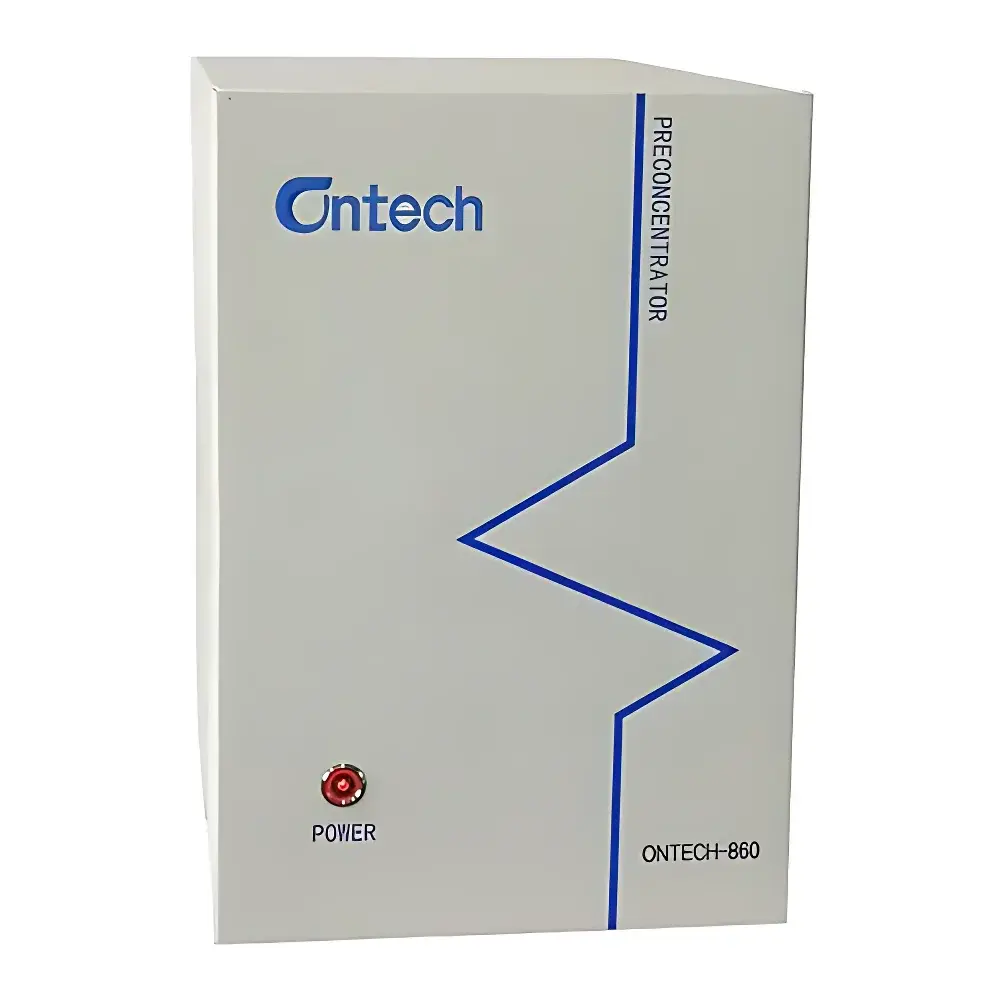
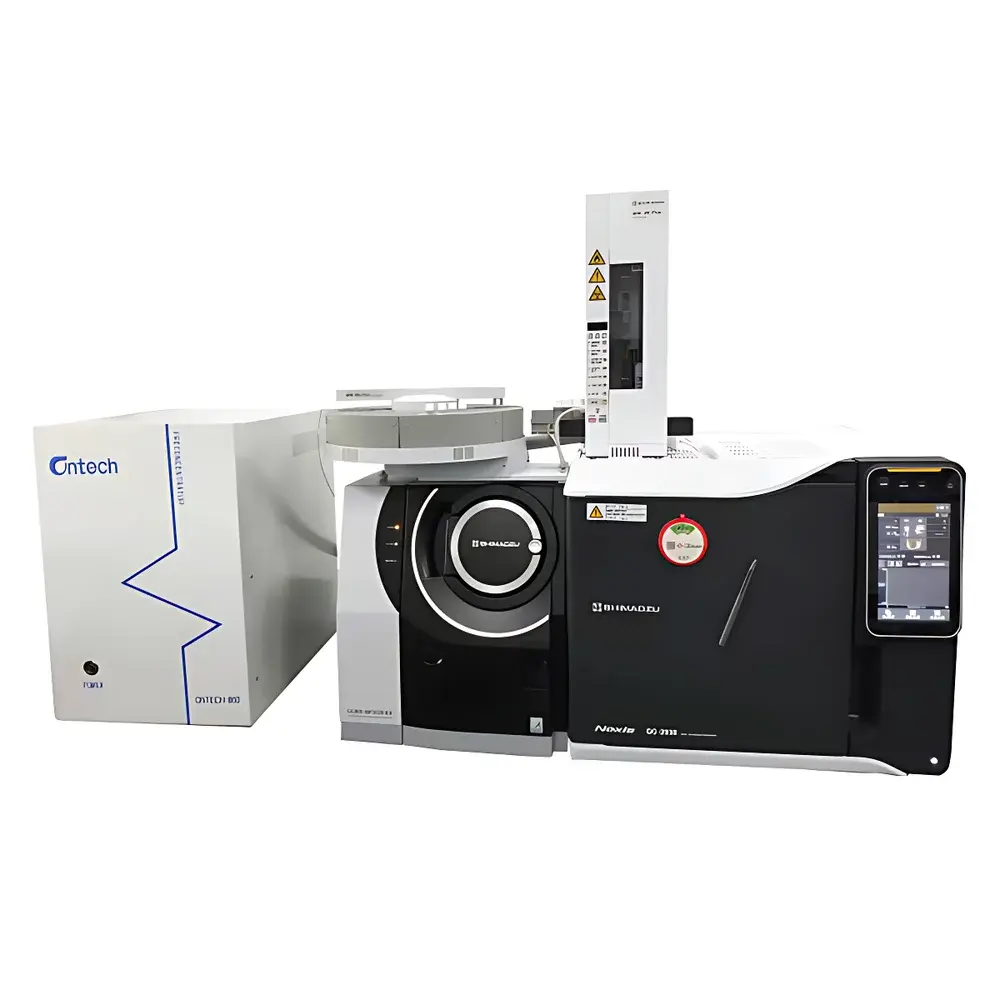
Ontech860 Electronic Cooling Triple-Cold-Trap Preconcentrator
| Brand | Ontech |
|---|---|
| Origin | Guangdong, China |
| Model | Ontech860 |
| Detection Principle | Cryogenic Preconcentration Coupled with GC/GC-MS |
| Instrument Type | Benchtop Laboratory Preconcentrator |
| Compliance | HJ 759–2023, HJ 1078–2019, US EPA TO-14/TO-15, PAMS, and 2019 VOCs Monitoring Guidelines |
| Sample Inlets | Dual independent standard/injector ports + 13 auxiliary ports (optional 16-port autosampler) |
| Cooling Method | Solid-state thermoelectric (Peltier) cooling |
| Trap Stages | Three-stage cryofocusing system (Stage I: ambient water removal |
| Stage II | co-trap purification |
| Stage III | deep-cryogenic focusing at ≤ –40 °C) |
| Sample Compatibility | Summa canisters, Tedlar® gas bags, and custom pressurized vessels |
| Software Platform | Windows 7–11 (32/64-bit), FDA 21 CFR Part 11–ready audit trail, GLP-compliant method logging and QA/QC reporting |
| System Diagnostics | Real-time valve status, pressure/flow monitoring, automatic leak detection (positive/negative pressure modes), graphical pneumatic schematic |
| Sample Path | Fully heated (up to 200 °C), SilcoNert®-coated inert flow path from inlet to trap |
| Concentration Factor | Up to 10⁴–10⁵× for C₂–C₁₂ VOCs and SVOCs |
| Water Removal Efficiency | >99.9% H₂O removal while retaining water-soluble polar analytes (e.g., aldehydes, alcohols, acids) |
| Residual Carryover | < method detection limit (MDL) after hot-purge cleaning cycle |
| Flow Control | High-stability mass flow controller (MFC) with adaptive startup compensation algorithm |
| Method Flexibility | Fully programmable sequence control, user-defined time-resolved valve/temperature/flow profiles, built-in HJ 759–2023, TO-14, TO-15, and PAMS templates |
Overview
The Ontech860 Electronic Cooling Triple-Cold-Trap Preconcentrator is a benchtop laboratory instrument engineered for ultra-trace quantification of volatile and semi-volatile organic compounds (VOCs/SVOCs) in ambient air, stack emissions, and indoor environments. It operates on the principle of cryogenic preconcentration—capturing analytes from large-volume gas samples onto thermally controlled cold traps, followed by rapid thermal desorption into a coupled gas chromatograph (GC) or GC-mass spectrometer (GC-MS). Unlike liquid nitrogen–dependent systems, the Ontech860 employs solid-state Peltier cooling across three functionally distinct trap stages: Stage I removes bulk water and CO₂ at near-ambient temperatures; Stage II eliminates residual moisture, N₂, O₂, and other interferents via selective adsorption/desorption; Stage III achieves deep-focusing at ≤ –40 °C to sharpen chromatographic peaks and maximize sensitivity for low-volatility and polar species—including aldehydes, ketones, esters, ethers, thiols, and nitrogen-containing compounds. Its design directly addresses critical limitations of conventional two-stage electronic coolers: loss of high-boiling-point analytes during water removal and poor recovery of water-soluble VOCs. By decoupling dehumidification from analyte retention, the Ontech860 enables quantitative enrichment of both PAMS (57 compounds) and TO-15 (65 compounds) target lists—without membrane-based dehydration that compromises polar compound integrity.
Key Features
- Triple-stage cryofocusing architecture: Stage I (water removal), Stage II (co-trap purification), Stage III (deep-cryogenic focusing)
- Fully electronic cooling system—no liquid nitrogen, no cryogens, zero consumables beyond electricity
- Heated, fully inert sample pathway: SilcoNert®-coated stainless steel tubing and valves, maintained at up to 200 °C to eliminate cold spots and surface adsorption
- Integrated high-precision mass flow controller with adaptive startup compensation—eliminates transient flow overshoot during initialization
- Dual independent injection ports for internal standards and calibration gases, plus 13 configurable auxiliary inlets (expandable to 16 with optional autosampler)
- Automated leak detection using both positive- and negative-pressure protocols; results logged with timestamped reports
- Hot-purge cleaning cycle with reverse-flow thermal desorption ensures carryover < method detection limit (MDL)
- Real-time graphical interface displaying valve positions, trap temperatures, flow rates, and gas directionality
- Modular electronics architecture supports field-replaceable circuit boards and simplified service diagnostics
Sample Compatibility & Compliance
The Ontech860 accepts samples collected in electropolished stainless-steel Summa canisters (6- or 11-L), fluorinated ethylene propylene (FEP) gas bags, and custom pressurized sampling vessels. Its robust water-handling capability allows direct analysis of humid ambient air without pre-drying—retaining analytes such as formaldehyde, acetaldehyde, methanol, and acetic acid that partition into condensed water phases. The system meets all technical requirements stipulated in Chinese national standards HJ 759–2023 (ambient air VOCs by canister/GC-MS) and HJ 1078–2019 (stack emission sulfur compounds by bag/preconcentration/GC-MS), as well as U.S. EPA Methods TO-14A and TO-15A for regulated VOC monitoring. It is validated for use in GLP and GMP-regulated laboratories, with software supporting 21 CFR Part 11–compliant electronic signatures, audit trails, and data integrity controls.
Software & Data Management
Control and data acquisition are managed through a native Windows application compatible with Windows 7 through Windows 11 (both 32- and 64-bit). The software provides full method programming—including time-resolved valve sequencing, temperature ramping, flow modulation, and trap bake-out cycles. Built-in method templates include HJ 759–2023, TO-14, TO-15, and PAMS configurations; users may modify or create new methods without hardware changes. All analytical sequences generate comprehensive QA/QC logs: system suitability checks, blank integration reports, calibration verification summaries, and automated pass/fail flagging. Data export supports CSV, TXT, and XML formats; metadata fields support customizable annotations (e.g., sampler ID, location, meteorological conditions). Audit trails record operator actions, parameter edits, and instrument state transitions with immutable timestamps.
Applications
The Ontech860 serves environmental laboratories conducting regulatory compliance testing for ambient air quality networks (e.g., China’s National Urban Air Quality Monitoring Network), industrial stack emission audits, landfill and wastewater treatment facility fugitive emission studies, and indoor air quality assessments in commercial buildings. Its ability to retain polar and reactive species makes it especially suitable for odor investigation (e.g., mercaptans, hydrogen sulfide, dimethyl sulfide), photochemical smog precursor monitoring (e.g., isoprene, monoterpenes), and emerging contaminant screening (e.g., halogenated solvents, oxygenated VOCs). Research applications include atmospheric chemistry modeling input generation, source apportionment studies using multivariate statistical analysis, and method development for novel SVOC classes such as nitro-aromatics and chlorinated phenols.
FAQ
Does the Ontech860 require liquid nitrogen or other cryogens?
No. It uses solid-state thermoelectric (Peltier) modules for all three cold trap stages—eliminating logistical constraints and safety hazards associated with cryogenic liquids.
Can it handle highly humid samples without losing polar VOCs?
Yes. Its staged dehumidification design removes >99.9% of water vapor while preserving water-soluble analytes such as formaldehyde and acetic acid—enabling full TO-15 and PAMS coverage.
Is the system compatible with third-party GC and GC-MS platforms?
Yes. It features universal GC interface compatibility via standard 1/8″ or 1/4″ VCR fittings and configurable transfer line temperature control.
How does the leak detection function work?
It performs automated pressure decay tests under both positive and negative pressure conditions, calculates leak rate per ASTM E2877, and generates PDF-formatted reports with pass/fail determinations.
What level of data integrity assurance does the software provide?
The software includes full 21 CFR Part 11 functionality: role-based access control, electronic signatures, immutable audit trails, and secure data archiving—all validated for use in regulated environmental testing labs.







