
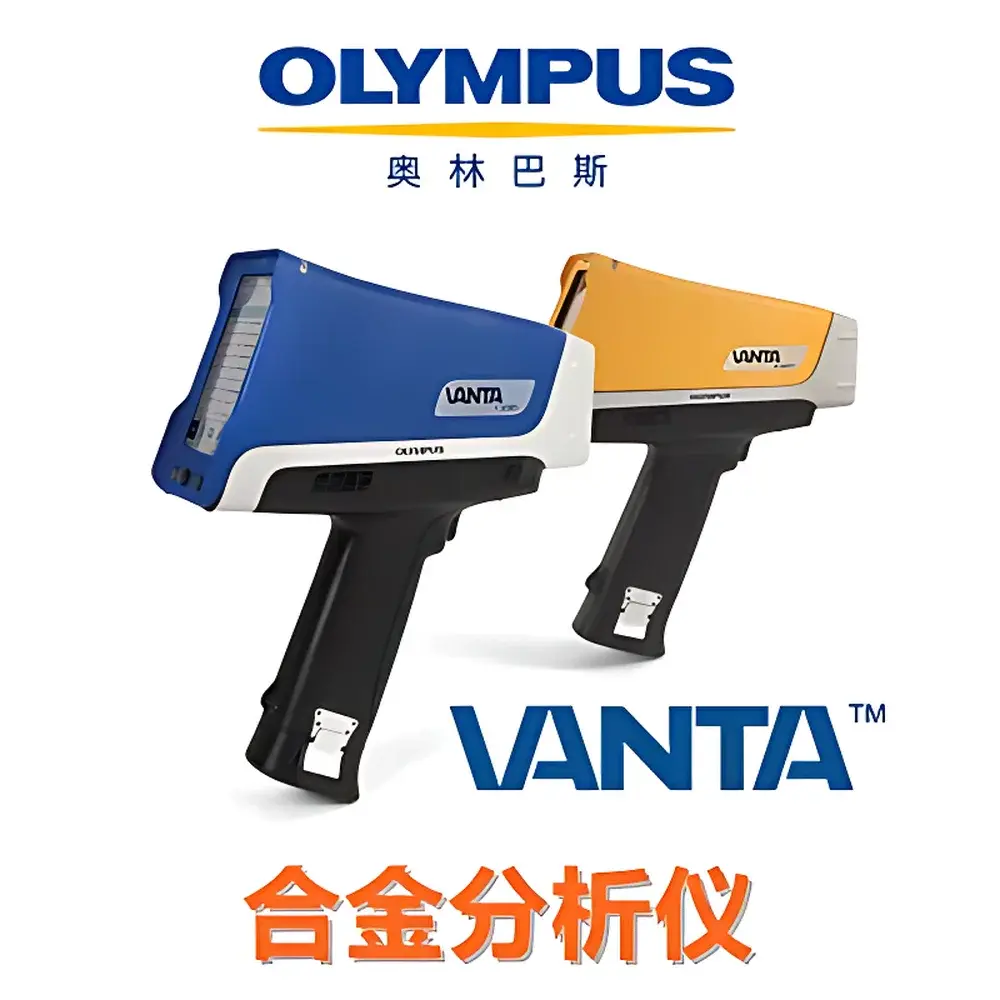
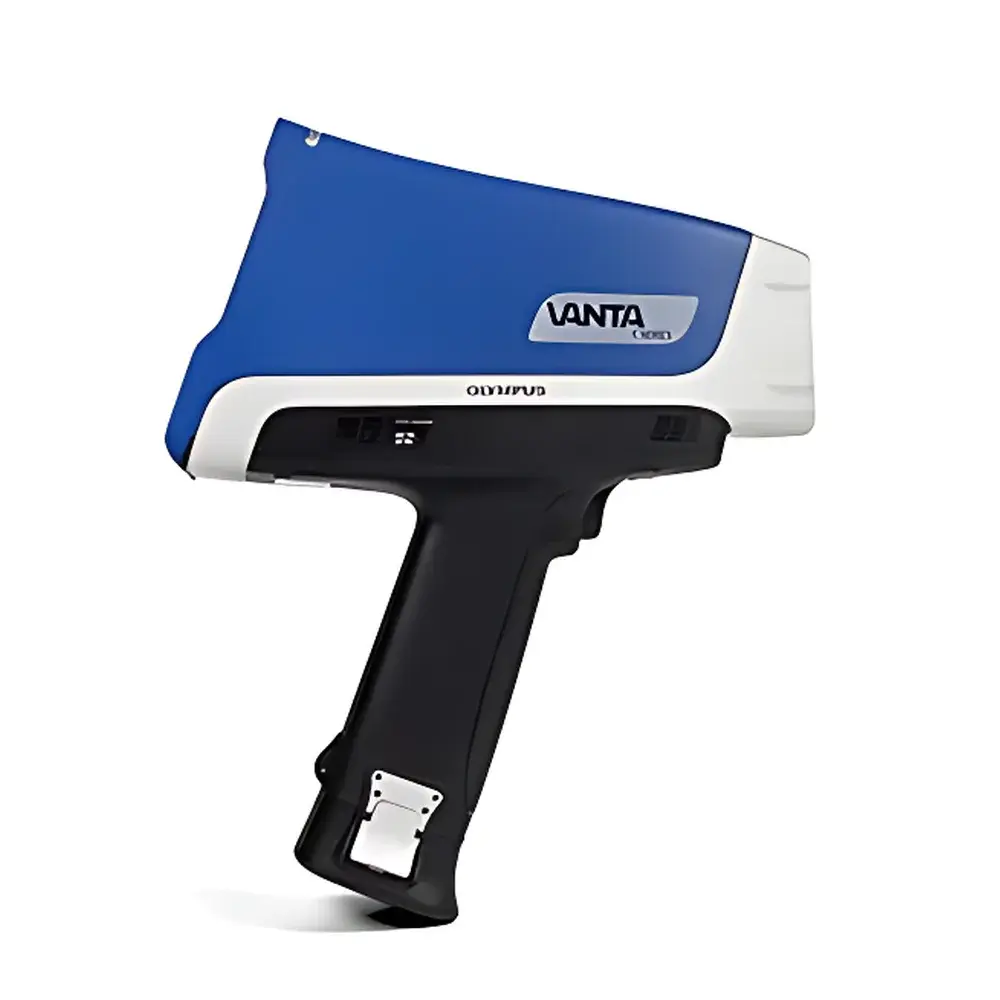
Olympus Vanta Series Handheld XRF Alloy Analyzer
| Brand | Olympus |
|---|---|
| Origin | USA |
| Manufacturer Type | Authorized Distributor |
| Origin Category | Imported |
| Model | Vanta Series Alloy Analyzer |
| Application | Handheld / Portable |
| Industry-Specific Type | Non-Ferrous Metals |
| Elemental Analysis Range | Mg to U |
| Quantitative Detection Range | 1 ppm – 99.99% |
| Energy Resolution | <140 eV |
| Repeatability | ±0.1% RSD |
Overview
The Olympus Vanta Series Handheld XRF Alloy Analyzer is a field-deployable Energy Dispersive X-Ray Fluorescence (EDXRF) spectrometer engineered for rapid, non-destructive elemental composition analysis of metallic materials in demanding industrial environments. Based on fundamental XRF physics—where primary X-rays excite atoms in the sample, inducing characteristic secondary (fluorescent) X-ray emission—the Vanta platform delivers quantitative and qualitative elemental data in seconds. Its core application lies in Positive Material Identification (PMI), alloy grade verification, scrap metal sorting, and incoming material inspection where regulatory compliance, traceability, and operational safety depend on accurate elemental attribution. Designed for rugged outdoor and industrial use, the Vanta series meets MIL-STD-810G drop-test requirements and achieves IP64/IP65 ingress protection ratings, ensuring reliable operation in dusty, humid, or rain-exposed conditions typical of foundries, refineries, recycling yards, and pipeline construction sites.
Key Features
- Proprietary Axon Technology™: Enhances spectral processing speed and signal-to-noise ratio under variable ambient conditions—including low-light, high-temperature, or vibration-prone settings—without compromising analytical accuracy.
- Ruggedized Industrial Housing: Magnesium alloy chassis with reinforced corners and shock-absorbing elastomer overmold; certified to survive multiple 4-ft drops onto concrete per MIL-STD-810G Method 516.6.
- High-Resolution Touchscreen Display: 5-inch capacitive LCD with anti-glare coating and glove-compatible touch sensitivity; readable under direct sunlight or low-illumination field conditions.
- Integrated Positioning & Documentation: Embedded GPS module logs georeferenced coordinates with every spectrum; optional 5-megapixel wide-angle camera captures annotated images synchronized with XRF results and location metadata.
- Ergonomic Control Interface: Thumb-operated industrial joystick and tactile front-panel buttons designed for one-handed operation while wearing heavy-duty PPE gloves.
- Multi-Modal Data Export: Seamless transfer via USB flash drive, Wi-Fi (802.11 a/b/g/n), or Bluetooth 4.2; supports CSV, PDF, and proprietary .vnt report formats compatible with enterprise LIMS integration.
Sample Compatibility & Compliance
The Vanta analyzer accommodates flat, curved, irregular, and coated metallic surfaces—including castings, pipes, welds, fasteners, and billets—without requiring sample preparation beyond surface cleaning. It is optimized for non-ferrous alloys (e.g., aluminum, copper, titanium, nickel, zinc, and magnesium-based grades) and capable of detecting light elements from magnesium (Mg, Z=12) through uranium (U, Z=92). The instrument complies with IEC 62471 (photobiological safety), 21 CFR Part 1020.40 (X-ray equipment safety), and EU RoHS directives. For regulated industries, it supports audit-ready data logging with time-stamped spectra, operator ID, GPS coordinates, and instrument calibration history—enabling adherence to ASME B31.3, API RP 578, ASTM E1621, ISO 17025, and FDA 21 CFR Part 11 requirements when configured with secure user authentication and electronic signature modules.
Software & Data Management
Vanta analyzers run on Olympus’ proprietary Olympus Scientific Software (OSS), a Windows CE–based platform supporting customizable workflows, multi-language UI, and role-based access control. The software includes pre-loaded alloy libraries compliant with ASTM, SAE, UNS, EN, and GB standards, with automatic grade matching and deviation alerts. Spectral data is stored locally with full metadata (including detector temperature, tube voltage/current, live time, and pulse processing parameters) to ensure analytical traceability. Cloud-enabled synchronization (via optional Olympus Connect subscription) allows centralized fleet management, remote firmware updates, and aggregated reporting across global QA/QC teams. All exported reports include digital signatures, tamper-evident hashing, and embedded calibration certificates—meeting GLP/GMP documentation rigor for pharmaceutical-grade metal component verification.
Applications
- Manufacturing QA/QC: Real-time verification of raw material conformity prior to machining or heat treatment; detection of out-of-spec interstitials (e.g., Si, Fe, Mn in Al alloys) affecting mechanical properties.
- Scrap Metal Recycling: High-throughput sorting of mixed non-ferrous streams; discrimination between Cu-Ni alloys (e.g., Monel vs. Inconel), Ti-6Al-4V vs. CP-Ti, or brass/zinc die-cast compositions.
- Oil & Gas PMI: On-site validation of piping, valves, and flanges against ASME B16.5 and API RP 578 specifications; identification of chromium depletion in stainless steels after welding.
- Aerospace & Power Generation: Verification of turbine blade superalloys (e.g., IN718, Waspaloy), thermal barrier coating substrates, and nuclear-grade zirconium cladding materials.
- Regulatory Auditing: Generation of auditable, timestamped, geo-tagged records for ISO 9001, ISO 14001, and OSHA 1910.119 compliance documentation.
FAQ
What elements can the Vanta analyzer detect in alloys?
It detects elements from magnesium (Mg) to uranium (U), including critical alloying constituents (Cr, Ni, Mo, Co, Ti, Al, Cu, Zn, Sn, Pb) and impurities (S, P, As, Bi, Cd) at concentrations ranging from 1 ppm to 99.99% by weight.
Is the Vanta analyzer suitable for light-element analysis such as aluminum or magnesium?
Yes—optimized vacuum or helium purge modes (depending on model configuration) enable reliable quantification of Mg, Al, Si, and P in lightweight alloys, meeting ASTM E2857 requirements for low-Z element precision.
How does the instrument ensure measurement repeatability across operators and field conditions?
Through hardware-level stabilization (thermally regulated X-ray tube and detector), real-time pulse processing correction, and factory-calibrated reference standards traceable to NIST SRMs; repeatability is validated at ±0.1% RSD for major alloying elements under controlled and field conditions.
Can Vanta data be integrated into an existing LIMS or ERP system?
Yes—via standardized CSV export, OPC UA connectivity, or custom API integration; Olympus provides documented protocols for seamless ingestion into LabWare, Thermo Fisher SampleManager, and SAP QM modules.
Does the device require annual recalibration or regulatory certification renewal?
While no mandatory annual recalibration is required, Olympus recommends biannual performance verification using certified reference materials; radiation safety registration follows local jurisdictional requirements (e.g., NRC or state agreement programs in the US; HSE in the UK).




