
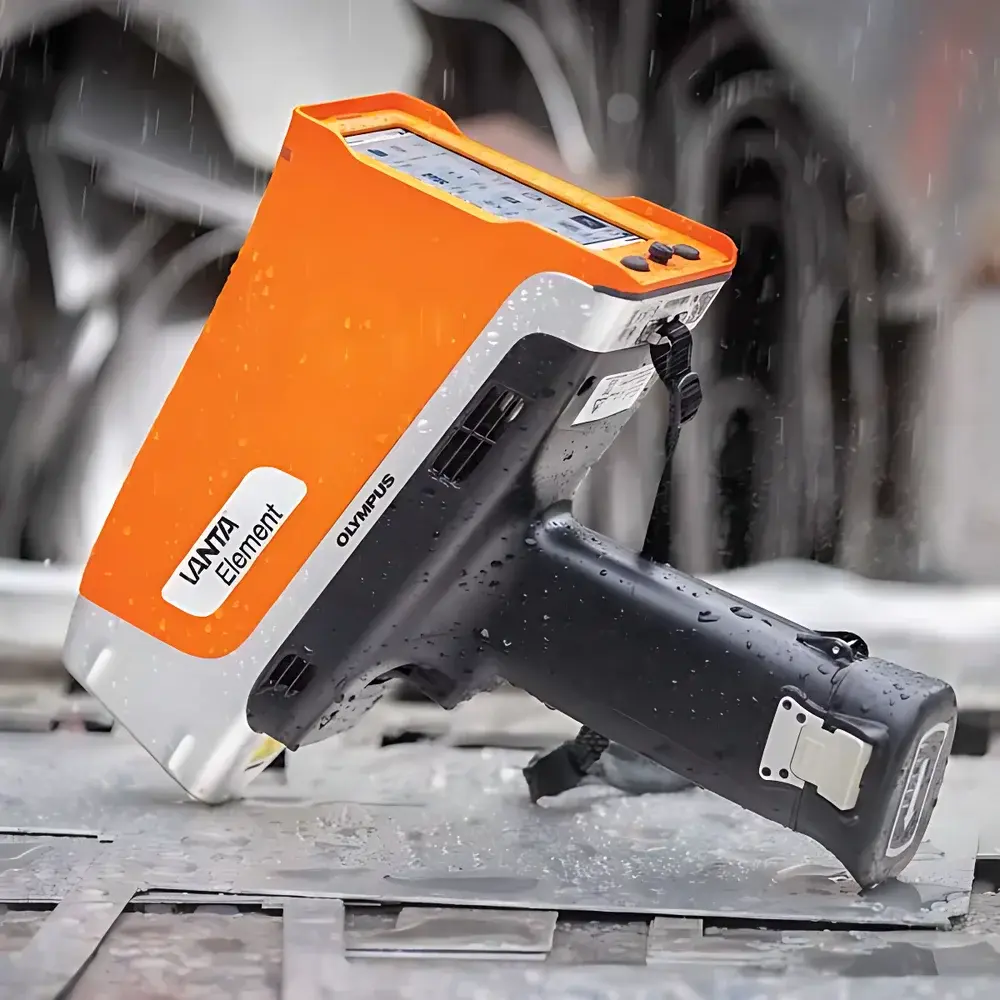
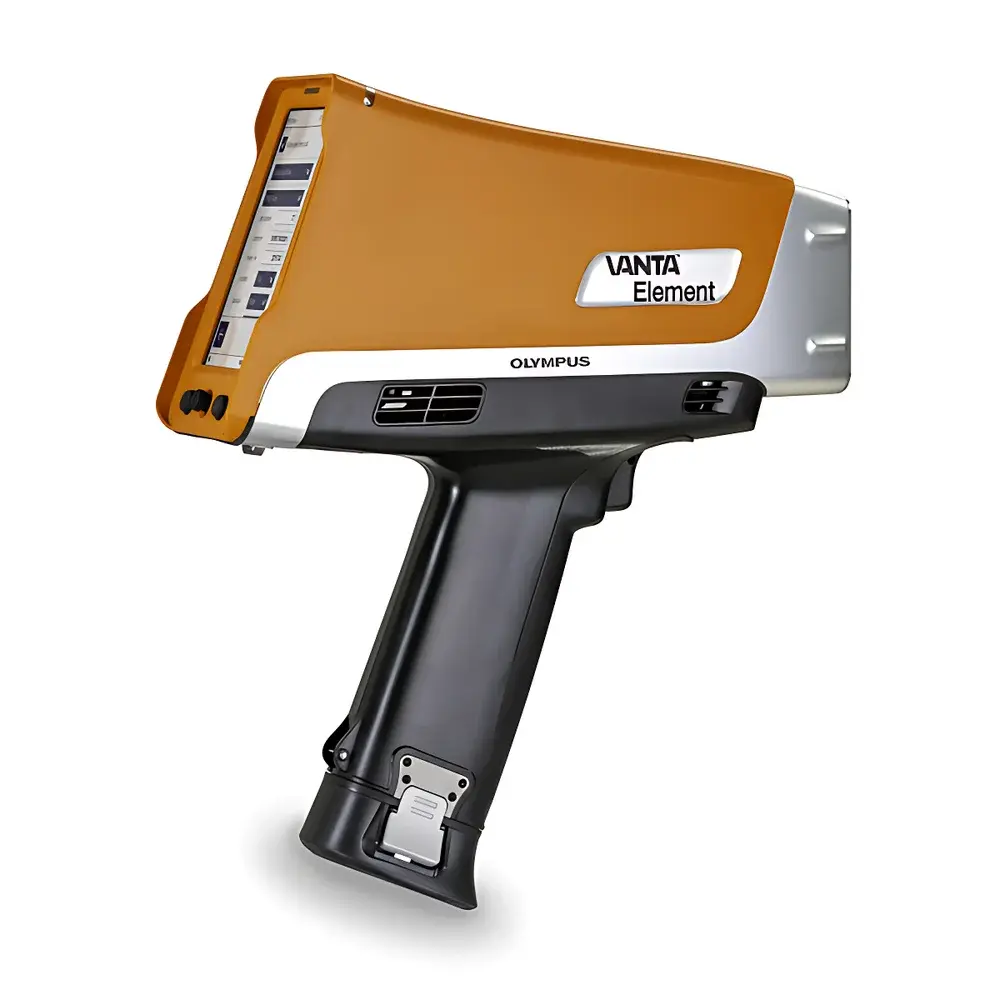
Olympus Vanta Element Handheld Energy Dispersive X-Ray Fluorescence (EDXRF) Spectrometer for Alloy Analysis
| Brand | Olympus |
|---|---|
| Origin | USA |
| Distribution Model | Authorized Distributor |
| Import Status | Imported |
| Model Series | Vanta Element |
| Application | Handheld / Portable |
| Industry Focus | Ferrous Metals |
| Elemental Range | Mg to U |
| Detection Limit | 1 ppm |
| Quantification Range | 1 ppm – 99.99 wt% |
| Energy Resolution | <140 eV at Mn Kα |
| Repeatability | ≤0.1% RSD (relative standard deviation) |
Overview
The Olympus Vanta Element is a rugged, entry-tier handheld energy dispersive X-ray fluorescence (EDXRF) spectrometer engineered for rapid, non-destructive elemental analysis and alloy identification in industrial field environments. Operating on the fundamental principle of X-ray fluorescence—where primary X-rays excite atoms in a sample, causing emission of characteristic secondary X-rays—the Vanta Element delivers quantitative and qualitative compositional data based on energy discrimination of emitted photons. Its optimized detector geometry, low-noise electronics, and Axon Technology™—a proprietary signal processing architecture—ensure high count-rate stability and spectral fidelity even under variable ambient conditions. Designed specifically for ferrous metal applications—including scrap sorting, incoming material inspection, and mill certificate verification—the instrument supports real-time grade matching against built-in alloy libraries compliant with ASTM E2925, ISO 17025–aligned workflows, and common industry standards such as UNS, AISI, SAE, and DIN. Its compact form factor and intuitive interface enable deployment by non-specialist personnel without compromising analytical rigor.
Key Features
- Ruggedized industrial design certified to IP54 ingress protection rating for dust and water resistance
- MIL-STD-810G certified drop-tested up to 1.5 meters onto concrete, minimizing downtime from accidental impacts
- Operational temperature range of –10 °C to +45 °C, validated for continuous use in outdoor or unconditioned facility environments
- 50 µm thick polyimide X-ray window—tool-free replaceable—providing mechanical durability while maintaining optimal low-energy sensitivity for Mg–Al–Si detection
- Stainless steel front panel with abrasion-resistant surface finish for long-term field reliability
- Integrated 1 GB industrial-grade microSD card for local result storage; supports USB mass storage export for offline reporting
- Optional Wi-Fi and Bluetooth connectivity enabling secure wireless data transfer to network folders or enterprise LIMS systems
Sample Compatibility & Compliance
The Vanta Element accommodates heterogeneous solid samples including castings, forgings, pipes, sheets, welds, and scrap fragments. Surface preparation is minimal—flat, clean, and homogeneous areas ≥5 mm in diameter yield optimal repeatability. The instrument complies with IEC 62471 (photobiological safety), FDA 21 CFR Part 1020.40 (X-ray equipment safety), and EU RoHS directives. Its measurement protocols support traceability requirements under GLP and GMP frameworks, with audit-ready metadata logging (operator ID, timestamp, GPS coordinates, exposure parameters). While not a regulated medical device, its analytical output meets ASTM E2925–22 criteria for handheld XRF used in positive material identification (PMI) and scrap metal sorting.
Software & Data Management
The Vanta Element runs Olympus’ proprietary firmware with a touch-optimized Android-based UI modeled after consumer-grade mobile interfaces—reducing operator training time and minimizing input errors. Preloaded alloy libraries include over 1,000 grades across carbon steels, stainless steels, tool steels, and nickel-based superalloys. Data management includes automatic CSV report generation, customizable pass/fail thresholds, and configurable grade-matching logic. Optional Olympus Scientific Cloud integration enables encrypted cloud storage, remote dashboard access, and centralized fleet monitoring. All measurements retain full spectral raw data, supporting retrospective reprocessing and method validation per ISO/IEC 17025 Clause 7.8. Audit trails record user actions, calibration events, and firmware updates—fully compatible with 21 CFR Part 11 electronic signature readiness when deployed with appropriate IT governance controls.
Applications
- Scrap metal recycling: Rapid segregation of stainless, carbon, and specialty alloys at receiving docks
- Manufacturing QA/QC: Incoming raw material verification prior to heat treatment or machining
- Field PMI (Positive Material Identification): On-site compliance checks per ASME B31.3 and API RP 578
- Construction site verification: Confirming structural steel composition during erection or retrofitting
- Inventory management: Real-time grading of stored billets, bars, and fasteners
- Educational and vocational labs: Teaching principles of atomic spectroscopy and metallurgical QC practices
FAQ
What elements can the Vanta Element detect?
It detects elements from magnesium (Mg, Z=12) through uranium (U, Z=92), with reliable quantification down to 1 ppm for mid-Z elements (e.g., Cr, Ni, Mo) under optimal measurement conditions.
Is calibration required before each use?
Factory calibration is stable for routine operation; however, daily verification using a certified reference standard (e.g., SS316 check sample) is recommended per ISO 17025 and ASTM E2925 best practices.
Can the Vanta Element analyze coated or painted metals?
Surface coatings >25 µm thick may attenuate low-Z signals; removal of paint, rust, or oxide layers is advised for accurate Mg–Al–Si quantification. The instrument includes a “coating mode” for approximate substrate correction.
Does it support regulatory reporting for quality audits?
Yes—full spectral data, measurement metadata, and operator logs are exportable in CSV and PDF formats, supporting internal audits and third-party inspections aligned with ISO 9001 and AS9100 requirements.
How is firmware updated and maintained?
Updates are delivered via Olympus-provided OTA packages or offline USB installation, with version history and change logs retained in system diagnostics for configuration control.
Related Products




