
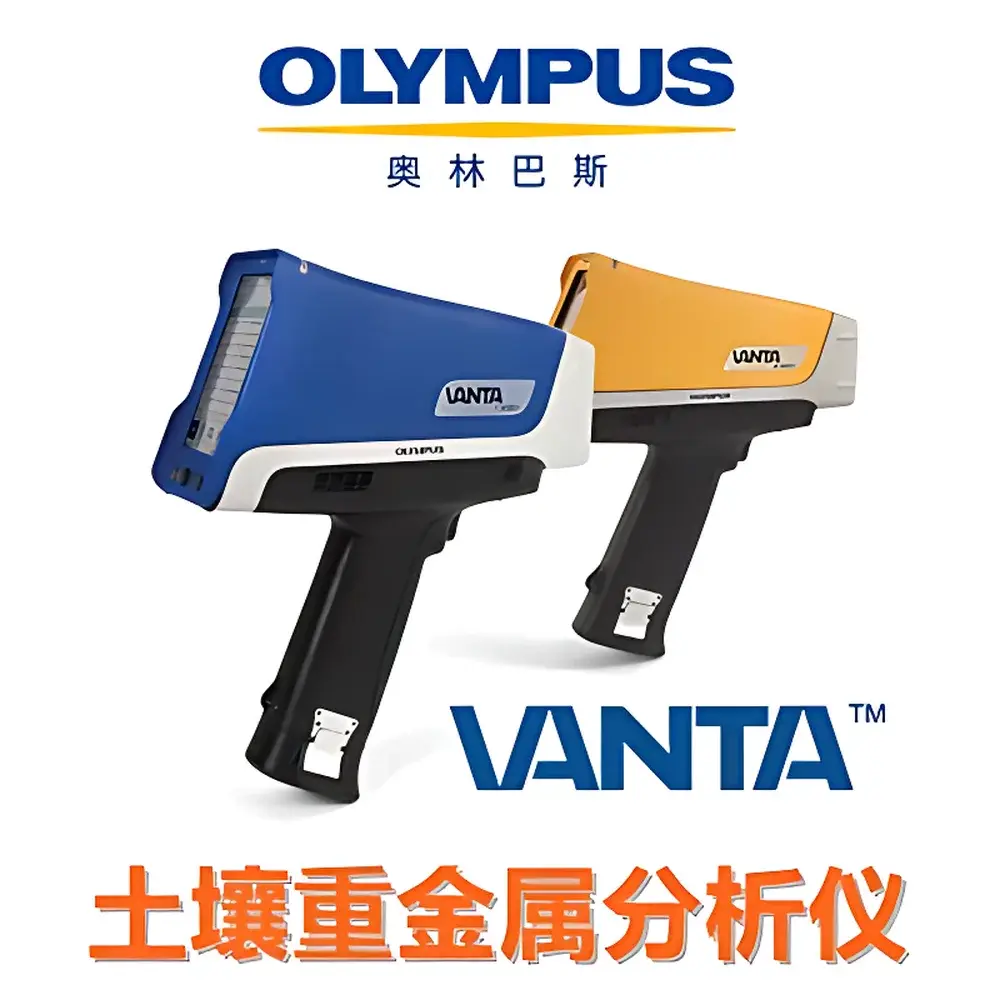
Olympus Vanta Series Handheld Energy Dispersive X-Ray Fluorescence (EDXRF) Spectrometer for Soil Heavy Metal Analysis
| Brand | Olympus |
|---|---|
| Origin | USA |
| Manufacturer Type | Authorized Distributor |
| Origin Category | Imported |
| Model | Vanta Series |
| Application | Handheld/Portable |
| Industry-Specific Use | Soil & Environmental Monitoring |
| Elemental Range | Mg–U |
| Detection Range | 1 ppm – 99.99% |
| Energy Resolution | <140 eV |
| Repeatability | 0.1% |
Overview
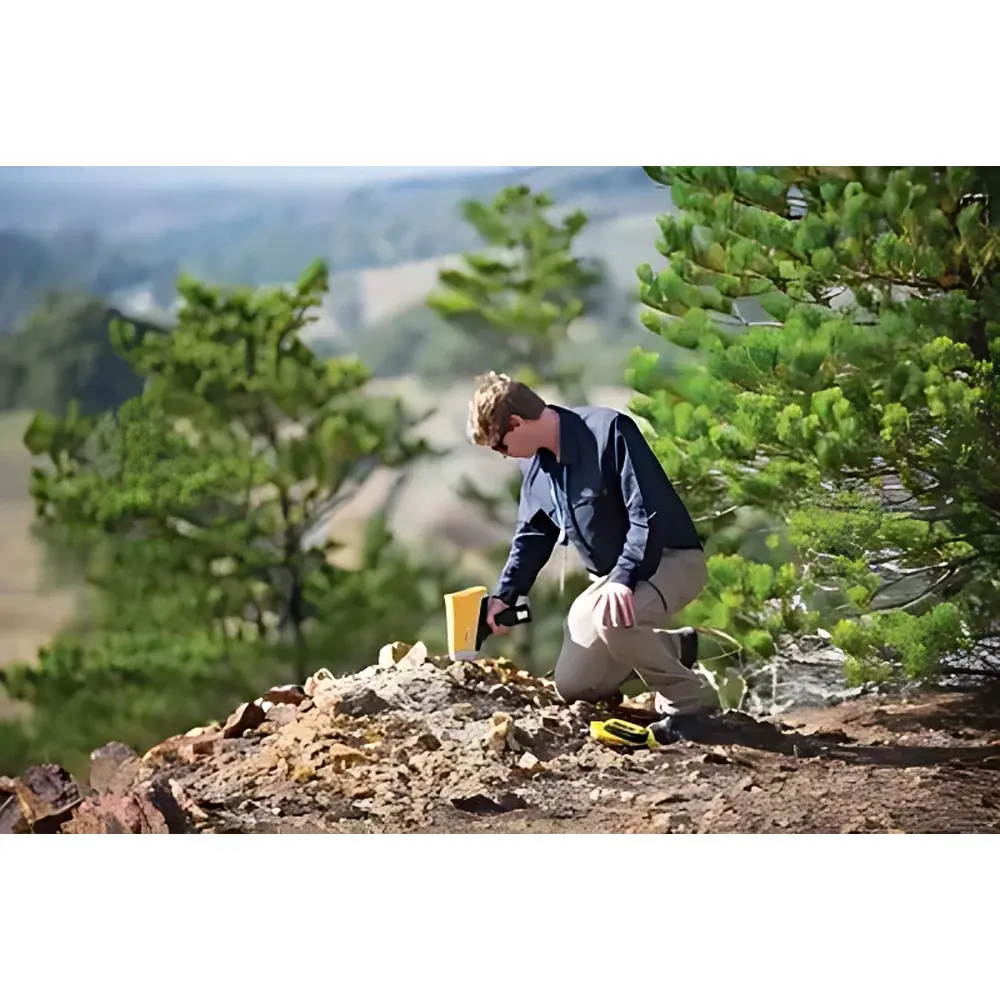
The Olympus Vanta Series is a rugged, field-deployable energy dispersive X-ray fluorescence (EDXRF) spectrometer engineered for rapid, non-destructive elemental analysis of soils, sediments, dust wipes, filters, and bulk environmental samples. Operating on the fundamental principle of X-ray fluorescence—where primary X-rays excite atoms in a sample, causing emission of characteristic secondary X-rays—the Vanta delivers quantitative and semi-quantitative data for elements from magnesium (Mg) to uranium (U). Its design prioritizes regulatory compliance, operational robustness, and analytical reproducibility in uncontrolled outdoor environments. Unlike benchtop EDXRF systems, the Vanta integrates real-time spectral processing, embedded environmental compensation (e.g., pressure and temperature correction), and direct geo-referencing—making it suitable for field screening, site characterization, and decision-support workflows aligned with U.S. EPA Method 6200 and ISO/DIS 13196.
Key Features
- Ruggedized industrial design compliant with MIL-STD-810G for 1.3 m drop resistance and IP65 ingress protection (dust-tight and water-jet resistant)
- Axon Technology™—proprietary low-noise electronics enabling high-count-rate detection and consistent inter-instrument repeatability of ≤0.1% RSD
- Integrated GPS/GLONASS receiver with sub-meter positional accuracy for geotagging spectra and generating spatial contamination maps
- Multi-modal excitation: selectable 4 W X-ray tube anodes (Rh, Ag, or W) and programmable 8-position primary beam filtration for optimized sensitivity across light and heavy elements
- Large-area silicon drift detector (SDD) with <140 eV Mn Kα energy resolution at 100,000 cps, ensuring reliable separation of overlapping peaks (e.g., As Kα/Pb Lα, Cr Kα/V Kα)
- Linux-based operating system with intuitive touch interface (800 × 480 WVGA capacitive display), customizable home screen shortcuts, and multi-language support
- Onboard 4 GB internal storage plus microSD expansion; data export via USB 2.0 (host/device), Wi-Fi (802.11 b/g/n), or Bluetooth 4.0 LE
Sample Compatibility & Compliance
The Vanta accommodates minimal-prep sampling protocols essential for high-throughput environmental fieldwork: in-situ soil scanning, bagged homogenized soils, sediment cores, filter media, surface swipes, and liquid suspensions (with appropriate containment). It supports method-defined applications including EPA Method 6200 (field screening for RCRA metals), ISO/DIS 13196 (soil contamination assessment), and NIOSH/OSHA aerosol filter analysis. Regulatory traceability is enhanced through built-in audit trail functionality, time-stamped spectral records, and optional 5 MP auto-focus panoramic imaging for contextual documentation. The instrument meets GLP/GMP-aligned data integrity requirements—including secure user authentication, electronic signatures (when paired with validated software), and full metadata capture (GPS coordinates, ambient pressure, operator ID, calibration status)—supporting compliance with FDA 21 CFR Part 11 where deployed in regulated remediation or due diligence contexts.
Software & Data Management
Data acquisition and reporting are managed via Olympus’ proprietary PC-based software (e.g., Olympus Scientific Software Suite), which enables advanced spectral deconvolution, matrix-matched calibration, limit-of-detection (LOD) calculation, and statistical trend analysis. Raw spectra, quantified results, GPS coordinates, and associated images are stored in standardized formats (e.g., .csv, .pdf, .dx) compatible with GIS platforms such as ArcGIS and QGIS. Cloud synchronization (via optional Olympus Connect services) facilitates centralized data aggregation, remote QA/QC review, and collaborative interpretation across project teams. All firmware updates and calibration files are digitally signed and version-controlled to maintain instrument traceability throughout its service life.
Applications
- Site characterization and preliminary risk assessment under CERCLA and RCRA frameworks
- Soil lead (Pb), arsenic (As), cadmium (Cd), chromium (Cr), and mercury (Hg) screening for brownfield redevelopment and residential property evaluation
- Monitoring of remediation progress through longitudinal elemental mapping
- Compliance verification for landfill cover materials, construction fill, and dredged sediments
- Industrial hygiene assessments—analysis of airborne particulate filters and surface wipe samples per OSHA ID-121 or NIOSH 7300
- Geochemical surveying and mining exploration support in near-surface regolith
FAQ
Does the Vanta require sample digestion or lab preparation before analysis?
No. The Vanta performs direct solid-phase analysis with no chemical digestion, grinding, or pelletizing required for most soil and sediment matrices.
Can the Vanta quantify light elements such as magnesium (Mg) and aluminum (Al) reliably in soil?
Yes—when configured with Rh or W anode tubes and optimized vacuum/helium purge (optional accessory), the Vanta achieves detection limits in the low ppm range for Mg, Al, Si, P, S, and Cl in silicate-rich matrices.
Is the instrument’s GPS data exportable in standard GIS-compatible formats?
Yes—georeferenced results are exported as CSV or Shapefile (.shp) with WGS84 coordinates, enabling seamless integration into ESRI, QGIS, or custom mapping dashboards.
How is measurement uncertainty addressed in regulatory reporting?
Uncertainty estimation is supported via certified reference material (CRM) validation, repeated measurement statistics, and propagation-of-error modeling within the software; documented procedures align with ISO/IEC 17025 requirements for field instrumentation.
What maintenance is required to sustain long-term performance?
Routine maintenance includes periodic verification using factory-supplied check sources, cleaning of the X-ray window and detector aperture, and annual calibration validation by an Olympus-authorized service center.
Related Products





