
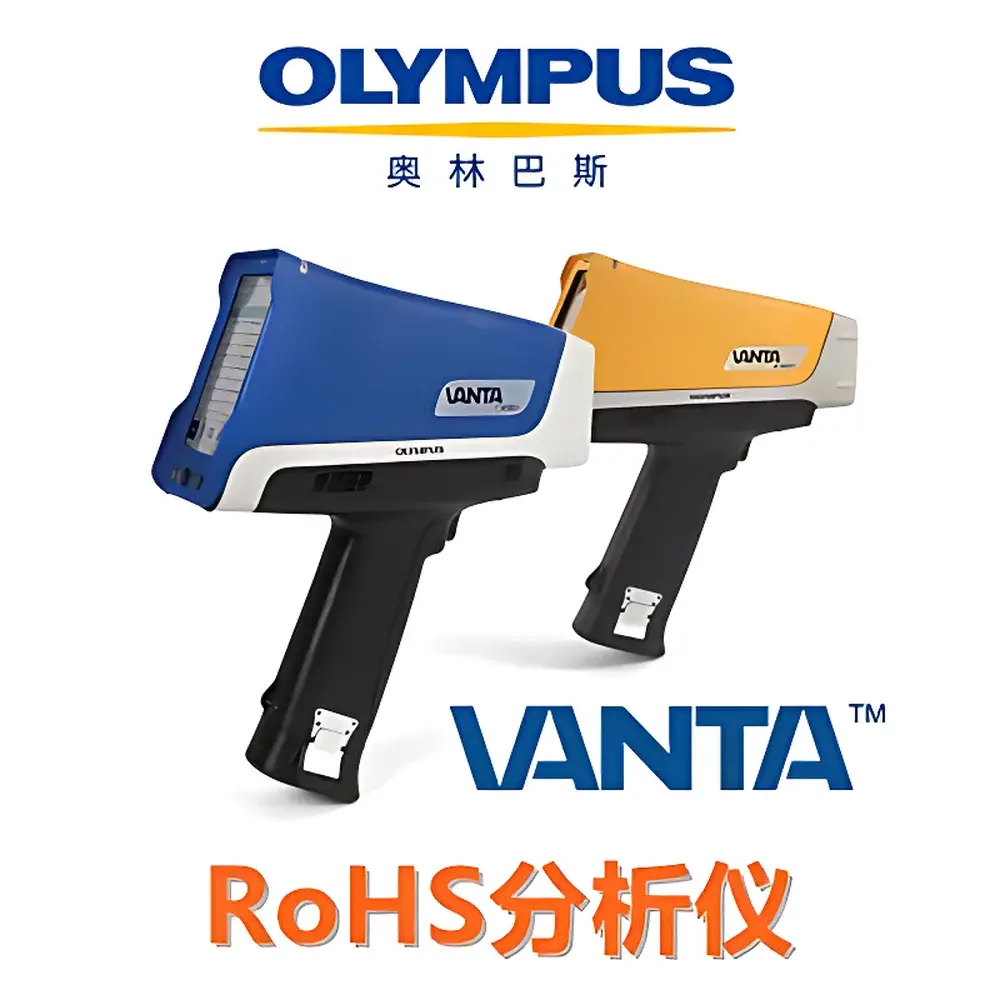
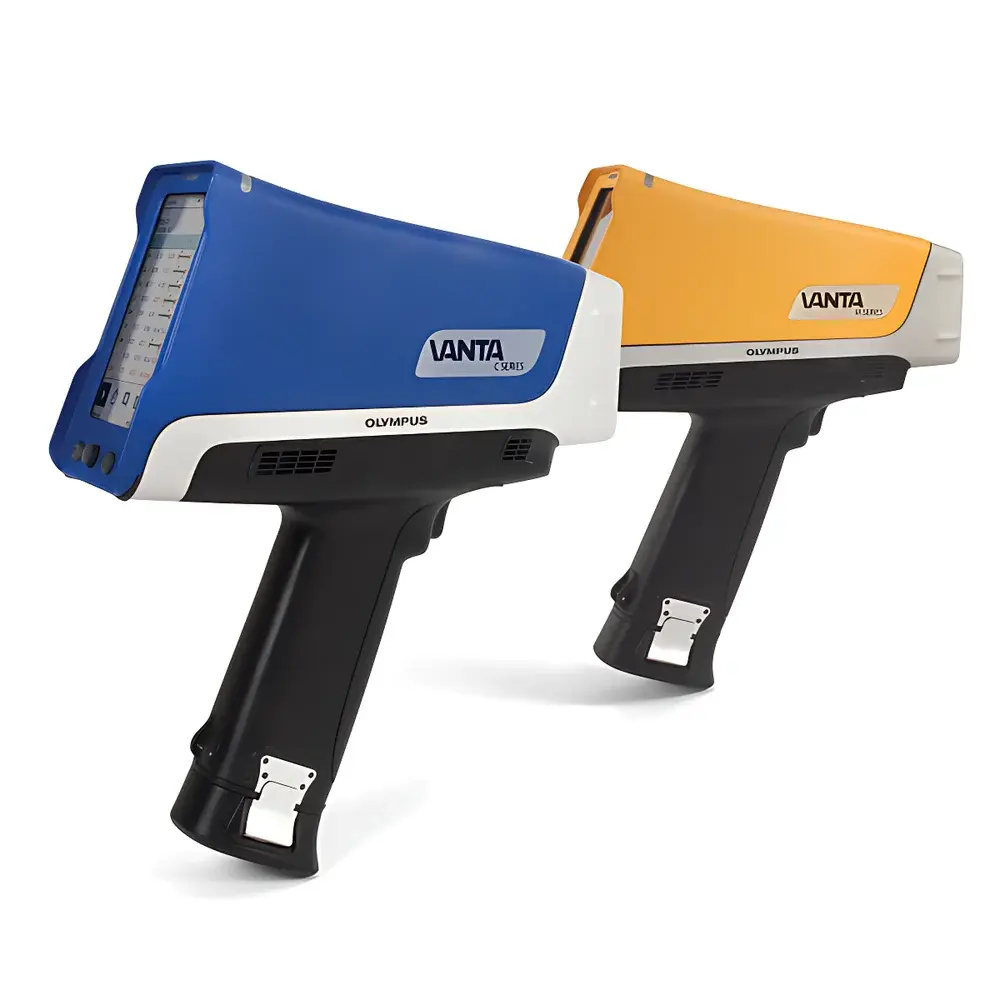
Olympus Vanta Handheld RoHS-Compliant Energy Dispersive X-Ray Fluorescence (EDXRF) Spectrometer
| Brand | Olympus |
|---|---|
| Origin | USA |
| Manufacturer Type | Authorized Distributor |
| Origin Category | Imported |
| Model | Vanta RoHS Series |
| Application | Handheld / Portable |
| Industry-Specific Use | Electronics |
| Elemental Range | Mg–U |
| Detection Range | 1 ppm – 99.99% |
| Energy Resolution | <140 eV |
| Repeatability | 0.1% |
Overview
The Olympus Vanta Handheld RoHS-Compliant Energy Dispersive X-Ray Fluorescence (EDXRF) Spectrometer is an industrial-grade, field-deployable analytical instrument engineered for rapid, non-destructive elemental screening of consumer goods, electronics, and recycled materials in compliance with global hazardous substance regulations. Based on fundamental EDXRF physics—where primary X-rays excite characteristic secondary (fluorescent) X-ray emissions from sample atoms—the Vanta delivers quantitative and semi-quantitative elemental composition data in seconds. Its core application lies in regulatory conformance verification, particularly for restricted substances under the EU RoHS Directive (2011/65/EU), China RoHS (ACPEIP), Japan RoHS, Korea RoHS, U.S. CPSIA (HR404), California Proposition 65, and CPSC-CH-E1002-08. Unlike benchtop lab instruments, the Vanta operates without sample preparation, enabling real-time pass/fail decisions at point-of-manufacture, incoming inspection, or on-site recycling sorting—reducing reliance on off-site laboratory analysis and accelerating quality gate throughput.
Key Features
- Proprietary Axon Technology: Low-noise electronics and high-count-rate pulse processing ensure exceptional signal-to-noise performance, delivering sub-140 eV energy resolution at Mn Kα and enabling reliable detection limits down to 1 ppm for key regulated elements (Pb, Cd, Cr, Hg, Br).
- Ruggedized Industrial Design: Certified to MIL-STD-810G for 1.3 m drop resistance and IP65-rated for dust-tightness and protection against low-pressure water jets—ensuring operational continuity in manufacturing floors, scrap yards, and outdoor inspection environments.
- Wide Operating Temperature Range: Functional from –10 °C to +50 °C without active cooling; optional fan accessory extends continuous operation at elevated ambient temperatures while maintaining IP56 ingress protection.
- Integrated Dual-Camera System: Full VGA targeting camera + 5-megapixel auto-focus panoramic camera for precise measurement positioning and automated image-tagged result archiving.
- Field-Optimized Hardware: 4 W microfocus X-ray tube with selectable anode materials (Rh, Ag, W); eight-position automatic primary beam filter wheel; large-area silicon drift detector (SDD) for M-series units; quad-core ARM processor for responsive UI and real-time spectrum processing.
- Ergonomic & Glove-Compatible Interface: Capacitive WVGA touchscreen (800 × 480), tactile industrial joystick, and programmable soft keys enable intuitive navigation—even with safety gloves.
Sample Compatibility & Compliance
The Vanta RoHS Series is validated for direct analysis of heterogeneous solid matrices including polymers, metals, ceramics, textiles, painted surfaces, printed circuit boards, solder joints, packaging foils, and composite assemblies. It requires no digestion, grinding, or pelletization—preserving sample integrity and eliminating preparation-induced contamination or bias. Method validation aligns with ASTM E2857–21 (“Standard Guide for Validation of XRF Screening Methods for RoHS Compliance”) and supports GLP/GMP-aligned workflows via audit-trail-capable software logging. Instrument firmware includes pre-calibrated RoHS-specific modes optimized per material class (e.g., “Plastic”, “Metal”, “PCB”), each applying matrix-matched fundamental parameter algorithms and certified reference material (CRM)-based calibration traceability. Regulatory compliance documentation—including ISO/IEC 17025–aligned uncertainty budgets for Pb/Cd/Hg/Cr/Br quantification—is available upon request for internal QA audits or third-party certification submissions.
Software & Data Management
Vanta instruments run a secure, Linux-based embedded OS with Olympus’ proprietary Olympus Scientific Software (OSS). OSS supports configurable reporting templates compliant with ISO 14001, IECQ QC080000, and corporate ERP integration requirements. All spectral data, metadata (GPS coordinates, operator ID, timestamp, camera images), and pass/fail flags are stored locally in encrypted 4 GB onboard memory—with expandable storage via microSD card. Data export options include USB mass storage mode, Wi-Fi (802.11 b/g/n via optional adapter), and Bluetooth (BLE/Classic) for seamless transfer to LIMS, SAP QM, or cloud-hosted compliance dashboards. Optional Olympus Cloud Connect enables remote firmware updates, centralized fleet monitoring, and role-based access control—meeting FDA 21 CFR Part 11 requirements for electronic records and signatures when deployed in regulated manufacturing environments.
Applications
- RoHS Pre-screening of Electronic Components: Rapid verification of Pb-free solder, halogen-free laminates, and plating coatings on connectors, PCBs, cables, and housings.
- Consumer Product Safety Testing: On-the-spot analysis of toys, jewelry, apparel fasteners (zippers, buttons), food contact materials (lunchboxes, cutlery), and children’s products per CPSIA Section 101.
- Recycling Stream Sorting: Identification of regulated metals in WEEE, e-waste, and post-consumer plastics to enforce upstream material acceptance criteria.
- Supply Chain Due Diligence: Supplier qualification audits, incoming raw material checks, and factory floor spot checks to mitigate non-compliance risk prior to shipment.
- Regulatory Surveillance: Enforcement by customs authorities, market surveillance bodies, and environmental agencies conducting field inspections of imported goods.
FAQ
What regulatory standards does the Vanta RoHS Series support out-of-the-box?
The instrument includes factory-loaded methods aligned with EU RoHS (2011/65/EU), China RoHS (ACPEIP), Japan RoHS, Korea RoHS, U.S. CPSIA, and CPSC-CH-E1002-08. Custom method development is supported via OSS Advanced Mode.
Can the Vanta distinguish between Cr(III) and Cr(VI)?
No—EDXRF is an elemental technique and cannot differentiate oxidation states. Cr quantification reflects total chromium content. For Cr(VI) speciation, complementary techniques such as ion chromatography coupled with ICP-MS are required.
Is the Vanta suitable for analyzing liquids or powders?
While primarily designed for solids, homogeneous powders may be analyzed in cup holders with Mylar film; liquid analysis is not recommended due to potential leakage, volatility, and lack of standardized geometry.
How is calibration maintained across multiple instruments in a global fleet?
Olympus provides CRM-based calibration verification kits and traceable calibration services. OSS supports multi-instrument synchronization of calibration coefficients and firmware versions via Olympus Cloud Connect.
Does the Vanta require annual recalibration or regulatory re-certification?
Per ISO/IEC 17025 and IECQ guidelines, routine performance verification using check standards is recommended before each shift. Formal recalibration is advised annually or after significant mechanical impact, service, or environmental exposure changes.






