
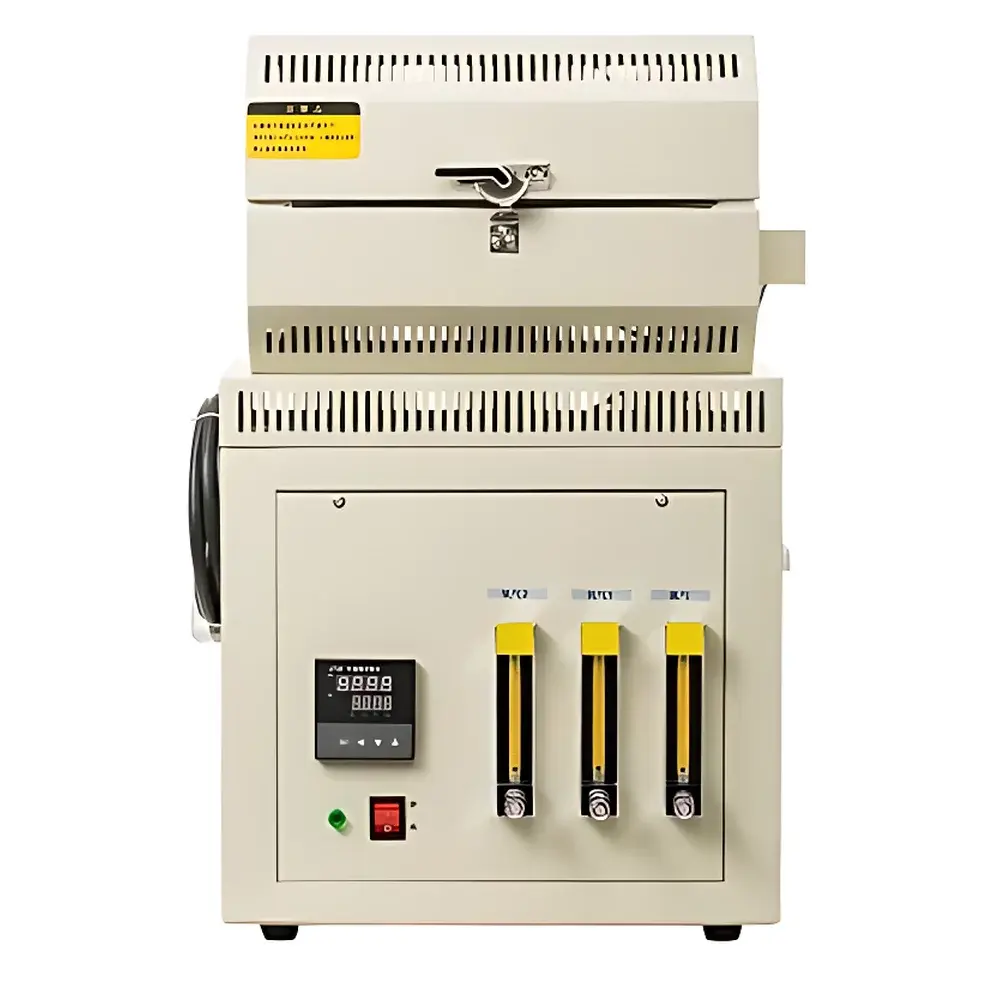
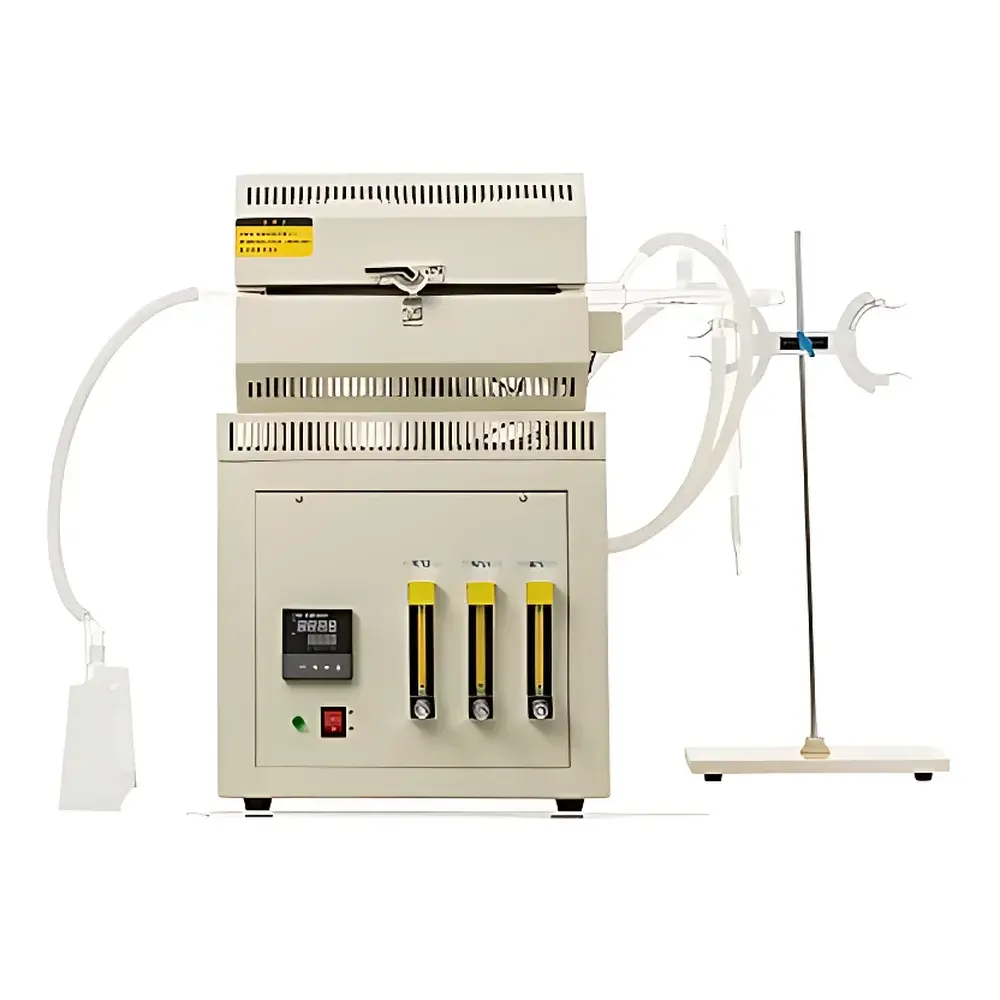
Zhuchi AOX-3 Adsorbable Organic Halogens (AOX) Combustion Analyzer
| [Brand | Zhuchi |
|---|---|
| Origin | Zhejiang, China |
| Model | AOX-3 |
| Detection Principle | High-Temperature Combustion Coupled with Microcoulometric Titration |
| Measurement Range | 0.8–1000 µg/L |
| Accuracy | ±1% |
| Repeatability | ≤1% RSD |
| Detection Limit | 0.8 µg/L |
| Resolution | 0.01 µg |
| Max Combustion Temperature | 1150 °C |
| Furnace Temp Control Stability | ±1 °C |
| Sample Introduction | Nitrogen-Pressurized Column Adsorption |
| Compatible Detection Systems | Microcoulometer or Ion Chromatograph |
| Power Supply | 220 V, 50 Hz, 1.5 kW |
| Dimensions (W×D×H) | 345 × 360 × 660 mm |
| Net Weight | 26 kg] |
Overview
The Zhuchi AOX-3 Adsorbable Organic Halogens (AOX) Combustion Analyzer is a dedicated high-temperature combustion system engineered for the quantitative determination of adsorbable organic halogens in aqueous and solid environmental matrices. It operates on the internationally recognized principle of adsorption–combustion–microcoulometric detection: organic halogen compounds are first concentrated onto activated carbon via nitrogen-pressurized column adsorption, followed by complete thermal oxidation at up to 1150 °C in an oxygen-rich atmosphere. The resulting halide ions (Cl⁻, Br⁻, F⁻, I⁻) are absorbed in an alkaline solution and quantified using either a microcoulometric titrator or an ion chromatograph. This methodology conforms rigorously to standardized test protocols including ISO 9562:1989, GB/T 15959–1995, and HJ/T 83–2001 — all of which define AOX as the sum of organically bound chlorine, bromine, and iodine (excluding fluorine unless specified). The AOX-3 is not a standalone detector but a fully integrated, furnace-based sample preparation and conversion module designed for seamless interfacing with compliant downstream analytical instrumentation.
Key Features
- Programmable temperature control system (LTDE PID + SSR) enabling precise ramping (≤50 °C/min), isothermal hold, and automated shutdown — with dual-stage overtemperature protection for operational safety and instrument longevity
- Ceramic fiber insulation furnace chamber (φ40 × 300 mm) with embedded high-resistance heating wire, delivering rapid thermal response (<10 min startup), low thermal mass, and energy-efficient operation
- Modular, openable furnace design permitting real-time visual monitoring of sample combustion and immediate access for maintenance or tube replacement
- Integrated built-in scrubbing system with five custom wash bottles and two absorption units, optimized for removal of SO₂, NOₓ, and CO₂ prior to halide capture
- Robust mechanical architecture: cold-rolled steel housing with phosphate coating and electrostatic powder finish; net weight 26 kg; compact footprint (345 × 360 × 660 mm)
- Low-voltage high-efficiency heating (220 V, 1.5 kW) ensures stable long-duration operation — validated for continuous 24-hour duty cycles in high-throughput environmental labs
- Standardized sample introduction using quartz boats and nitrogen-pressurized adsorption columns (15 mm OD silicone tubing kit included), compatible with both liquid and solid samples (5–1000 mg matrix mass)
Sample Compatibility & Compliance
The AOX-3 supports analysis across a broad spectrum of environmental and industrial matrices, including drinking water, surface water, groundwater, wastewater, effluent, seawater, treated municipal water, pulp and paper mill discharges, sludge, sediments, soils, and waste oils. Its column adsorption protocol — utilizing analytically pure activated carbon — achieves >95% recovery for chlorinated, brominated, and iodinated organics under standard HJ/T 83–2001 conditions. The system complies fully with ISO 9562:1989 (Water quality — Determination of adsorbable organic halogens (AOX) — Microcoulometric method), GB/T 15959–1995, and referenced regulatory frameworks including GB 8978–1996 (Comprehensive Wastewater Discharge Standard) and GB 3544–2008 (Discharge Standard of Water Pollutants for Ferrous Metallurgy Industry). While not intrinsically GLP/GMP-certified, its programmable temperature logging, reproducible combustion profiles, and traceable calibration procedures support audit readiness for laboratories operating under ISO/IEC 17025 accreditation requirements.
Software & Data Management
The AOX-3 operates as a hardware platform without embedded software; however, it is fully compatible with third-party data acquisition systems used with microcoulometers or ion chromatographs. Optional PC-based control and data logging modules (sold separately) provide time-stamped temperature ramp profiles, combustion event markers, and integration-ready output formats (CSV, ASCII) suitable for LIMS ingestion. All temperature setpoints, dwell times, and ramp rates are stored in non-volatile memory within the LTDE controller — supporting full traceability per FDA 21 CFR Part 11 principles when paired with validated chromatographic data systems. Calibration verification is performed using certified potassium chloride standards traceable to NIST SRM 999a, with documented linearity (R² ≥ 0.999) across the 0.8–1000 µg/L range.
Applications
- Regulatory compliance testing for AOX in industrial effluents prior to discharge (e.g., chlor-alkali, pesticide, pharmaceutical, and pulp/paper manufacturing)
- Monitoring formation of disinfection by-products (DBPs) such as chloroform and haloacetic acids in drinking water treatment plants
- Assessment of halogenated contaminant load in landfill leachate and contaminated site groundwater
- Method validation and reference material analysis in national environmental monitoring laboratories
- Research into organohalogen persistence, bioaccumulation potential, and transformation pathways in aquatic ecosystems
- QA/QC support for activated carbon regeneration studies and adsorption efficiency optimization
FAQ
What detection instruments must be used with the AOX-3?
The AOX-3 is a combustion unit only. Quantification requires coupling to either a microcoulometer (per GB/T 15959–1995) or an ion chromatograph with suppressed conductivity detection (per HJ/T 83–2001). These instruments are not included.
Is purified oxygen mandatory?
While 99.6% oxygen suffices, use of ultra-high-purity oxygen (99.999%) eliminates the need for pre-combustion gas scrubbing and improves halogen recovery reproducibility — especially critical for low-level (<10 µg/L) measurements.
Can the AOX-3 analyze solid samples directly?
Yes. Solid matrices (soils, sludges, sediments) are homogenized, weighed into quartz boats (5–1000 mg), and subjected to identical adsorption–combustion–detection workflow as liquids, following EPA Method 1650 adaptation guidelines.
What maintenance intervals are recommended?
Quartz combustion tubes should be inspected after every 50 runs; absorption bottles and scrubber solutions require replacement before each batch; furnace insulation integrity and thermocouple calibration should be verified quarterly or per ISO/IEC 17025 internal audit schedule.
Does the system support remote diagnostics?
The LTDE controller provides analog voltage outputs (0–5 V) corresponding to real-time temperature and status signals. When integrated with lab SCADA or PLC networks, these enable remote monitoring — though no native Ethernet/Wi-Fi interface is provided.







