
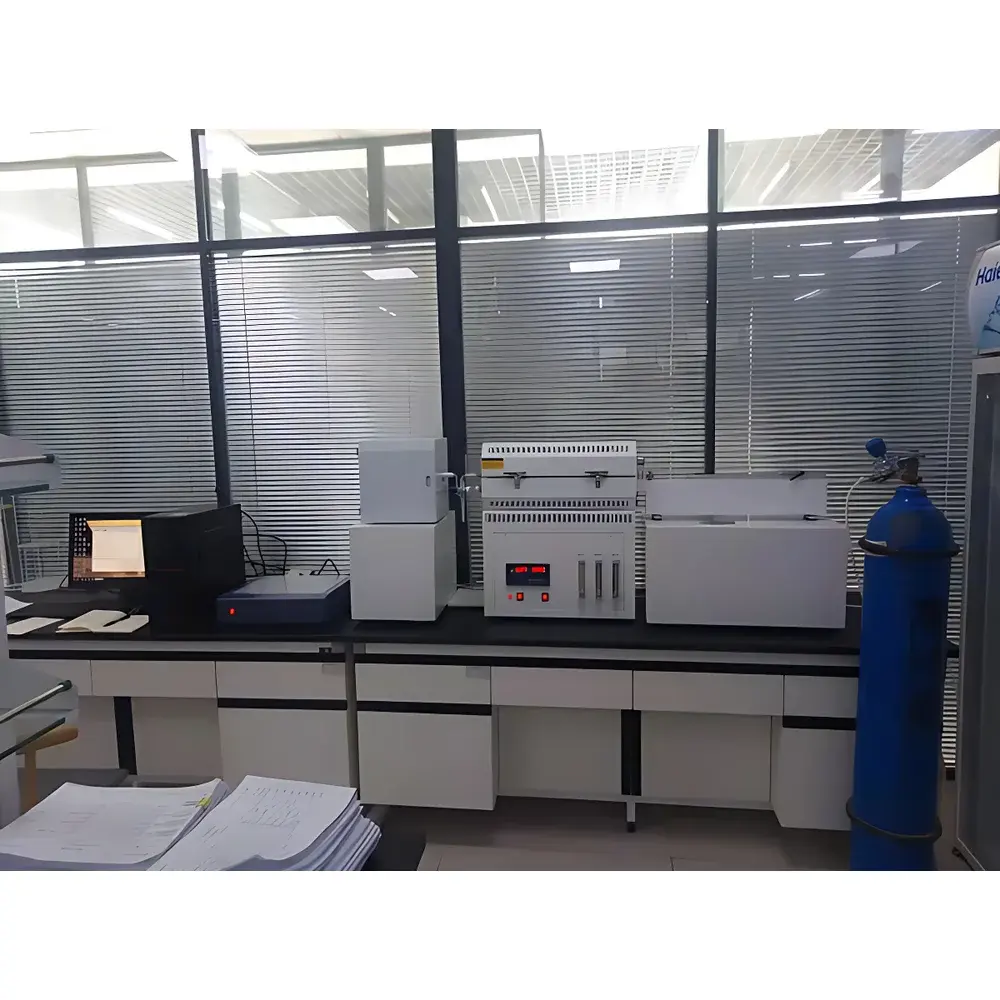
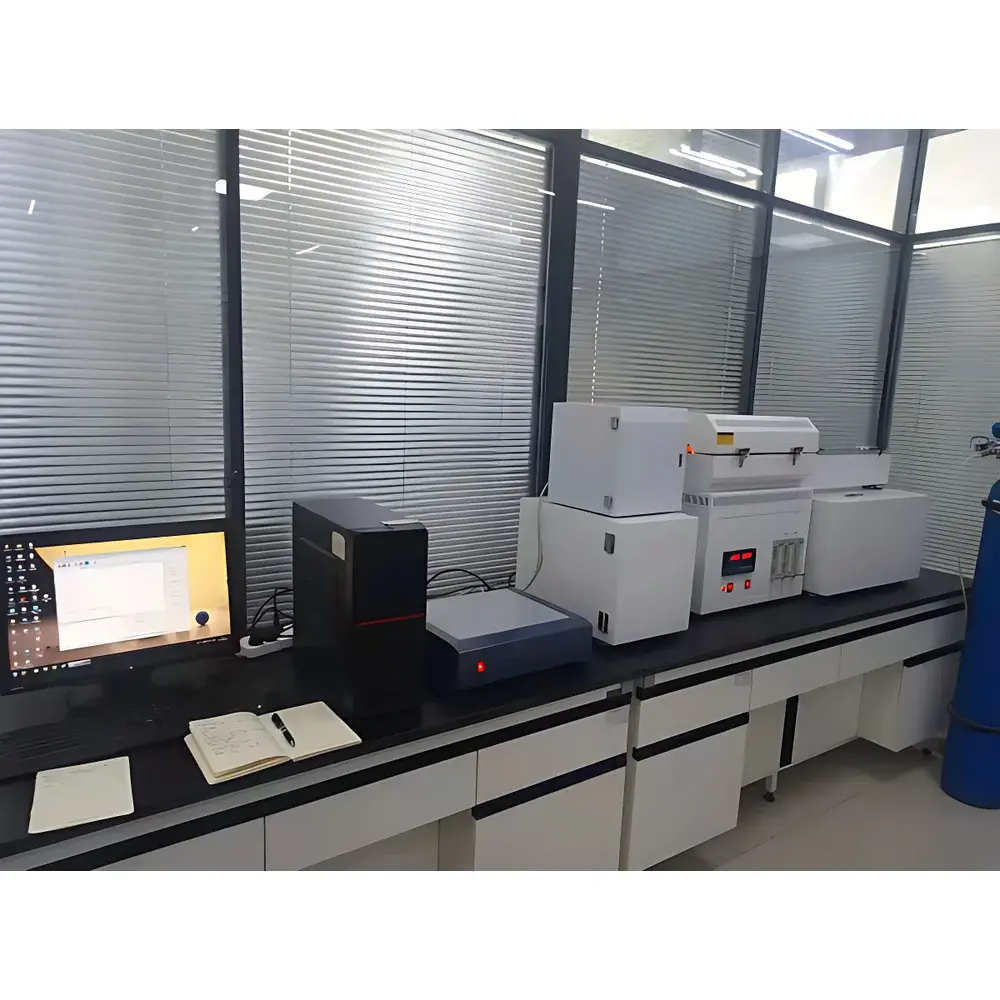
Zhuochi AOX-WK-S Microcoulometric Analyzer for HJ 1214–2021 Compliance
| Brand | Zhuochi |
|---|---|
| Model | AOX-WK-S |
| Standard Compliance | HJ 1214–2021 (PRC Environmental Standard for AOX Determination) |
| Measurement Principle | Microcoulometric Titration after High-Temperature Combustion |
| Detection Target | Adsorbable Organic Halogens (AOX) in Water |
| Temperature Control | Dual-Zone Combustion Furnace with Precise Airflow-Regulated Thermal Management |
| Sample Introduction | Automated Solid/Liquid Injector with Inert Carrier Gas Delivery |
| Halogen Capture & Quantification | Silver Coulometric Cell with Real-Time Charge Integration |
| Adsorption System | Activated Carbon Column Assembly per HJ 1214–2021 Protocol |
| Data Output | Integrated Coulometric Signal Processing Unit with Calibration Traceability |
Overview
The Zhuochi AOX-WK-S Microcoulometric Analyzer is a purpose-built instrumental system engineered to fully satisfy the procedural and performance requirements of China’s national environmental standard HJ 1214–2021, “Determination of Adsorbable Organic Halogens (AOX) in Water—Microcoulometric Method.” This system implements a rigorously defined analytical workflow: water samples are first passed through an activated carbon column to adsorb organic halogen compounds; the loaded carbon is then combusted quantitatively at high temperature (900–950 °C) under controlled oxygen-rich airflow; halogen elements (Cl, Br, I) released as hydrogen halides are swept into a microcoulometric titration cell, where they react stoichiometrically with silver ions generated electrochemically. The total charge consumed during coulometric regeneration of Ag⁺ is directly proportional to halogen mass, enabling precise quantification down to sub-µg/L AOX levels. The analyzer’s dual-zone furnace architecture ensures thermal stability and reproducibility across sequential sample runs—a critical requirement for regulatory compliance in municipal wastewater, industrial effluent, and surface water monitoring.
Key Features
- Dual-temperature combustion furnace with independent zone control (pre-combustion zone: 200–300 °C; main combustion zone: up to 950 °C), integrated with real-time airflow regulation and thermocouple feedback for ±2 °C thermal accuracy.
- Custom-designed quartz combustion tube with optimized geometry and inert inner coating to minimize halogen adsorption loss and ensure complete sample oxidation.
- Modular microcoulometric detection unit featuring a silver coulometric cell with low-noise current measurement circuitry, calibrated against certified KCl and NaBr reference standards traceable to NIM (National Institute of Metrology, China).
- Column adsorption module compliant with HJ 1214–2021 specifications, including standardized activated carbon bed volume, flow rate control (10–60 mL/min), and pressure monitoring for breakthrough validation.
- Automated sample introduction system supporting both liquid injection (via syringe pump) and solid-phase transfer (carbon trap insertion), with purge gas management to eliminate ambient halogen contamination.
- Rugged mechanical design with corrosion-resistant internal pathways and sealed electronics housing suitable for continuous operation in QC laboratories adhering to ISO/IEC 17025 quality systems.
Sample Compatibility & Compliance
The AOX-WK-S is validated for use with raw and treated water matrices including drinking water, groundwater, surface water, municipal wastewater, and industrial discharges containing chlorinated, brominated, or iodinated organics (e.g., chlorophenols, trihalomethanes, haloacetic acids). It meets all method-specific criteria outlined in HJ 1214–2021—including recovery validation (85–115% for spiked AOX), blank control limits (≤5 µg/L), repeatability (RSD ≤10%), and calibration linearity (r² ≥0.995 over 5–100 µg AOX range). While developed for PRC regulatory application, the system’s fundamental microcoulometric detection principle aligns with internationally recognized approaches described in ISO 9562 and DIN 38409 Part 36, facilitating cross-method comparability in multi-jurisdictional environmental reporting.
Software & Data Management
Instrument control, data acquisition, and report generation are managed via embedded firmware with USB-connected PC interface. Software provides step-by-step method execution guidance per HJ 1214–2021, automatic peak integration of coulometric current transients, real-time calibration curve fitting, and audit-trail logging of operator actions, parameter changes, and calibration events. Raw signal files (.dat) and summary reports (.pdf/.xlsx) are timestamped and exportable for archival in LIMS environments. Though not FDA 21 CFR Part 11–certified out-of-box, the system supports manual electronic signature protocols and configurable user access levels consistent with GLP documentation practices.
Applications
- Regulatory AOX monitoring for discharge permits under China’s EIA and pollutant discharge licensing regime.
- Performance evaluation of activated carbon filtration, ozonation, and advanced oxidation processes in water treatment plants.
- Method validation and interlaboratory comparison studies targeting halogenated disinfection by-products (DBPs).
- Research on persistence and transformation of halogenated pharmaceuticals and pesticides in aquatic ecosystems.
- QA/QC support for environmental testing laboratories accredited to CNAS CL01 (equivalent to ISO/IEC 17025).
FAQ
Does the AOX-WK-S comply with international AOX standards such as ISO 9562 or EPA Method 1650?
It is designed and verified specifically for HJ 1214–2021. While its core microcoulometric detection mechanism is fundamentally compatible with ISO 9562, full conformance requires laboratory-specific method adaptation and validation per ISO/IEC 17025 clause 7.2.2.
What consumables require regular replacement?
Activated carbon columns, quartz combustion tubes (after ~200 cycles), silver anode assemblies in the coulometric cell, and O-rings/seals in gas pathways—typically replaced per manufacturer-recommended maintenance intervals or after observed signal drift.
Is external gas supply required?
Yes: high-purity oxygen (≥99.995%) for combustion and argon or nitrogen (≥99.998%) as carrier/purge gas are mandatory. Regulators and mass flow controllers must be supplied externally.
Can the system be integrated into an existing LIMS?
Raw data export (CSV, Excel) and timestamped PDF reports enable manual LIMS ingestion; direct API or HL7 integration is not supported natively but may be implemented via third-party middleware.
What is the typical analysis time per sample?
Approximately 25–35 minutes per sample, including adsorption (if performed in-line), combustion, halogen transfer, and coulometric integration—excluding sample preparation and carbon column conditioning steps.







