
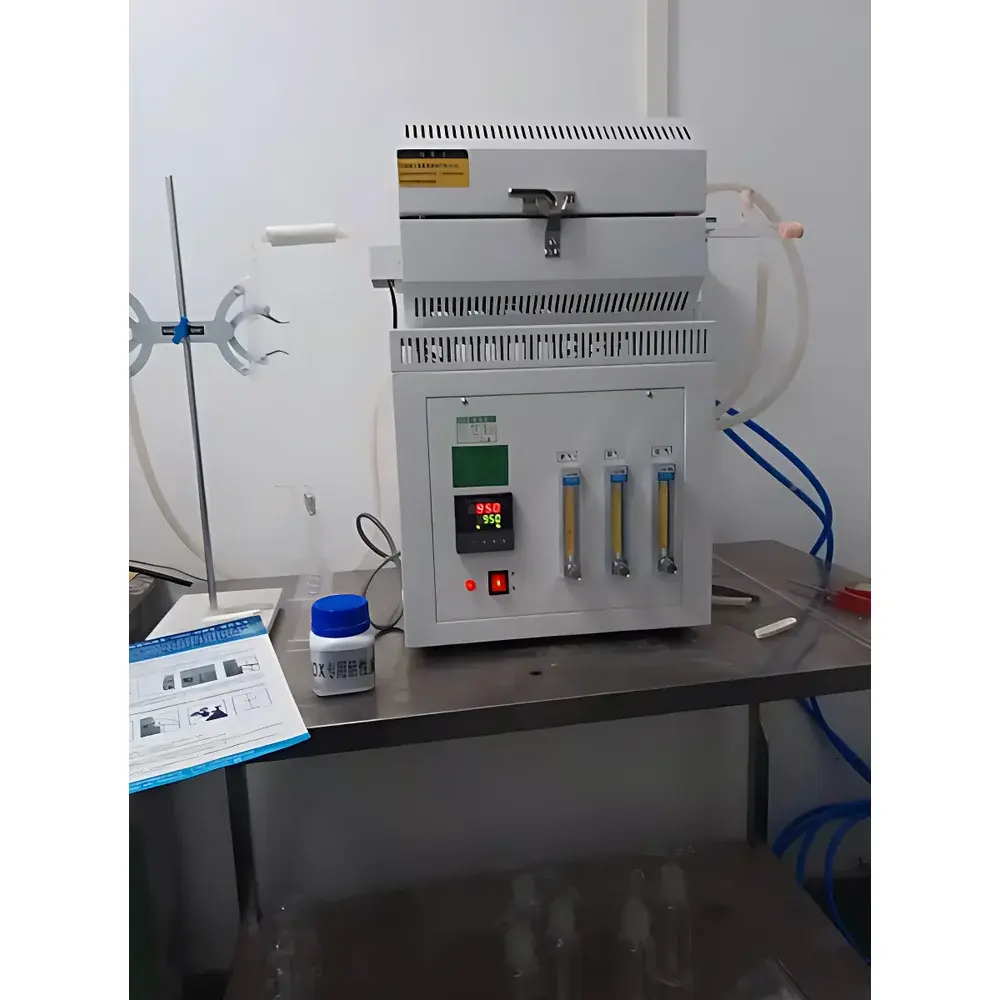
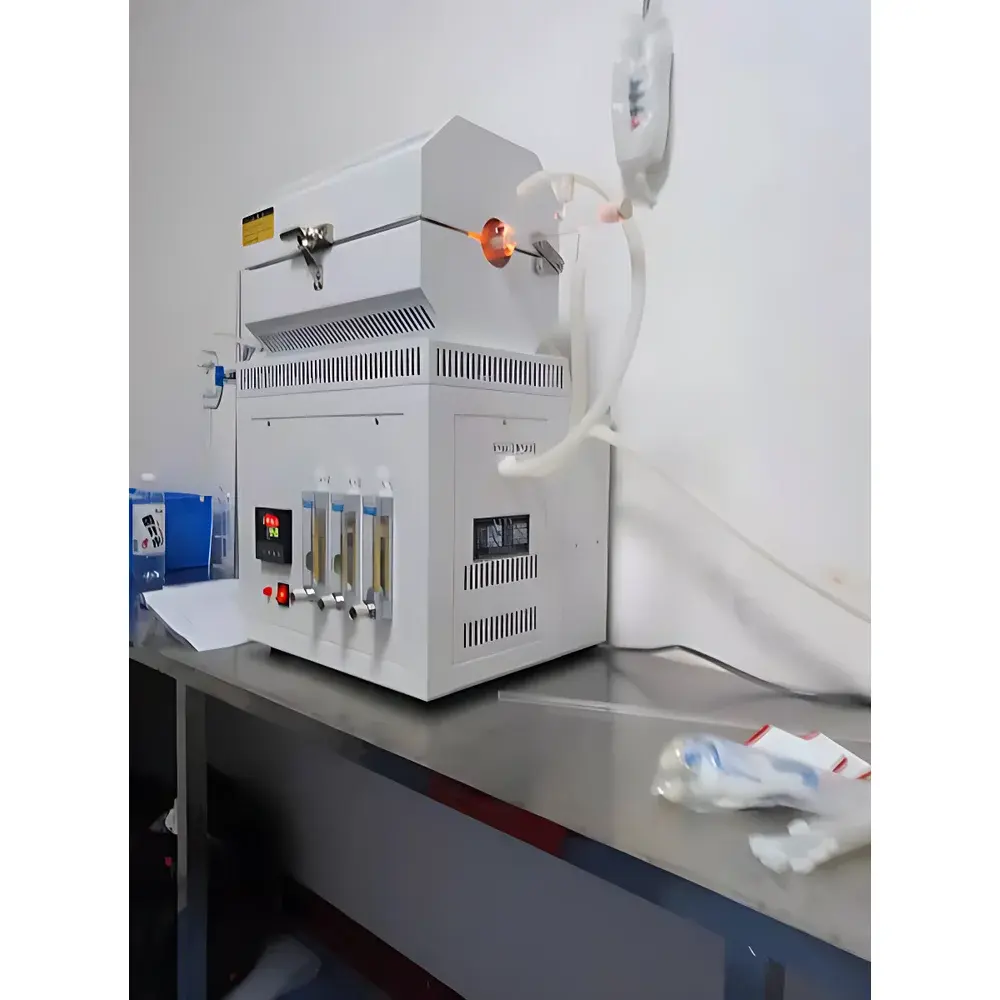
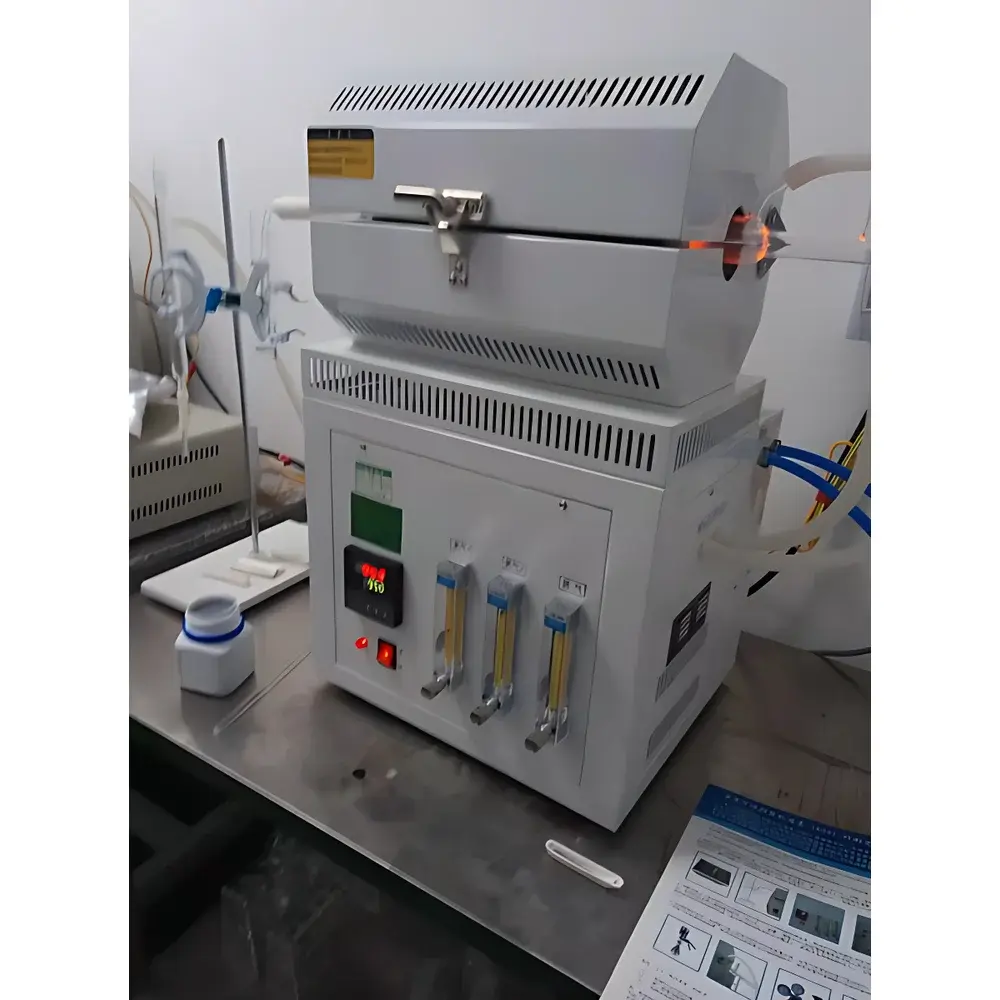
ZC-AOX Adsorbable Organic Halides (AOX) Analyzer
| Brand | ZOCHI |
|---|---|
| Origin | Zhejiang, China |
| Manufacturer Type | Authorized Distributor |
| Product Origin | Domestic (China) |
| Model | ZC-AOX |
| Price | USD 4,200 (FOB Zhejiang) |
| Measurement Principle | Combustion–Coulometric Titration |
| Measurement Range | 5–1000 µg AOX per sample |
| Accuracy | ±1% of reading |
| Repeatability (RSD) | ≤1% |
| Detection Limit | 0.8–1000 µg/L (sample-dependent) |
| Resolution | 0.01 µg |
Overview
The ZC-AOX Adsorbable Organic Halides (AOX) Analyzer is a dedicated laboratory instrument engineered for the quantitative determination of adsorbable organic halogen compounds—including chlorinated, brominated, and iodinated substances—in aqueous environmental matrices. It operates on the internationally recognized combustion–coulometric titration principle, fully aligned with standard methods such as ISO 9562, DIN 38409-H11, EPA Method 1650, and EN 1485. In this method, organic halogens are first concentrated onto activated carbon under controlled flow conditions, followed by high-temperature oxidative pyrolysis (950 °C) in a dual-zone oxygen stream. The resulting hydrogen halides (HX) are absorbed in an electrolyte solution, where coulometric titration quantifies total halide ion concentration via electrogenerated silver ions (Ag⁺), providing direct mass-based AOX values in micrograms per liter or per sample.
Key Features
- Integrated dual-flow oxygen delivery system: Inner tube O₂ flow 120–150 mL/min; outer tube O₂ flow 40–60 mL/min—ensuring complete oxidation and minimizing char formation.
- Programmable combustion furnace with precise temperature control (±5 °C) at 950 °C, validated by embedded thermocouple feedback and thermal stability monitoring.
- Coulometric titration cell with Ag/AgNO₃ reference electrode and platinum working electrodes, delivering sub-microgram resolution (0.01 µg) and linear response across the full 5–1000 µg analytical range.
- Dedicated sample introduction module with pressure-regulated nitrogen carrier gas (2–3 mL/min flow control) for reproducible activated carbon column loading and elution-free adsorption.
- Robust quartz boat handling mechanism with calibrated insertion/retraction timing (2 min pre-heating → 3 min combustion → 4–5 min post-combustion purge) to ensure consistent thermal history and quantitative recovery.
- Compliance-ready design: Supports audit trails, user access levels, and electronic signature capability—facilitating alignment with GLP, ISO/IEC 17025, and FDA 21 CFR Part 11 requirements when paired with optional LIMS-integrated software.
Sample Compatibility & Compliance
The ZC-AOX Analyzer accepts raw, filtered, or centrifuged water samples—including surface water, wastewater effluents, drinking water, leachates, and industrial process streams—without prior derivatization or solvent extraction. Sample volume is adjustable (typically 100–500 mL) to accommodate varying AOX concentrations. All wet chemistry components—including the bubble absorption trap, quartz combustion tube, and activated carbon columns—are chemically inert and trace-metal-clean certified. The system meets the performance verification criteria outlined in ISO/IEC 17025-accredited laboratories for routine AOX testing and satisfies reporting requirements for national discharge permits (e.g., China’s GB 30485, EU Industrial Emissions Directive Annex I).
Software & Data Management
The analyzer interfaces with ZOCHI AOX Control Suite (v3.2), a Windows-based application supporting method configuration, real-time coulometric current monitoring, automatic endpoint detection, calibration curve generation (multi-point linear or quadratic), and QC flagging (e.g., drift >0.5% over 24 h). Raw data files (.axd) include timestamped metadata (operator ID, sample ID, ambient temperature, O₂ pressure logs), enabling full traceability. Export formats include CSV, PDF analytical reports, and XML for LIMS ingestion. Audit trail logging records all parameter changes, result modifications, and user logins—retained for ≥36 months per internal QA policy.
Applications
- Regulatory compliance monitoring for municipal and industrial wastewater treatment plants subject to AOX discharge limits.
- Source identification and load assessment in river basin management programs targeting organohalogen pollution hotspots.
- Process validation in pulp & paper mills, pharmaceutical manufacturing, and pesticide formulation facilities where chlorinated intermediates may enter effluent streams.
- Research applications in environmental fate studies, including hydrolysis, photolysis, and biodegradation kinetics of halogenated micropollutants.
- Quality assurance for activated carbon suppliers—verifying adsorption capacity and regeneration efficiency against halogenated surrogate compounds.
FAQ
What sample preparation is required prior to AOX analysis?
No acidification, filtration, or preservative addition is needed beyond standard field preservation (e.g., cooling to 4 °C and analysis within 28 days per ISO 9562). Suspended solids >100 mg/L should be removed by centrifugation or membrane filtration (0.45 µm) to prevent column clogging.
Can the ZC-AOX analyze bromine- or iodine-containing compounds with equal sensitivity?
Yes—the coulometric detection mechanism responds stoichiometrically to Cl⁻, Br⁻, and I⁻ ions. Calibration with potassium bromide or potassium iodide standards confirms equivalent molar sensitivity (within ±2% RSD) across halogen species.
Is method validation documentation included with the instrument?
Yes—ZOCHI supplies a comprehensive validation package including system suitability test protocols, limit of quantitation (LOQ) verification data, intermediate precision studies (n=6 over 3 days), and comparison reports against certified reference materials (CRM) such as NIST SRM 2974.
How often must the coulometric cell electrolyte be replaced?
Under routine use (≤10 samples/day), the AgNO₃–HNO₃ electrolyte requires replacement every 72 hours or after 50 analyses—whichever occurs first—to maintain charge balance and avoid silver electrode passivation.







