
Zhuochi WK-3 Microcoulometric Analyzer for Adsorbable Organic Halides (AOX) per GB/T 34845-2017
| Brand | Zhuochi |
|---|---|
| Model | WK-3 |
| Origin | Zhejiang, China |
| Compliance | GB/T 34845-2017 |
| Detection Principle | Microcoulometric Titration |
| AOX Range | 0.5–5000 mg/L as Cl⁻ |
| Combustion Temp | 500–1000 °C (±1% ±5 °C) |
| Generator Current | ±2 mA |
| Amplifier Output | ±30 V |
| Bias Voltage | 0–500 mV (adjustable) |
| Repeatability | ≤5% (≥10 mg/L), ≤10% (1–10 mg/L), ≤50% (<1 mg/L) |
| Power | 220 V AC ±10%, 50 Hz, 3000 W |
Overview
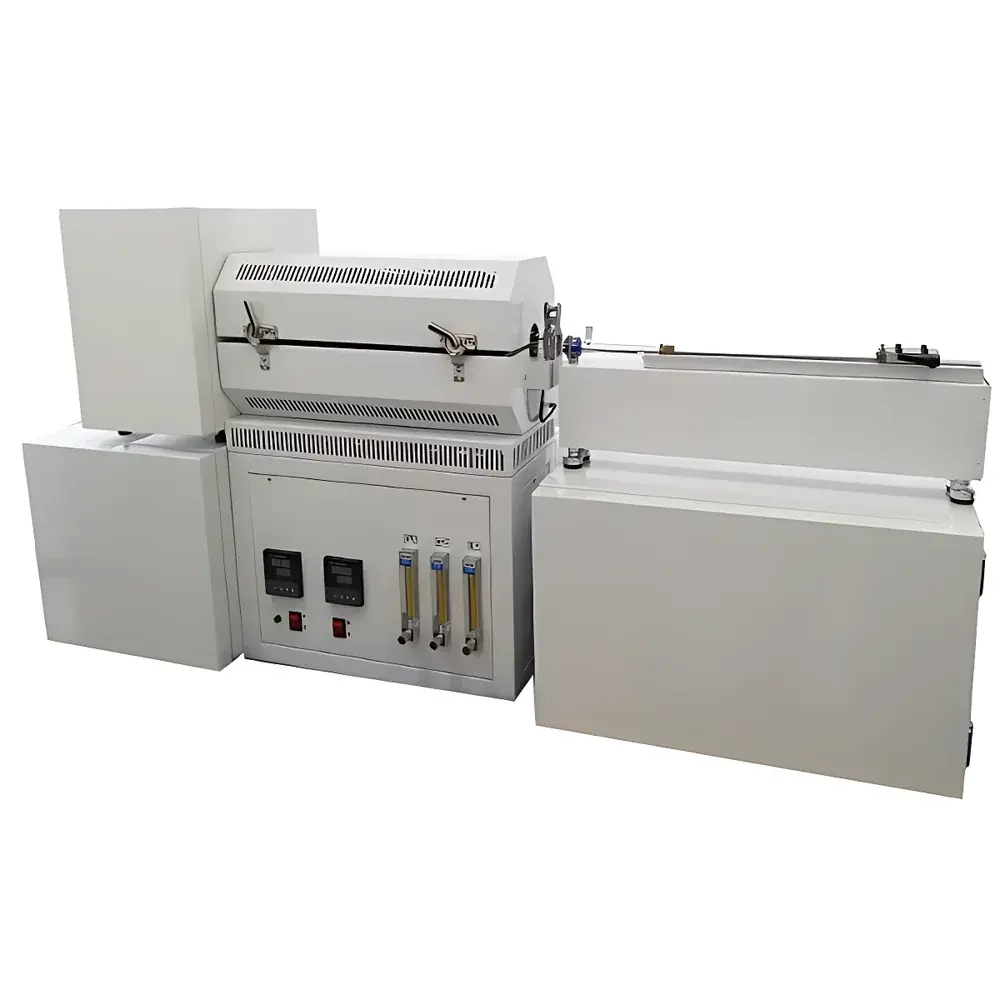
The Zhuochi WK-3 Microcoulometric Analyzer is a dedicated instrumental system designed for the quantitative determination of Adsorbable Organic Halides (AOX) in aqueous samples—primarily wastewater, effluents, and process water associated with pulp and paper manufacturing, textile dyeing, pharmaceutical production, and municipal treatment facilities. It operates in strict accordance with the Chinese national standard GB/T 34845–2017, which specifies the microcoulometric titration method for AOX measurement. The instrument employs high-temperature catalytic combustion (500–1000 °C) to mineralize organic halogen compounds into inorganic halide ions (Cl⁻, Br⁻, I⁻), followed by electrochemical detection via a silver/silver sulfide coulometric titration cell. This principle ensures trace-level sensitivity, robustness against matrix interferences, and compatibility with complex industrial effluents containing suspended solids or humic substances—provided sample pretreatment (e.g., adsorption on activated carbon, acidification, filtration) is performed per GB/T 34845–2017 protocol.
Key Features
- Integrated dual-zone high-temperature furnace with precise PID temperature control (±1% ±5 °C over 500–1000 °C range), enabling complete oxidative decomposition of refractory organohalogens including chlorinated phenols, PCBs, and brominated flame retardants.
- Microcoulometric detection module featuring a silver-based titration cell with real-time current integration; generator current range ±2 mA and amplifier output ±30 V support high signal-to-noise ratio across the full dynamic range.
- Adjustable bias voltage (0–500 mV) allows optimization of titration endpoint sensitivity for varying halogen speciation and sample matrices.
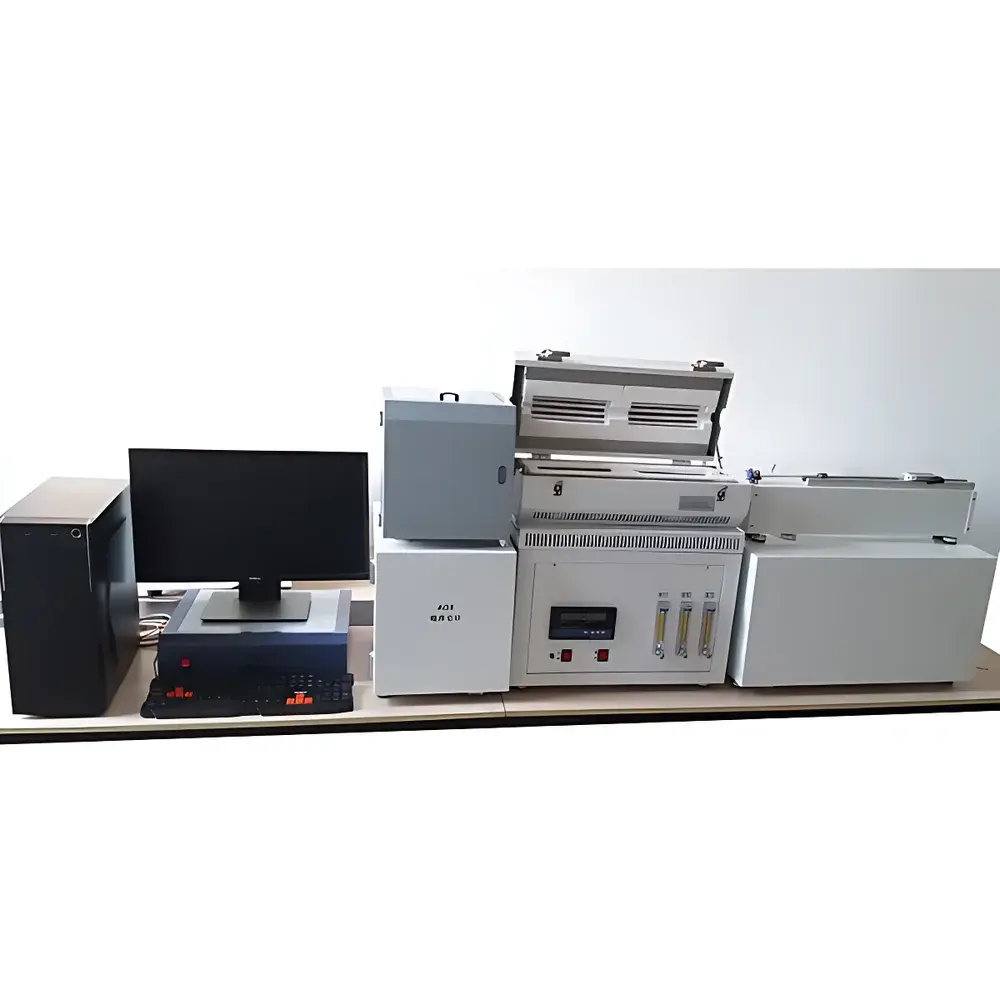
- Windows-based embedded software provides intuitive instrument control, real-time parameter monitoring (combustion temperature, titration current, integrated charge), and automatic calculation of AOX concentration (reported as mg/L Cl⁻ equivalent).
- Modular hardware architecture includes detachable combustion tube, quartz裂解 tube, and replaceable titration cell—facilitating maintenance, cleaning, and method validation without recalibration.
- Compliant electrical design: 220 V AC ±10%, 50 Hz, 3000 W maximum power draw; built-in thermal cutoff and gas flow interlock for operational safety during extended unattended runs.
Sample Compatibility & Compliance
The WK-3 analyzer is validated for use with liquid samples meeting GB/T 34845–2017 requirements—including clarified, filtered, or centrifuged wastewater, surface water, and leachates. Sample preparation must include adsorption onto activated carbon (under controlled pH and contact time), followed by desorption with nitric acid and neutralization prior to injection. The system supports analysis of chloride, bromide, and iodide contributions to total AOX, though quantification assumes chlorine equivalence unless calibrated with compound-specific standards. While not certified to ISO 9562 or EPA Method 1650, its operational methodology aligns with the fundamental principles of microcoulometric AOX determination referenced in ISO/IEC 17025-accredited laboratories. Data integrity meets basic GLP documentation needs when paired with external audit-trail-capable LIMS or manual logbook practices.
Software & Data Management
The analyzer’s native Windows application enables full instrument configuration, method storage (up to 99 user-defined methods), real-time chromatogram-like titration curve visualization, and automated report generation. All analytical parameters—including furnace setpoint, bias voltage, integration time, and raw coulombic charge—are timestamped and stored in proprietary binary files (.DAT). Export options include CSV for third-party statistical analysis (e.g., JMP, Minitab) and direct printing via Windows GDI drivers. Although the software does not implement FDA 21 CFR Part 11 electronic signature or audit trail functions natively, it supports export of raw data and metadata compatible with externally managed electronic lab notebooks (ELNs) used in regulated environments. User access levels are not enforced; therefore, procedural controls (e.g., SOPs governing method modification and result review) are required for compliance in QA/QC workflows.
Applications
- Regulatory compliance testing for AOX discharge limits under China’s Integrated Wastewater Discharge Standard (GB 8978) and local environmental protection bureau mandates.
- Process monitoring in chlorine-free bleaching (TCF/ECF) pulp mills to quantify residual organochlorine load before biological treatment.
- Environmental impact assessment of landfill leachate and industrial park effluents where halogenated solvents or biocides may contribute to persistent toxicity.
- Research applications investigating halogen mass balance in advanced oxidation processes (AOPs) or activated carbon adsorption-desorption cycles.
- Method development and cross-validation studies comparing AOX results with complementary techniques such as GC-MS (for specific compounds) or IC-MS (for inorganic halide speciation).
FAQ
What sample volume is required for one AOX analysis?
Typical injection volume is 50–100 µL of the final desorbed acidic extract; exact volume depends on expected AOX concentration and calibration curve linearity.
Can the WK-3 measure AOX in solid samples such as sludge or soil?
No—the instrument is configured exclusively for aqueous extracts. Solid matrices require prior leaching or Soxhlet extraction per GB/T 34845–2017 Annex B before analysis.
Is routine calibration with potassium hydrogen phthalate (KHP) or sodium chloride required?
Yes; daily calibration using NaCl standard solutions (0.5–5000 mg/L Cl⁻) is mandatory to verify coulometric efficiency and system linearity prior to sample batch analysis.
What maintenance intervals are recommended for the combustion tube and titration cell?
Quartz combustion tubes should be inspected after every 50 analyses and replaced if cracked or heavily discolored; titration cells require electrolyte replacement every 3–5 days of active use and full cleaning weekly.
Does the system support remote diagnostics or network connectivity?
The WK-3 communicates exclusively via RS-232 serial interface; Ethernet or USB connectivity is not supported. Remote troubleshooting requires physical access or terminal emulation via connected PC.
Related Products







