
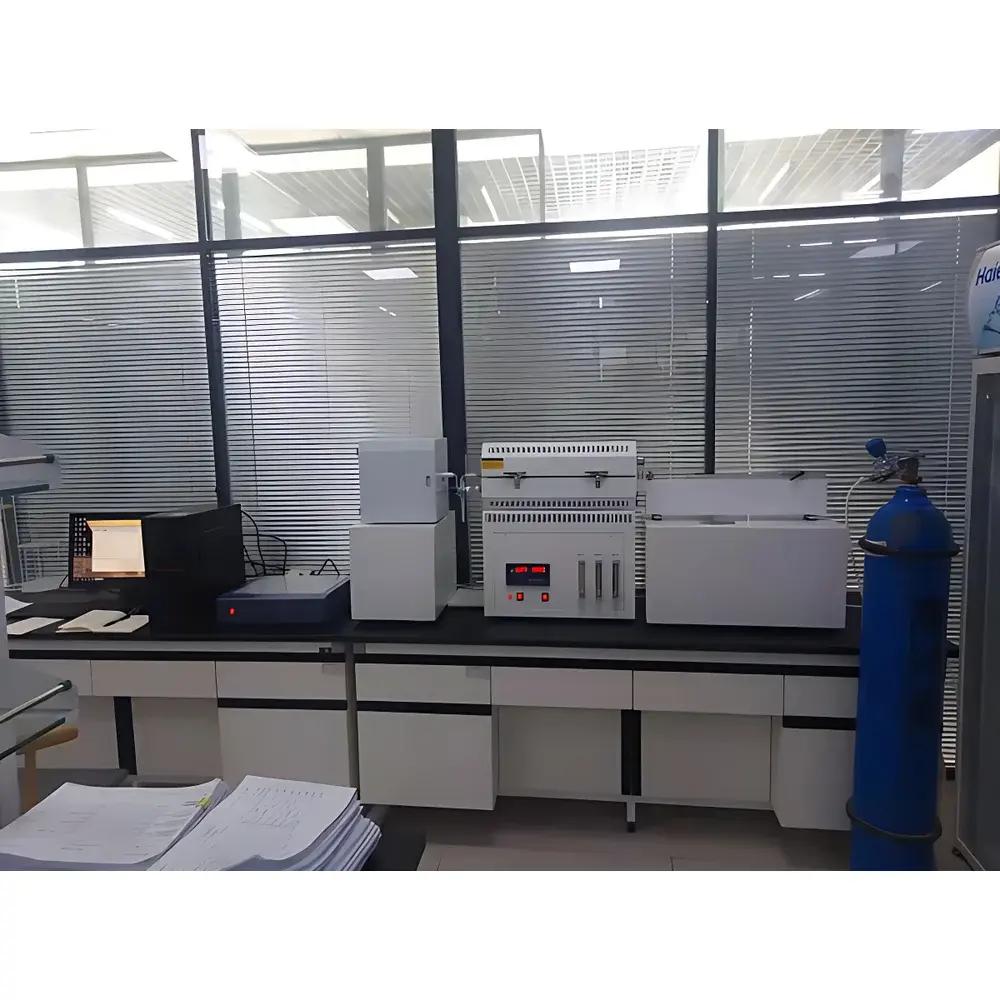
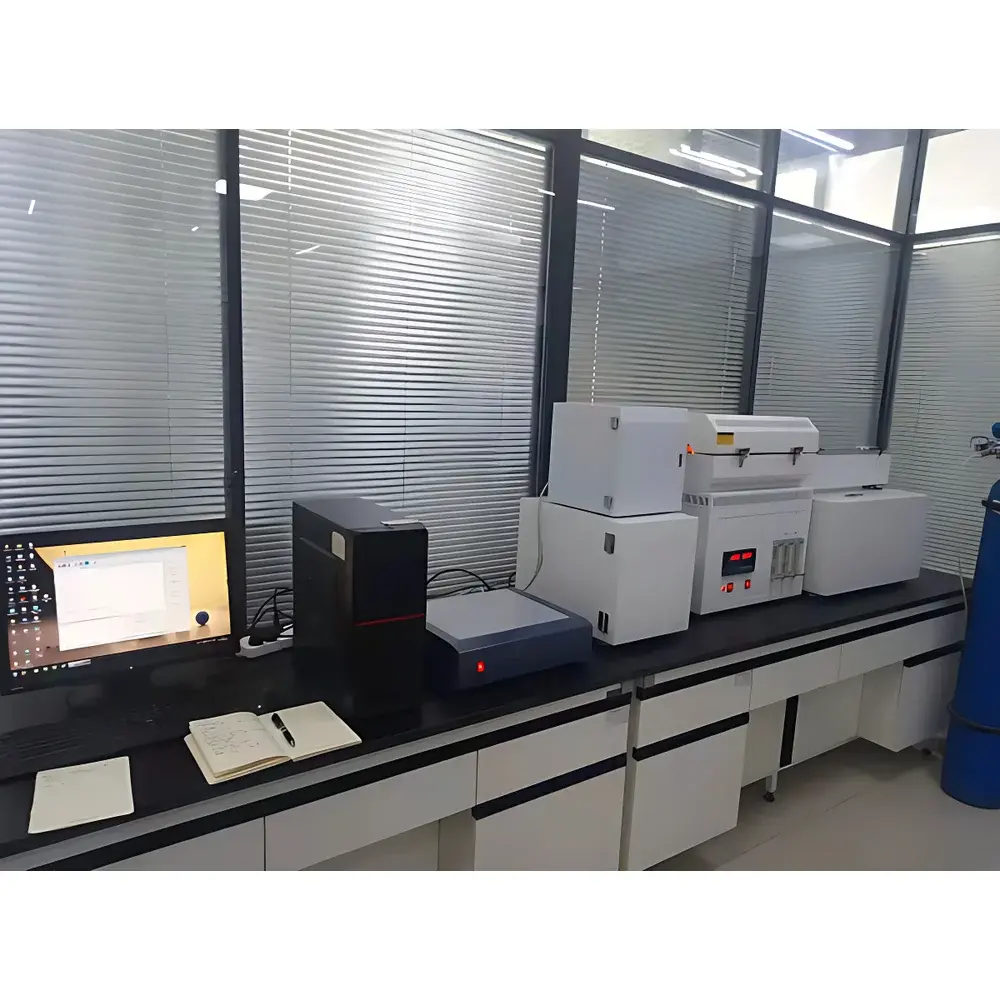
Zhuochi AOX-S Microcoulometric Analyzer for Adsorbable Organic Halogens
| Brand | Zhuochi |
|---|---|
| Origin | Zhejiang, China |
| Model | AOX-S Zhuochi |
| Measurement Principle | Combustion-Microcoulometric Titration |
| Temperature Range | 500–1000 °C (±1 % ±5 °C) |
| Accuracy | <5 % |
| Repeatability | <5 % |
| Limit of Detection | 0.1 µg/L |
| Compliance | HJ 1214–2021 (China EPA Standard for Water Quality — Determination of Adsorbable Organic Halogens by Microcoulometry) |
Overview
The Zhuochi AOX-S Microcoulometric Analyzer is a dedicated, fully integrated system engineered for the quantitative determination of Adsorbable Organic Halogens (AOX) in aqueous environmental samples—specifically aligned with the technical requirements of China’s Ministry of Ecology and Environment standard HJ 1214–2021. This instrument implements the combustion-microcoulometric titration method: samples are first adsorbed onto activated carbon under controlled pH and ionic strength conditions; the loaded carbon is then combusted at high temperature (500–1000 °C) in a purified oxygen stream, converting organic halogens (Cl, Br, I) quantitatively to hydrogen halides (HX). The resulting halide gases are absorbed in an electrolyte solution, where electrochemical titration via silver ion generation enables precise coulometric quantification based on Faraday’s law. The system delivers trace-level sensitivity and regulatory-grade reproducibility required for wastewater discharge monitoring, drinking water source assessment, and industrial effluent compliance reporting.
Key Features
- Dual-zone programmable combustion furnace with independent gas-flow temperature control—ensures stable thermal decomposition across the full 500–1000 °C operating range, with accuracy maintained within ±1 % ±5 °C.
- Integrated microcoulometric detector featuring a silver/silver chloride reference electrode pair and constant-current coulometric cell, calibrated per ASTM D5808 and ISO 9562 principles.
- Dedicated sample introduction and ejection modules designed for reproducible handling of activated carbon cartridges, minimizing carryover and operator variability.
- Optimized halogen absorption train including quartz combustion tube, ice-cooled absorber, and low-dead-volume transfer lines to prevent halide loss or recombination.
- Robust mechanical architecture with corrosion-resistant materials (quartz, high-purity alumina, PTFE-lined fittings) suitable for long-term operation in laboratory environments processing complex matrices (e.g., pulp & paper effluents, pharmaceutical wastewater).
Sample Compatibility & Compliance
The AOX-S system accommodates liquid samples ranging from surface water, groundwater, and municipal wastewater to highly colored or saline industrial discharges. Sample preparation follows standardized adsorption protocols (e.g., batch or column mode using specified activated carbon, NaNO3 buffer, and nitric acid conditioning). All hardware and operational parameters conform to HJ 1214–2021, including mandatory calibration verification with potassium bromide standards, system blanks, and matrix spike recovery checks. While developed for Chinese regulatory application, the underlying combustion-coulometric methodology is consistent with internationally recognized approaches such as ISO 9562 (Water quality — Determination of adsorbable organohalogen compounds (AOX) — Microcoulometric method) and DIN 38409 Part 36. Data output meets basic GLP documentation requirements, supporting audit-ready record retention when paired with external LIMS integration.
Software & Data Management
The analyzer operates via embedded firmware with local touchscreen interface for method setup, temperature ramping, titration control, and real-time current integration. Raw coulometric charge (in µC) is automatically converted to AOX concentration (µg/L as Cl) using user-defined calibration slopes and sample volume inputs. Data export is supported via USB to CSV format, enabling downstream analysis in Excel or validated laboratory software. Though not natively compliant with FDA 21 CFR Part 11, the system supports manual audit trails through timestamped calibration logs, run reports, and electronic signature-capable external data management systems. Optional RS-232/RS-485 interfaces allow integration into centralized environmental monitoring platforms.
Applications
- Regulatory compliance testing for AOX in municipal and industrial wastewater prior to discharge (per HJ 1214–2021 and provincial emission standards).
- Process control in chlorinated chemical manufacturing, pulp bleaching, and pharmaceutical synthesis where halogenated byproducts require tracking.
- Environmental impact assessment of landfill leachate, hospital effluents, and textile dyeing wastewater.
- Method validation studies and inter-laboratory comparison programs targeting organic halogen speciation and mass balance closure.
- Research applications investigating natural organic matter halogenation kinetics in aquatic systems.
FAQ
What sample types are compatible with the AOX-S system?
Liquid water samples—including raw sewage, treated effluent, surface water, and saline process streams—are supported. Solid or sludge matrices require prior extraction and filtration per HJ 1214–2021 Annex A.
Is the system capable of distinguishing between chlorine, bromine, and iodine species?
No. The AOX-S measures total adsorbable halogens (expressed as Cl-equivalents); speciation requires complementary techniques such as IC-MS or GC-ECD.
What maintenance intervals are recommended for routine operation?
Carbon traps and absorber solutions should be replaced after every 20–30 analyses; quartz combustion tubes require inspection every 100 runs and cleaning with dilute HNO3 if soiling occurs.
Does the system include certified reference materials or calibration standards?
The base configuration does not include CRM; however, KBr standard solutions (traceable to NIM or NIST SRMs) are recommended for daily calibration and verification per HJ 1214–2021 Section 7.3.
Can the AOX-S be used for non-aqueous samples such as soil extracts or organic solvents?
Only after aqueous phase extraction and strict adherence to the adsorption protocol outlined in HJ 1214–2021; direct injection of organic solvents is incompatible with the combustion and absorption chemistry.







