
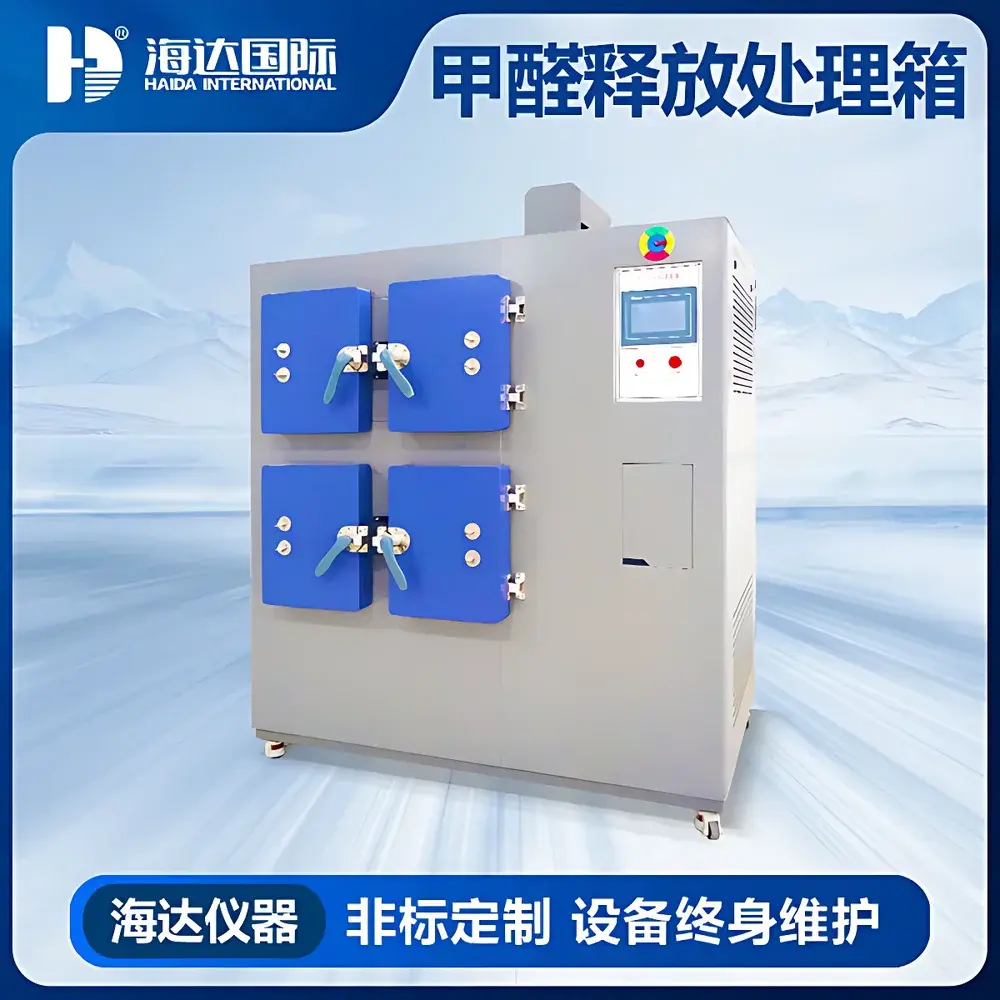
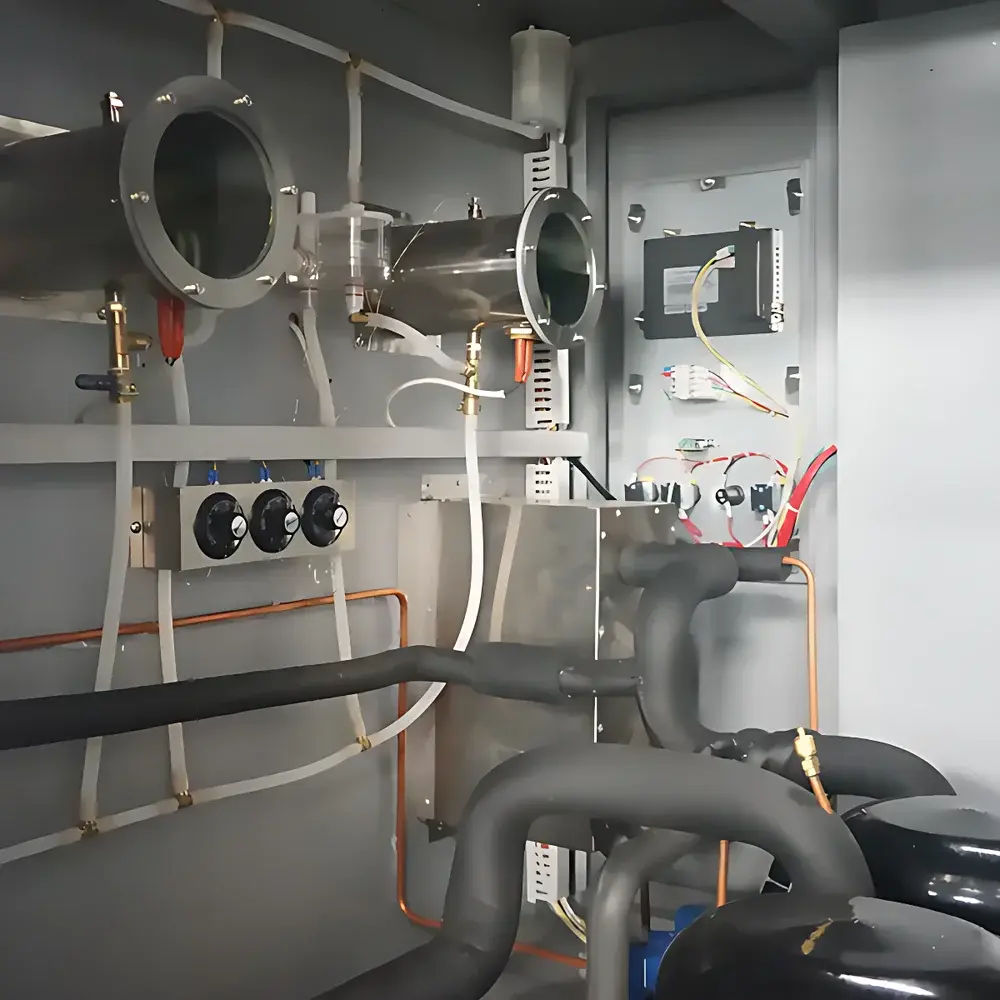
HAIDA HD-F801-3A Formaldehyde & VOC Emission Test Chamber
| Brand | HAIDA INTERNATIONAL |
|---|---|
| Origin | Guangdong, China |
| Manufacturer Type | Direct Manufacturer |
| Product Category | Domestic (China-Made) |
| Model | HAIDA HD-F801-3A Formaldehyde & VOC Emission Test Chamber |
| Temperature Range | 15–40 °C |
| Humidity Range | 30–80 %RH |
| Temperature Uniformity | ≤±1 °C |
| Temperature Stability | ≤±0.3 °C |
| Humidity Accuracy | ±5 %RH |
| Airflow Velocity | 0.1–0.3 m/s |
| Internal Chamber Dimensions (W×D×H) | 400×700×600 mm (4 chambers) |
| Power Supply | 220 V, 50 Hz, 4 kW max |
Overview
The HAIDA HD-F801-3A Formaldehyde & VOC Emission Test Chamber is a precision-engineered environmental simulation system designed for standardized pre-conditioning and equilibrium stabilization of building materials—particularly wood-based panels, laminates, and composite boards—prior to formaldehyde or volatile organic compound (VOC) emission quantification. It operates on the principle of controlled climate exposure under ISO 12460-1, ASTM D6007-2, EN 717-1, ANSI/BIFMA X7.1-2007, and GB 18580-2017 compliant conditions. The chamber maintains stable, reproducible temperature and humidity profiles across four independent 0.168 m³ test compartments, enabling parallel sample conditioning while minimizing inter-chamber cross-talk. Its thermodynamic architecture integrates PID-controlled refrigeration, dew-point-based humidity generation, and laminar airflow management to achieve high-fidelity replication of indoor ambient conditions—critical for generating statistically robust emission data required in regulatory compliance, quality assurance, and product certification workflows.
Key Features
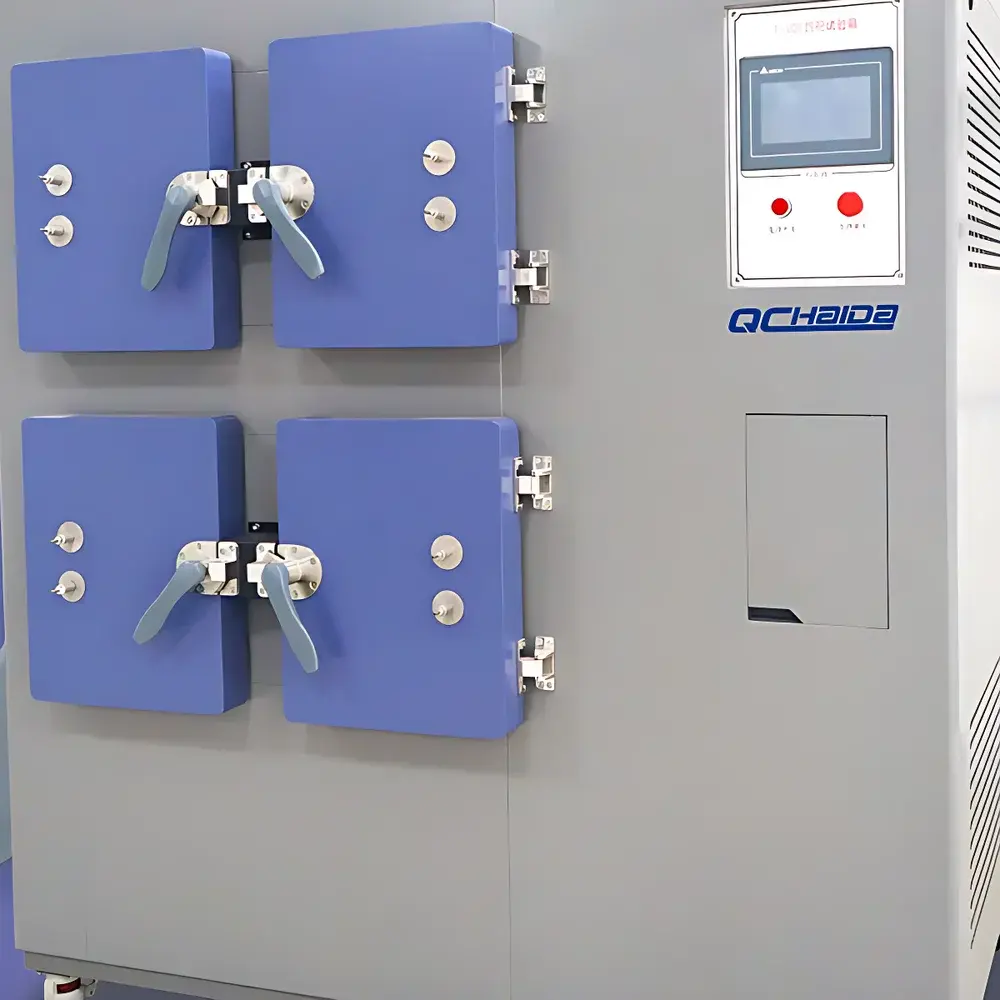
- Four independent, identical test chambers (400 × 700 × 600 mm each), allowing concurrent multi-sample conditioning with traceable environmental isolation
- Dew-point humidity control system using distilled water reservoir and precision temperature-regulated humidifier—enabling accurate RH setpoints from 30–80 %RH with ±5 %RH deviation
- Microprocessor-based temperature regulation (15–40 °C range) with ±0.3 °C stability and ≤±1 °C uniformity across chamber volume
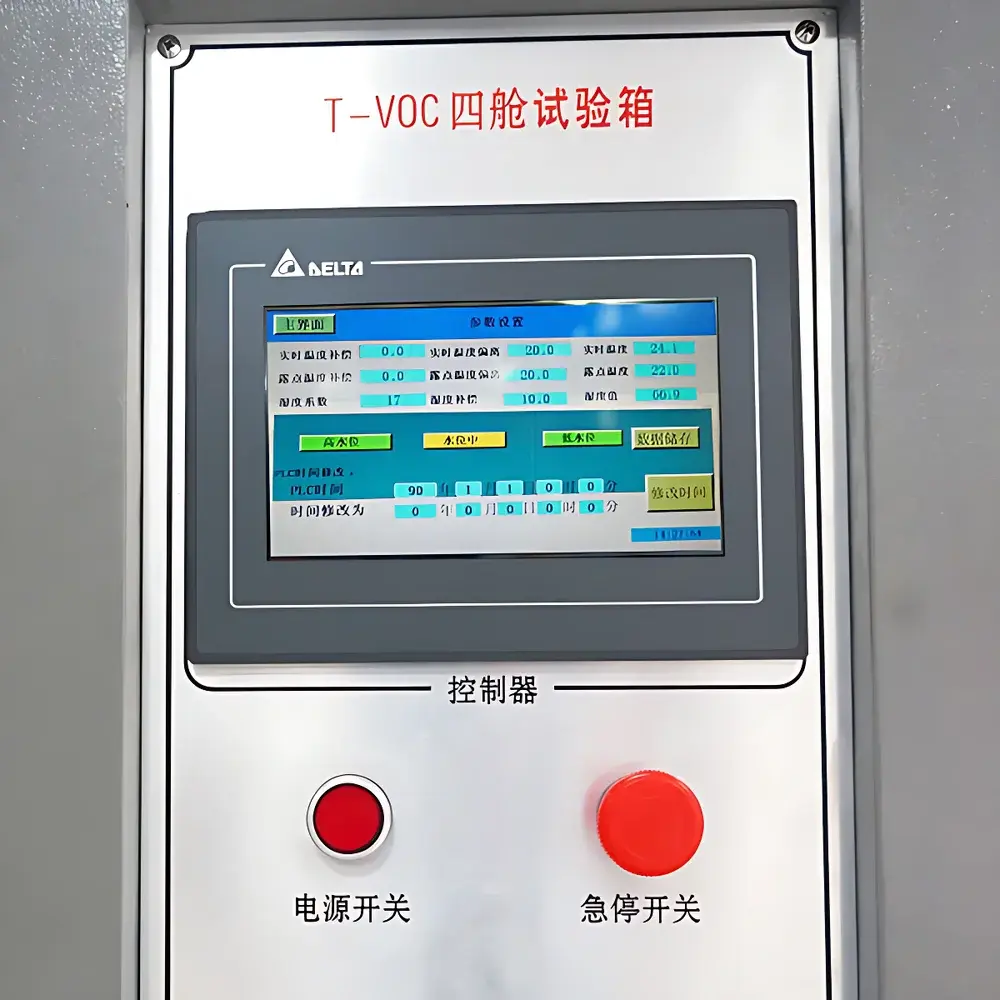
- Integrated 10-inch industrial touchscreen HMI with Siemens PLC controller and Wecon logic interface—supporting intuitive parameter setting, real-time monitoring, and alarm logging
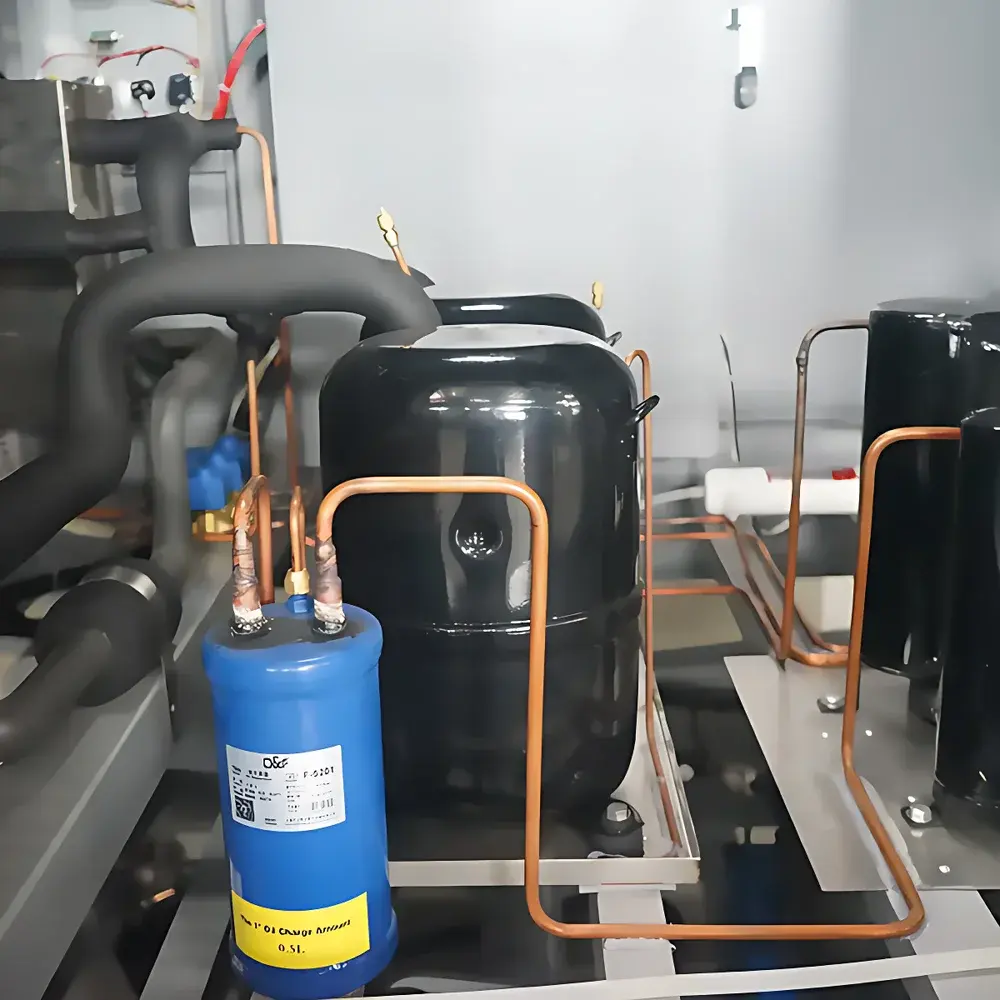
- Modular mechanical design featuring rear-mounted condensing unit, axial fan-driven air recirculation, and perforated baffle flow distribution for uniform thermal/hygrometric distribution
- Comprehensive safety interlocks: low/high water level detection, over-temperature cutoff, phase-loss protection, and automatic compressor restart delay (5–8 min)
- Industrial-grade construction with stainless steel inner chamber walls, insulated double-wall housing, and corrosion-resistant fluid pathways
Sample Compatibility & Compliance
The HD-F801-3A accommodates standard test specimens per ISO 12460-1 (150 × 150 mm, 10–20 mm thick) and ASTM D6007-2 (100 × 100 mm). Sample racks are adjustable and load-rated to support up to 10 kg per shelf without deformation. All operational parameters—including temperature ramp rates, humidity equilibration time, and air exchange rate—are configurable to align with method-specific requirements. The system supports full audit trail generation for GLP/GMP-aligned laboratories and meets essential electromagnetic compatibility (EMC) and electrical safety standards (IEC 61000-4 series, IEC 61010-1). While not intrinsically certified for hazardous area use, it complies with general laboratory equipment safety directives when installed in ventilated, non-explosive environments per IEC 60079-14 guidelines.
Software & Data Management
The embedded control firmware logs all critical process variables—chamber temperature, dew-point setpoint, actual RH, airflow velocity, compressor runtime, and alarm events—at user-defined intervals (default: 1-min resolution). Data export is supported via USB 2.0 to CSV format for post-processing in Excel, MATLAB, or LIMS platforms. Optional Ethernet connectivity enables remote monitoring and integration into centralized facility SCADA systems. The system records timestamped operator actions, parameter changes, and fault acknowledgments—meeting foundational FDA 21 CFR Part 11 requirements for electronic records and signatures when paired with institutional access controls and audit log review procedures. No cloud storage or third-party telemetry is enabled by default; all data remains resident on the onboard industrial PC.
Applications
- Pre-conditioning of particleboard, MDF, plywood, and engineered flooring prior to desiccator, perforator, or chamber method formaldehyde testing (ISO 12460, JIS A 1460, CNS 13499)
- Equilibration of adhesives, coatings, and sealants for VOC emission profiling per ISO 16000-9 and ASTM D5116
- Stability testing of low-emission construction materials under accelerated aging protocols (e.g., elevated T/RH cycling)
- Reference chamber validation in accredited testing laboratories seeking CNAS, UKAS, or A2LA accreditation to ISO/IEC 17025
- Research-grade climate simulation for material science studies on moisture-dependent off-gassing kinetics
FAQ
What standards does the HD-F801-3A directly support?
It is engineered to meet the environmental control specifications of ISO 12460-1, ASTM D6007-2, EN 717-1, ANSI/BIFMA X7.1-2007, and GB 18580-2017 for formaldehyde emission testing.
Is distilled water mandatory for operation?
Yes—only distilled or deionized water may be used in the dew-point humidifier reservoir to prevent mineral scaling, sensor drift, and premature failure of the humidification system.
How often must the water reservoir be replaced?
Distilled water must be refreshed before each formaldehyde emission test cycle. For continuous operation, the reservoir should be drained and refilled every 1–2 months, depending on usage frequency and local water quality.
Can the chamber operate unattended overnight?
Yes—provided ambient room conditions remain within 15–30 °C and ≤85 %RH, and the unit is installed with adequate ventilation and emergency power cutoff. All safety interlocks remain active during extended runs.
What maintenance is required quarterly?
Inspection of condenser coil cleanliness, calibration verification of temperature/humidity sensors (traceable to NIST standards), lubrication of fan bearings, and verification of airflow uniformity using calibrated anemometry.
Related Products







