
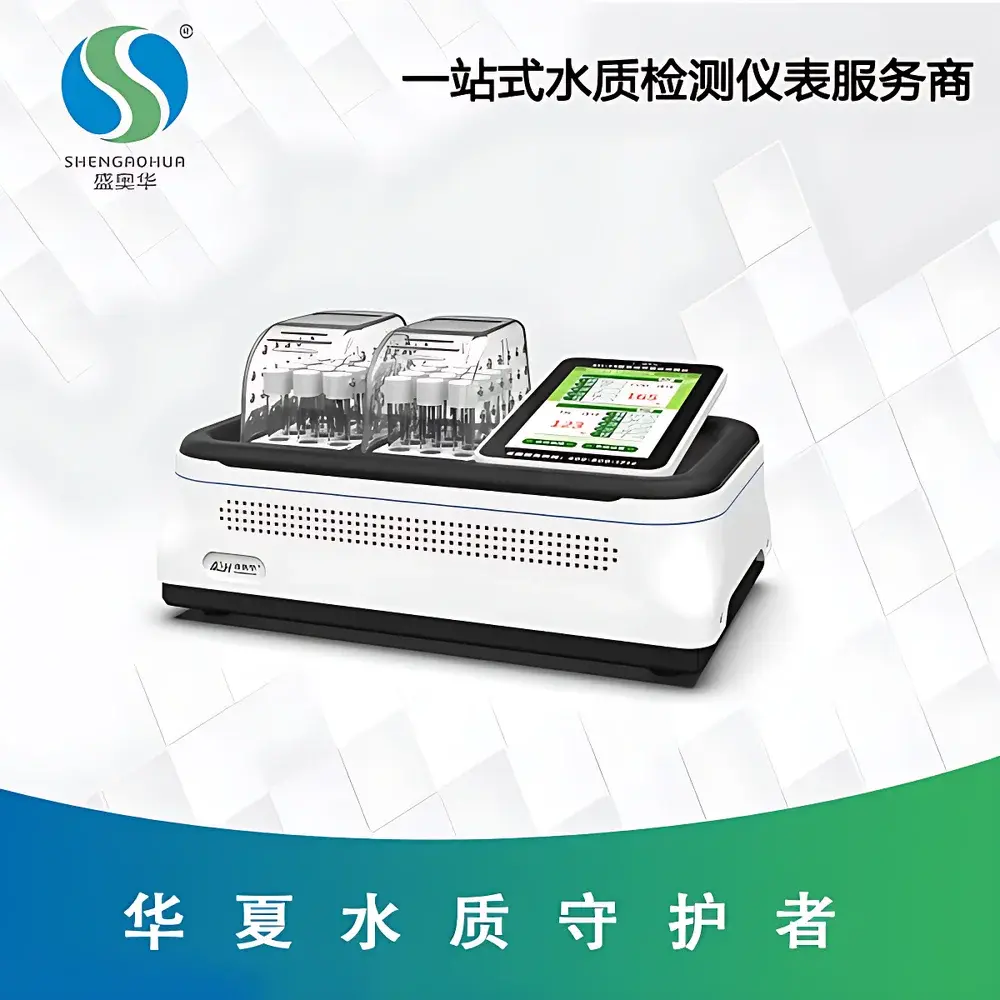
Shengaohua SH-24(V10) Intelligent Dual-Zone COD Digestion System
| Brand | Shengaohua |
|---|---|
| Origin | Jiangsu, China |
| Manufacturer Type | Direct Manufacturer |
| Model | SH-24(V10) |
| Digestion Method | Rapid Digestion |
| Heating Module | Dual Independent Heating Blocks |
| Batch Capacity | 24 Samples |
| Temperature Range | 0–168 °C |
| Temperature Accuracy | ±0.5 °C |
| Digestion Vial Capacity | 12 mL |
| Timing Resolution | 0.1 s |
| Display | 7-inch High-Resolution Touchscreen |
| Built-in Curves | 30 Predefined (including 13 Standard + User-Editable) |
| Power Supply | AC 220 V ±10%, 50 Hz |
| Rated Power | <600 W |
| Dimensions | 380 × 250 × 165 mm |
| Safety Features | Overtemperature Cutoff (200 °C), Transparent Acid-Resistant Shield, Dynamic Load-Adaptive Power Control |
| Cooling Principle | Optimized Air Convection Architecture |
Overview
The Shengaohua SH-24(V10) Intelligent Dual-Zone COD Digestion System is an engineered solution for standardized chemical oxygen demand (COD) sample preparation in accordance with ISO 6060, APHA Standard Methods 5220D, and EPA Method 410.1. Designed for precision and reproducibility in environmental laboratories, this system implements rapid closed-vessel digestion using dual independently controlled heating zones—enabling simultaneous processing of two distinct sample groups under different thermal protocols (e.g., low-temperature pre-digestion followed by high-temperature oxidation). Each zone employs high-stability imported heating elements coupled with high-precision Pt100 temperature sensors and dynamic load-adaptive power regulation to maintain ±0.5 °C thermal accuracy across the full 0–168 °C operating range. The system’s air-convection optimized internal architecture ensures uniform thermal distribution, minimized thermal lag, and enhanced long-term stability—critical for GLP-compliant routine analysis.
Key Features
- Dual-zone independent temperature control allows concurrent execution of heterogeneous digestion protocols without cross-contamination or thermal interference.
- 7-inch high-resolution capacitive touchscreen interface with ergonomic menu navigation and intuitive icon-based workflow—designed for glove-compatible operation in analytical lab environments.
- 30 built-in digestion curves (13 standardized per ISO/EPA/GB/T norms + 17 user-definable), supporting flexible method selection and traceable parameter logging.
- Dynamic power modulation adjusts heating output in real time based on vial count and thermal mass, reducing energy consumption during partial-load operation while preserving setpoint fidelity.
- Triple-mode alarm system (10-second pulse, 1-minute sustained, continuous tone) configurable per protocol to align with operator alert preferences and safety SOPs.
- Integrated acid-resistant thermal insulation and transparent polycarbonate safety shield meet IEC 61010-1 requirements for laboratory electrical equipment protection against splashes and thermal hazards.
- Auto-timed digestion cycles with 0.1-second resolution and persistent parameter storage ensure method reproducibility and audit-ready record retention.
Sample Compatibility & Compliance
The SH-24(V10) accommodates standard 12 mL borosilicate glass digestion vials (compatible with Hach, Lovibond, and other OEM formats) and supports both open-reflux and sealed-vessel digestion configurations. Its dual-zone architecture enables parallel validation studies—for instance, comparing dichromate-based COD oxidation at 150 °C (Zone A) against alternative oxidant systems at 120 °C (Zone B). The instrument complies with ISO/IEC 17025:2017 clause 6.4.2 regarding equipment suitability for intended use and supports traceable calibration via external reference thermometers (NIST-traceable Class A). All firmware operations—including curve editing, parameter saving, and alarm configuration—are timestamped and non-erasable, satisfying basic data integrity requirements under FDA 21 CFR Part 11 Annex 11 principles for electronic records in environmental testing labs.
Software & Data Management
While the SH-24(V10) operates as a standalone benchtop unit without PC connectivity, its embedded firmware implements robust local data governance: all user-modified parameters—including custom curve definitions, temperature/time setpoints, and alarm thresholds—are stored in non-volatile memory with write-protection logic. Each digestion run logs start time, target temperature, actual achieved temperature profile (averaged per zone), duration, and completion status. These records are retained for ≥1,000 cycles and can be reviewed directly on-screen with scrollable history navigation. For laboratories requiring integration into LIMS environments, optional RS-232 serial output (available upon request) provides ASCII-formatted run summaries compatible with common laboratory data acquisition platforms.
Applications
This system is routinely deployed in municipal wastewater treatment plants for daily influent/effluent COD monitoring; in third-party environmental testing laboratories accredited to CNAS/ILAC standards for regulatory reporting; and in R&D settings evaluating novel oxidation catalysts or alternative digestants (e.g., permanganate-based methods). Its dual-zone capability supports method development workflows such as matrix spike recovery assessment, inter-laboratory comparison trials, and temperature-gradient optimization studies for high-chloride or high-suspended-solid samples. Industries served include electroplating (effluent compliance), food & beverage (BOD/COD correlation), pulp & paper (process water characterization), aquaculture (nutrient loading analysis), and photovoltaic manufacturing (etching waste stream profiling).
FAQ
Does the SH-24(V10) support external data export or USB logging?
No—the system stores all operational records internally only. Optional RS-232 output is available for integration with external DAQ systems.
What is the maximum safe operating temperature for extended periods?
The thermal cutoff is set at 200 °C; however, sustained operation above 168 °C is not recommended per manufacturer specifications and may impact sensor longevity.
Can the instrument be calibrated in-house using standard reference materials?
Yes—users may perform verification using NIST-traceable liquid-in-glass thermometers or PT100 probe calibrators at multiple setpoints (e.g., 50 °C, 100 °C, 150 °C); calibration certificates are not generated automatically but can be documented manually.
Is the heating block material resistant to sulfuric acid and silver sulfate mixtures?
The dual heating blocks are constructed from corrosion-resistant aluminum alloy with ceramic-coated surface finish, validated for repeated exposure to standard COD digestion reagents (H₂SO₄ + Ag₂SO₄ + K₂Cr₂O₇) under ISO 6060 conditions.
How does the dynamic power adjustment affect temperature stability during partial loading?
The system continuously monitors thermal load via feedback from dual-zone sensors and modulates power delivery to maintain ±0.5 °C accuracy—even when only 6 of 24 positions are occupied—without manual recalibration or dwell-time compensation.







