
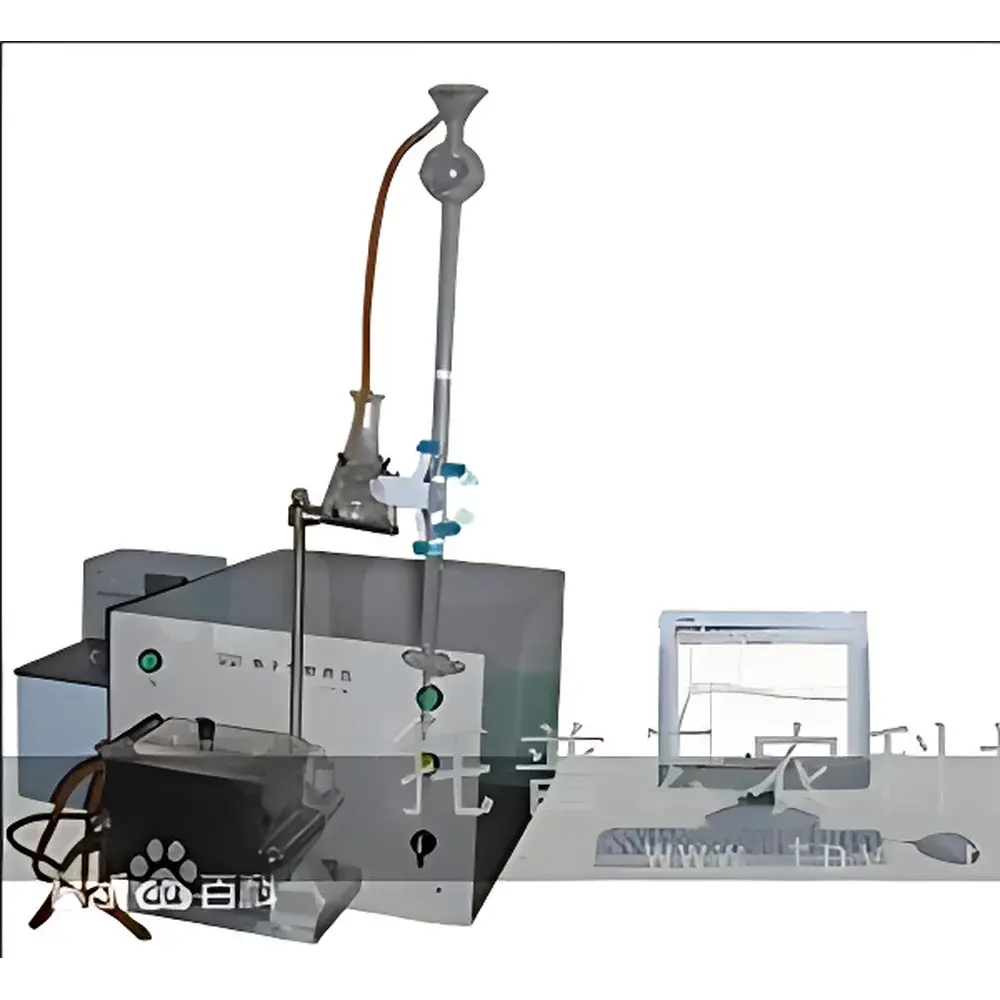
Top Cloud-agri HZF-150 Electronic Farinograph
| Brand | Top Cloud-agri |
|---|---|
| Origin | Zhejiang, China |
| Manufacturer | Yes |
| Country of Origin | China |
| Model | HZF-150 |
| Motor Power | 0.2 kW |
| Torque Range | 1–10 N·m |
| Accuracy | ≤5% of full scale |
| Main Mixer Blade Speed | 63 ±1 rpm |
| Auxiliary Mixer Blade Speed | 94.5 ±1 rpm |
| Time Axis Range | 0–20 min |
| Resistance Axis Range | 0–1000 FU |
| Sample Mass | 300 g or 50 g (interchangeable bowls) |
| Torque Sensitivity | 9.8 mN·m/FU (300 g bowl), 1.96 mN·m/FU (50 g bowl) |
| Chart Speed | 1.00 mm/min |
| Data Format | Microsoft Access (.accdb) |
| Interface | USB 2.0, hot-pluggable |
Overview
The Top Cloud-agri HZF-150 Electronic Farinograph is a precision-controlled laboratory instrument engineered for the quantitative rheological characterization of wheat flour doughs. Based on the standardized farinograph principle—defined in ISO 5530-1 and AACCI Method 54-21—the instrument measures torque resistance generated during controlled hydration and mixing of flour-water suspensions. As the dough develops under constant temperature (typically 30 °C) and defined blade geometry, the system records real-time mechanical resistance as a function of time, generating the characteristic farinogram: a plot of consistency (in FU, Farinograph Units) versus mixing time. From this curve, critical functional parameters—including water absorption (%), dough development time (min), dough stability (min), degree of softening (FU), and the Farinograph Quality Index—are derived objectively and reproducibly. The HZF-150 supports both 300 g and 50 g test protocols, enabling flexibility across research, breeding, milling, and quality assurance workflows without compromising metrological integrity.
Key Features
- Interchangeable mixing bowls (300 g and 50 g): Automatic detection via embedded bowl ID recognition ensures correct parameter loading and eliminates manual selection errors.
- Dual-blade mixing system: Main blade rotates at 63 ±1 rpm; auxiliary blade at 94.5 ±1 rpm—precisely replicating standardized shear profiles per ISO and AACCI specifications.
- Integrated automatic water dosing: Motor-driven syringe pump replaces manual rubber bulb operation, delivering precise, repeatable hydration control with programmable ramp profiles.
- Real-time multi-curve overlay: Up to 12 farinograms can be displayed simultaneously on-screen for comparative analysis—essential for cultivar screening or process optimization studies.
- Hardware-level safety architecture: Dual-key activation, lid-open interlock shutdown, and dynamic torque overload protection (auto-stop at >10 N·m) ensure operator and instrument safety during extended unattended runs.
- Intelligent auto-start logic: Detects bowl insertion, water addition, and motor engagement to initiate data acquisition and chart plotting without user intervention.
- USB 2.0 interface with true hot-swap support: Enables seamless connection to Windows-based host systems for configuration, real-time monitoring, and raw data export.
Sample Compatibility & Compliance
The HZF-150 is validated for use with common cereal flours including hard red winter, hard red spring, soft white, durum, and rye. It also accommodates specialty formulations such as gluten-reduced blends, ancient grain composites, and industrial starch-protein matrices used in confectionery (e.g., chewing gum base development) and chocolate processing. All measurements comply with internationally recognized standards: ISO 5530-1 (Cereal and cereal products — Determination of farinograph properties), AACCI Approved Method 54-21, and GB/T 14614–2023 (Chinese national standard for flour farinographic testing). Instrument firmware and data handling support audit-ready operation: timestamped raw datasets, immutable metadata logging, and Access database storage (.accdb) facilitate GLP-aligned record retention and traceability.
Software & Data Management
Data acquisition and analysis are managed through a dedicated Windows application supporting English-language UI. Raw torque-time series are acquired at ≥10 Hz sampling rate and stored with full metadata (operator ID, sample ID, ambient temperature/humidity, bowl type, hydration profile). Analytical outputs include calibrated absorption %, development time (time to peak consistency), stability (time from peak to 30 FU drop), weakening rate (slope after peak), and quality index (area under curve normalized to reference flour). Export options include CSV for statistical packages (e.g., JMP, R), PDF reports with embedded farinograms, and native .accdb files compatible with Microsoft Access for relational querying and long-term archival. No cloud dependency or subscription model—data remains fully under user control.
Applications
- Wheat breeding programs: High-throughput screening of progeny lines for dough strength traits correlated with HMW-glutenin subunit composition.
- Grain procurement & storage: Objective assessment of post-harvest quality degradation (e.g., protease activity impact on stability).
- Mill process control: In-line verification of blend consistency, reduction system performance, and heat damage detection via abnormal absorption/stability ratios.
- Flour product specification: Release testing against contractual farinograph limits (e.g., “stability ≥ 9.0 min” for bread flour).
- Food manufacturing QA/QC: Validation of incoming flour lots prior to dough formulation; troubleshooting batch-to-batch variability in baked goods texture.
- Research on non-wheat systems: Empirical adaptation for rye, spelt, teff, and composite systems where traditional alveograph data is unavailable.
FAQ
Does the HZF-150 meet FDA 21 CFR Part 11 requirements for electronic records?
The instrument itself does not provide electronic signature capability or audit trail encryption. However, its Access database output and timestamped raw files are compatible with validated LIMS or ELN platforms that implement Part 11 controls.
Can the 50 g bowl be used for regulatory compliance testing?
Yes—when operated per AACCI Method 54-21 Annex B (mini-farinograph protocol), the 50 g configuration delivers results statistically equivalent to the 300 g method for routine quality control, subject to lab-specific correlation validation.
Is temperature control integrated into the HZF-150?
The unit requires external thermostatic control of the mixing chamber. Users must maintain ambient air temperature at 30 ±0.5 °C using a dedicated climate cabinet or conditioned lab environment, as specified in ISO 5530-1.
How is torque calibration verified?
Calibration is performed using certified dead-weight torque standards traceable to NIM (National Institute of Metrology, China). Annual verification is recommended; factory calibration certificates are supplied with each instrument.
What maintenance is required for long-term accuracy?
Bi-weekly cleaning of bowl, blades, and sensor housing with ethanol; quarterly inspection of drive belt tension and encoder alignment; annual recalibration of torque transducer and timebase electronics.





