
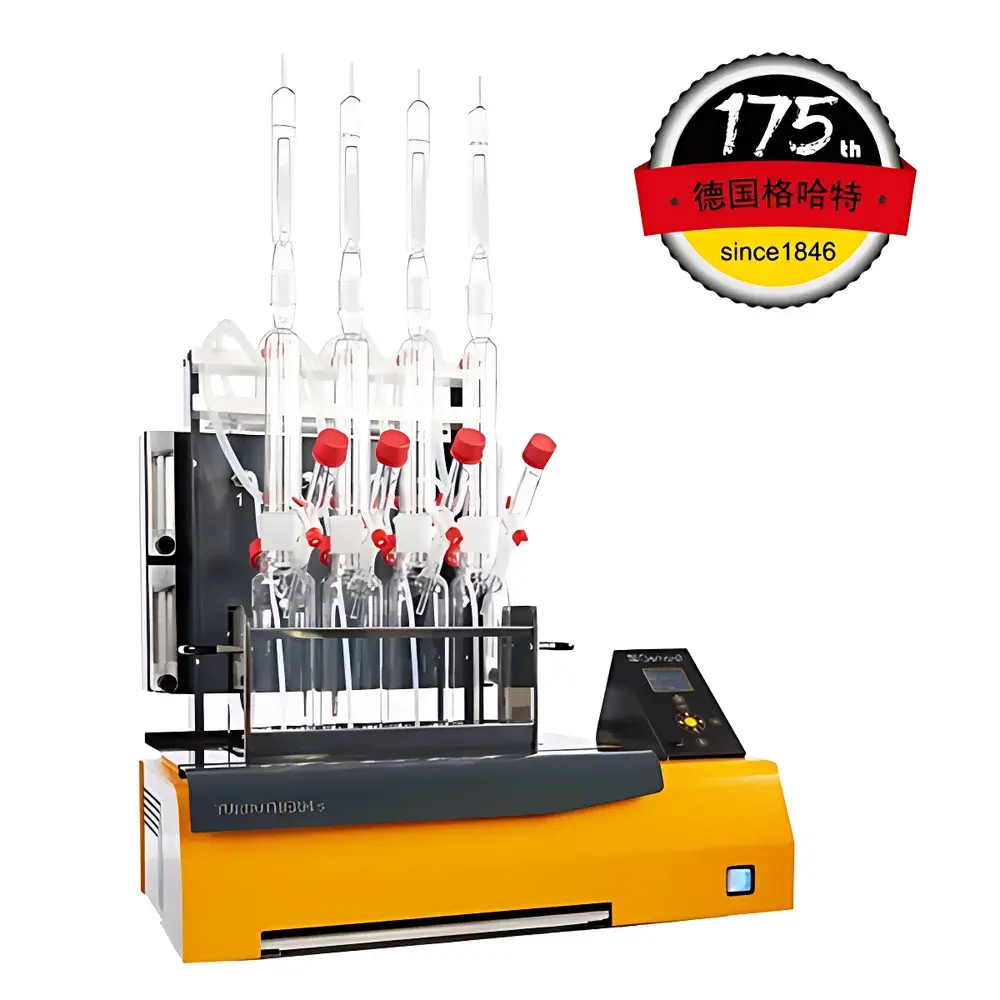
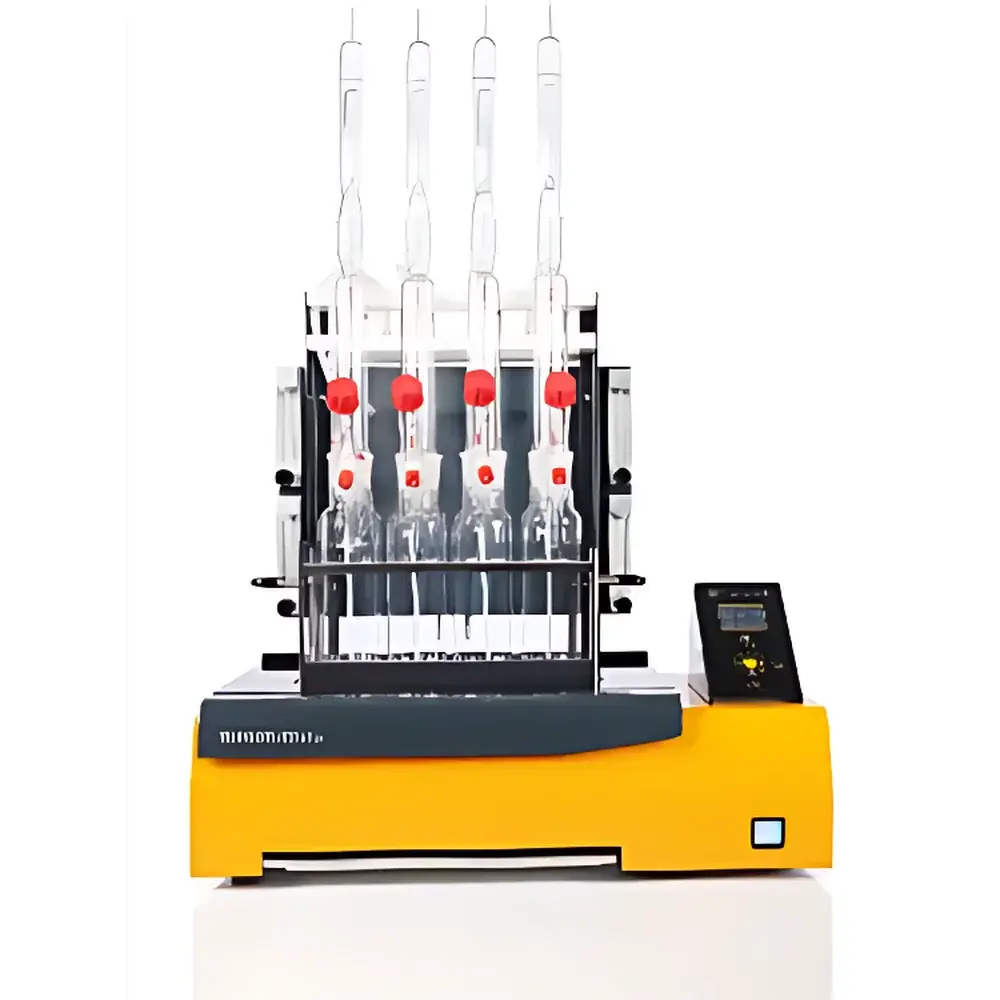
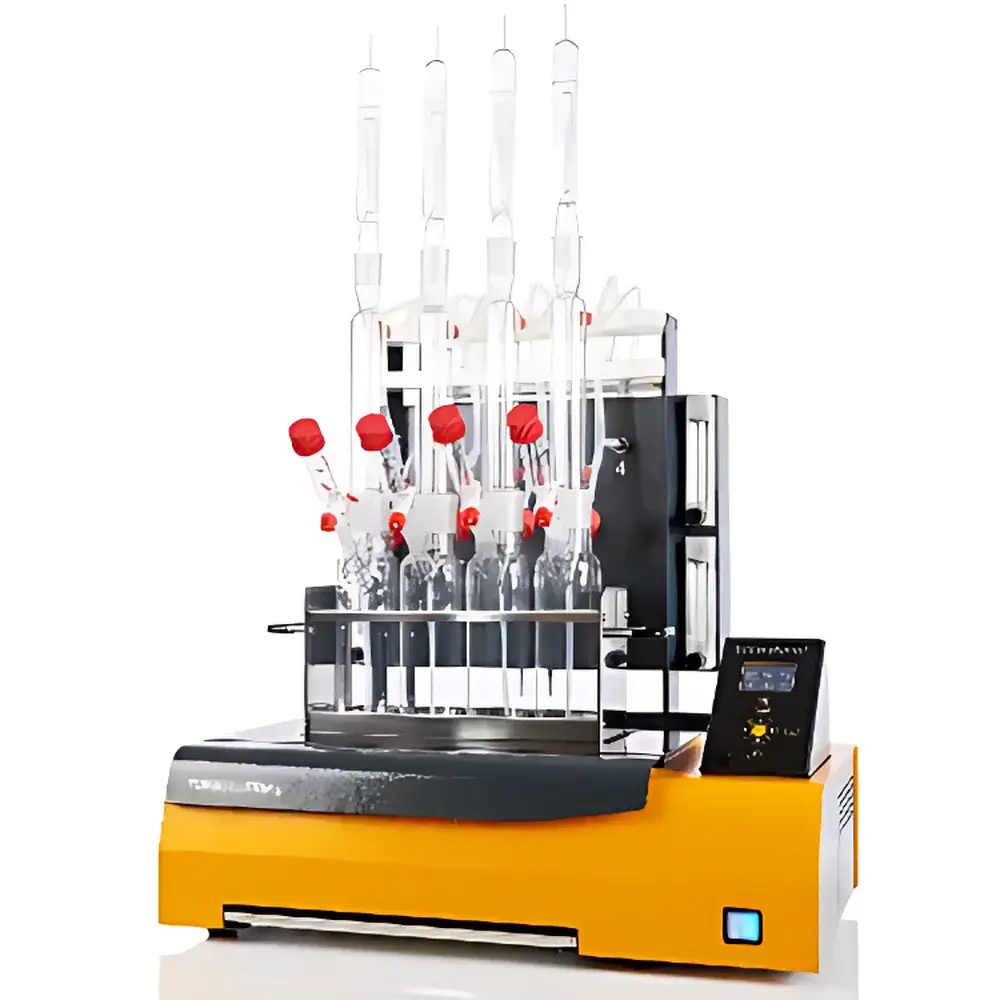
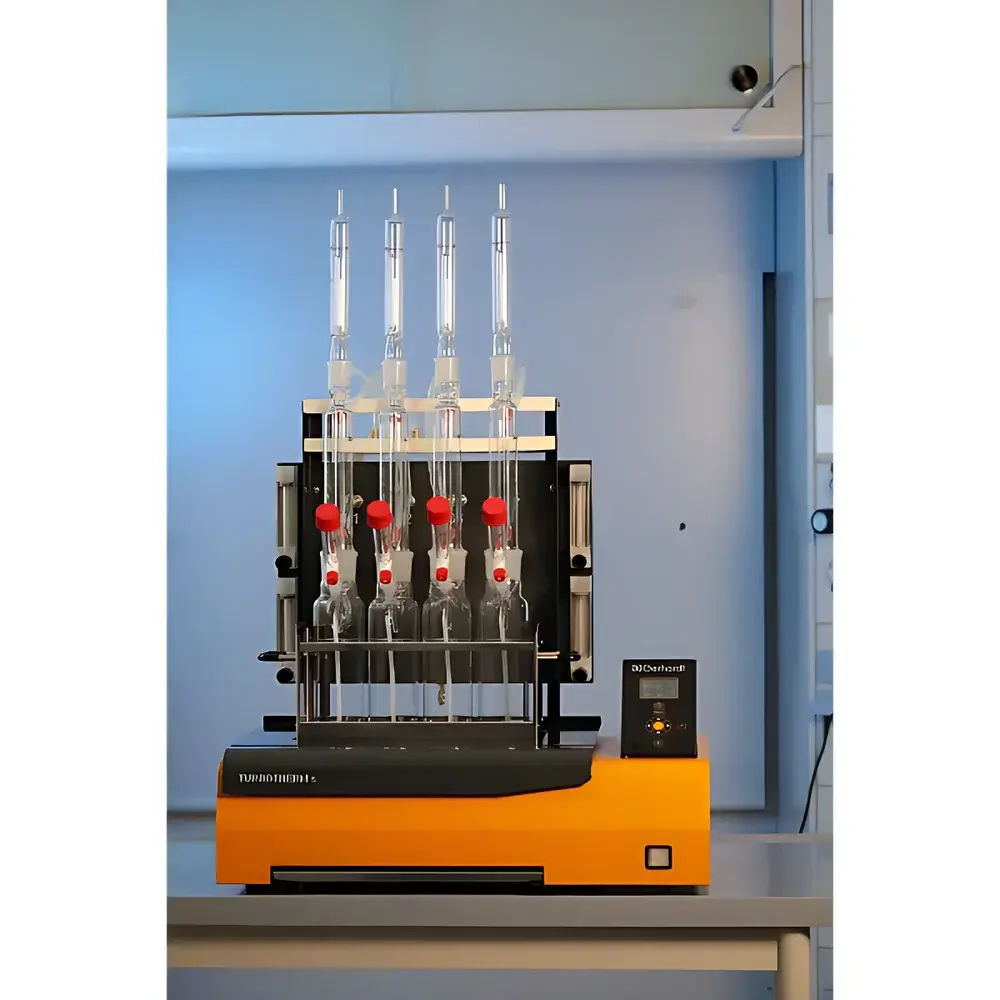
Gerhardt Thermo Scientific Cyanide Digestion and Distillation System TTs 4 CAR
| Brand | Gerhardt |
|---|---|
| Origin | Germany |
| Manufacturer | C. Gerhardt GmbH & Co. KG |
| Type | Laboratory Benchtop System |
| Model | TTs 4 CAR |
| Heating Positions | 4 |
| Distillation Flask Capacity | 800 mL |
| Max Heating Temperature | 650 °C |
| Programmable Methods | 99 |
| Magnetic Stirring | Integrated |
| Rated Power | 2000 W |
| Order No. | 12-06144 |
Overview
The Gerhardt Thermo Scientific Cyanide Digestion and Distillation System TTs 4 CAR is a fully integrated, benchtop laboratory instrument engineered for precise, reproducible distillation-based determination of cyanide and other volatile analytes in environmental and wastewater matrices. It operates on the principle of acid distillation under controlled nitrogen purge — a standardized method aligned with ISO 11263:2023, EPA Method 414.1, ASTM D7511–19, and DIN 38405–27. The system employs Gerhardt’s proprietary TURBOTHERM infrared rapid-heating technology, delivering uniform thermal energy directly to the distillation flask base without convective lag or hot-spot formation. This ensures rapid ramp-up to target temperatures (up to 650 °C), precise temperature stability during distillation, and minimal risk of bumping or foaming — critical for accurate recovery of labile cyanide species (e.g., free CN⁻, weak-acid dissociable cyanides) from complex, high-chloride or high-sulfide wastewater samples.
Key Features
- Four independent distillation positions with synchronized heating control, enabling parallel processing of up to four samples under identical thermal and gas-flow conditions — essential for statistical validity and throughput optimization in routine QC/QA labs.
- TURBOTHERM infrared heating module with digital PID temperature regulation, offering ±2 °C accuracy across the full 50–650 °C operating range and programmable ramp/hold profiles for method-specific digestion kinetics.
- Integrated magnetic stirring in each distillation flask position, ensuring homogeneous sample mixing, improved heat transfer, and consistent volatilization efficiency — particularly beneficial for viscous or particulate-laden effluents.
- Modular design supporting functional expansion: compatible with Gerhardt Kjeldahl digestion modules (enabling conversion to a full Kjeldahl nitrogen analyzer), wet ashing configurations, and flow-injection-compatible digestion interfaces for automated sample introduction.
- Gas-tight distillation train including borosilicate glass condenser, high-efficiency absorption trap (e.g., NaOH or Na₂CO₃ solution), calibrated gas flowmeter (0–5 L/min N₂), and drip tray-equipped support frame — all constructed from chemically resistant materials compliant with GLP handling requirements.
Sample Compatibility & Compliance
The TTs 4 CAR is validated for use with aqueous matrices including municipal wastewater, industrial effluents (e.g., electroplating, mining, chemical synthesis), surface water, and sludge digests. It supports multi-analyte applications beyond cyanide, including sulfide (ISO 10577), fluoride (ISO 10304-1), formaldehyde (ISO 14402), volatile fatty acids (VFA), phosphides, and dithiocarbamates — all via selective distillation under pH- and temperature-controlled conditions. The system meets structural and operational requirements of ISO/IEC 17025:2017 for accredited testing laboratories and incorporates hardware-level safeguards (e.g., overtemperature cutoff, gas-flow interlock) required for safe operation in regulated environments. All glassware conforms to DIN EN ISO 1042 and ASTM E288–16 dimensional tolerances.
Software & Data Management
Controlled via Gerhardt’s PC-based LabSoft software (Windows 10/11 compatible), the TTs 4 CAR supports full method programming, real-time temperature/gas-flow monitoring, event logging, and audit-trail generation compliant with FDA 21 CFR Part 11 and EU Annex 11. Each run generates timestamped, user-attributed data files containing setpoints, actual values, alarm events, and completion status — exportable in CSV or PDF format for LIMS integration. Software validation packages (IQ/OQ/PQ documentation) are available upon request to support GMP/GLP compliance in pharmaceutical or contract environmental testing facilities.
Applications
- Determination of total cyanide and amenable cyanide in wastewater per EPA 414.1 and ISO 11263.
- COD analysis in high-chloride wastewaters using the modified dichromate distillation method (DIN 38409-H41).
- Quantification of sulfide as H₂S after acid distillation (ISO 10577) and subsequent titrimetric or spectrophotometric detection.
- Recovery of volatile organic acids (e.g., acetic, propionic) from anaerobic digesters for biogas process control.
- Preparation of distillates for downstream ICP-MS, IC, or UV-Vis analysis of halides, metals, or carbonyl compounds.
FAQ
Is the TTs 4 CAR compliant with international standard methods for cyanide analysis?
Yes — it is designed and validated for ISO 11263:2023, EPA Method 414.1, ASTM D7511–19, and DIN 38405–27.
Can the system be used for Kjeldahl nitrogen analysis?
Yes — with optional Kjeldahl digestion modules and appropriate glassware, it functions as a complete Kjeldahl system meeting ISO 5983–1 and AOAC 984.13 requirements.
What safety features are included for unattended operation?
Overtemperature cutoff, nitrogen flow interlock, condensate level sensor, and emergency power-off circuit ensure safe overnight runs.
Is method validation support provided?
Gerhardt supplies IQ/OQ documentation templates, performance verification protocols, and on-site qualification support for regulatory audits.
Are replacement parts and certified calibration services available globally?
Yes — Gerhardt maintains an international spare parts network and offers traceable calibration services accredited to ISO/IEC 17025.







