
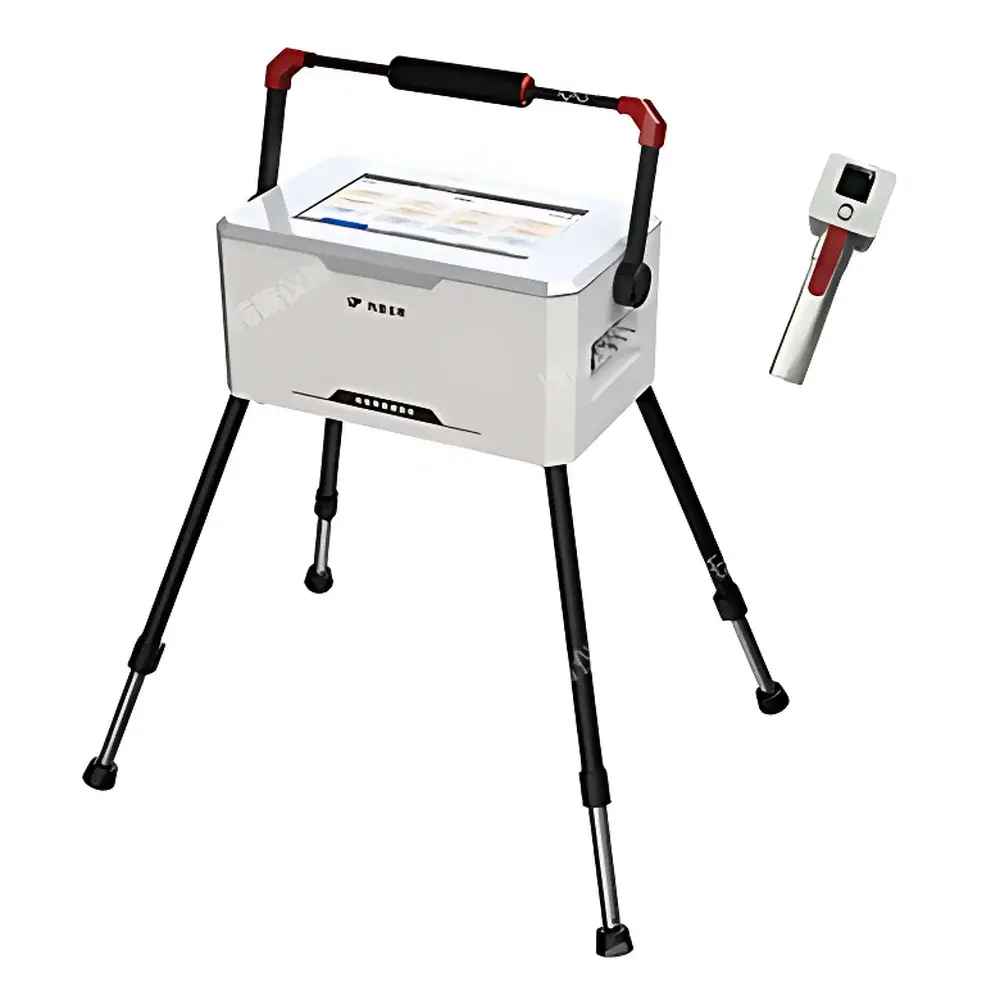
Top Cloud-agri TP-PM-1 Portable Photosynthesis Measurement System
| Brand | Top Cloud-agri |
|---|---|
| Origin | Zhejiang, China |
| Manufacturer Type | Direct Manufacturer |
| Country of Origin | China |
| Model | TP-PM-1 |
| CO₂ Range | 0–2000 µmol/mol (ppm), Resolution: 0.001, Accuracy: ≤3% FS |
| Ambient Temp | 0–50 °C, Res: 0.001 °C, Acc: ±0.3 °C |
| Leaf Chamber Temp | 0–50 °C, Res: 0.001 °C, Acc: ±0.3 °C |
| Ambient RH | 0–100% RH, Res: 0.001% RH, Acc: ±5% RH |
| Chamber RH | 0–100% RH, Res: 0.001% RH, Acc: ±5% RH |
| Leaf Surface Temp | 0–50 °C, Res: 0.001 °C, Acc: ±0.2 °C |
| PAR | 0–2000 µmol/(m²·s), Res: 0.001, Acc: ±5 µmol/(m²·s) |
| Net Photosynthetic Rate (Pn) | µmol/(m²·s), Res: 0.001 |
| Stomatal Conductance (Gs) | mol/(m²·s), Res: 0.001 |
| Transpiration Rate (Tr) | mmol/(m²·s), Res: 0.001 |
| Intercellular CO₂ (Ci) | µmol/mol, Res: 0.001 |
| Instantaneous Water Use Efficiency (WUE) | dimensionless, Res: 0.001 |
Overview
The Top Cloud-agri TP-PM-1 Portable Photosynthesis Measurement System is a field-deployable, open-path gas exchange instrument engineered for quantitative assessment of leaf-level photosynthetic physiology under controlled or natural conditions. It operates on the principle of differential infrared gas analysis (NDIR) coupled with simultaneous microclimate monitoring and quantum sensor-based PAR measurement. The system quantifies real-time carbon assimilation dynamics by measuring the flux difference of CO₂ between inlet and outlet airstreams across a standardized leaf chamber, while concurrently recording leaf temperature, chamber and ambient humidity/temperature, photosynthetically active radiation (PAR), stomatal conductance, transpiration rate, intercellular CO₂ concentration (Ci), and instantaneous water use efficiency (WUE). Designed for ecophysiological fieldwork and greenhouse experimentation, the TP-PM-1 supports reproducible, non-destructive in situ measurements across diverse plant species—including herbaceous crops, woody perennials, and understory vegetation—without requiring leaf excision or vacuum sealing.
Key Features
- Integrated NDIR CO₂ analyzer with real-time CO₂ extremum filtering algorithm, reducing stabilization time by >40% compared to conventional open-system protocols.
- 10-inch Android-based capacitive touchscreen interface with dual-language support (English/Chinese), firmware-over-the-air (FOTA) update capability, and intuitive workflow-driven navigation.
- Modular open-gas-path architecture with actively regulated airflow (0.2–1.2 L/min), enabling dynamic environmental simulation and minimizing boundary layer artifacts during high-humidity or low-wind conditions.
- High-resolution microclimate sensing suite: dual thermistors (leaf surface + chamber air), capacitive RH sensors (chamber & ambient), and calibrated silicon photodiode PAR sensor (400–700 nm).
- Field-optimized mechanical design: adjustable-height tripod-mounted leaf chamber (3 cm × 3 cm optical window), ergonomic hand-held probe, corrosion-resistant aluminum-carbon steel chassis, and IP54-rated interface protection with silicone dust caps.
- Onboard 8 GB internal storage with auto-save recovery; data export via USB 2.0 in native Excel (.xlsx) format—no post-conversion required.
Sample Compatibility & Compliance
The TP-PM-1 accommodates intact, attached leaves ranging from 1.5 cm² to 9 cm² (standard 3 cm × 3 cm chamber), including broadleaf dicots, monocot grasses, conifer needles (with adapter), and epiphytic foliage. Its non-invasive clamp design applies uniform, low-pressure contact (<15 kPa), preventing mesophyll compression or vascular disruption. All optical and thermal sensors are calibrated traceably to NIST-certified references. Data acquisition complies with ISO 17025-aligned internal validation protocols. While not FDA 21 CFR Part 11 certified out-of-box, audit trails, user-defined metadata fields, and timestamped raw-data logs support GLP-compliant documentation when integrated into institutional QA workflows. The system meets IEC 61000-4 electromagnetic compatibility standards for laboratory and outdoor deployment.
Software & Data Management
Data collection is fully automated with configurable sampling intervals (default: 120 s), programmable start/stop triggers, and embedded experimental annotation fields. On-device visualization includes synchronized time-series plots (dual-Y axis supported) and tabular views with scrollable history. Users may zoom into individual graphs via double-tap interaction. Local data management enables selective export, deletion, or cloud upload. When connected to Wi-Fi, the instrument interfaces natively with the “Smart AgriCloud” IoT platform (v4.0), supporting multi-user access control, cross-experiment parameter comparison, regression modeling tools, and export of publication-ready SVG/PNG charts. All cloud-stored datasets retain original timestamps, instrument serial ID, and environmental context tags—ensuring full provenance for peer-reviewed reporting.
Applications
The TP-PM-1 serves as a primary tool for plant ecophysiologists investigating drought tolerance mechanisms, CO₂ fertilization responses, light saturation kinetics, and thermal acclimation thresholds. It is routinely deployed in agronomic trials evaluating cultivar-specific WUE under deficit irrigation, in forest ecology studies tracking diurnal stomatal behavior across canopy strata, and in urban horticulture research assessing photosynthetic performance of green infrastructure species. Educational applications include undergraduate plant physiology labs, graduate thesis fieldwork, and extension training on precision crop monitoring. Its portability and battery endurance (>8 h continuous operation at 25 °C) make it suitable for longitudinal monitoring across heterogeneous landscapes—from paddy fields to alpine meadows—without reliance on external power infrastructure.
FAQ
What is the minimum leaf area required for reliable measurement?
The standard chamber accepts leaves ≥1.5 cm²; optimal signal-to-noise ratio is achieved with ≥4.5 cm² surface area.
Can the instrument operate in high-humidity tropical environments?
Yes—the chamber and ambient RH sensors are rated for 0–100% RH, and the open-path design mitigates condensation risk during prolonged use at >90% RH.
Is PAR calibration traceable to international standards?
Yes—each PAR sensor is factory-calibrated against a NIST-traceable reference spectroradiometer (model LI-1800), with certificate provided per unit.
How does the system handle transient CO₂ fluctuations during rapid light changes?
The embedded CO₂ extremum filter dynamically adjusts integration time to suppress noise spikes while preserving physiological response fidelity, validated against step-change CO₂ injection tests per ASTM E2897-13.
Does the device support custom protocol scripting for automated diurnal cycles?
Not natively—but experiment sequences can be preconfigured via CSV-based batch templates uploaded through the Smart AgriCloud portal, enabling scheduled parameter sweeps across light intensity, CO₂ setpoints, or temperature gradients.
Related Products



