
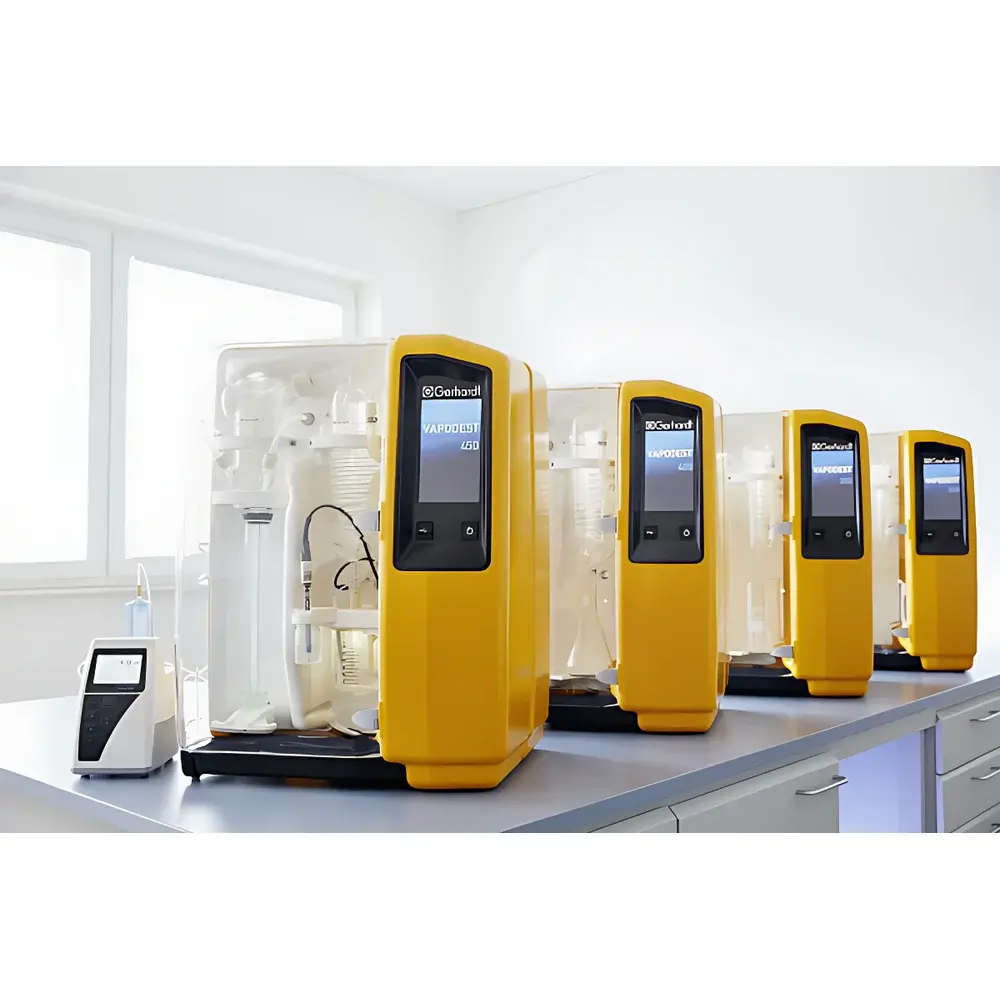
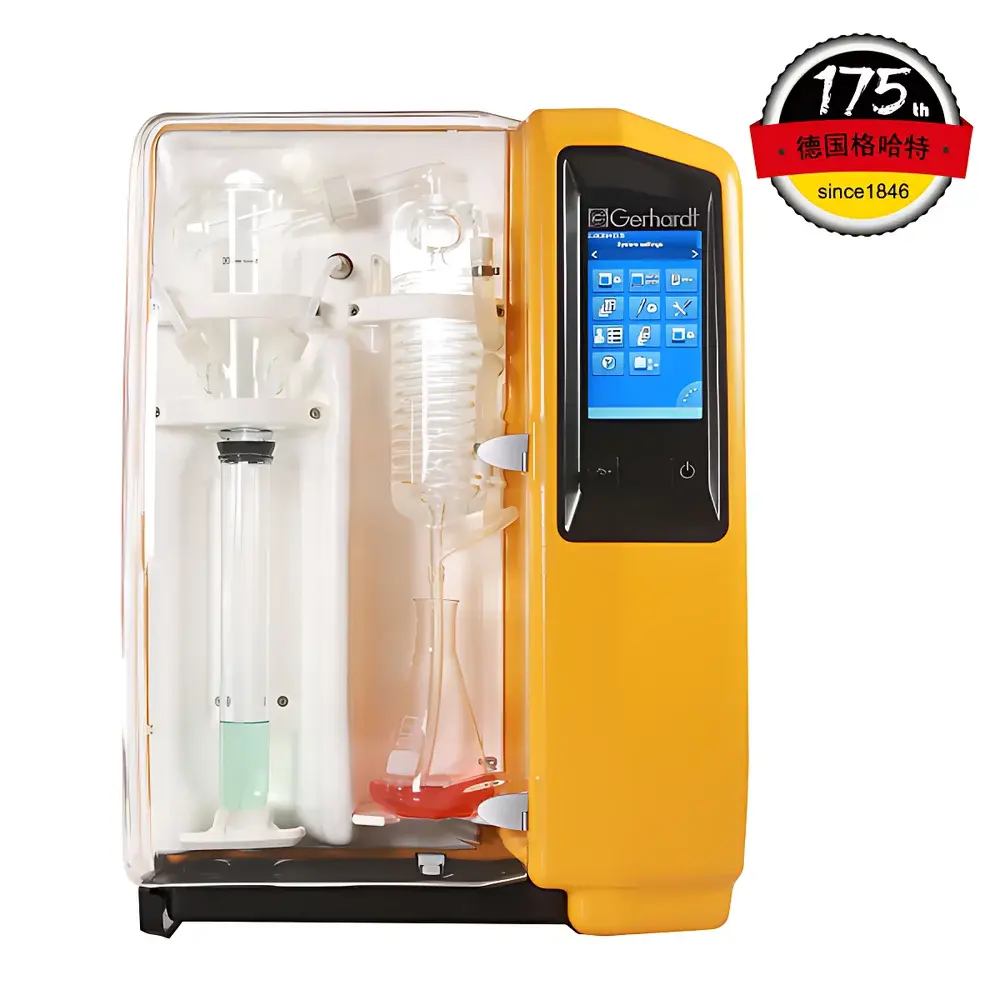
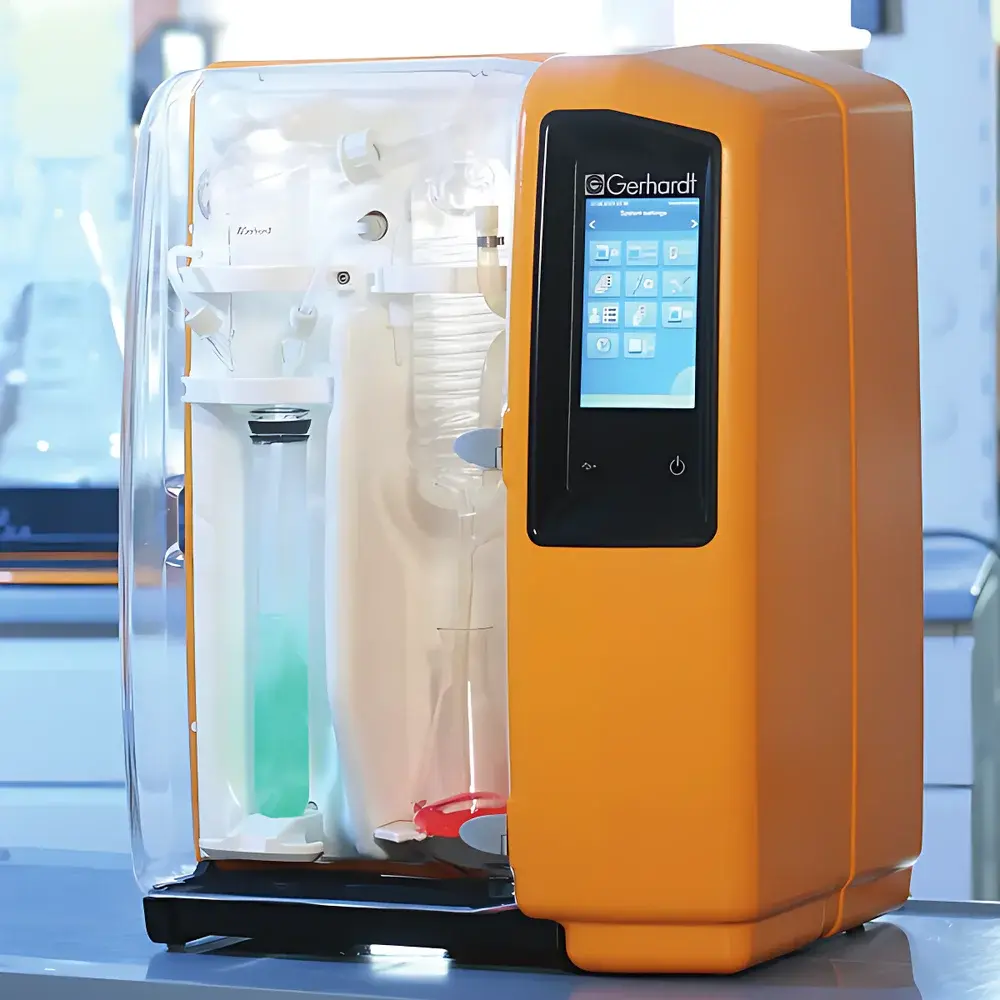
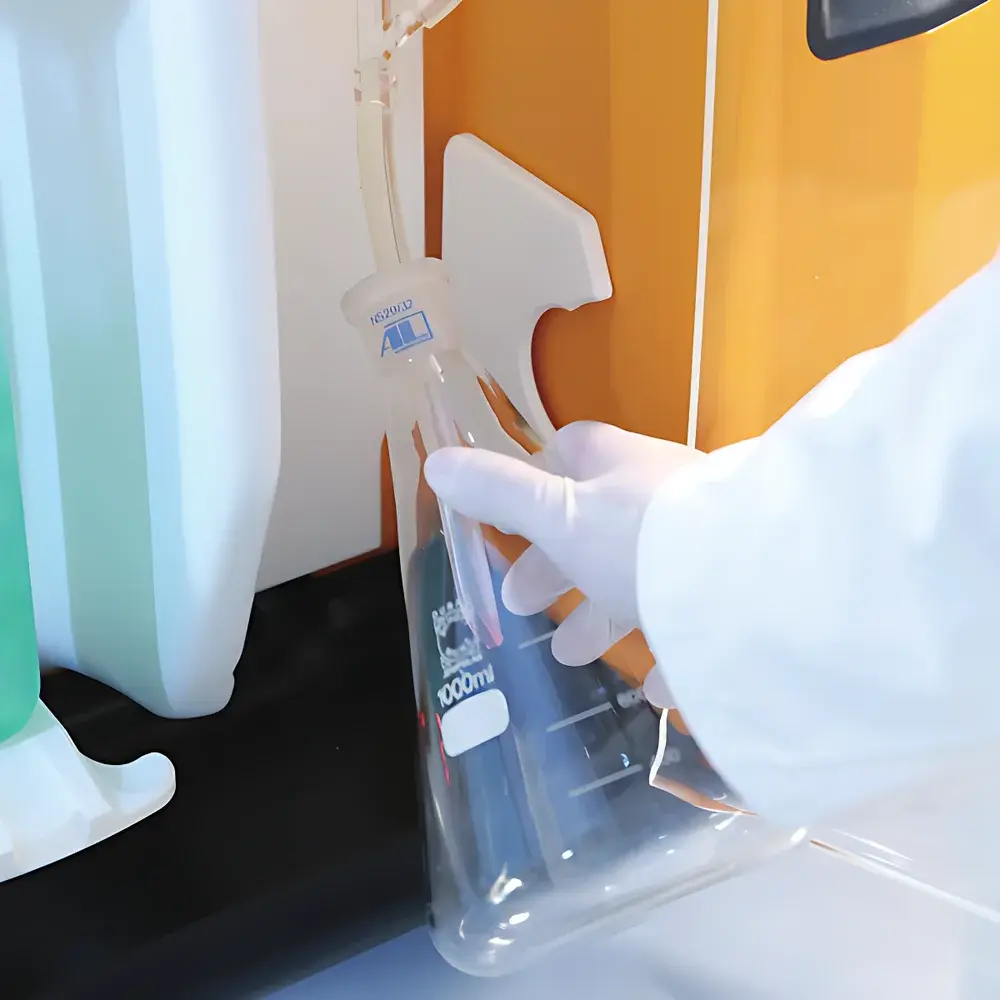
Gerhardt Vap300 Automated Kjeldahl Nitrogen/Protein Determinator
| Brand | Gerhardt |
|---|---|
| Origin | Germany |
| Manufacturer | C. Gerhardt GmbH & Co. KG |
| Model | Vap300 |
| Principle | Kjeldahl Distillation (Steam Distillation) |
| Measurement Range | 0.01–100 mg N |
| Repeatability | ±1% |
| Detection Limit | 0.01 mg N |
| Recovery Rate | >99.5% |
| Power Supply | 230 V AC, 50/60 Hz |
| Power Consumption | 2200 W |
| Dimensions (W×D×H) | 440 × 340 × 690 mm |
| Weight | 34 kg |
| Cooling Water Requirement | 2–5 L/min |
| Sample Distillation Time | 2–4 min per sample |
| Steam Output Control | 10–100% programmable via software |
Overview
The Gerhardt Vap300 Automated Kjeldahl Nitrogen/Protein Determinator is a precision-engineered steam distillation system designed for reliable, reproducible quantification of total nitrogen and crude protein content in accordance with AOAC, ISO 8968, ISO 5983, DIN EN ISO 1871, and other internationally recognized Kjeldahl methodology standards. Built upon over 126 years of Gerhardt’s heritage in Kjeldahl instrumentation, the Vap300 implements classical wet-chemical steam distillation—where alkaline-treated digests are subjected to controlled steam flow to liberate ammonia, which is then trapped in boric acid and quantified via titration. Unlike spectrophotometric or Dumas-based alternatives, the Vap300 delivers reference-method accuracy for regulatory-compliant analysis across food, feed, environmental, and pharmaceutical laboratories.
Key Features
- Programmable microprocessor control with intuitive LCD interface guiding users through each step—alkali addition, dilution, distillation, waste discharge, and rinse cycles.
- Integrated steam generator with adjustable output (10–100% range), enabling precise optimization for diverse matrices—including alcohol-rich samples where ~70% steam saturation ensures optimal volatility control.
- Corrosion-resistant polymer housing and chemically inert fluid pathways ensure long-term stability in high-acid, high-salt, or high-sulfur environments typical of feed digestates or wastewater sludge.
- Automatic reagent dosing: NaOH addition and post-distillation water dilution are fully automated, minimizing operator intervention and inter-sample variability.
- RS485 serial interface for integration into laboratory information management systems (LIMS) and centralized instrument monitoring networks.
- Steam standby mode reduces thermal cycling stress on components and improves energy efficiency during idle periods between analyses.
- Fail-safe monitoring: real-time detection of low coolant flow, insufficient alkali volume, condenser temperature deviation, and distillate overflow—each triggering audible/visual alerts and process suspension.
Sample Compatibility & Compliance
The Vap300 accommodates a broad spectrum of sample types requiring steam-volatile nitrogen release or acid/base volatile compound isolation. Validated applications include crude protein determination in cereals, dairy products, meat, and plant-based foods; volatile basic nitrogen (VBN) in fish and seafood; ammoniacal nitrogen in soil extracts; nitrate/nitrite after reduction; formaldehyde in disinfectants; free sulfur dioxide in wine; and total volatile acidity in fermented beverages. Its design conforms to GLP and GMP operational requirements, supporting audit-ready documentation when paired with compliant titration modules (e.g., Metrohm 905 Titrando). The system meets CE marking directives and complies with IEC 61010-1 for electrical safety in laboratory equipment.
Software & Data Management
Gerhardt’s proprietary VapControl software enables method creation, parameter logging, and full traceability per run—including timestamped sequence records, steam pressure profiles, reagent volumes dispensed, and error event logs. All data are exportable in CSV or PDF formats compatible with 21 CFR Part 11–compliant electronic signature workflows when deployed with validated authentication protocols. Audit trails record user logins, method modifications, and result approvals—essential for FDA-regulated environments or ISO/IEC 17025 accredited testing laboratories. No cloud dependency: local storage ensures data sovereignty and uninterrupted operation under restricted network policies.
Applications
- Food & Beverage: Crude protein in flour, soy meal, infant formula, cheese, and beer wort; alcohol content in spirits via distillative separation; SO₂ in wine and cider.
- Animal Feed & Agriculture: Total Kjeldahl nitrogen (TKN) in silage, manure, and fertilizer blends; non-protein nitrogen (NPN) in urea-supplemented rations.
- Environmental Testing: Ammonia-N in wastewater effluents; volatile fatty acids in anaerobic digestate; phenol and formaldehyde in leachates.
- Cosmetics & Detergents: Free amine content in surfactant formulations; residual ammonia in hair dyes and bleaching agents.
- Pharmaceuticals & Biotech: Nitrogen recovery validation in API synthesis; assay of amino group-containing excipients.
FAQ
Is the Vap300 compatible with existing Gerhardt digestion units such as the KB, CSB, or SMA series?
Yes—the Vap300 is mechanically and protocol-synchronized for seamless integration with Gerhardt’s full line of Kjeldahl digesters, enabling end-to-end automation from digestion to distillation.
What titration methods does the Vap300 support for endpoint detection?
The system is agnostic to titration technique: it delivers standardized distillate to any external titrator, whether colorimetric (methyl red/bromocresol green indicator) or potentiometric (pH or double-junction electrode).
Does the Vap300 require continuous cooling water supply?
Yes—it operates with a recirculating or mains-fed condenser requiring 2–5 L/min flow. Optional chillers or closed-loop coolers can be integrated for ambient temperatures exceeding 35 °C.
Can method parameters be locked to prevent unauthorized changes in regulated labs?
Absolutely. Password-protected method editing and user role assignment (operator, supervisor, administrator) are supported via VapControl software.
What maintenance intervals are recommended for routine operation?
Daily: rinse cycle verification and condenser inspection. Quarterly: steam generator descaling and alkali pump calibration. Annual: full performance qualification (PQ) against certified reference materials per ISO/IEC 17025 guidelines.





