
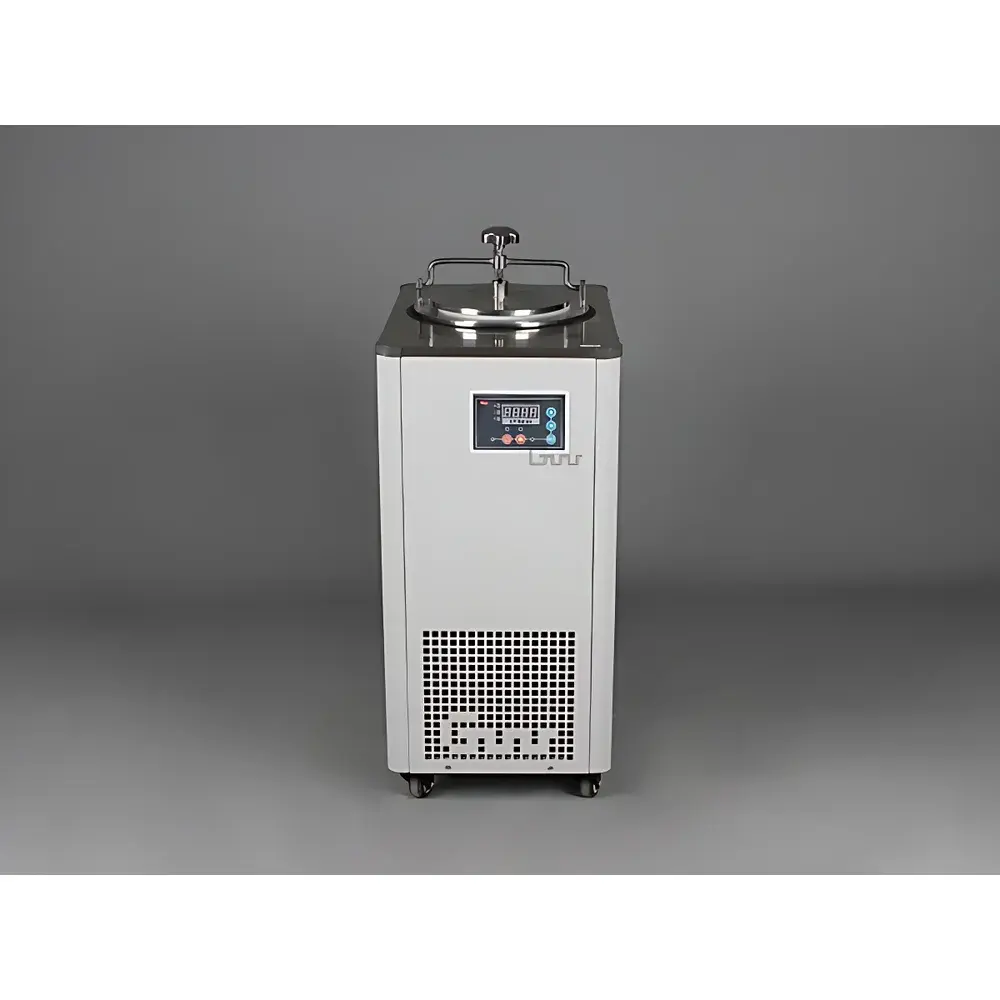
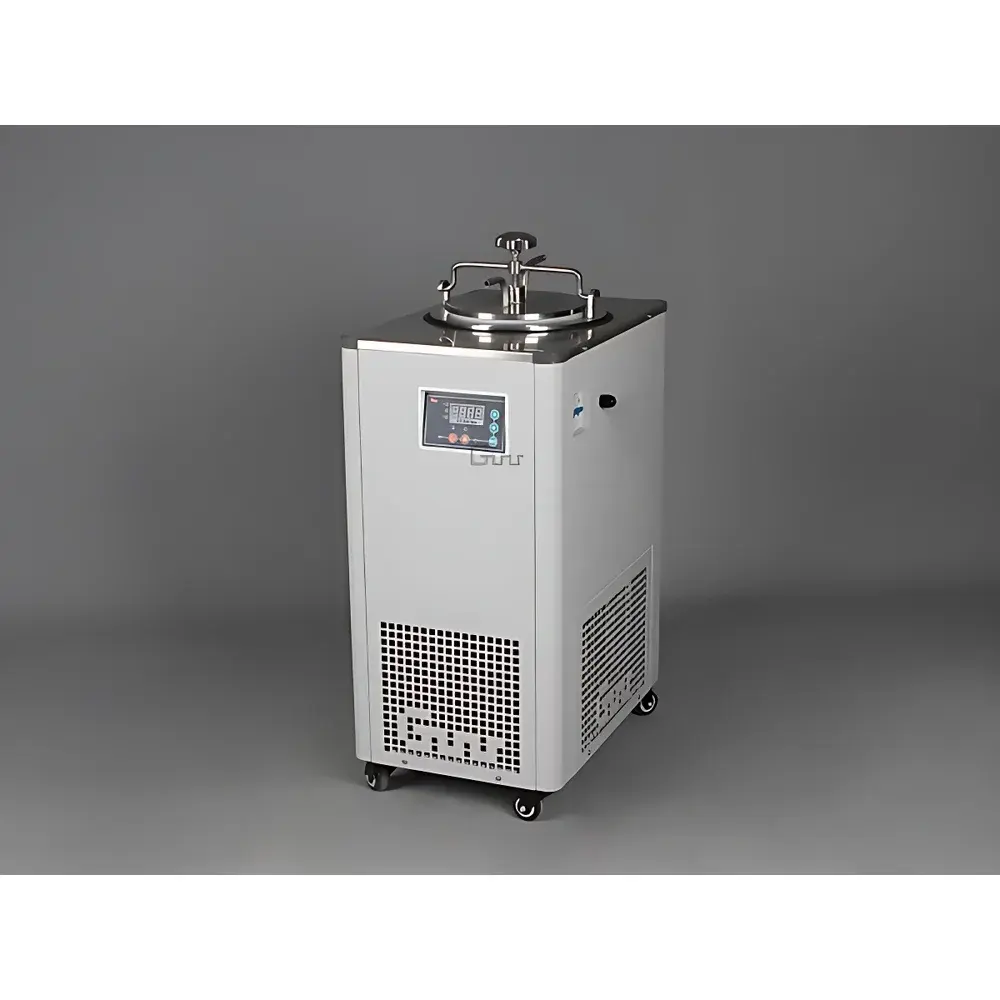
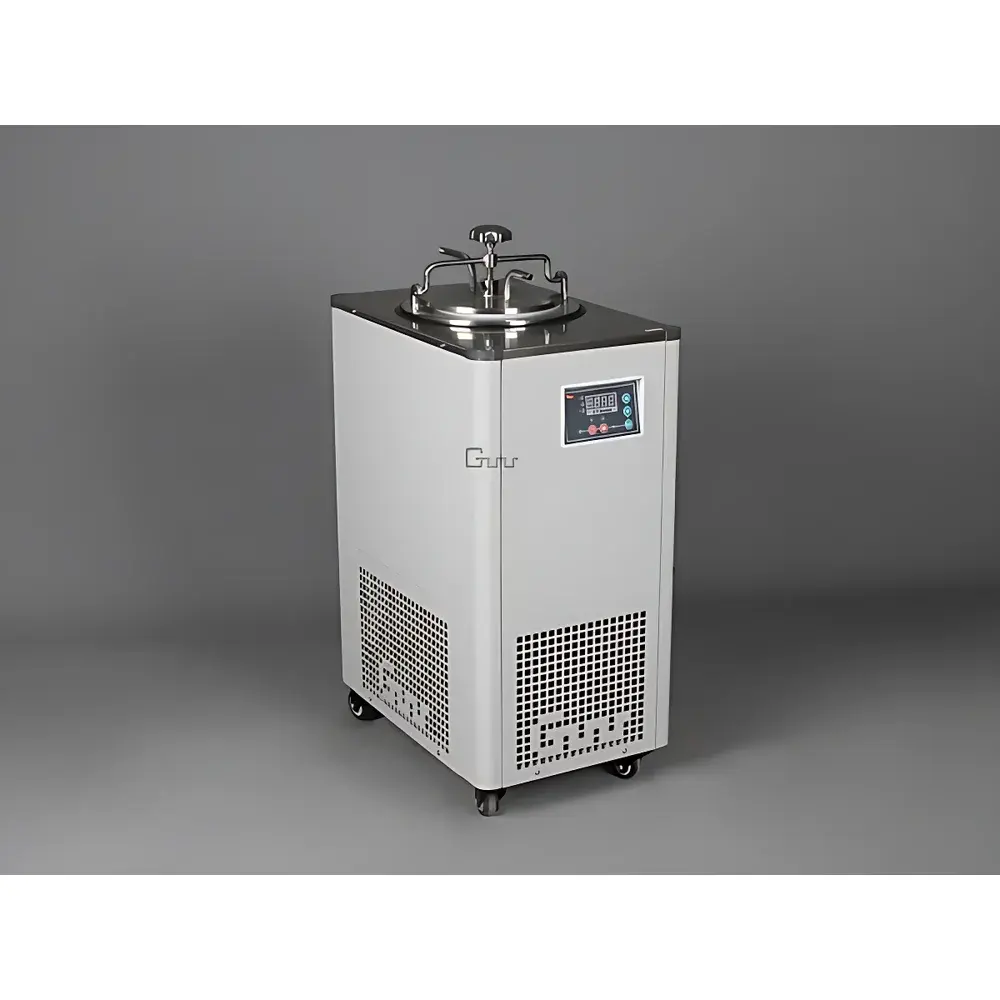
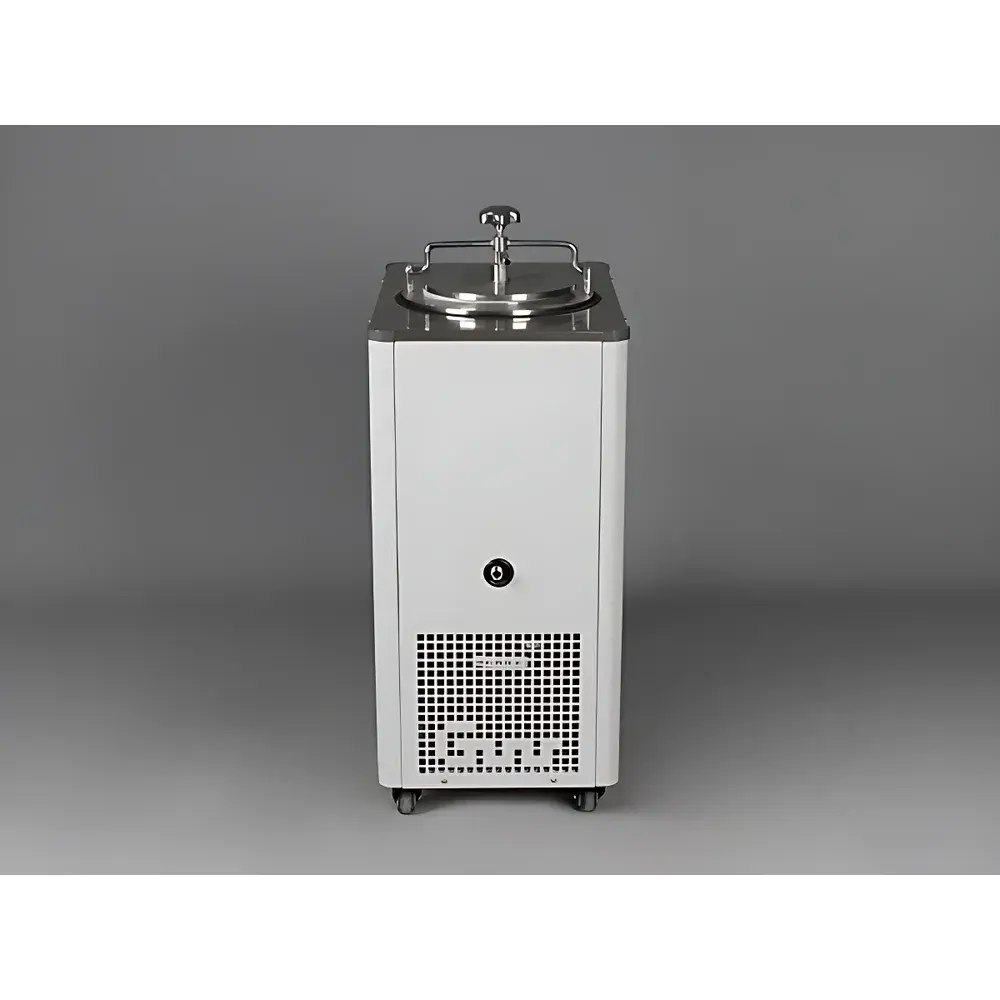
The Great Wall VT-2000L Cryogenic Vapor Trap
| Brand | The Great Wall |
|---|---|
| Origin | Henan, China |
| Manufacturer Type | Direct Manufacturer |
| Country of Origin | China |
| Model | VT-2000L |
| Price | Upon Request |
| Empty Minimum Temperature | −80 °C |
| Cooling Method | Direct Contact Cooling |
| Temperature Display | Digital (Pt100 Sensor) |
| Temperature Setting Range | Adjustable Within Operating Range |
| Safety Protections | Delay Start, Overcurrent Protection, Overtemperature Protection |
| Moisture Removal Capacity | Up to 1 kg (Water-Based Systems) |
| Refrigeration Capacity | 260 W at −40 °C, 110 W at −60 °C, 40 W at −80 °C |
| Refrigerants | R404A + R23 Dual-Circuit System |
| Trap Chamber Dimensions | Ø160 mm × 240 mm |
| Chamber Material | 06Cr19Ni10 (AISI 304 Stainless Steel) |
| Vacuum Port Interface | Flexible Hose Fitting, OD Ø12 mm |
| Ambient Operating Conditions | 5–35 °C, ≤70% RH |
| Total Power Consumption | 1580 W |
| Rated Current | 7.2 A |
| Power Supply | 220–240 V~, 50 Hz |
| Overall Dimensions (W×D×H) | 520 × 528 × 1190 mm |
| Net Weight | 100 kg |
Overview
The Great Wall VT-2000L Cryogenic Vapor Trap is an engineered solution for condensing and immobilizing solvent vapors—particularly water, ethanol, acetone, and other low-boiling-point volatiles—during high-vacuum processes such as freeze-drying, rotary evaporation, vacuum concentration, and battery electrode drying. Operating on the principle of cryo-condensation, the unit achieves a stable empty chamber temperature of −80 °C using a dual-refrigerant cascade system (R404A/R23), enabling efficient phase transition of gaseous species into solid or liquid phases directly within the trap chamber. Its design integrates thermal stability, material compatibility, and process safety to support continuous operation in regulated laboratory and pilot-scale manufacturing environments—including those adhering to GLP, GMP, and ISO 17025 frameworks.
Key Features
- Stainless steel trap chamber (AISI 304 / 06Cr19Ni10) with seamless construction and electropolished interior surface—resistant to corrosion from aqueous, alcoholic, and mildly acidic media
- Dual-mode condensation configuration: direct-contact cooling of stainless chamber walls or optional glass cold finger assembly (borosilicate 3.3) for aggressive solvents (e.g., HCl, THF, DMF)
- Pt100 precision temperature sensor with digital display and real-time monitoring—enabling synchronized vacuum pump activation based on thermal stabilization thresholds
- Cascade refrigeration architecture delivering graded cooling performance: 260 W at −40 °C, 110 W at −60 °C, and 40 W at −80 °C—optimized for both rapid cooldown and sustained ultra-low-temperature operation
- Integrated safety logic including compressor delay protection, overcurrent cutoff, and independent overtemperature shutdown—compliant with IEC 61000-6-2/6-4 EMC and IEC 61010-1 safety standards
- Modular vacuum interface with standardized Ø12 mm flexible hose connection—compatible with common vacuum manifolds, lyophilizers, and glovebox transfer lines
Sample Compatibility & Compliance
The VT-2000L supports diverse sample matrices across pharmaceutical, electrochemical, and materials science workflows. The 304 stainless steel chamber is validated for repeated use with water, methanol, ethanol, isopropanol, and ethyl acetate. When equipped with the optional borosilicate cold finger, compatibility extends to hydrochloric acid vapor, acetonitrile, chloroform, and dimethyl sulfoxide—subject to controlled feed rates and exposure duration. All wetted surfaces meet USP Class VI biocompatibility requirements. The unit’s electrical architecture conforms to CE marking directives (2014/30/EU EMC, 2014/35/EU LVD), and its operational documentation supports audit readiness for FDA 21 CFR Part 11-compliant data integrity protocols when paired with validated SCADA or LabVIEW-based control systems.
Software & Data Management
While the VT-2000L operates as a standalone instrument with local digital setpoint control, it features analog voltage output (0–5 V DC) for temperature signal integration into external PLCs or DAQ systems. Optional RS485 Modbus RTU interface enables bidirectional communication for remote setpoint adjustment, alarm status polling, and timestamped temperature logging—facilitating traceable recordkeeping aligned with ALCOA+ principles (Attributable, Legible, Contemporaneous, Original, Accurate, Complete, Consistent, Enduring, Available). Data export formats include CSV and XML; no proprietary software installation is required.
Applications
- Vacuum drying of lithium-ion battery cathode/anode foils—preventing solvent residue and electrolyte decomposition during roll-to-roll processing
- Cryo-trapping in lyophilization cycles to protect oil-sealed or dry scroll vacuum pumps from water vapor backstreaming and oil emulsification
- Condensation of volatile organic compounds (VOCs) during solvent recovery in API synthesis under reduced pressure
- Pre-freezing support for cryo-microtomy sample preparation and low-temperature SEM specimen staging
- Gas-phase purification in inert-atmosphere gloveboxes handling moisture-sensitive catalysts or air-sensitive organometallics
FAQ
Can the VT-2000L be used continuously for >8 hours without defrosting?
Yes—under nominal load conditions (≤0.6 kg water equivalent per cycle), the unit maintains stable −80 °C operation for up to 16 hours before requiring manual defrost. Automatic defrost is not integrated but can be scheduled via external timer control.
Is the stainless steel chamber suitable for hydrofluoric acid (HF) vapor?
No—HF vapor requires Hastelloy C-276 or fluoropolymer-lined trapping surfaces. The 304 chamber is incompatible with HF and concentrated fluorinated solvents.
What vacuum level is recommended upstream of the trap inlet?
Optimal performance occurs between 1 × 10⁻¹ and 5 × 10⁻³ mbar. Below 1 × 10⁻³ mbar, condensation efficiency decreases due to reduced molecular collision frequency.
Does the unit comply with ATEX or IECEx for explosive atmospheres?
No—the VT-2000L is rated for Zone 2/Class I Division 2 use only. Explosion-proof variants require custom engineering and third-party certification.
Can the temperature setpoint be ramped programmatically?
Not natively—but external PID controllers with analog input/output capability can modulate the setpoint signal via the 0–5 V interface, enabling linear or stepwise thermal profiles.



