
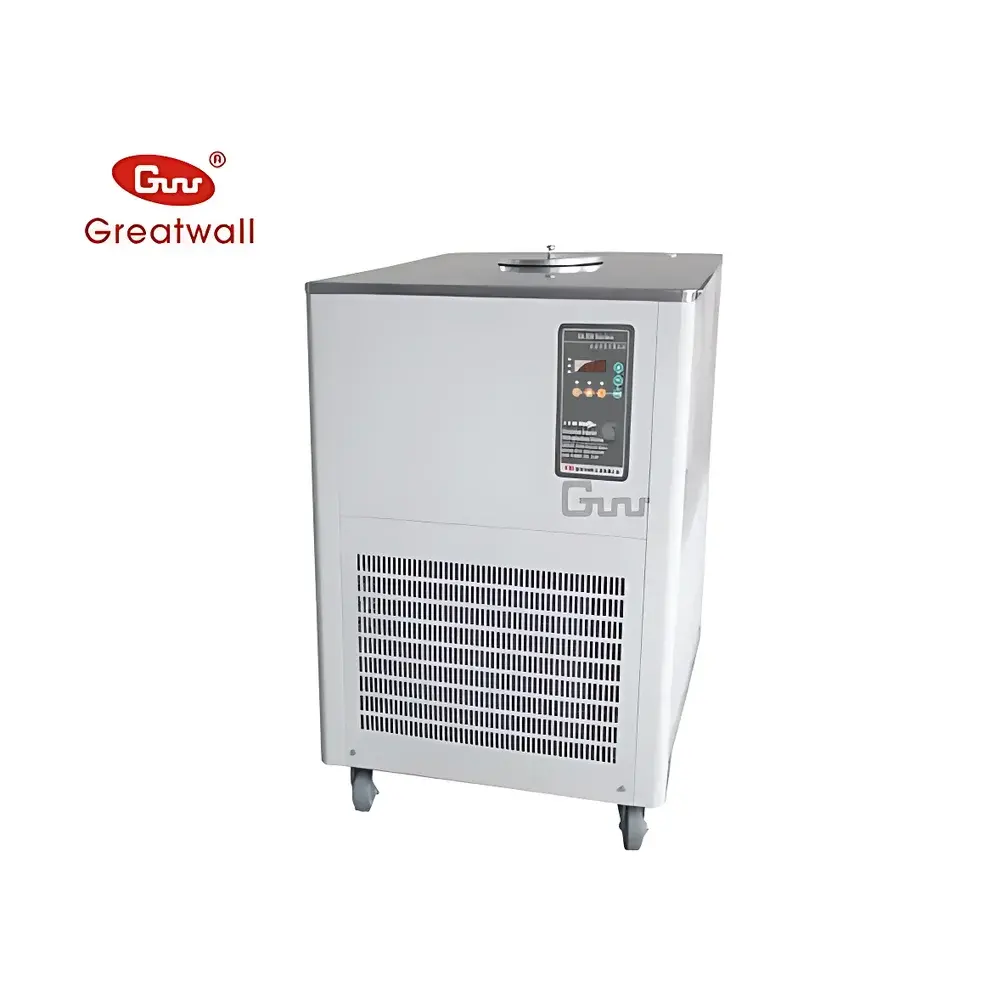
The Great Wall DHJF-1010 Cryogenic Circulating Stirred Bath
| Brand | The Great Wall |
|---|---|
| Origin | Henan, China |
| Manufacturer Type | Direct Manufacturer |
| Country of Origin | China |
| Model | DHJF-1010 |
| Price Range | USD 7,000–14,000 |
| Temperature Range | −100 °C to −60 °C |
| Ambient Operating Temperature | 5–25 °C |
| Temperature Stability | ±2 °C |
| Power Supply | 3-phase, 380 V, 50 Hz |
| Reservoir Capacity | 10 L |
| Reservoir Dimensions | Φ250 mm × 250 mm (H) |
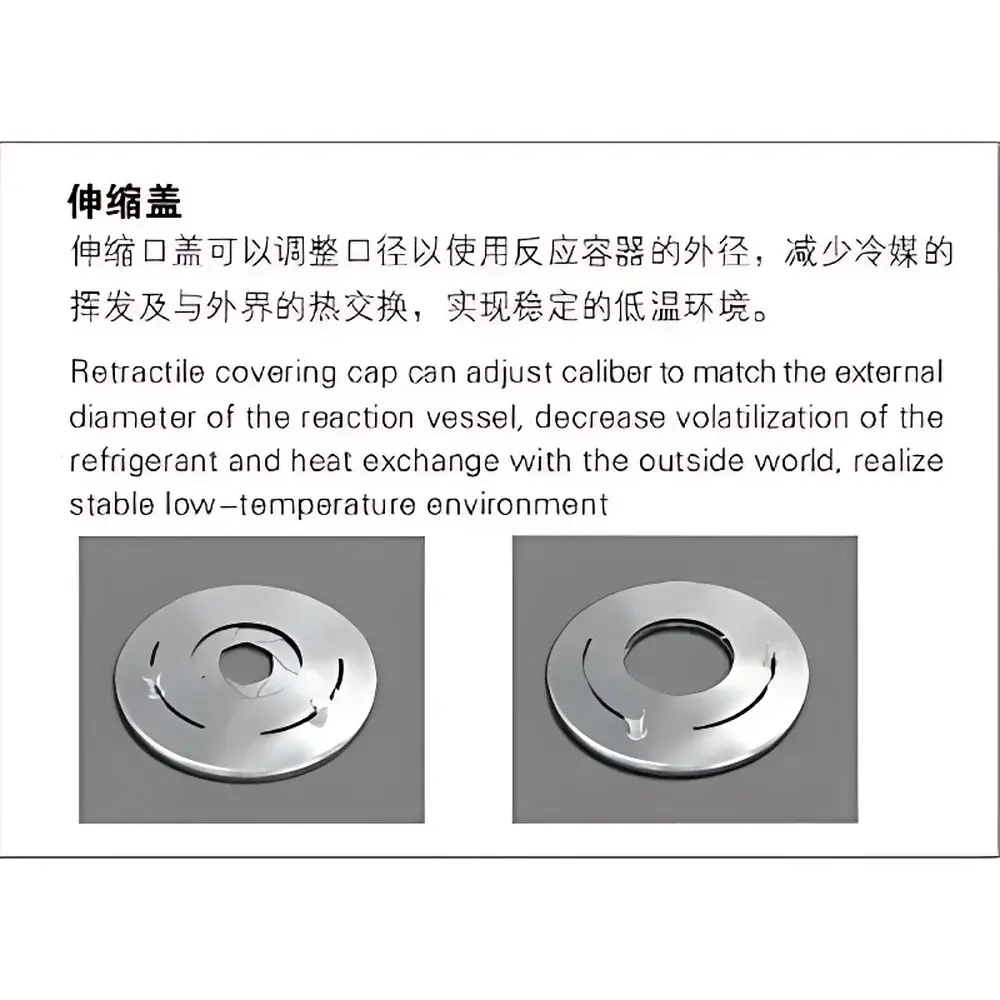
| Opening Diameter | Φ210 mm |
| Cooling Capacity | 160 W at −60 °C / 70 W at −80 °C / 40 W at −100 °C |
| Max. Flask Size Supported | 3000 mL |
| Total Power Consumption | 2050 W |
| Housing Material | Cold-rolled steel with electrostatic powder coating |
| External Dimensions (L×W×H) | 780 × 670 × 1085 mm |
| Net Weight | 150 kg |
| Circulation System | 304 stainless steel + polymer-based corrosion-resistant components |
| Low-Temp Operation Limitation | No circulation below −100 °C |
Overview
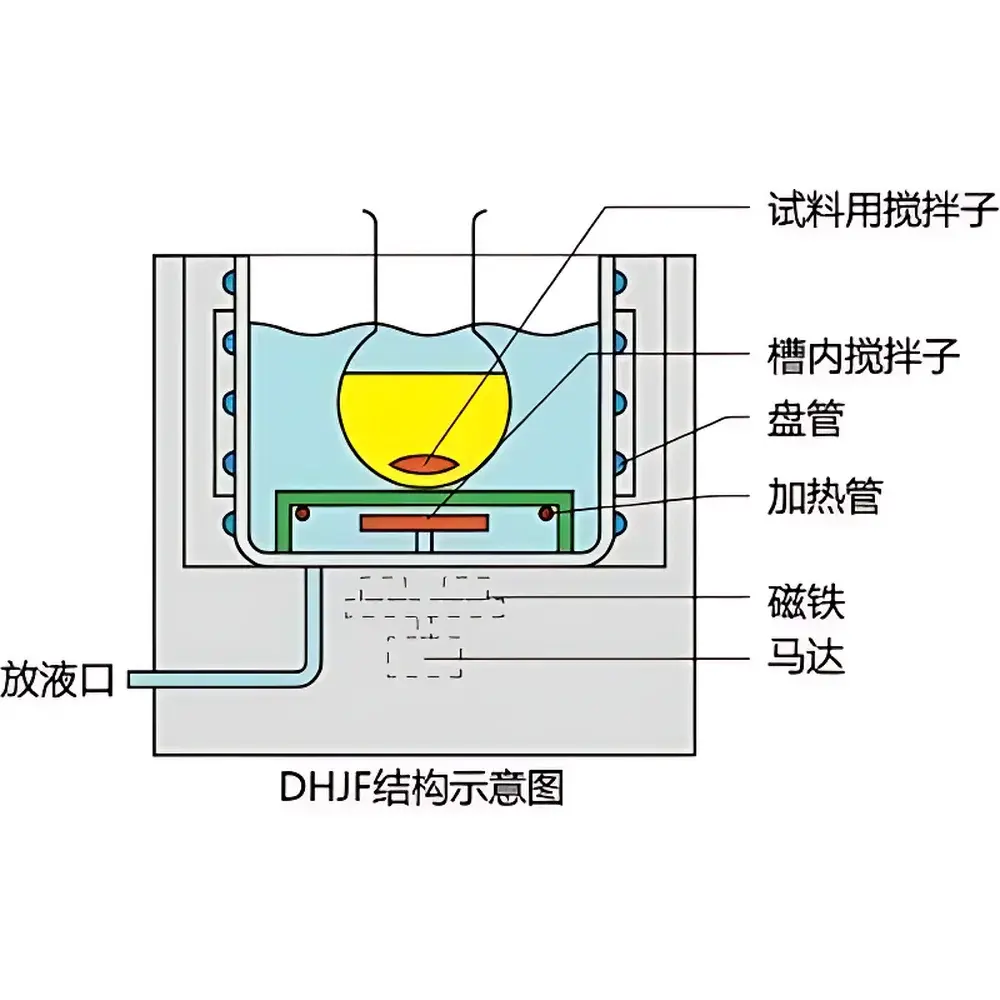
The Great Wall DHJF-1010 Cryogenic Circulating Stirred Bath is an engineered thermal management system designed for precise low-temperature reaction control and sample conditioning in synthetic chemistry, materials science, and pharmaceutical development laboratories. It operates on a single-stage compression fractional condensation refrigeration cycle—optimized for stable operation across the demanding −100 °C to −60 °C range. Unlike conventional recirculating chillers limited to −40 °C or higher, the DHJF-1010 integrates proprietary thermodynamic staging and high-efficiency heat exchange architecture to sustain sub−80 °C setpoints without cryogen dependency. Its core function is to provide both temperature-controlled immersion and active magnetic stirring within a sealed reservoir, enabling exothermic reaction suppression, crystallization kinetics studies, and low-temperature catalysis under reproducible thermal boundary conditions.
Key Features
- Single-stage compression fractional condensation refrigeration system—engineered for extended operational stability between −100 °C and −60 °C, with verified thermal hold capability over 8-hour continuous cycles.
- Critical refrigeration components—including hermetic scroll compressors and expansion valves—sourced from Tier-1 suppliers in the United States, Germany, and France, ensuring MTBF >15,000 hours under rated load.
- Digital PID temperature controller with membrane keypad interface and dual-display readout: one for setpoint, one for real-time bath temperature; resolution 0.1 °C, update rate 0.5 Hz.
- Corrosion-inhibited circulation loop constructed from ASTM A240 304 stainless steel tubing and fluoropolymer-lined pump housing, compatible with acetone/dry ice slurries, liquid nitrogen pre-cooled solvents, and halogenated reaction media.
- Integrated overhead magnetic stirrer with adjustable torque (0–1200 rpm), coupled to a PTFE-coated stir bar drive shaft sealed via dual-lip silicone elastomer gasketing to prevent cold-trap icing at the shaft interface.
- Thermal insulation jacket composed of vacuum-deposited aluminized polyimide film and closed-cell nitrile rubber foam, minimizing parasitic heat ingress and reducing compressor duty cycle by up to 35% versus standard fiberglass-wrapped designs.
Sample Compatibility & Compliance
The DHJF-1010 accommodates standard laboratory glassware up to 3 L volume, including round-bottom flasks (up to Φ150 mm neck diameter), jacketed reactors, and immersion-cooled probes. Its open-top reservoir (Φ210 mm aperture) allows direct access for thermocouple insertion, reflux condenser mounting, and inert gas purging via optional side-port adapters. All wetted surfaces comply with ISO 8502-3 for chloride ion resistance and pass ASTM B117 salt-spray testing for 96 hours without visible pitting. Electrical safety conforms to IEC 61010-1:2010 (Ed.3) for laboratory equipment, including reinforced insulation between refrigeration circuit and mains supply. While not certified for Class I Division 1 hazardous locations, its spark-free stirrer motor and grounded chassis meet GLP-aligned installation requirements for non-explosive synthesis suites.
Software & Data Management
The DHJF-1010 operates as a standalone instrument with no embedded firmware-based data logging. However, its analog 0–10 V temperature output and RS-485 Modbus RTU port (optional add-on) enable integration into third-party SCADA or LIMS environments. When interfaced via Modbus, users can remotely configure setpoints, monitor real-time temperature deviation, log compressor run-time counters, and trigger alarms on thermal drift exceeding ±3 °C. Audit trails generated through external systems satisfy FDA 21 CFR Part 11 requirements when paired with electronic signature-capable host software and time-stamped write-protected storage. No proprietary cloud service or vendor-hosted platform is involved—data sovereignty remains fully under institutional control.
Applications
- Low-temperature Grignard and organolithium reagent synthesis requiring sustained −78 °C bath conditions with mechanical agitation.
- Controlled nucleation studies in polymer solution thermodynamics, where crystallization onset is mapped across −90 °C to −65 °C gradients.
- Stabilization of metastable intermediates during asymmetric epoxidation or dihydroxylation reactions sensitive to thermal runaway.
- Calibration validation of cryogenic thermocouples and Pt100 sensors per ASTM E220 and IEC 60751 standards using traceable NIST-traceable reference baths.
- Pre-cooling of HPLC mobile phases and SFC co-solvents to improve separation selectivity and column backpressure consistency.
FAQ
Does the DHJF-1010 support continuous circulation below −100 °C?
No. Due to thermodynamic limitations of the single-stage compression cycle and viscosity-induced flow resistance in common heat transfer fluids (e.g., ethanol/methanol blends), circulation is disabled automatically below −100 °C to prevent pump cavitation and thermal shock to the evaporator coil.
What coolant fluids are recommended for long-term use?
A 40:60 v/v mixture of analytical-grade methanol and deionized water provides optimal freezing point depression and thermal conductivity down to −105 °C. Ethylene glycol–water blends are not recommended due to increased viscosity and reduced heat transfer efficiency below −70 °C.
Is the unit compliant with EU RoHS and REACH directives?
Yes. All PCB assemblies, wiring harnesses, and refrigerant charge (R23/R508B blend) meet RoHS Annex II substance restrictions and REACH SVHC thresholds as verified by third-party SGS test reports (Report No. GZ090123456789).
Can the stirrer speed be synchronized with temperature ramping profiles?
Not natively. Stirring speed is manually adjustable and independent of thermal programming. For automated ramp-and-stir protocols, external programmable logic controllers (PLCs) must coordinate the RS-485 interface and stirrer PWM signal via custom ladder logic.
Related Products



