
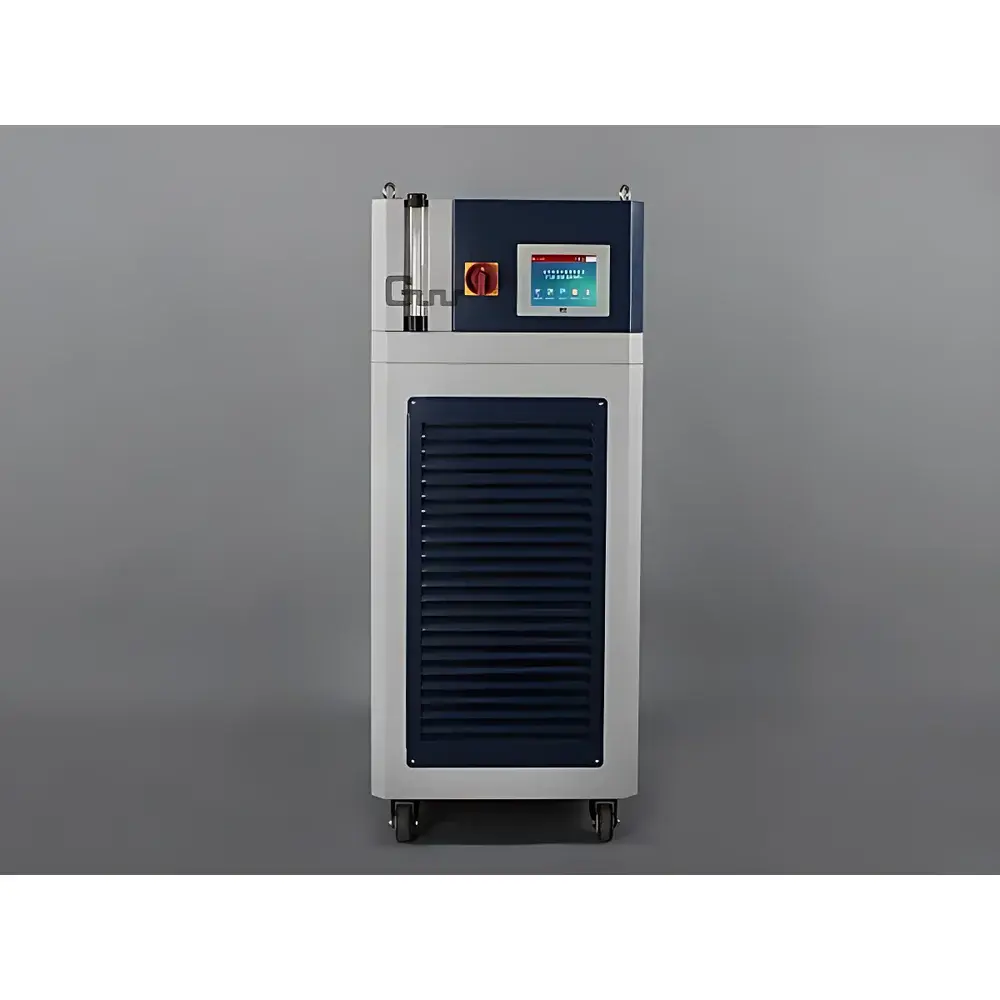
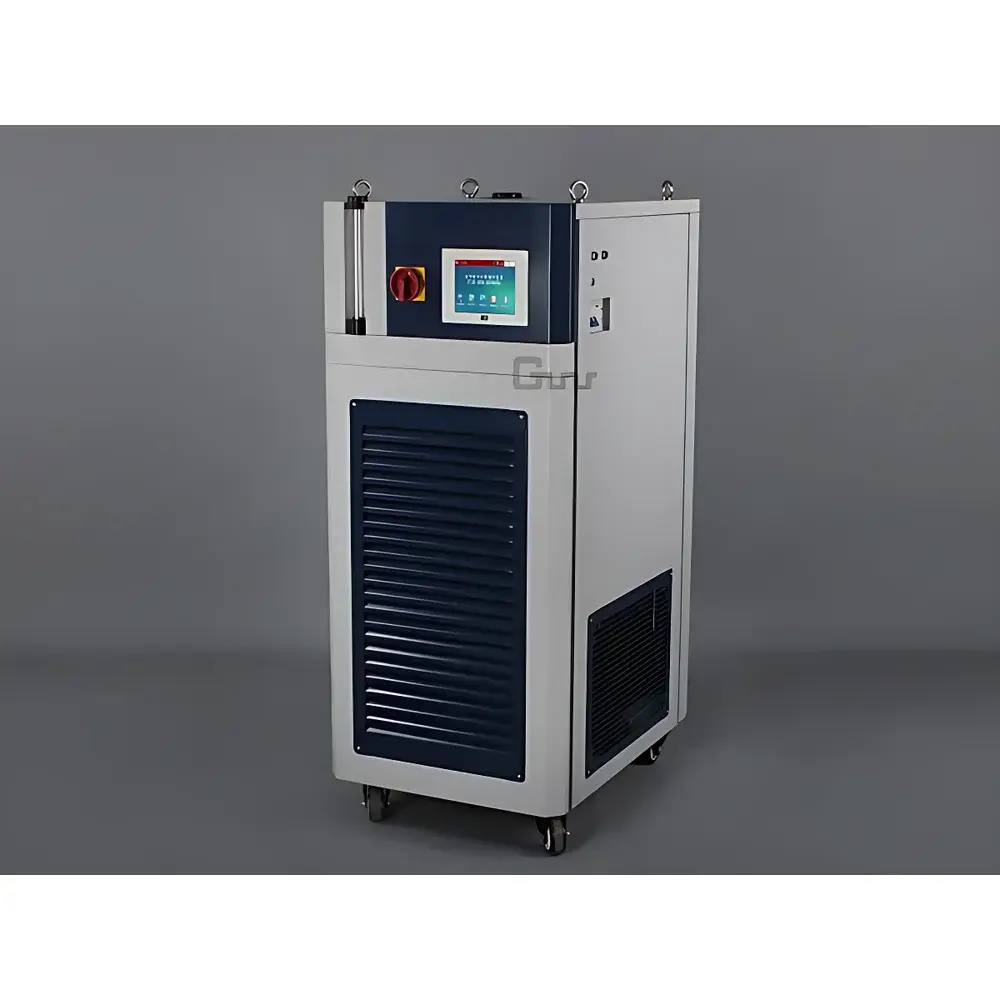
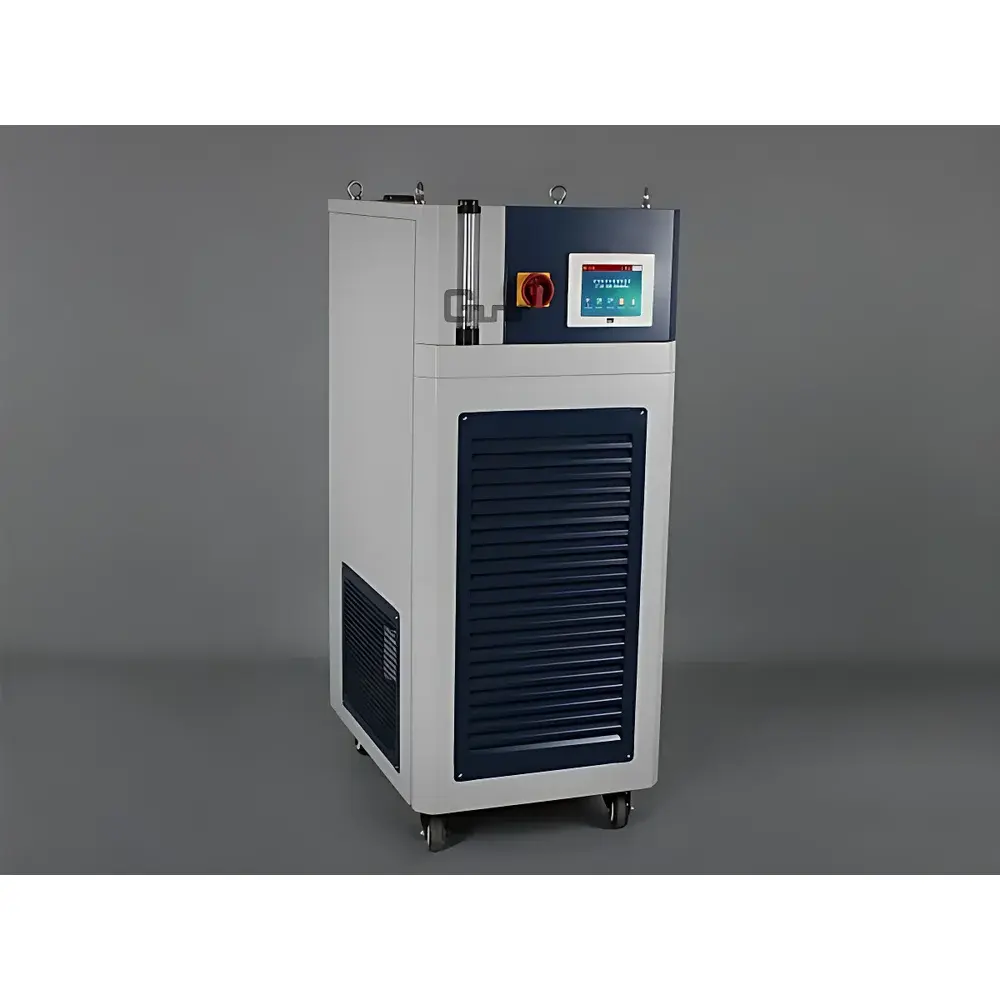
ZT-20-200-30H Closed-Loop Refrigerated & Heated Circulator
| Brand | The Great Wall |
|---|---|
| Origin | Henan, China |
| Manufacturer Type | Direct Manufacturer |
| Model | ZT-20-200-30 |
| Temperature Range | −30 °C to 200 °C |
| Temperature Stability | ±0.5 °C |
| Power Supply | 220–240 V~, 50 Hz |
| Total Power | 4.7 kW |
| Heating Power | 3 kW |
| Cooling Capacity | 1.7 kW @ 200 °C, 2.6 kW @ 10 °C, 1.1 kW @ −10 °C, 0.7 kW @ −20 °C, 0.3 kW @ −30 °C |
| Refrigerant | R22 |
| Bath Fluid Volume | 10 L |
| Pump Flow Rate | 30 L/min |
| Pump Pressure | 1 bar |
| Dimensions (W×D×H) | 580 × 825 × 1370 mm |
| Net Weight | 172 kg |
Overview
The ZT-20-200-30H Closed-Loop Refrigerated & Heated Circulator is an integrated thermal management system engineered for precise, bidirectional temperature control of external process equipment—including jacketed reactors, rotary evaporators, calorimeters, and analytical instrumentation. Unlike single-function chillers or heaters, this unit employs a dual-mode refrigeration-heating architecture based on a cascade-capable vapor-compression cycle with independent proportional-integral-derivative (PID) controlled heating and cooling circuits. Its operational range spans from −30 °C to +200 °C with a certified stability of ±0.5 °C under dynamic load conditions—achieved through real-time fluid temperature feedback, high-efficiency plate heat exchangers, and low-thermal-mass circulation pathways. Designed for laboratory-scale process integration, the system delivers consistent thermal transfer via a closed-loop external circulation loop, eliminating evaporation losses and minimizing contamination risk associated with open-bath systems.
Key Features
- Wide operational temperature span (−30 °C to 200 °C) enabled by optimized R22 refrigeration circuit and 3 kW resistive heating module
- High-flow, low-pulsation circulation pump delivering up to 30 L/min at 1 bar pressure—compatible with long tubing runs and high-resistance reactor jackets
- Integrated PID temperature controller with programmable ramp/soak profiles and real-time deviation monitoring
- Stainless steel fluid reservoir (10 L capacity) and corrosion-resistant wetted parts compliant with common organic solvents and aqueous media
- Robust mechanical architecture: heavy-duty casters, reinforced frame, and vibration-damped compressor mounting for stable operation in shared lab environments
- Optional explosion-proof configuration (ATEX/IECEx-ready) available for use in hazardous area classifications (Zone 1/2), including solvent-intensive synthesis labs
Sample Compatibility & Compliance
The ZT-20-200-30H circulates thermally stable heat-transfer fluids—including silicone oils, glycol/water mixtures, and specialized low-temperature synthetic fluids—without degradation across its full operating range. All wetted components meet ISO 8502-3 cleanliness standards and are compatible with GLP/GMP-aligned workflows. While not inherently FDA 21 CFR Part 11–compliant, the system supports audit-trail–capable data logging when paired with validated third-party SCADA or LIMS interfaces. It conforms to IEC 61000-6-3 (EMC emission limits) and IEC 61000-6-2 (immunity requirements), and meets CE marking criteria for electrical safety (EN 61010-1). Documentation packages include factory calibration certificates traceable to NIST-equivalent national metrology institutes.
Software & Data Management
The unit features a local touchscreen HMI with intuitive navigation for setpoint adjustment, alarm configuration, and real-time display of fluid inlet/outlet temperatures, pump status, and compressor duty cycle. Optional RS485 Modbus RTU or Ethernet TCP/IP interface enables integration into centralized lab automation platforms. When connected to compliant software environments (e.g., LabVIEW, DeltaV, or custom Python-based acquisition tools), users can log timestamped temperature, flow, and power consumption data at user-defined intervals (1–60 s resolution). Raw data export is supported in CSV format; no proprietary file locking or vendor-specific viewers are required. Firmware updates are performed via USB flash drive with SHA-256 checksum verification.
Applications
- Controlled-temperature organic synthesis in glass or stainless steel reactors requiring exothermic quenching or endothermic initiation
- Condenser cooling and bath temperature stabilization for rotary evaporation under reduced pressure
- Thermal conditioning of DSC, TGA, and rheometry sample stages during method development
- Cell culture incubator jacketing and bioreactor temperature maintenance in upstream bioprocessing R&D
- Calibration validation of temperature-sensitive sensors and transducers across multi-point thermal profiles
- Accelerated stability testing per ICH Q1A(R2) guidelines using programmed temperature cycling protocols
FAQ
What types of heat-transfer fluids are recommended for operation below −20 °C?
Low-viscosity silicone oils (e.g., DC-200 series) or specialized low-temperature synthetic fluids with pour points ≤ −40 °C are recommended. Ethylene glycol/water blends are not suitable below −15 °C due to increased viscosity and potential pump cavitation.
Can the ZT-20-200-30H be integrated into a PLC-controlled pilot plant?
Yes—via Modbus RTU (RS485) or optional Ethernet/IP protocol, enabling remote start/stop, setpoint modulation, and fault status polling within industrial control architectures.
Is R22 refrigerant still serviceable given global phaseout timelines?
R22 remains technically viable for maintenance and recharge in existing units under current EPA SNAP and EU F-Gas Regulation exemptions for laboratory equipment; however, retrofitting to R404A or R513A is supported upon request for new installations.
What safety interlocks are built into the system?
Hardware-level protections include dry-run detection, overtemperature cutoff (220 °C max), high-pressure shutdown (>1.8 bar), low-level fluid alarm, and ground-fault circuit interruption (GFCI) on the main power input.
Does the unit support continuous unattended operation for 72+ hours?
Yes—when installed with proper ventilation (min. 500 m³/h ambient airflow), level-monitored fluid reservoir, and validated thermal load matching, it meets ISO/IEC 17025 requirements for extended-duration calibration experiments.



