
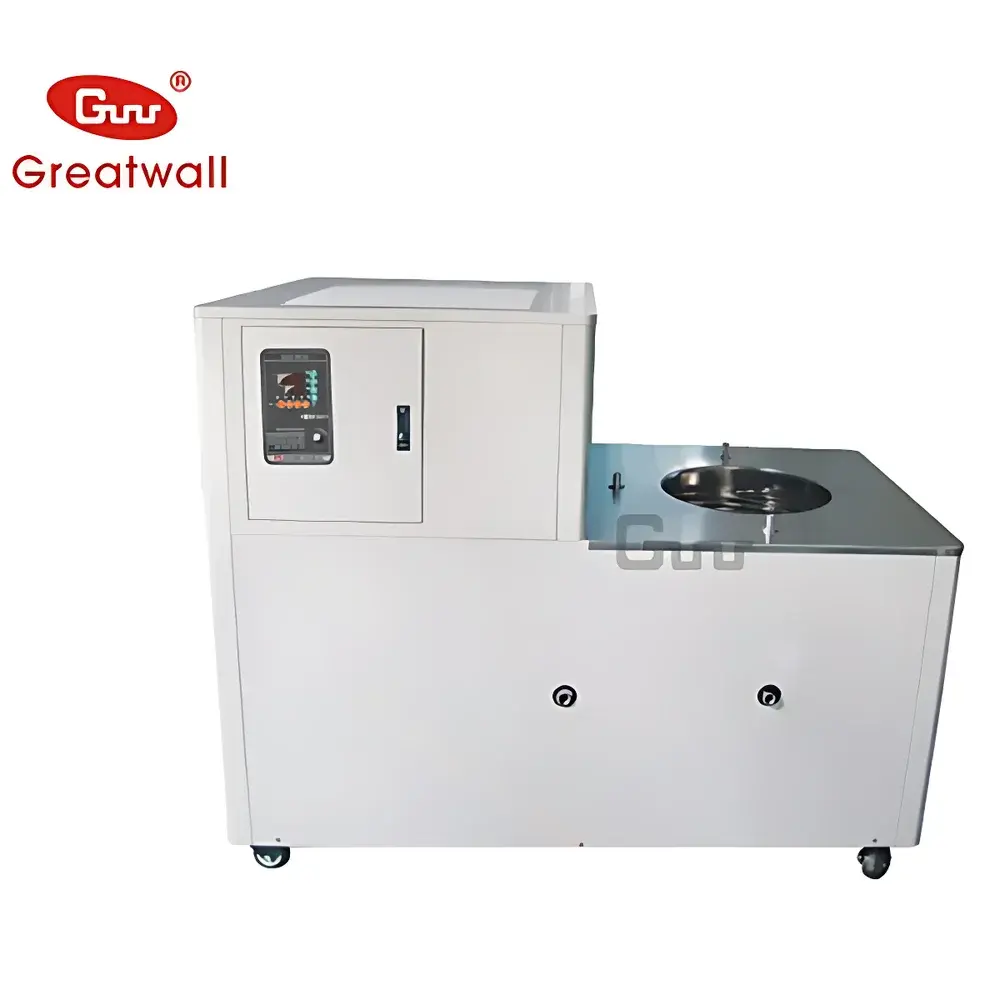
Great Wall DHJF-1250 Ultra-Low Temperature Stirred Reaction Bath
| Brand | The Great Wall |
|---|---|
| Origin | Henan, China |
| Manufacturer Type | Direct Manufacturer |
| Product Category | Domestic |
| Model | DHJF-1250 |
| Instrument Type | Constant-Temperature Bath |
| Circulation Mode | Internal Circulation |
| Temperature Control | Refrigeration & Heating |
| Bath Volume | 50 L |
| Temperature Range | −120 °C to −60 °C |
| Temperature Stability | ±2 °C |
| Power Supply | 3-phase, 380 V, 50 Hz |
| Refrigeration Capacity | 700 W at −60 °C / 580 W at −80 °C / 420 W at −100 °C / 125 W at −120 °C |
| Max Flask Capacity | 20 L |
| Overall Power Consumption | 4876 W |
| External Dimensions (L×W×H) | 1340 × 820 × 1310 mm |
| Net Weight | 265 kg |
| Tank Material | 304 Stainless Steel + Polymer Anti-Corrosion Lining |
| Display | Digital LED with Keypad Input |
| Cabinet Finish | Cold-Rolled Steel with Electrostatic Powder Coating |
Overview
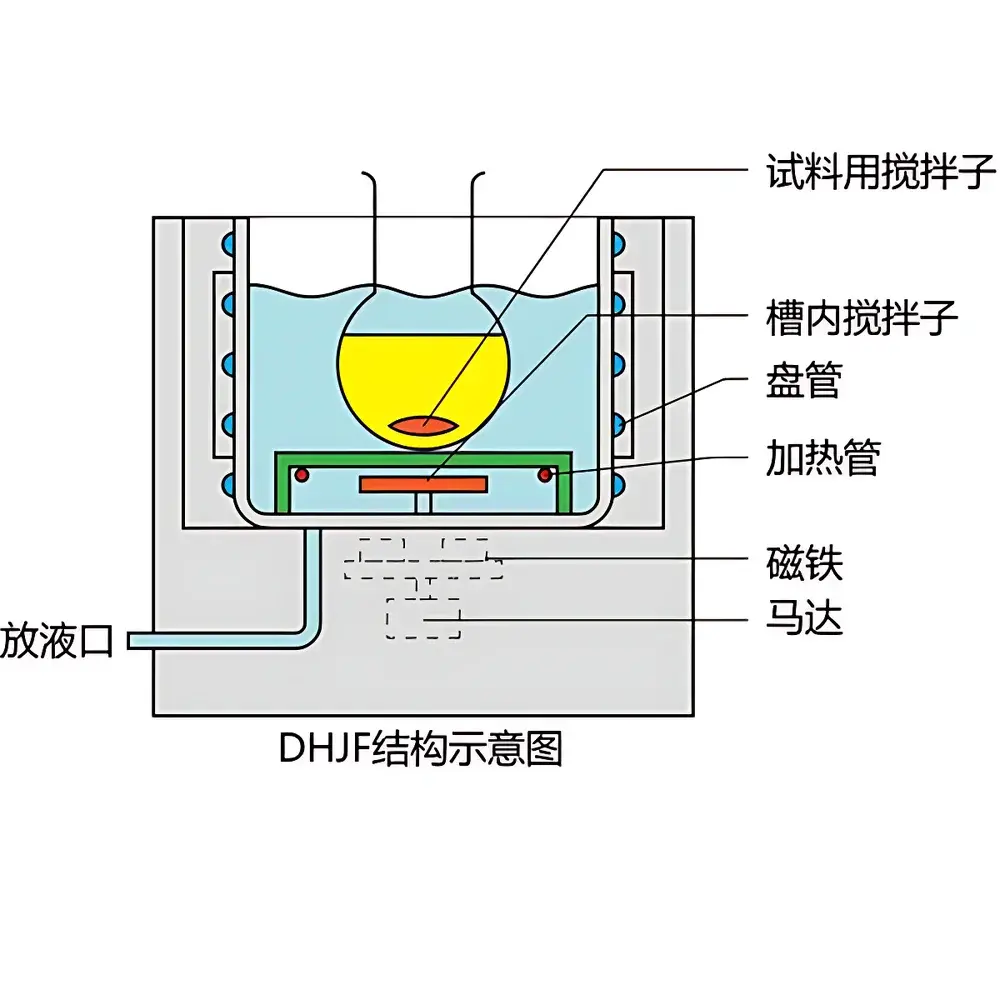
The Great Wall DHJF-1250 Ultra-Low Temperature Stirred Reaction Bath is an engineered constant-temperature bath system designed for demanding low-temperature synthesis, cryogenic reaction control, and material property evaluation in research laboratories and pilot-scale chemical development. It operates on a single-stage compression fractional condensation refrigeration principle—distinct from cascade systems—enabling stable operation down to −120 °C while maintaining internal circulation capability. Unlike conventional cryostats that disable circulation below −80 °C, the DHJF-1250 sustains active fluid recirculation across its full operational range, ensuring uniform thermal distribution and effective heat exchange during exothermic or endothermic reactions. Its integrated stirring mechanism allows direct agitation of reaction mixtures within the bath reservoir or external vessels connected via insulated tubing—eliminating the need for separate magnetic stirrers or overhead agitators in many low-temperature applications.
Key Features
- Single-stage compression fractional condensation technology optimized for ultra-low temperature stability between −120 °C and −60 °C, reducing mechanical complexity and long-term maintenance requirements compared to multi-stage cascade architectures.
- Critical refrigeration components—including hermetic compressors and expansion valves—sourced from Tier-1 suppliers in the United States, Germany, and France, supporting high mean time between failures (MTBF) and consistent thermal output over extended duty cycles.
- Internal circulation loop constructed from electropolished 304 stainless steel and chemically resistant polymer linings, rated for continuous exposure to low-viscosity cryogenic solvents (e.g., liquid nitrogen-cooled ethanol, isopentane, or chlorofluorocarbon alternatives).
- Digital LED interface with membrane keypad enables precise setpoint entry, real-time temperature monitoring, and alarm configuration without external software dependency.
- Robust structural architecture featuring cold-rolled steel cabinet with electrostatic powder coating, vibration-dampened compressor mounting, and reinforced insulation layers minimizing ambient thermal ingress and condensation buildup.
- Integrated dual-mode control logic permitting simultaneous regulation of both bath temperature and internal stirring speed—configurable via front-panel inputs or optional analog voltage input (0–10 V DC).
Sample Compatibility & Compliance
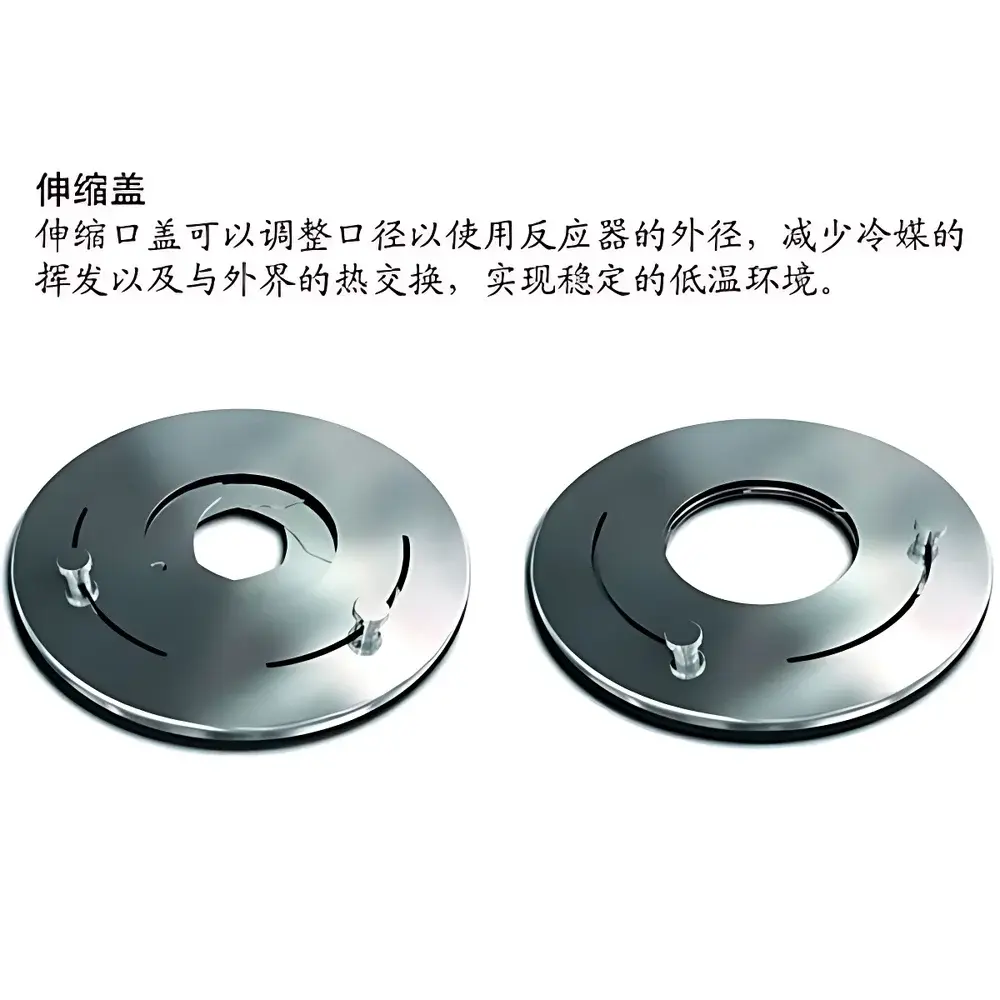
The DHJF-1250 accommodates standard laboratory glassware up to 20 L volume, including jacketed reactors, Dewar flasks, and double-walled condensers. Its open-top design (Φ400 mm aperture) supports modular integration with reflux condensers, gas inlet manifolds, and inert atmosphere purging systems. All wetted surfaces comply with ISO 8502-3 for surface cleanliness and ASTM B117 salt-spray resistance standards. While not certified for IEC 61000-4 electromagnetic compatibility or ATEX hazardous area use, the unit meets CE marking requirements for electrical safety (EN 61010-1) and is routinely deployed in GLP-compliant environments where traceable temperature logging and operator-accessible calibration verification are maintained per internal SOPs.
Software & Data Management
The DHJF-1250 operates as a standalone instrument with no embedded firmware-based data logging. However, its analog output terminals (Pt100 signal and 0–10 V temperature feedback) support connection to third-party DAQ systems (e.g., National Instruments CompactDAQ, Keysight 34972A) for time-stamped acquisition, trend analysis, and audit-ready reporting. When integrated into validated workflows, users may configure external software to meet FDA 21 CFR Part 11 requirements—including electronic signatures, audit trails, and user-level access controls—for regulated pharmaceutical or biotech applications. Calibration certificates for the built-in Pt100 sensor can be issued upon request, traceable to NIM (National Institute of Metrology, China) standards.
Applications
- Low-temperature Grignard, organolithium, and lithium–halogen exchange reactions requiring sustained sub−100 °C conditions with mechanical agitation.
- Cryogenic crystallization studies of polymorphic APIs under controlled thermal ramping protocols.
- Thermal aging tests of elastomers, adhesives, and composite resins per ASTM D3045 and ISO 188.
- Calibration and validation of infrared spectrometers, differential scanning calorimeters (DSC), and dilatometers using certified reference materials.
- Pre-cooling of superconducting magnet cryostat components prior to helium transfer operations.
- Environmental simulation testing of aerospace-grade lubricants and sealants under extreme thermal cycling profiles.
FAQ
Does the DHJF-1250 support external temperature probes for vessel-specific feedback control?
Yes—its analog input port accepts 0–10 V signals from external Pt100 or thermistor probes mounted directly in the reaction vessel, enabling cascade control loops where bath temperature follows process temperature.
Is the internal circulation pump compatible with dry ice/acetone slurries or liquid nitrogen mixtures?
No—the circulation system is designed exclusively for low-freezing-point organic heat transfer fluids (e.g., ethylene glycol/water blends, silicone oils). Cryogenic liquids must be used only in static immersion mode without pumping.
What maintenance intervals are recommended for the refrigeration system?
Compressor oil and filter-drier replacement every 24 months under continuous operation; annual inspection of refrigerant charge integrity and insulation vacuum integrity for the −120 °C stage.
Can the unit be operated in a fume hood?
Yes—provided minimum clearance (≥150 mm) is maintained around rear ventilation grilles and ambient temperature remains within 5–25 °C per specification; exhaust ducting is not required but recommended for solvent vapor containment.
Is remote monitoring possible via Ethernet or RS485?
Not natively—the DHJF-1250 lacks embedded network interfaces. Integration requires external signal conditioning modules and industrial PLCs or DAQ hardware configured for Modbus RTU or TCP/IP bridging.



