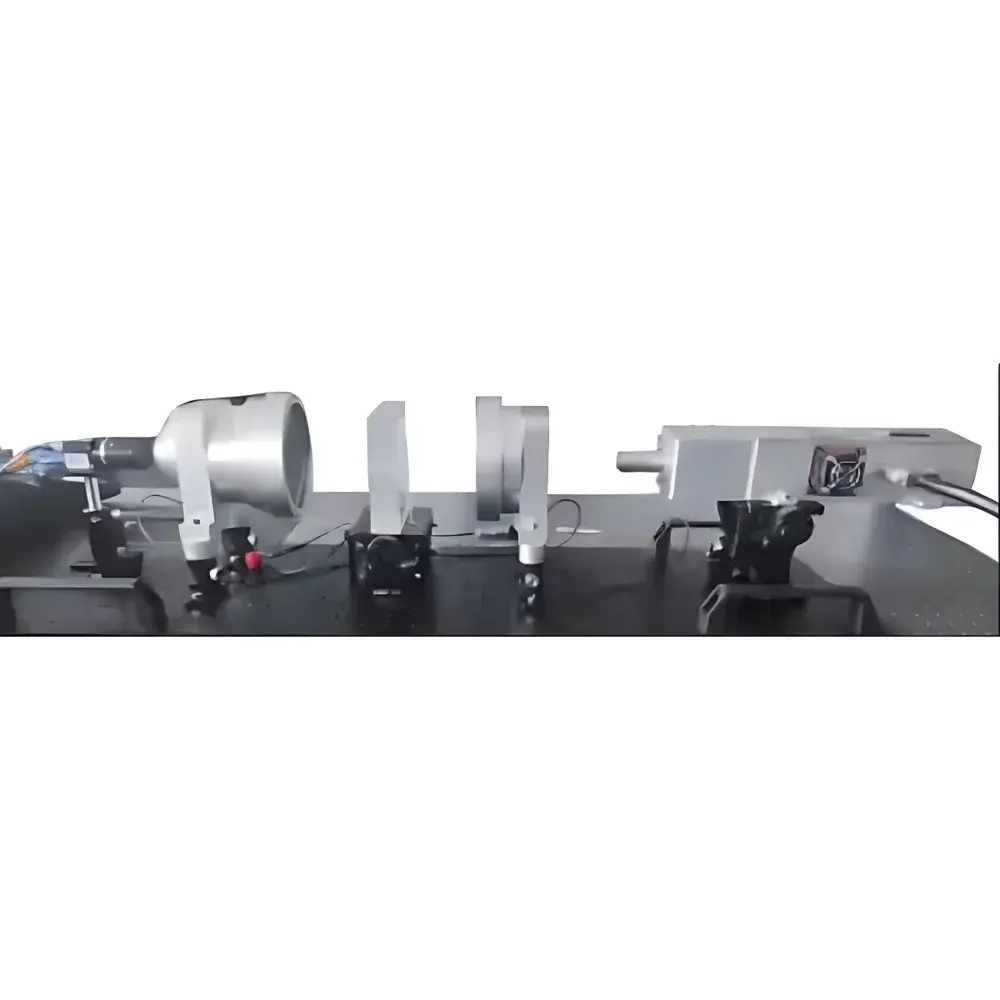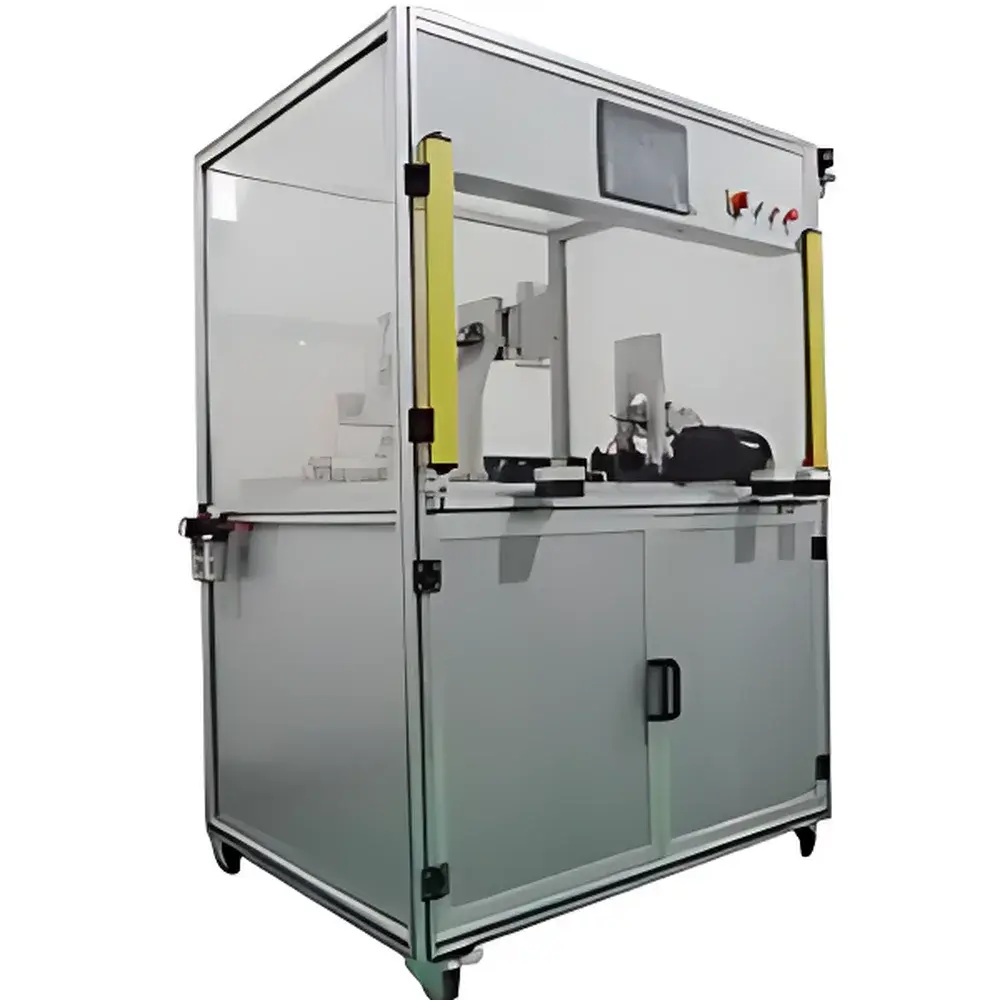
Jiubin JB Air Vent Direction Adjustment Force Testing Station
| Brand | Jiubin |
|---|---|
| Origin | Shanghai, China |
| Manufacturer Type | Authorized Distributor |
| Country of Origin | China |
| Model | JB |
| Quotation | Upon Request |
| Torque Range | 0–20 N·m |
| Actuation | Pneumatic Linear Cylinder (Adjustable Speed) |
| Test Duration Setting | 1–9999 s/min/h |
| Cycle Life Capability | ≥500,000 Cycles |
| Compliance Standards | TPV 8221-75m300, GMW15448 (Apr 2010, Appendix C), IP-0118 V4, EP 87 500.25 |
Overview
The Jiubin JB Air Vent Direction Adjustment Force Testing Station is an engineered electromechanical test system designed specifically for quantitative evaluation of mechanical actuation performance in automotive HVAC air vent assemblies. It operates on the principle of controlled torque application and real-time force measurement during directional adjustment of vent louvers, rotary knobs, and sliding actuators. The system integrates a precision torque sensor with a programmable pneumatic linear actuator to replicate OEM-specified manual or motorized manipulation sequences—enabling repeatable assessment of breakaway torque, running torque, end-stop resistance, hysteresis, and fatigue endurance under defined angular displacement profiles. Its architecture supports both static and dynamic testing protocols required by Tier 1 suppliers and OEM validation labs to verify functional reliability, tactile feedback consistency, and long-term durability prior to vehicle integration.
Key Features
- Integrated dual-mode torque measurement: simultaneous acquisition of horizontal and vertical louver rotation torque, knob twist torque, and adjacent vane coupling forces
- Automated cycle counting with pass/fail logic based on user-defined torque thresholds and positional tolerance windows
- Product identification via barcode/QR code scanning; test reports—including torque vs. angle curves, peak values, and cycle count—are exportable in PDF/CSV formats
- Modular aluminum extrusion frame with powder-coated steel enclosure; rear-mounted isolated electrical cabinet ensures EMI shielding and thermal separation
- 10.4-inch industrial-grade touchscreen HMI with intuitive calibration menus, test sequence programming, and real-time waveform visualization
- Four-wheel mobility (2 fixed + 2 swivel casters) and front-access service door facilitate lab repositioning and maintenance without disassembly
Sample Compatibility & Compliance
The JB station accommodates single-unit automotive air vent modules—including center console, dashboard, and overhead duct assemblies—regardless of louver count (2–12 blades), actuation type (manual knob, slider, or motor-driven), or material composition (PP, ABS, PC/ABS blends). Fixturing is adaptable via standardized T-slot rails and quick-release clamps. All test methodologies align with internationally recognized automotive component standards: TPV 8221-75m300 (Volkswagen Group), GMW15448 Appendix C (General Motors), IP-0118 V4 (Ford Motor Company), and EP 87 500.25 (Mercedes-Benz). The system supports audit-ready documentation per ISO/IEC 17025 requirements, including traceable calibration certificates for torque sensors (NIST-traceable, ±0.5% FS accuracy) and timestamped test logs.
Software & Data Management
The embedded control software provides full test configuration—including dwell time at intermediate positions, ramp rate control (0.1–10°/s), bidirectional cycling, and conditional branching (e.g., abort on torque overshoot). Data acquisition occurs at 1 kHz sampling rate, ensuring high-fidelity resolution of transient events such as latch engagement or detent snapping. Raw torque-angle data is stored locally with SHA-256 hash integrity verification. Optional network interface enables secure FTP/SFTP upload to LIMS or PLM systems. Audit trail functionality complies with FDA 21 CFR Part 11 requirements, logging operator ID, parameter changes, and report generation events with immutable timestamps.
Applications
This testing station serves critical quality assurance functions across R&D, APQP, and production line environments. Typical use cases include: validation of new vent mechanism designs against target torque specifications; comparative analysis of material substitutions (e.g., lubricant-free vs. greased gears); verification of assembly process consistency post-robotic installation; accelerated life testing to simulate 10+ years of consumer usage; root cause analysis of field returns related to stiff operation or premature failure; and supplier qualification audits requiring documented repeatability (GRR < 10% per AIAG MSA guidelines).
FAQ
What torque sensor accuracy is certified for this system?
The integrated torque transducer is calibrated to ±0.5% of full scale (0–20 N·m) with NIST-traceable documentation provided upon delivery.
Can the system test multi-axis vent mechanisms simultaneously?
No—it performs sequential axis testing (horizontal then vertical, or knob then blade) within a single fixture setup; concurrent multi-axis measurement requires optional add-on sensor modules.
Is the software compatible with Windows-based enterprise networks?
Yes—the HMI OS supports standard Ethernet TCP/IP communication and can integrate with Active Directory for role-based access control.
Does the system meet ISO 17025 calibration traceability requirements?
Yes—torque sensor calibration is performed annually by an ILAC-accredited laboratory, and full calibration records are included in the delivery package.
What maintenance intervals are recommended for pneumatic components?
Air filter regulators require quarterly inspection; cylinder seals should be replaced every 250,000 cycles or biannually, whichever occurs first.