
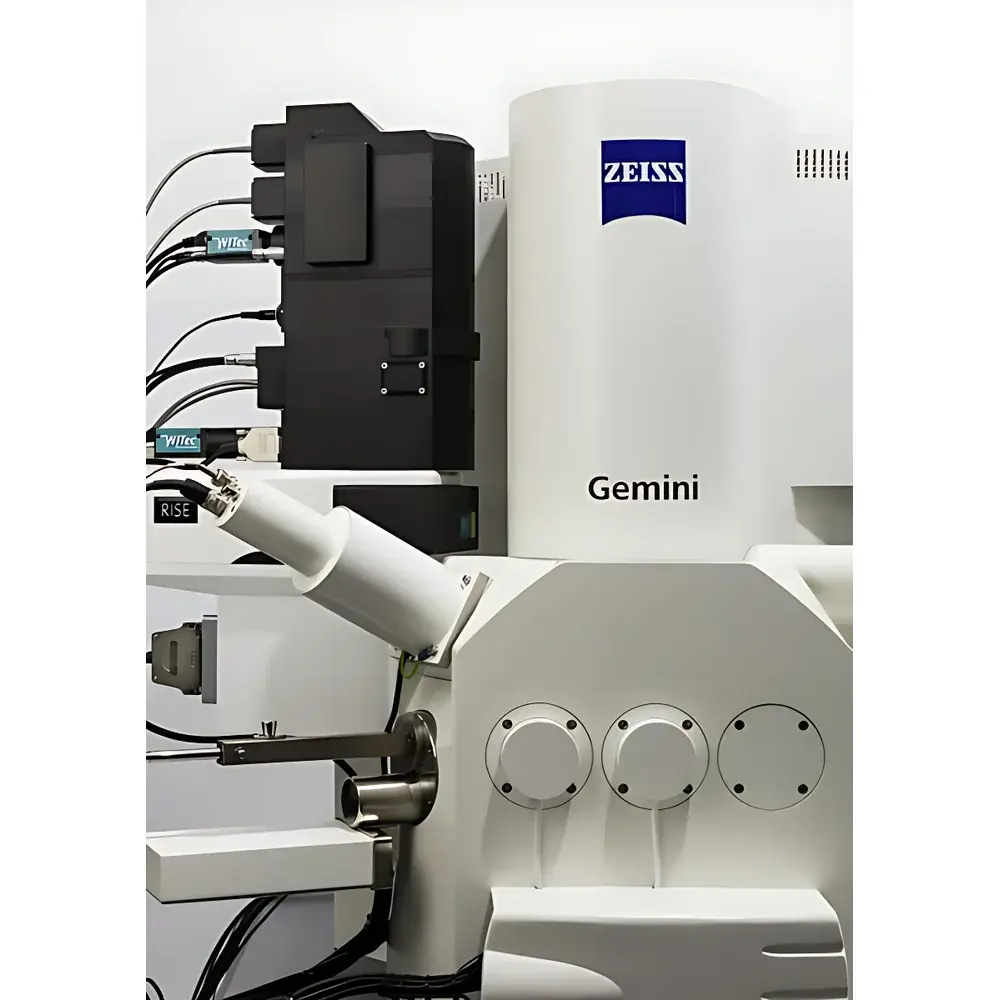
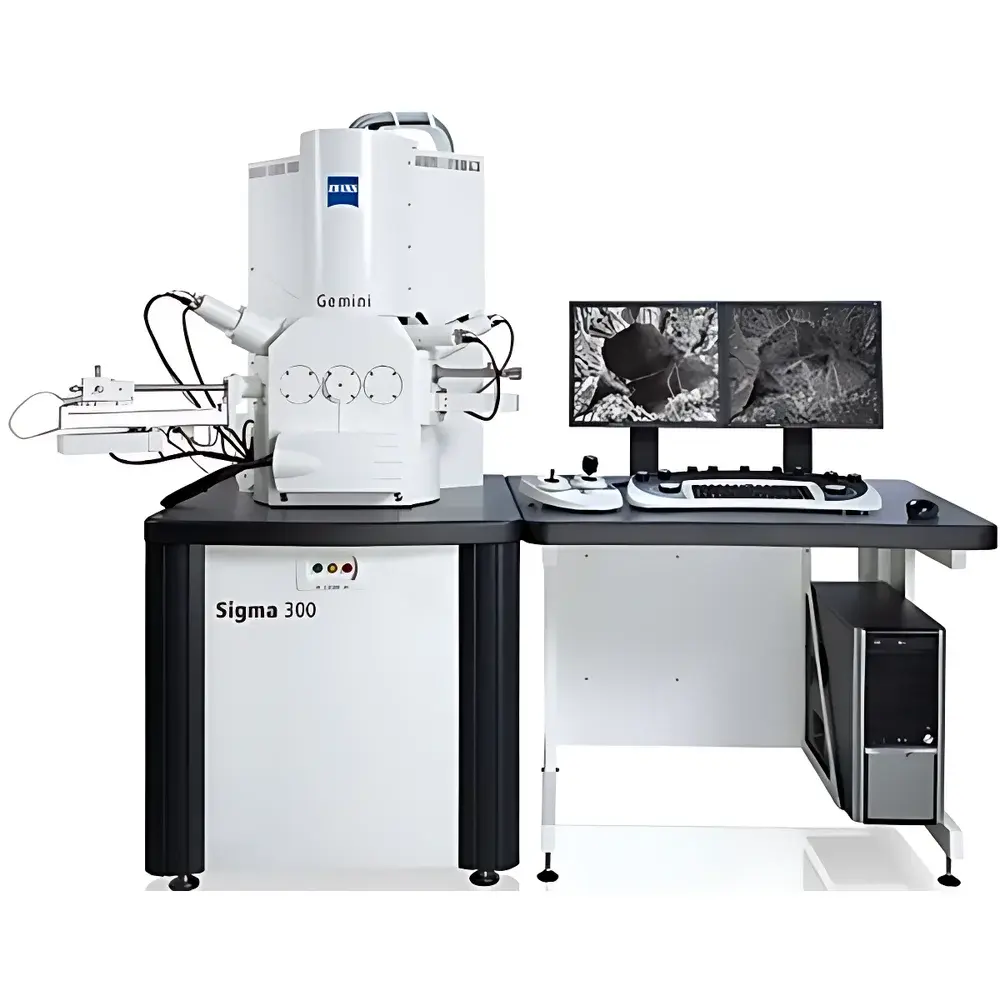
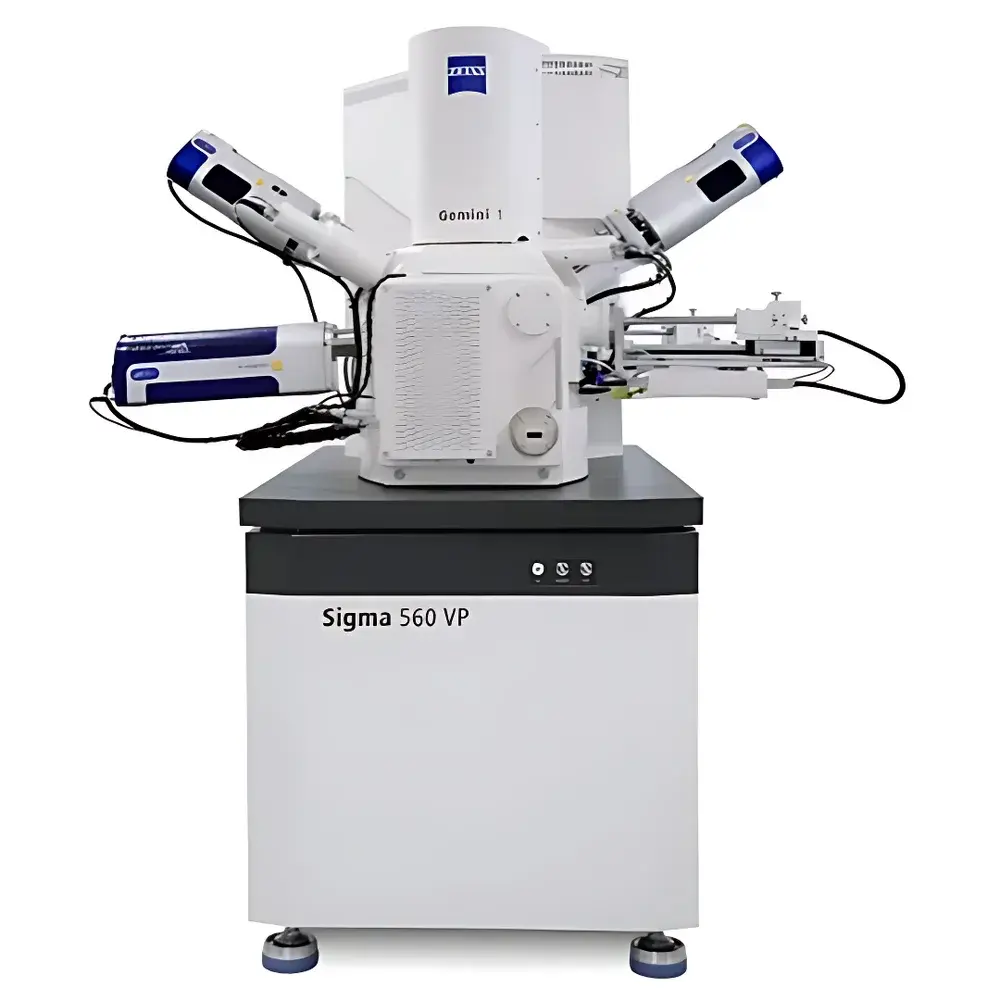
ZEISS SIGMA Series Field Emission Scanning Electron Microscope
| Brand | ZEISS |
|---|---|
| Origin | Germany |
| Model | SIGMA |
| Detector Options | InLens SE, ETSE, aBSD, Sense BSD |
| EDS Geometry | Optimized for High-Solid-Angle Collection |
| Operating Modes | NanoVP Lite, High-Resolution SEM, Low-Voltage Imaging, In-Situ Compatible |
| Vacuum System | Differential Pumping with Dual-Stage Turbo-Molecular Pumps |
| Stage | Motorized 5-Axis Precision Stage (±0.1 µm repeatability) |
| Beam Control | Gemini II Electron Optics with Active Stigmator and Auto-Alignment |
| Software Platform | SmartSEM with GLP/GMP-Compliant Audit Trail (21 CFR Part 11 Ready) |
| Compliance | ISO 14644-1 Class 5 Cleanroom-Compatible Design, CE Marked, RoHS Compliant |
Overview
The ZEISS SIGMA Series is a high-performance field emission scanning electron microscope (FE-SEM) engineered for nanoscale imaging, microanalysis, and in-situ experimentation across academic, industrial, and regulatory environments. Built upon the proprietary Gemini II electron optical column—featuring a dual-beam condenser system and aberration-corrected electrostatic lens design—the SIGMA delivers sub-nanometer resolution at accelerating voltages ranging from 0.1 kV to 30 kV. Its low-voltage imaging capability (<1 kV) enables high-contrast, charge-free visualization of beam-sensitive, non-conductive, or uncoated specimens—including polymers, biological tissues, and frozen-hydrated samples—without compromising surface detail. The column’s magnetically shielded architecture eliminates stray fields, ensuring compatibility with magnetic materials and enabling reliable analysis of ferromagnetic alloys, spintronic devices, and superconductors. Integrated differential vacuum stages maintain ultra-high vacuum (UHV) conditions in the gun chamber while permitting variable-pressure operation (up to 130 Pa) in the specimen chamber—facilitating direct observation of hydrated, outgassing, or insulating samples without sputter coating.
Key Features
- Gemini II electron optics with active stigmator and real-time beam alignment—ensuring long-term stability and reproducibility across multi-hour acquisition sessions.
- Four integrated solid-state detectors: InLens SE (for topographic contrast at low kV), ETSE (Everhart-Thornley secondary electron), aBSD (angular-selective backscattered electron), and Sense BSD (high-efficiency BSE with compositional sensitivity).
- NanoVP Lite mode—a streamlined four-step workflow (Load → Align → Acquire → Analyze) reducing time-to-data by up to 40% compared to conventional FE-SEM operation.
- Modular detector interface supporting simultaneous multi-signal acquisition (SE/BSE/EDS/EBSD) with synchronized pixel registration.
- Motorized 5-axis precision stage with sub-micron positioning repeatability and programmable tilt range (–5° to +70°), optimized for cross-sectional imaging and serial sectioning.
- Native integration with ZEISS CROSSBEAM platforms and in-situ holders (heating, cooling, tensile, electrical biasing) for automated correlative workflows.
Sample Compatibility & Compliance
The SIGMA accommodates specimens up to 200 mm in diameter (including 6-inch wafers) and supports standard SEM stubs, TEM grids, cryo-carriers, and custom in-situ stages. Its variable-pressure and low-kV capabilities eliminate the need for conductive coatings on most non-metallic samples—reducing preparation artifacts and preserving native morphology. All hardware and software components comply with ISO 14644-1 Class 5 cleanroom requirements, CE directives (2014/30/EU, 2014/35/EU), and RoHS 2011/65/EU restrictions. The SmartSEM software includes audit-trail functionality compliant with FDA 21 CFR Part 11, supporting electronic signatures, user access control, and change history logging required for GLP and GMP-regulated laboratories.
Software & Data Management
SmartSEM v7.x provides an intuitive, task-oriented interface with embedded scripting (Python API) for workflow automation, batch processing, and integration into laboratory information management systems (LIMS). Real-time EDS quantification leverages ZEISS’ optimized detector geometry—achieving >20,000 cps count rates at 10 kV with <130 eV Mn-Kα energy resolution. Hyperspectral mapping, phase identification (via EBSD pattern indexing), and 3D surface reconstruction (from stereo-SE pairs) are natively supported. Raw data is stored in open-format HDF5 containers, ensuring long-term archival integrity and third-party tool interoperability (e.g., HyperSpy, DigitalMicrograph).
Applications
- Materials Science: Nanoparticle size distribution analysis, polymer phase segregation imaging, battery cathode/anode interface characterization, and 2D material layer counting via contrast modulation.
- Life Sciences: Cryo-SEM of vitrified cells, collagen fibril orientation mapping, and immunogold-labeled ultrastructural localization.
- Geosciences: Mineral phase discrimination using BSE intensity thresholds, porosity quantification in shale cores, and in-situ Raman-SEM correlation for fluid inclusion analysis.
- Semiconductor Manufacturing: Defect review on 6-inch wafers, gate oxide thickness measurement via voltage contrast, and EBL mask alignment with sub-50 nm precision.
- Metallurgy & Failure Analysis: Automated inclusion classification (ASTM E45), fatigue crack propagation tracking, and intergranular corrosion assessment via potential contrast imaging.
- Forensics & Cultural Heritage: Fiber morphology comparison, pigment stratigraphy in historical paintings, and degradation mechanism analysis of archaeological metals.
FAQ
What vacuum levels does the SIGMA support for different sample types?
The SIGMA operates in high vacuum (10⁻⁷ mbar), low vacuum (1–130 Pa), and variable pressure modes—enabling imaging of conductive, non-conductive, and hydrated specimens without coating.
Is the system compatible with third-party EDS or EBSD detectors?
Yes—standardized detector ports and SDK support allow integration with major vendors’ EDS (e.g., Oxford Instruments, Thermo Fisher) and EBSD systems under synchronized acquisition protocols.
Can the SIGMA perform automated particle analysis on large-area maps?
Yes—SmartSEM includes ParticleMetric module with customizable segmentation rules, size/shape/chemistry filtering, and ISO 13322-2-compliant statistical reporting.
Does ZEISS provide application-specific training and method validation support?
Yes—ZEISS Application Scientists deliver on-site and remote training, SOP development, and IQ/OQ documentation packages aligned with ISO/IEC 17025 and ASTM E1558 standards.
How is data security managed during remote collaboration sessions?
All remote access uses TLS 1.3-encrypted VNC tunnels with session-level authentication; no raw image data is stored on external servers.





