
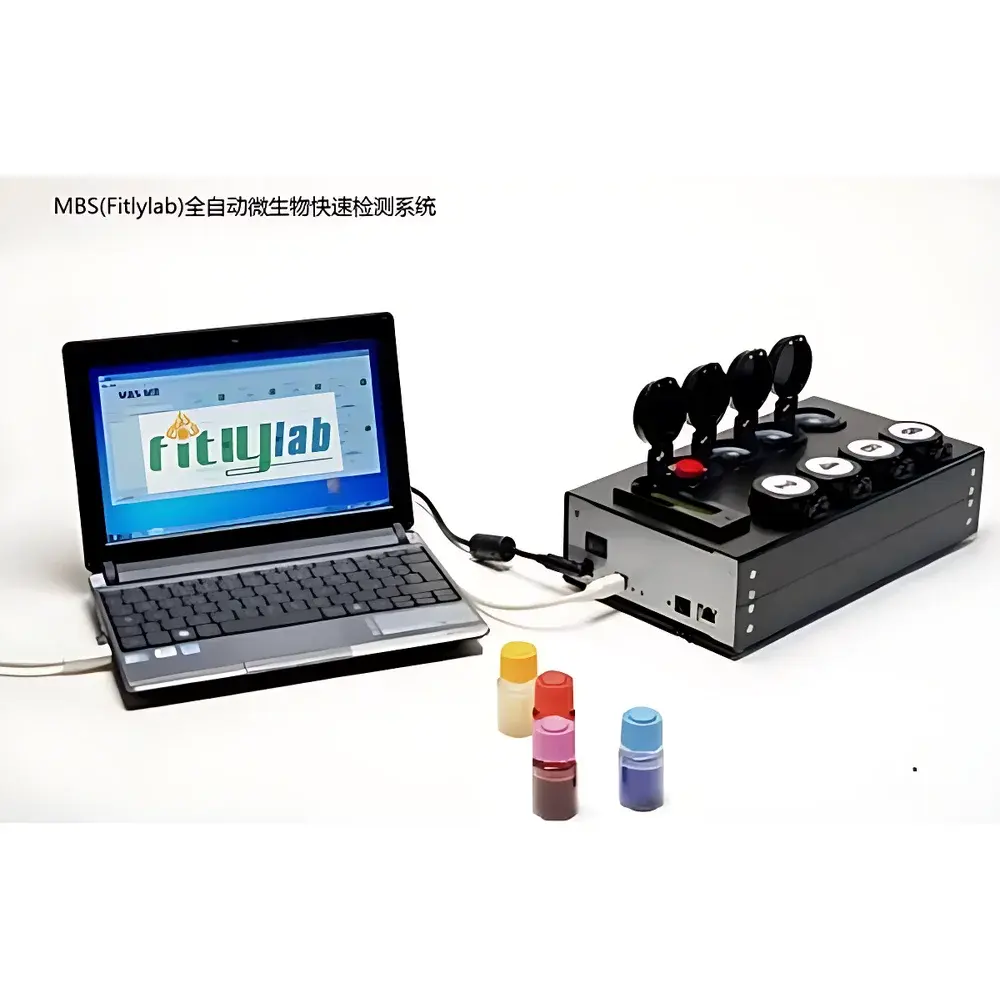
MBS Fitlylab Microbial Rapid Detection System (MBS-MR)
| Brand | MBS.SRL |
|---|---|
| Origin | Italy |
| Model | MBS(Fitlylab) |
| Detection Channels | 8 |
| Wavelengths | Triple-wavelength (Blue, Green, Red) |
| Detection Time | 2–10× faster than conventional plate culture methods |
| Repeatability | High |
| Sample Types | Solid, liquid, surface swabs, pastes, slurries |
| Regulatory Compliance | ISO 16140:2003 (validation of alternative microbiological methods), ISO/IEC 17025:2005 (general requirements for competence of testing and calibration laboratories), ISO/TR 13843:2000 (water quality — validation of microbiological methods) |
Overview
The MBS Fitlylab Microbial Rapid Detection System (MBS-MR) is an integrated, portable platform engineered for quantitative and qualitative detection of foodborne microorganisms in compliance with internationally recognized validation frameworks. Unlike conventional culture-based assays, the MBS-MR employs a proprietary multi-modal detection principle grounded in real-time monitoring of microbial metabolic activity via redox-mediated chromogenic response. Within the sealed VL detection vial, target microorganisms metabolize selective substrates—triggering electron transfer through a custom-designed redox shuttle system. This process alters the oxidation–reduction potential (ORP) of the medium, inducing a time-resolved, wavelength-specific color shift in the embedded chromophore. The MBS-MR host unit captures kinetic absorbance changes across three discrete optical channels (450 nm blue, 530 nm green, 630 nm red), enabling robust discrimination against turbidity-induced scattering artifacts common in heterogeneous food matrices. The system quantifies viable microbial load by modeling the inflection point (tinf) of the differential intensity curve—where the rate of color transition reaches maximum acceleration—correlating directly with initial CFU concentration. This physiologically anchored approach ensures high specificity (≥99.999%) and sensitivity down to 1 CFU per test unit, without reliance on nucleic acid amplification or antibody binding.
Key Features
- Eight independent, thermally regulated detection wells—each programmable for distinct incubation profiles (e.g., 30°C for coliforms, 37°C for Salmonella, 41.5°C for E. coli O157:H7)
- Triple-wavelength photometric sensing eliminates interference from particulate scatter, pigment interference, or background fluorescence
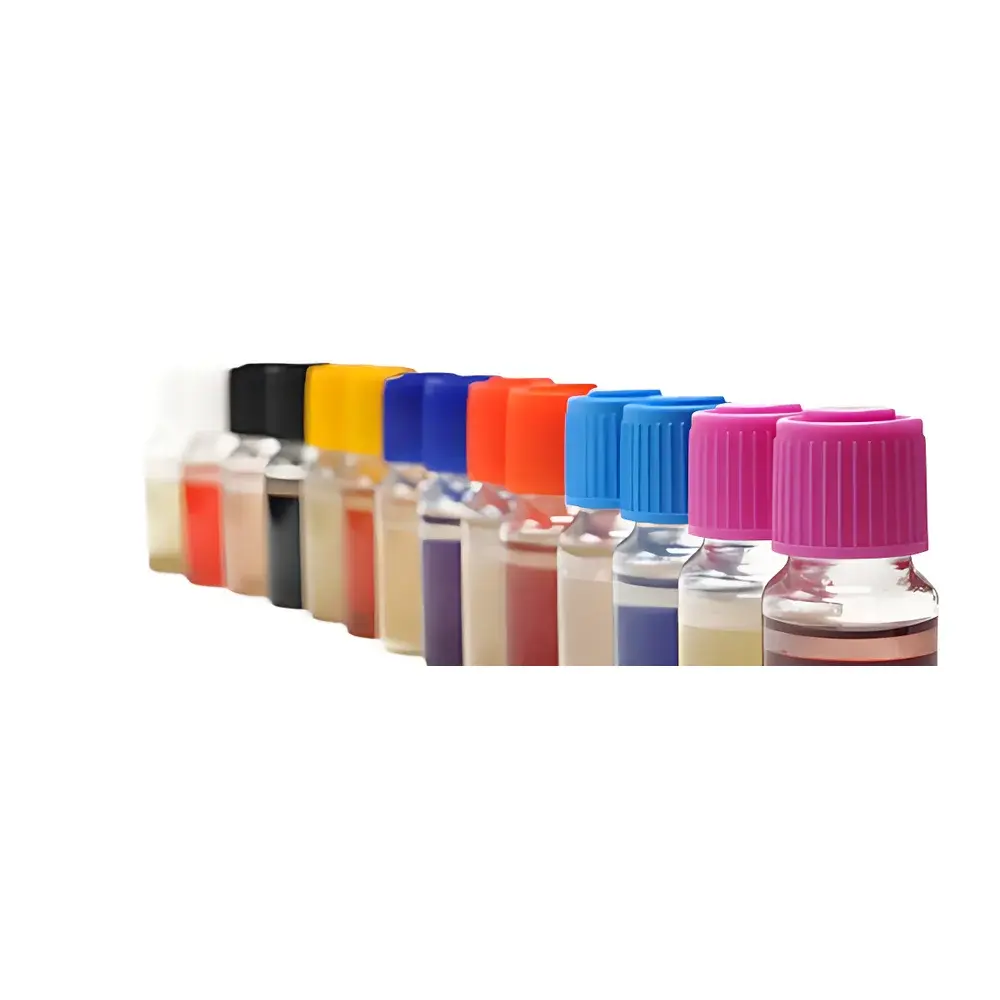
- VL detection vials integrate selective enrichment media, enzymatic substrates (e.g., β-glucuronidase for E. coli), and redox mediators—all pre-sterilized and lyophilized for shelf-stable deployment
- Automated data acquisition, curve fitting, and CFU calculation—no manual colony counting or subjective interpretation required
- Self-contained biosafety design: closed-vial operation meets BSL-1 containment standards; post-assay thermal deactivation enables safe disposal as non-hazardous lab waste
- Portable form factor (≤8 kg) with integrated battery support—validated for field use in production lines, cold storage facilities, and border inspection posts
- Fitlylab software suite supports audit-ready electronic records compliant with FDA 21 CFR Part 11 (electronic signatures, user access controls, immutable audit trails)
Sample Compatibility & Compliance
The MBS-MR accommodates diverse sample formats without mandatory pre-enrichment or dilution: raw meat homogenates (1 g), dairy liquids (1 mL), environmental swabs (10 cm² surface area), filtered water (100 mL filtrate), and semi-solid products (e.g., sauces, spreads). Each VL vial contains matrix-specific neutralizers to counteract preservatives (e.g., sorbates, nitrites) and antimicrobial residues. Method validation adheres to ISO 16140:2003 for equivalence assessment against reference culture methods, with documented performance across >30 food categories—including ready-to-eat meals, infant formula, and seafood. Internal validation protocols satisfy ISO/IEC 17025:2005 requirements for method verification, including precision (within-lab CV ≤8%), linearity (R² ≥0.995 over 1–10⁶ CFU/mL), and limit of detection confirmation per ISO 11133:2014. Certification documentation includes third-party verification reports from Rome Tor Vergata University’s Department of Public Health and the Italian National Institute of Nuclear Physics (INFN).
Software & Data Management
The Fitlylab software (v5.2+, English/Chinese bilingual interface) provides GLP-compliant workflow management. Users define test templates per analyte (e.g., “Total Viable Count – ISO 4833-1”), assign batch IDs, and configure pass/fail thresholds aligned with Codex Alimentarius or EU Regulation (EC) No 2073/2005. All raw spectral curves, tinf timestamps, and calculated CFU values are stored in an encrypted SQLite database with automatic daily backups. Reporting modules generate PDF certificates containing instrument ID, operator credentials, environmental logs (temperature/humidity), and traceable chain-of-custody metadata. Export functions support CSV, XML, and LIMS-compatible ASTM E1384 formats. Software updates are delivered via secure HTTPS channel with SHA-256 signature verification—no subscription fees for lifetime maintenance.
Applications
- HACCP prerequisite program verification: routine swabbing of food contact surfaces (conveyor belts, slicers, packaging tools)
- Raw material release testing: inbound milk, eggs, spices, and produce prior to processing
- Environmental monitoring in cleanrooms and RTE production zones per FDA Food Safety Modernization Act (FSMA) requirements
- Import/export quarantine screening at ports of entry—aligned with USDA-FSIS and EFSA rapid testing guidelines
- Water quality surveillance in beverage manufacturing and aquaculture systems per ISO 9308-1 and EPA Method 1604
- Consumer protection agency investigations of outbreak-linked food items
FAQ
What regulatory standards does the MBS-MR system meet?
The system is validated per ISO 16140:2003 for equivalence to reference methods and internally verified per ISO/IEC 17025:2005. It also satisfies ISO/TR 13843:2000 for water microbiology and supports compliance with FDA 21 CFR Part 11, EU Annex 11, and GLP/GMP documentation requirements.
Can the system detect viable but non-culturable (VBNC) cells?
No—the assay detects metabolically active cells capable of redox cycling under defined incubation conditions. VBNC cells lacking respiratory chain functionality will not generate a measurable signal.
Is method transfer required when switching from traditional plating?
Yes. Laboratories must perform in-house verification per ISO 16140:2003 Section 7, including repeatability, reproducibility, and ruggedness testing using representative product matrices.
How is temperature control managed across eight independent wells?
Each well incorporates Peltier-based thermoelectric elements with PID feedback loops, maintaining setpoints within ±0.3°C across ambient temperatures of 10–35°C.
Are VL vials reusable?
No. VL vials are single-use, sterile, and designed for one-time thermal deactivation post-analysis. Reuse would compromise assay integrity and regulatory compliance.




