
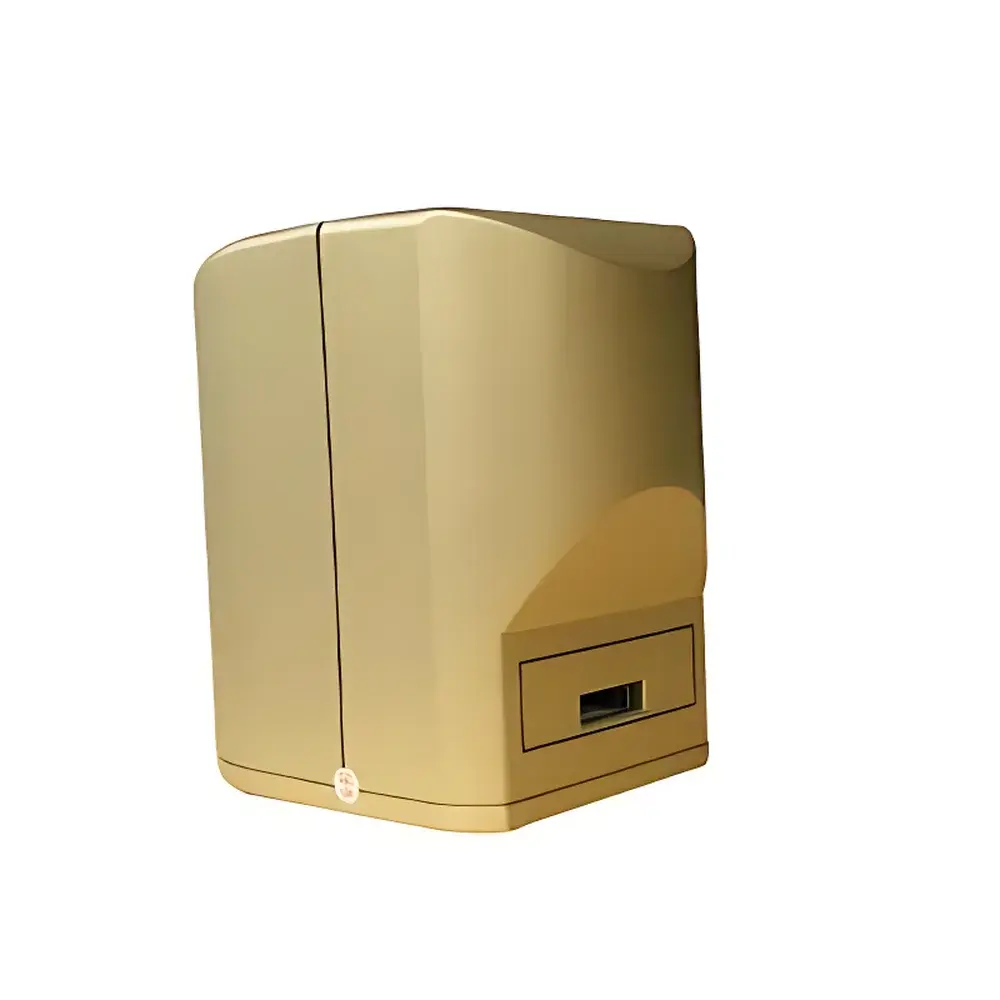
TMYQ-CGR100 Gold Immunochromatographic Strip Reader for β-Agonist Residue Detection
| Origin | China |
|---|---|
| Manufacturer Type | Authorized Distributor |
| Model | TMYQ-CGR100 |
| Detection Principle | Reflectance-based CMOS photometric quantification of colloidal gold immunochromatographic test strips |
| Measurement Range | 0–256 grayscale units (256-level reflectance intensity) |
| Precision | CV ≤ 1% (repeatability under controlled ambient conditions) |
| Throughput | ≤ 60 seconds per test (including reading, calculation, and report generation) |
| Sample Format | Single-strip cassette (1 test per run) |
| Interface | USB 2.0 |
| Power Supply | DC 5 V via USB port |
| Operating Humidity | <70% RH |
| Dimensions | 16 × 15 × 11 cm |
| Weight | 0.5 kg |
| Data Output | Local storage + exportable CSV/PDF reports |
| Software Compatibility | Windows 7/10/11 (x64), requires external host PC |
Overview
The TMYQ-CGR100 Gold Immunochromatographic Strip Reader is a dedicated quantitative optical reader engineered for regulatory-grade screening of β-agonist residues—including clenbuterol, ractopamine, and salbutamol—in animal-derived food matrices. It operates on the principle of reflectance photometry: a calibrated CMOS sensor captures the optical density of colloidal gold-labeled test lines (control line C and test line T) on lateral-flow immunoassay strips. By converting RGB pixel intensity into standardized grayscale values (0–256), the instrument enables semi-quantitative concentration estimation based on the T/C ratio, eliminating subjective visual interpretation and improving inter-operator reproducibility. Designed for high-throughput field and laboratory environments, the TMYQ-CGR100 complies with the foundational metrological requirements for rapid screening devices referenced in GB/T 22289–2008 (Chinese national standard for β-agonist detection in animal tissues and urine) and aligns with AOAC Official Method guidelines for lateral-flow assay instrumentation validation.
Key Features
- High-fidelity CMOS imaging module with uniform illumination and fixed-focus optics ensures consistent reflectance capture across strip batches.
- 256-level grayscale quantification provides sufficient dynamic range for reliable T/C ratio calculation and threshold-based classification (e.g., negative/positive/invalid).
- Integrated self-diagnostic routine verifies optical path integrity, sensor stability, and baseline calibration prior to each measurement cycle.
- On-device keyboard interface enables standalone operation—no touchscreen or external input required for basic read-and-report workflows.
- USB 2.0 connectivity supports direct data transfer to host PCs; no proprietary drivers required—compatible with standard HID-compliant enumeration.
- Compact form factor (16 × 15 × 11 cm) and low mass (0.5 kg) facilitate deployment in mobile labs, slaughterhouse QC stations, and field inspection units.
- Zero-maintenance optical architecture: no moving parts, no consumable light sources, and no recalibration kits—calibration is firmware-embedded and stable over time.
Sample Compatibility & Compliance
The TMYQ-CGR100 is validated for use with commercially available colloidal gold-based lateral flow assays targeting clenbuterol (in porcine/muscle tissue homogenates and urine), ractopamine (in swine liver and kidney extracts), and salbutamol (in bovine urine). It accepts single-strip cassettes conforming to ISO 22367:2020 dimensional specifications for immunochromatographic test cartridges. While the reader itself does not perform extraction or sample preparation, its output meets traceability requirements for GLP-aligned screening programs: all measurements include timestamp, operator ID (if entered), strip lot number (manually logged), and raw grayscale values for both C and T lines. Data files are structured to support audit-ready archiving per FDA 21 CFR Part 11 (when used with compliant host software and electronic signature protocols).
Software & Data Management
The included Windows-compatible software (distributed on optical disc) provides full data lifecycle control: real-time result visualization, batch report generation (Chinese-language PDF with official seal placeholder), image capture of scanned strips (timestamped and embedded in report metadata), and local SQLite database storage. Export functions support CSV for LIMS integration and XML for interoperability with national food safety surveillance platforms (e.g., China’s NIFDC Food Safety Information System). All stored images retain original EXIF metadata, enabling forensic verification of analytical integrity. The software enforces mandatory entry fields (sample ID, test date, analyst initials) and logs all user actions—including report edits and deletions—for compliance with internal QA procedures.
Applications
- Routine surveillance at provincial and municipal agricultural product quality supervision centers.
- In-line residue screening at centralized slaughterhouses prior to carcass release.
- Regulatory inspections conducted by market regulation bureaus and provincial drug administration agencies.
- Raw material acceptance testing at meat processing facilities sourcing from multiple farms.
- Pre-market verification at wholesale fresh meat markets and retail supermarket distribution hubs.
- Contract testing laboratories supporting third-party certification (e.g., HACCP, BRCGS Food Safety Standard Clause 4.10.2).
FAQ
Does the TMYQ-CGR100 require daily calibration or reference standards?
No—its optical system is factory-calibrated with non-drift photodiodes and performs automatic dark-current compensation before each scan. External calibration strips are not required for routine operation.
Can it read test strips from manufacturers other than the original equipment supplier?
Yes, provided the strip format matches the mechanical cassette dimensions and the colloidal gold signal falls within the detectable reflectance range (450–650 nm spectral response); however, quantitative accuracy depends on assay-specific algorithm mapping, which must be loaded separately via software configuration.
Is the device compatible with networked LIMS environments?
Yes—CSV export and configurable field mapping enable seamless ingestion into common LIMS platforms; API-level integration requires custom middleware development using the documented USB serial command protocol.
What environmental conditions affect measurement stability?
Ambient lighting must be diffused and non-directional; direct sunlight or fluorescent flicker may induce noise. Relative humidity must remain below 70% to prevent condensation on optical surfaces.
How is data integrity ensured during power interruption?
All measurements are written to non-volatile memory immediately upon completion; unsaved reports are retained in RAM until explicit save or export, with auto-recovery on restart.





