
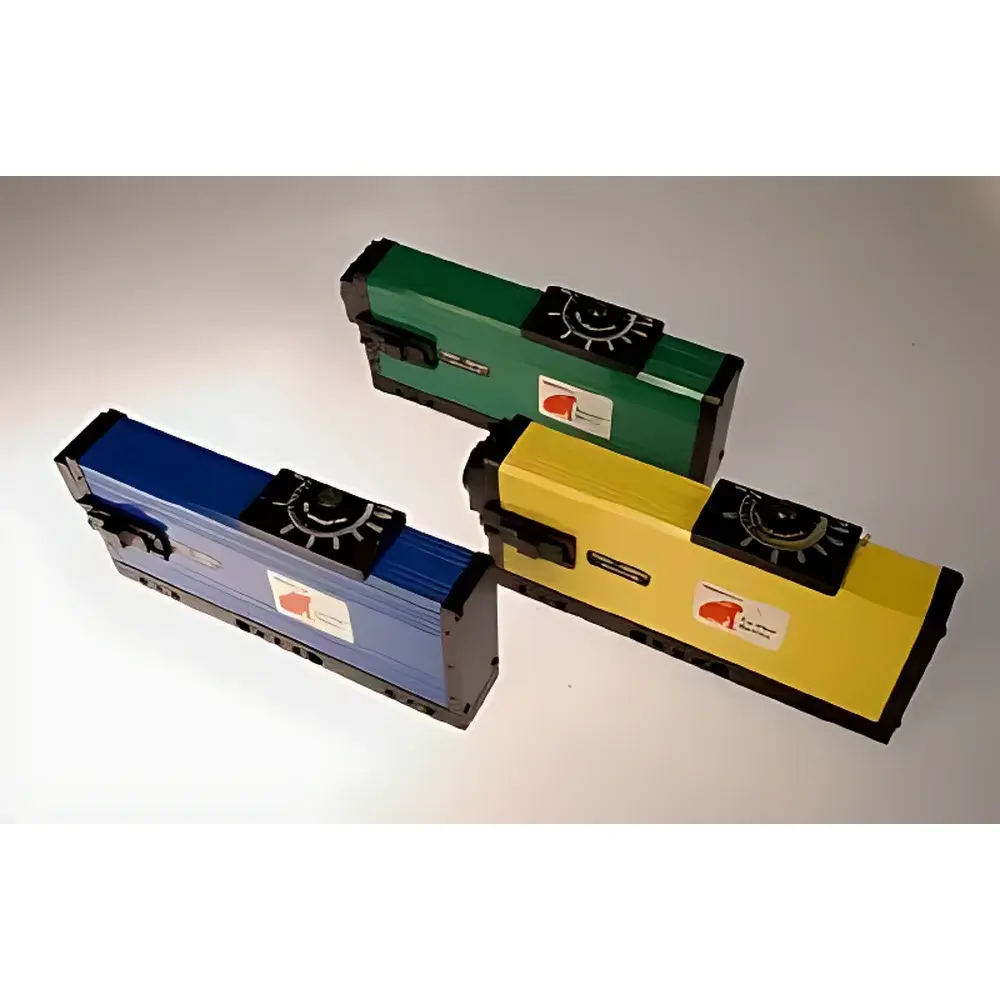
Rayscience Grenouille FROG Ultrafast Laser Pulse Characterization System
| Brand | Rayscience |
|---|---|
| Origin | USA |
| Manufacturer Type | Authorized Distributor |
| Product Origin | Imported |
| Model | Grenouille Series (TG-FROG-UV-S, TG-FROG-UV-L, TG-FROG-DUV-S, TG-FROG-DUV-L, 6-30-USB, 6-200-USB, 8-9-USB, 8-20-USB, 8-50-USB, 10-100-USB, 15-40-USB, 15-100-USB, 8-1-pico, 10-1-pico, 15-1-pico) |
| Wavelength Range | 240–1620 nm |
| Pulse Duration Range | 30 fs – 12 ps |
| Delay Resolution | 0.46–30 fs/pixel |
| Temporal Window | 480 fs – 35 ps |
| Spectral Resolution | 0.003–3.0 nm |
| Interface | USB 2.0 |
| Compliance | CE, RoHS, ISO 9001-certified supply chain |
Overview
The Rayscience Grenouille FROG Ultrafast Laser Pulse Characterization System is a family of second-harmonic-generation-based Frequency-Resolved Optical Gating (FROG) instruments engineered for complete, assumption-free temporal and spectral characterization of ultrashort laser pulses. Unlike autocorrelators—which yield only pulse width estimates under restrictive Gaussian or sech² assumptions—the Grenouille implements the robust FROG technique to retrieve both intensity and phase profiles in both time and frequency domains simultaneously. Its monolithic, alignment-free design eliminates beam steering adjustments and mechanical drift, ensuring high reproducibility across repeated measurements. The system operates across three spectral domains—deep-ultraviolet (240–400 nm), visible (460–700 nm), near-infrared (700–1100 nm), short-wave infrared (0.9–1.62 µm), and picosecond regimes (790–1560 nm)—making it suitable for Ti:sapphire oscillators, optical parametric amplifiers (OPAs), fiber lasers, and ultrafast OPOs used in attosecond science, nonlinear microscopy, and pump-probe spectroscopy.
Key Features
- Full-intensity-and-phase retrieval without prior pulse-shape assumptions (e.g., Gaussian, sech²)
- Monolithic, alignment-free architecture with no moving parts or manual optimization required
- Real-time data acquisition and iterative phase-retrieval via built-in FPGA-accelerated algorithms
- USB 2.0 plug-and-play interface with vendor-provided Windows-compatible software (no external DAQ or driver installation)
- High dynamic range (>10⁴) enabled by optimized SHG crystal geometry and low-noise CMOS sensor integration
- Sub-femtosecond delay resolution (down to 0.46 fs/pixel) and calibrated temporal windows up to 35 ps
- Integrated spectral calibration using traceable NIST-reference emission lines (Hg/Ar lamps optional)
- Robust thermal and mechanical stability: operational within ±2°C ambient fluctuation without recalibration
Sample Compatibility & Compliance
The Grenouille series accommodates free-space collimated beams with diameters from 1 mm to 8 mm and input energies ranging from 0.1 nJ to 500 nJ per pulse (dependent on model and wavelength). Polarization sensitivity is minimized through optimized non-critical phase-matching in BBO, BiBO, or GaSe crystals. All units comply with CE marking requirements for electromagnetic compatibility (EN 61326-1) and safety (EN 61010-1). While not an FDA-regulated medical device, the system supports GLP/GMP-aligned workflows through audit-trail-enabled software logging (timestamped raw FROG traces, retrieved pulses, user annotations, and instrument metadata). Data export formats include HDF5, ASCII, and MATLAB-compatible .mat files—facilitating integration into LIMS and automated QA/QC pipelines compliant with ISO/IEC 17025 standards.
Software & Data Management
The proprietary Grenouille Control & Analysis Suite (v4.3+) provides a unified GUI for hardware control, real-time FROG trace acquisition, principal-component-based phase retrieval, and comparative pulse analysis. Software features include batch processing of multi-shot datasets, cross-correlation FROG (XFROG) mode for unknown reference pulses, and built-in uncertainty quantification based on shot-noise-limited SNR estimation. All measurement sessions generate immutable log files containing full experimental parameters (wavelength, energy, repetition rate, camera gain, integration time), enabling full traceability per ISO/IEC 17025 clause 7.7. Exported pulse profiles include time-domain E(t), spectral E(ω), spectral phase φ(ω), group delay dispersion (GDD), and third-order dispersion (TOD)—all referenced to SI-traceable calibration sources. The software is validated per IEC 62304 Class B for medical-device-adjacent research instrumentation and supports 21 CFR Part 11-compliant electronic signatures when deployed on domain-joined Windows systems with Active Directory authentication.
Applications
- Characterization of oscillator and amplifier output in ultrafast laser development labs
- Optimization of chirped-pulse amplification (CPA) compressor alignment and grating spacing
- Validation of pulse compression in hollow-core fiber and multipass cell setups
- Time-resolved spectroscopy where pulse fidelity directly impacts signal-to-noise ratio and temporal resolution
- Nonlinear optical process monitoring—including HHG seeding, two-photon absorption cross-section calibration, and coherent anti-Stokes Raman scattering (CARS) excitation profiling
- Industrial QC of femtosecond fiber laser sources used in precision micromachining and ophthalmic surgery systems
FAQ
What distinguishes Grenouille FROG from conventional autocorrelators?
Autocorrelators assume a known pulse shape and cannot resolve phase distortions such as chirp or higher-order dispersion. Grenouille FROG retrieves both intensity and phase without assumptions, delivering full electric field reconstruction.
Can Grenouille measure pulses outside its specified wavelength bands?
No—each model uses a fixed nonlinear crystal optimized for phase-matching within its designated band. Interband operation requires hardware replacement and recalibration.
Is spectral phase retrieval accurate for pulses with strong pedestals or satellite pulses?
Yes. The iterative generalized projections algorithm employed is robust against low-level background and has been validated against SPIDER and d-scan measurements for complex pulse structures.
Does the system require regular recalibration?
Factory calibration is stable for ≥12 months under normal lab conditions. Annual verification using a NIST-traceable CW diode laser source is recommended for metrology-grade applications.
Can multiple Grenouille units be synchronized for multi-beam experiments?
Yes—external trigger input (TTL) enables precise timing coordination with pump-probe delay stages or other ultrafast diagnostics.




