
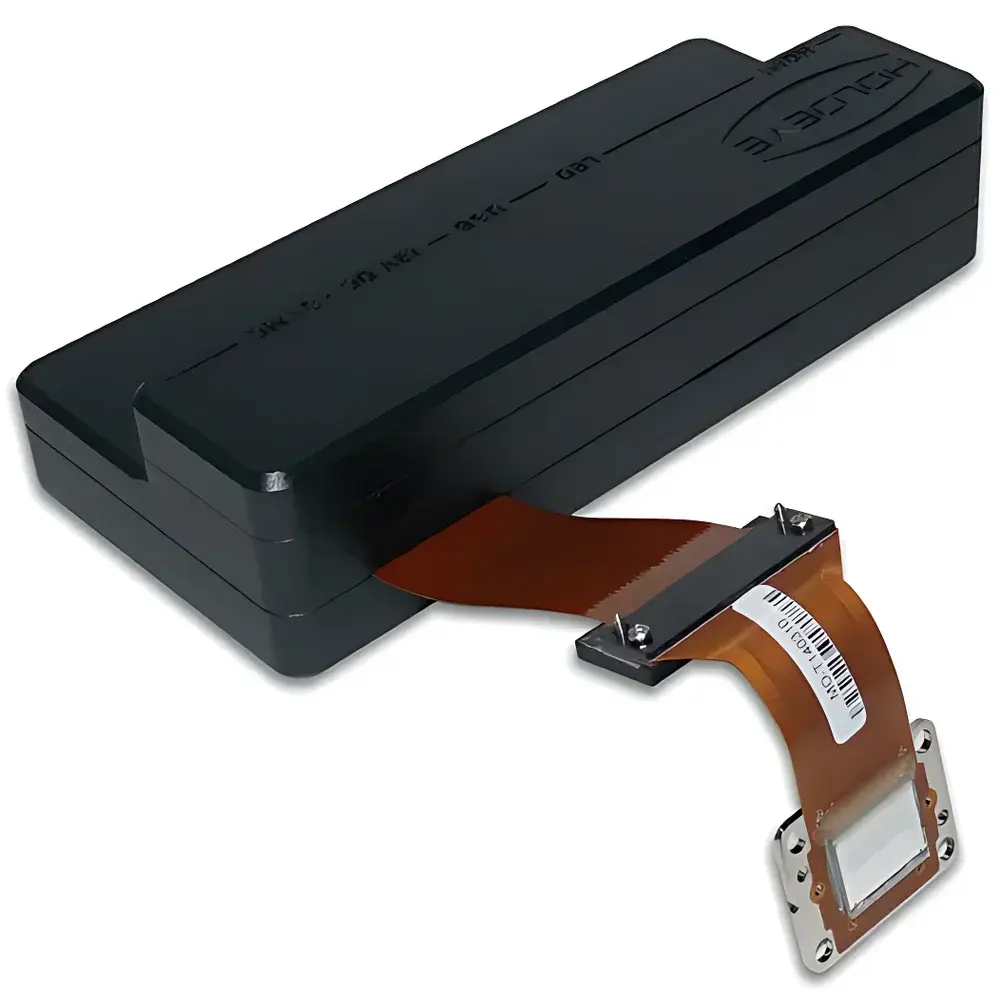
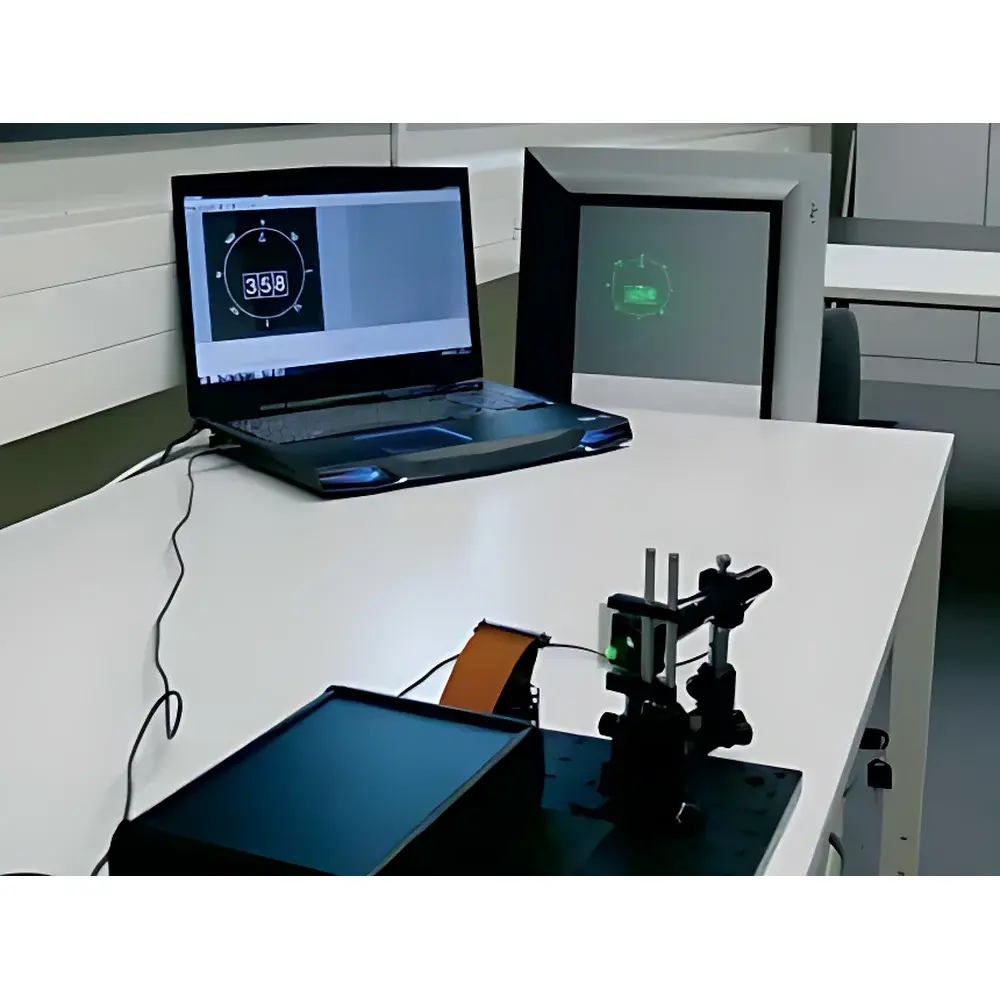
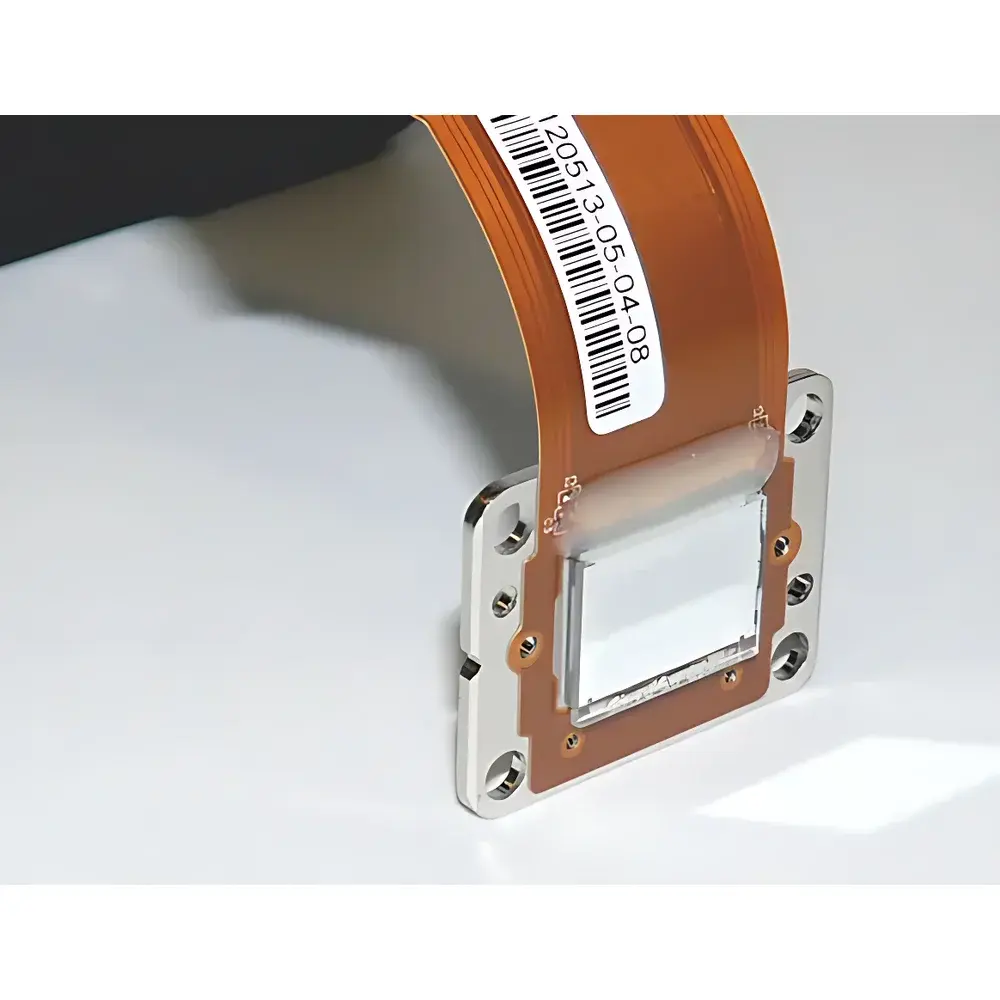
Holoeye LETO-3 Pure-Phase Spatial Light Modulator
| Brand | Holoeye |
|---|---|
| Origin | Germany |
| Model | LETO-3 |
| Spectral Range | 400–1100 nm |
| Resolution | 1920 × 1080 pixels |
| Pixel Pitch | 6.4 µm |
| Fill Factor | 93% |
| Field of View (TFOV) | 15.36 × 8.64 mm |
| Instantaneous Field of View (IFOV) | 7.8 µrad |
| Frame Rate | 60 Hz |
| Interface | HDMI (video input), USB 2.0 (control) |
| Operating Mode | Pure-phase modulation only |
| Optical Configuration | Transmissive, binary-optical element |
| Mounting | Benchtop / Ground-based optical setup |
Overview
The Holoeye LETO-3 Pure-Phase Spatial Light Modulator (SLM) is a high-resolution, transmissive liquid-crystal-on-silicon (LCoS) device engineered for precision wavefront shaping in advanced optical systems. Unlike intensity-modulating devices, the LETO-3 operates exclusively in pure-phase modulation mode—applying spatially varying phase delays to incident light without significant amplitude coupling. This enables high-fidelity control over beam steering, holographic projection, adaptive optics correction, and structured illumination. Its native resolution of 1920 × 1080 pixels, combined with a pixel pitch of 6.4 µm and a fill factor of 93%, ensures minimal diffraction artifacts and maximized optical throughput across the 400–1100 nm spectral range. Designed for integration into laboratory-scale spectroscopic and hyperspectral imaging platforms, the LETO-3 serves as a programmable diffractive optical element—replacing fixed gratings, lenses, or vortex plates with software-defined optical functions.
Key Features
- Transmissive LCoS architecture optimized for visible to near-infrared wavelengths (400–1100 nm)
- Pure-phase modulation capability with <1° RMS phase error per pixel under calibrated conditions
- Native resolution of 1920 × 1080 pixels; effective active area of 15.36 × 8.64 mm
- High optical fill factor (93%) minimizes zero-order leakage and improves diffraction efficiency
- HDMI video interface enables direct connection to standard graphics cards for real-time pattern streaming
- USB 2.0 interface provides bidirectional communication for firmware updates, calibration loading, and synchronization signals
- No proprietary hardware required—fully compatible with Windows/Linux environments using standard display drivers
- Thermal stability engineered for continuous operation in ambient lab environments (20–25°C, non-condensing)
Sample Compatibility & Compliance
The LETO-3 is designed for use with collimated, spatially coherent light sources including laser diodes, Ti:sapphire oscillators, and supercontinuum sources. It supports polarization-sensitive configurations when used with linearly polarized input aligned to the SLM’s preferred axis. As a benchtop optical component—not a standalone analytical instrument—the device complies with IEC 61000-6-3 (EMC emission limits) and IEC 61000-6-2 (immunity requirements) for laboratory equipment. While not certified as a medical or industrial safety device, it meets CE marking requirements for optical apparatus within the EU. Integration into GLP- or GMP-regulated workflows requires user validation of optical performance parameters (e.g., phase uniformity, temporal stability) per ISO/IEC 17025 guidelines.
Software & Data Management
The LETO-3 is operated via Holoeye’s open-architecture GUI, distributed under a perpetual license with source-code access to core hologram generation libraries (C/C++ and Python bindings included). The software supports three primary operational paradigms: (1) real-time rendering of user-defined computer-generated holograms (CGHs); (2) parametric generation of standard optical functions—including spherical lenses, blazed gratings, optical vortices, and axicons—with adjustable focal length, groove density, topological charge, or NA; and (3) superposition of multiple phase functions with independent scaling and alignment. All generated phase maps are stored in 16-bit grayscale TIFF format, enabling traceability, version control, and batch processing. Audit trails—including timestamped configuration files, applied patterns, and system status logs—are exportable in CSV format for regulatory documentation. The software does not implement FDA 21 CFR Part 11 electronic signature controls; users deploying it in regulated environments must supplement with validated third-party data integrity solutions.
Applications
- Dynamic holographic microscopy and quantitative phase imaging
- Multi-plane fluorescence excitation in light-sheet and structured illumination microscopy (SIM)
- Adaptive optics wavefront correction in astronomical and ophthalmic instrumentation
- Programmable spectral filtering in Fourier-transform and snapshot hyperspectral systems
- Optical trapping and micromanipulation using reconfigurable optical tweezers
- Calibration and characterization of interferometric sensors and metrology tools
- Education and research in Fourier optics, diffractive optics, and computational imaging
FAQ
Is the LETO-3 suitable for pulsed laser applications?
Yes—provided pulse energy remains below 10 mJ/cm² at 10 ns duration and repetition rates do not exceed 1 kHz. Thermal lensing effects must be evaluated experimentally for ultrafast regimes.
Can multiple LETO-3 units be synchronized?
Yes—via external TTL trigger input (BNC) supporting master-slave configuration with sub-microsecond jitter.
Does the device support custom gamma calibration?
Yes—users may upload per-pixel lookup tables (LUTs) to compensate for nonlinearity in phase response across wavelength and drive voltage.
What is the typical phase modulation depth?
At 633 nm, the LETO-3 achieves ≥2π radians of phase retardation with <5% spatial nonuniformity across the active aperture.
Is OEM integration supported?
Yes—Holoeye provides mechanical drawings, electrical interface specifications, and SDK documentation for embedded control in turnkey instruments.






