
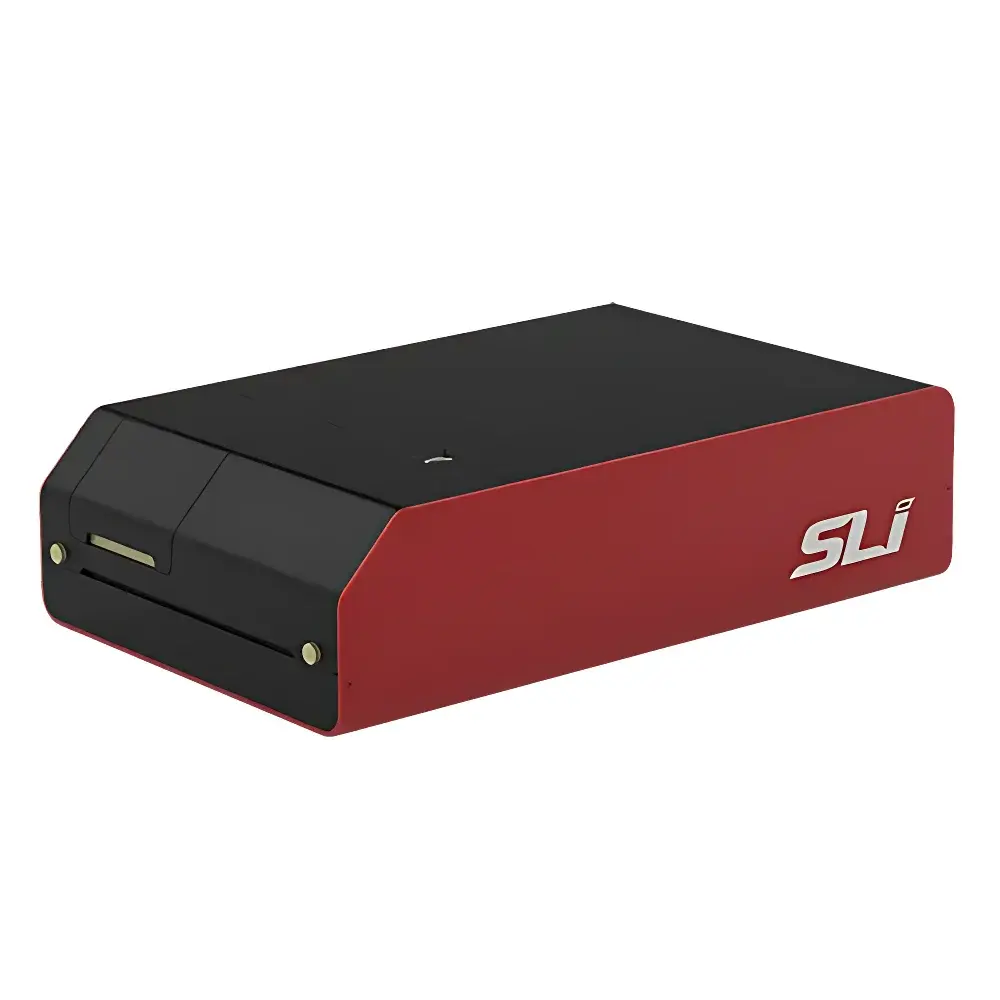
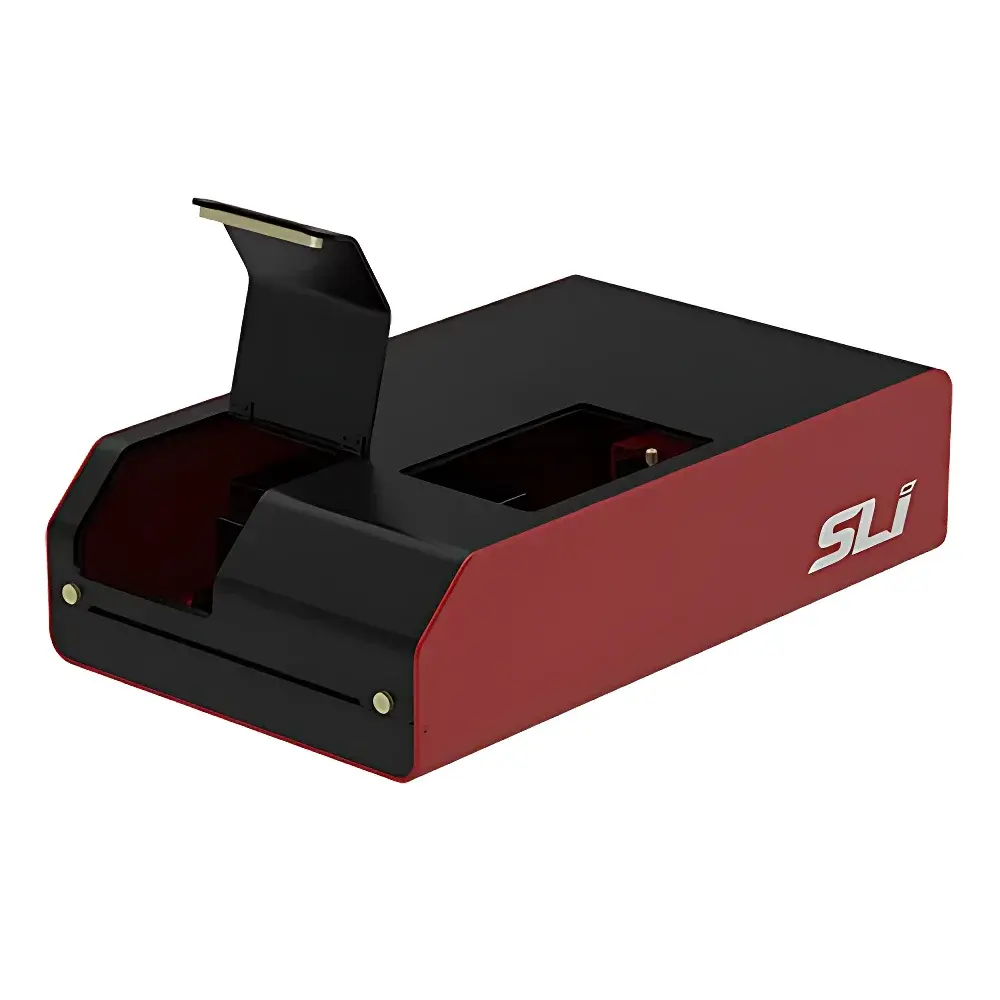
Spectrolight FWS Fluo Molecular Fluorescence Spectrometer SP-FL
| Brand | Spectrolight |
|---|---|
| Origin | USA |
| Manufacturer Type | Authorized Distributor |
| Import Status | Imported |
| Model | SP-FL |
| Price Range | USD 14,000–28,000 (approx.) |
| Dispersive Element | Grating and Interference Filters |
| Spectral Bandwidth (Slit) | 6–15 nm |
| Resolution | 62,500 (SP-FL-245) / 600,000 (SP-FL-303) / 200,000 (SP-FL-642) |
| Sensitivity | 62,500 (SP-FL-245) / 600,000 (SP-FL-303) / 200,000 (SP-FL-642) |
| Wavelength Accuracy | ±1% of reading |
Overview
The Spectrolight FWS Fluo Molecular Fluorescence Spectrometer SP-FL is a high-performance benchtop instrument engineered for quantitative and qualitative fluorescence analysis across research, quality control, and regulatory-compliant laboratories. It operates on the principle of steady-state molecular fluorescence spectroscopy—exciting fluorophores with tunable monochromatic light and measuring emitted photons across a broad spectral range. The system integrates Spectrolight’s proprietary TwinFilm™ optical architecture to deliver high-intensity, spectrally pure excitation light while minimizing thermal drift and polarization artifacts. Unlike conventional filter-based fluorimeters, the SP-FL series combines grating dispersion with precision interference filters to enable flexible excitation wavelength selection (350–900 nm) and wide emission detection (200–1050 nm), supporting both UV-Vis and NIR-active fluorophores—including quantum dots, lanthanide complexes, and bioconjugated dyes.
Key Features
- Proprietary TwinFilm™ excitation optics delivering >85% transmission efficiency and reduced spectral crosstalk between excitation and emission paths
- Three detector configurations: high-speed front-illuminated CCD (SP-FL-245), TE-cooled back-illuminated CCD (SP-FL-303), and non-cooled back-illuminated CCD (SP-FL-642), each optimized for specific signal-to-noise and acquisition speed requirements
- Adjustable spectral bandwidth (6–15 nm) via motorized slit control, enabling trade-off optimization between resolution and photon throughput
- Wavelength accuracy maintained at ±1% across full excitation and emission ranges—calibrated traceably to NIST-traceable standards
- Rugged aluminum-alloy optical housing with passive thermal stabilization, suitable for continuous operation in ambient lab environments (20–25°C, <60% RH)
- Modular design supporting seamless integration with optional microscope modules (e.g., epifluorescence, confocal-ready coupling ports) and fiber-optic sampling accessories
Sample Compatibility & Compliance
The SP-FL accommodates standard 1 cm quartz cuvettes, microvolume cells (down to 5 µL), and solid-sample holders for powder or thin-film analysis. Its broad spectral coverage supports common fluorophore classes: organic dyes (FITC, TRITC, Cy-series), intrinsic biomolecules (NADH, tryptophan, collagen), nanoparticles (CdSe/ZnS QDs), and environmental probes (PAHs, humic substances). The instrument complies with ISO/IEC 17025:2017 requirements for analytical instrument validation and supports IQ/OQ documentation packages. Data acquisition workflows are compatible with GLP/GMP environments when paired with Spectrolight’s optional 21 CFR Part 11-compliant software module, including electronic signatures, audit trails, and user-access controls.
Software & Data Management
Spectrolight’s FluoroView™ software provides a dedicated interface for instrument control, spectral acquisition, kinetic profiling, and multivariate analysis. It supports real-time background subtraction, spectral deconvolution using constrained least-squares fitting, and batch processing of multi-sample datasets. Raw data are stored in vendor-neutral HDF5 format with embedded metadata (wavelength calibration, slit width, integration time, detector temperature). Export options include CSV, ASCII, and JCAMP-DX for interoperability with third-party platforms such as MATLAB, OriginLab, and Thermo Fisher Omnic. Remote operation via Ethernet or USB 3.0 ensures compatibility with centralized lab informatics systems (LIMS) and automated sample handling robots.
Applications
- Quantitative assay development for pharmaceutical impurity profiling (e.g., residual solvent detection, degradation product identification)
- Protein conformational studies via intrinsic tryptophan fluorescence and Förster resonance energy transfer (FRET)
- Environmental monitoring of polycyclic aromatic hydrocarbons (PAHs) and dissolved organic matter (DOM) in aqueous matrices
- Material science characterization of luminescent perovskites, phosphors, and OLED emissive layers
- Cellular imaging support through synchronized acquisition with optional epi-fluorescence microscope modules
- Teaching laboratory use for fundamental spectroscopy experiments (Stokes shift measurement, quantum yield estimation, lifetime approximation via intensity decay modeling)
FAQ
What excitation sources are integrated into the SP-FL platform?
The SP-FL uses a stabilized halogen-tungsten lamp (Mighty Light™) with a minimum 2,000-hour lifetime and spectral output optimized for 350–900 nm excitation. No laser or LED excitation modules are included by default but can be added via OEM customization.
Is wavelength calibration performed automatically during startup?
Yes—FluoroView™ executes a reference peak scan using internal Hg/Ne spectral lines prior to each session, correcting for mechanical drift and ensuring long-term repeatability.
Can the SP-FL meet FDA requirements for regulated QC labs?
When configured with the optional 21 CFR Part 11 compliance package (including role-based access, electronic audit trail, and data integrity safeguards), the SP-FL satisfies baseline instrument qualification criteria for pharmaceutical and clinical testing environments.
How does the TwinFilm™ technology differ from conventional dichroic beam splitters?
TwinFilm™ employs dual-layer interference coatings deposited on fused silica substrates, achieving >99.5% reflection at excitation wavelengths and >95% transmission at emission wavelengths—significantly reducing Raman scattering and stray-light-induced baseline distortion compared to single-dichroic designs.
Are microscope coupling components supplied with the base system?
Microscope modules (e.g., SP-MICRO-FW, SP-CONF-ADAP) are optional accessories. Integration requires alignment verification using the included collimation test kit and is supported by Spectrolight’s application engineering team under extended service contracts.





