
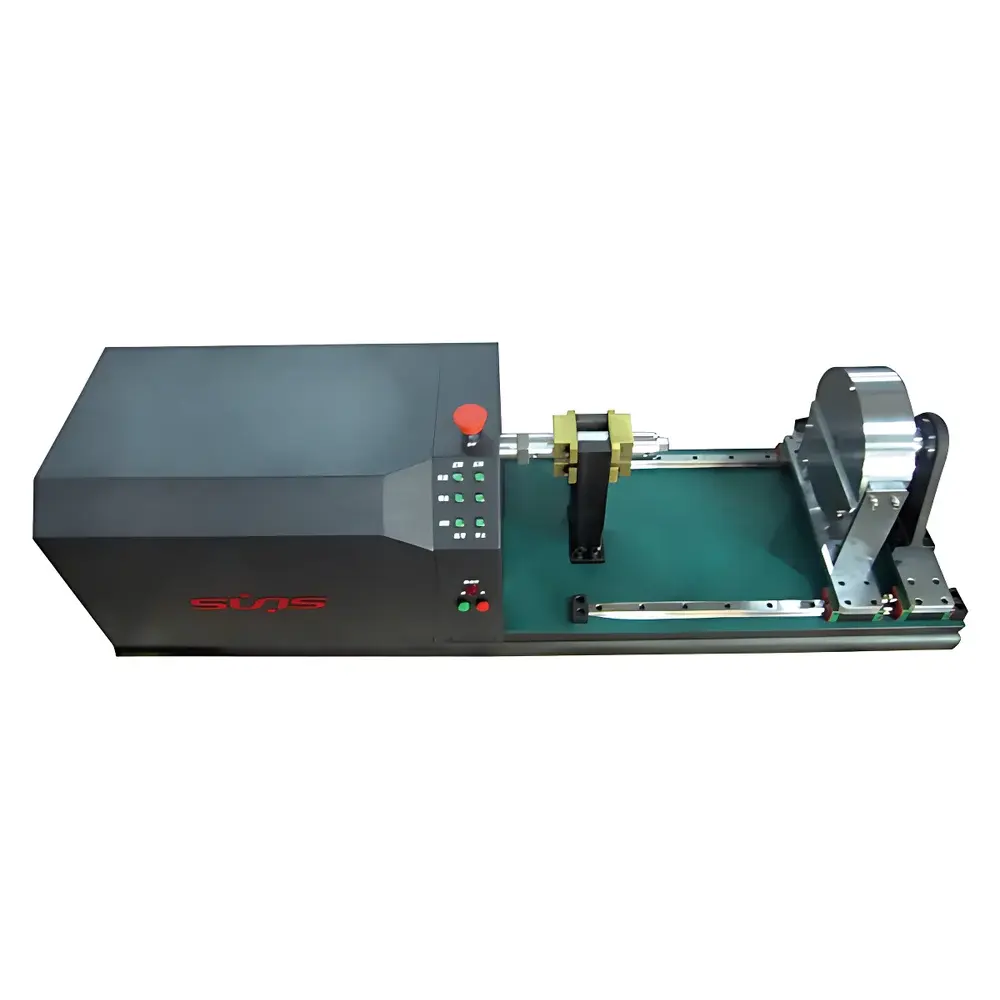
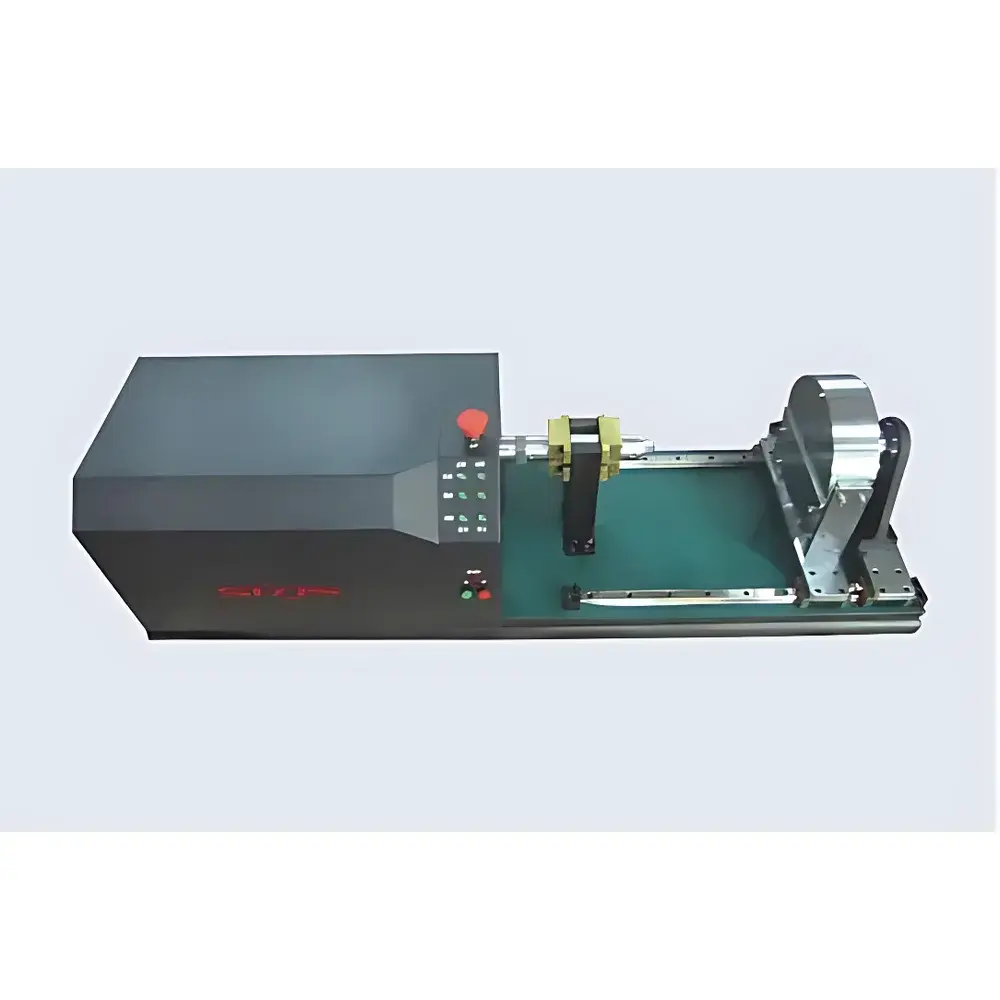
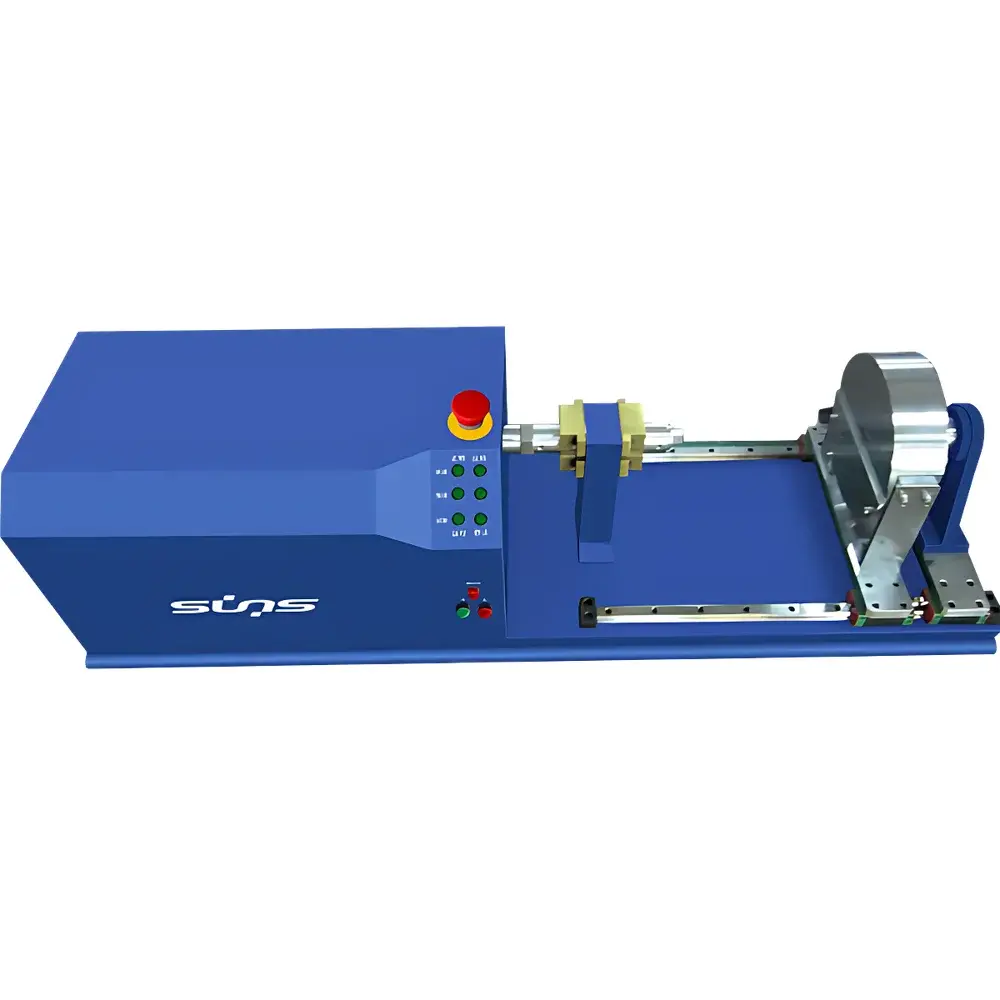
SUNS TTM-C Bolt Torsion Testing Machine
| Brand | SUNS |
|---|---|
| Origin | Guangdong, China |
| Manufacturer Type | Direct Manufacturer |
| Model | TTM-C |
| Max Torque | 100 N·m |
| Torque Measurement Range | 0–100% of full scale |
| Torque Resolution | 1 part in 10,000 (0.01% FS) |
| Twist Angle Measurement Range | 0–10,000° |
| Motor Power | 0.4 kW |
Overview
The SUNS TTM-C Bolt Torsion Testing Machine is an electromechanical precision instrument engineered for quantitative evaluation of mechanical locking performance in threaded fasteners—specifically bolts, nuts, and self-locking nut assemblies. It operates on the principle of controlled angular displacement under applied torsional load, enabling direct measurement of torque–angle relationships critical to preload verification, thread friction analysis, and functional integrity assessment. Designed in strict accordance with metrological and aerospace-grade fastener testing requirements, the TTM-C supports static and quasi-static torsion protocols defined by national and international standards including JJG 269–2006 (China National Verification Regulation for Torsion Testing Machines), GJB 715.14–1990 and GJB 715.15–1990 (PLA General Specifications for Fastener Torque and Torque–Tension Testing), NASM1312-31:1997 (Aerospace Standard for Fastener Torque Testing), HB 7596 (MJ Thread Self-Locking Nut Test at ≤425 °C), GB/T 943–1988 (Technical Requirements for Self-Locking Nuts), and ISO 16047:2005 (Fasteners — Torque/Clamp Force Testing). Its architecture integrates high-fidelity torque transduction, angular position feedback, and closed-loop servo control to ensure traceable, repeatable, and auditable test execution.
Key Features
- Servo motor drive system delivering precise, programmable angular velocity profiles with minimal speed fluctuation (<±0.5% of setpoint), essential for consistent torque ramping and dwell-phase stability.
- Planetary gear reducer providing high transmission efficiency (>92%), low backlash (<5 arcmin), and smooth rotational output—critical for eliminating torsional oscillation during low-speed or high-resolution tests.
- High-stability torque sensor with integrated temperature compensation and electromagnetic interference (EMI) shielding, offering linearity ≤±0.5% FS and repeatability ≤±0.2% FS over full range.
- Dual-sensor configuration supporting concurrent acquisition of torsional torque and axial force (when equipped with optional load cell), enabling full torque–tension correlation per ISO 16047.
- Industrial-grade embedded control unit with real-time PID regulation, overload cut-off response time <10 ms, and hardware-based emergency stop circuitry compliant with IEC 61800-5-2 functional safety guidelines.
- Modular software interface compatible with Windows OS, supporting ASTM E2921-compliant test sequence scripting, digital calibration certificate import/export, and audit trail logging for GLP/GMP environments.
Sample Compatibility & Compliance
The TTM-C accommodates standard metric and imperial bolt/nut assemblies ranging from M3 to M30 (or equivalent UNC/UNF sizes), with adjustable clamping fixtures accommodating both hex-head and flange-type fasteners. Fixture geometry conforms to ISO 16047 Annex A for standardized grip alignment and minimal bending moment introduction. All mechanical and electrical subsystems meet CE marking requirements (2014/30/EU EMC Directive and 2014/35/EU Low Voltage Directive). Calibration procedures follow ISO/IEC 17025 principles, and measurement uncertainty budgets are documented per ILAC P14:2019. The system supports traceable calibration using NIST-traceable torque standards (e.g., Fluke 7120A or equivalent) and angular encoders certified to ISO 230-2:2014.
Software & Data Management
The proprietary Windows-based testing software provides ISO 17025-aligned data handling: automatic timestamping, user authentication (role-based access control), electronic signature capability, and immutable audit trails compliant with FDA 21 CFR Part 11 requirements. Real-time plots display torque vs. angle, torque vs. time, and derived parameters including yield torque, breakaway torque, prevailing torque, and elastic slope (stiffness). Raw data export is supported in CSV, XML, and PDF formats—with metadata embedding (test ID, operator, calibration date, environmental conditions). Report templates align with GB/T 228.1–2021 and ISO 16047:2005 annexes, generating fully annotated curves and tabulated results including statistical summaries (mean, SD, CV%) across replicate tests.
Applications
- Verification of self-locking nut performance under thermal cycling (per HB 7596 up to 425 °C, when used with external environmental chamber).
- Preload consistency validation in automotive powertrain assembly processes where torque-to-yield (TTY) fastening is specified.
- Quality assurance screening of aerospace fasteners per NASM1312-31, including torque scatter analysis and friction coefficient derivation (μth, μs).
- R&D characterization of novel thread geometries (e.g., lobed, knurled, or polymer-coated threads) for torque retention and relaxation behavior.
- Manufacturing process qualification for cold-formed or heat-treated fasteners, assessing batch-to-batch variability in torsional yield strength and ductility.
FAQ
What torque accuracy class does the TTM-C meet according to JJG 269–2006?
The TTM-C meets Class 1 accuracy requirements per JJG 269–2006, verified via periodic calibration against certified reference standards.
Can the system perform torque–tension coupling tests per ISO 16047:2005?
Yes—when configured with an axial load cell and calibrated torque–tension fixture, the TTM-C executes full ISO 16047-compliant coupling tests, including calculation of total, thread, and bearing surface friction coefficients.
Is the software validated for use in regulated pharmaceutical or medical device manufacturing?
The software includes 21 CFR Part 11 compliance features (audit trail, e-signature, user access levels); however, site-specific validation documentation must be generated per internal SOPs and risk assessment.
What maintenance intervals are recommended for the planetary gearbox and torque sensor?
Gearbox lubrication is required every 2,000 operational hours; torque sensor zero-point verification is recommended before each test session, with full calibration every 12 months or after 5,000 test cycles.
Does the system support automated pass/fail decision logic based on user-defined torque-angle thresholds?
Yes—the software allows definition of multi-stage acceptance criteria (e.g., torque at 30°, max torque, angle at breakaway) with configurable alarms and automatic result classification.



