
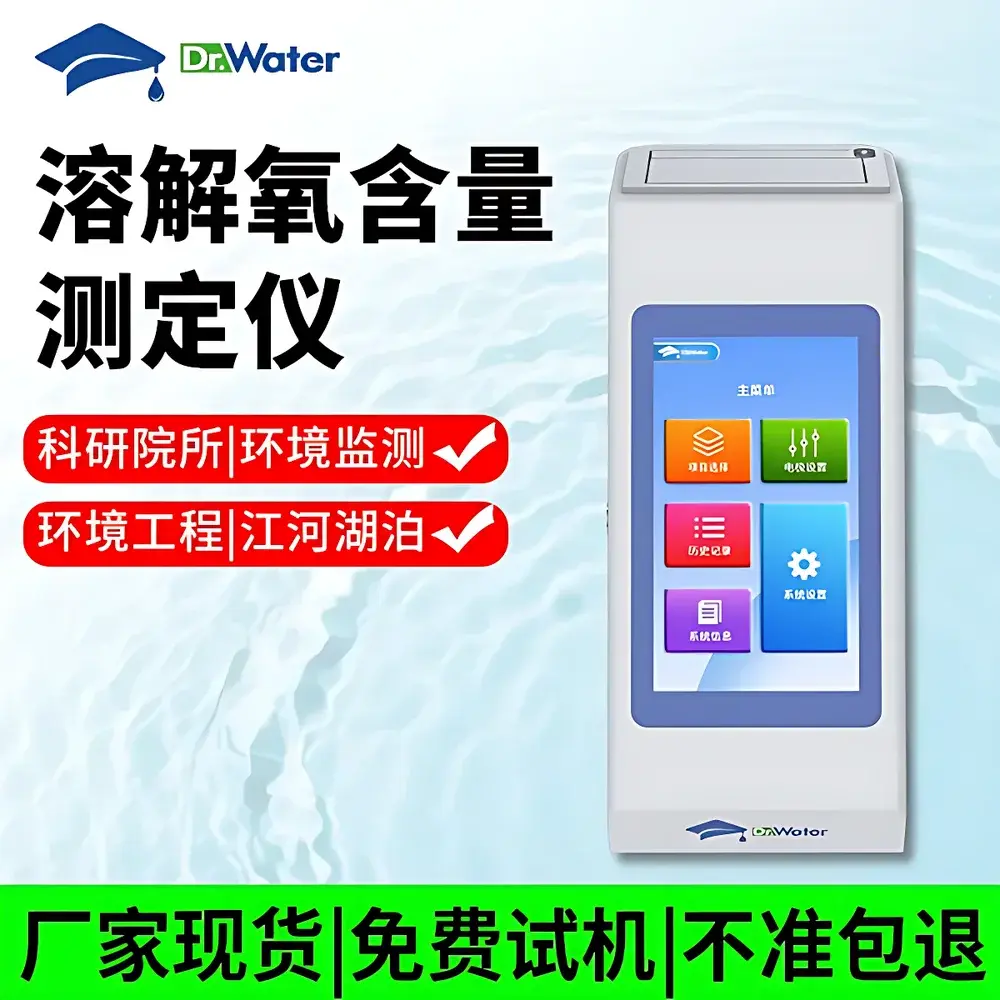
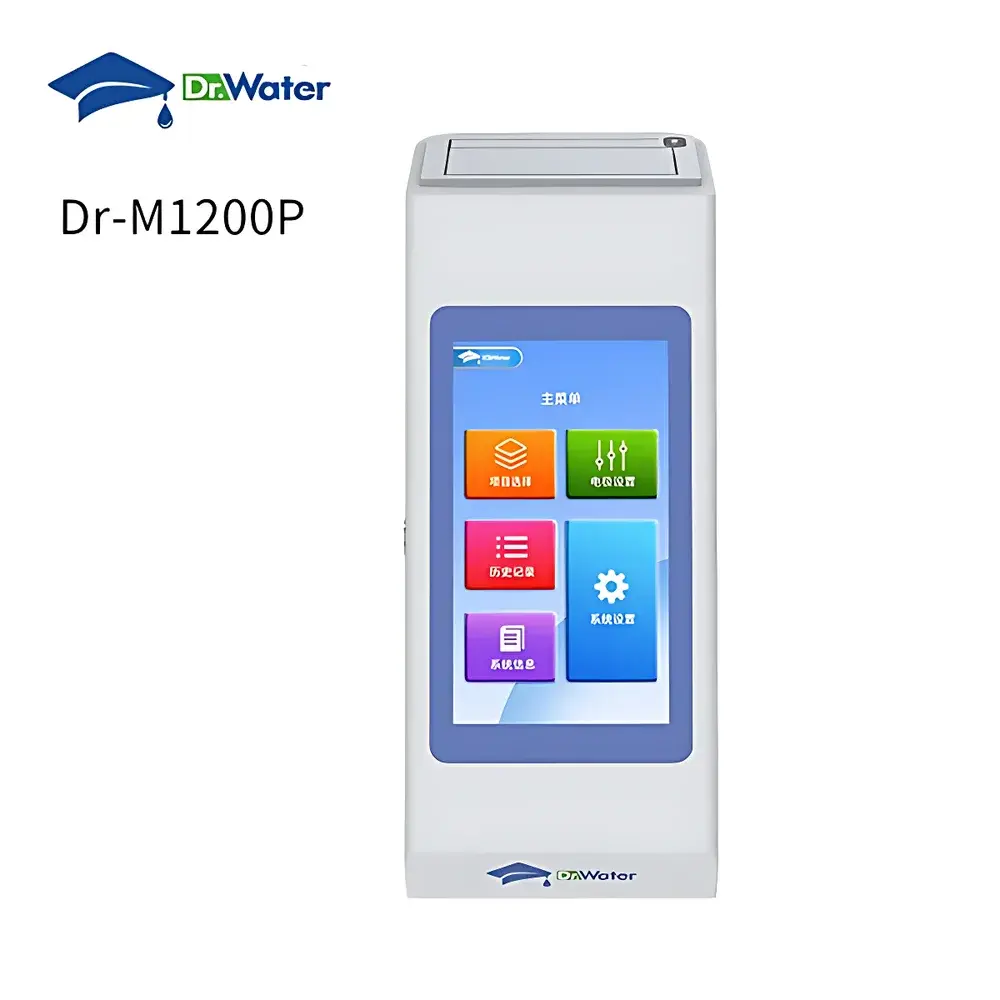
Doctor Water Dr-M1204P Portable Dissolved Oxygen Meter
| Brand | Doctor Water |
|---|---|
| Origin | Hunan, China |
| Model | Dr-M1204P |
| Instrument Type | Portable |
| Measurement Principle | Electrochemical (Clark-type polarographic sensor) |
| Measurement Range | 0–50 mg/L |
| Accuracy | ±1% FS |
| Resolution | 0.001 mg/L |
| Calibration | Two-point calibration (air-saturated water & zero-oxygen solution) |
| Detection Limit | 0.001 mg/L |
| Temperature Compensation | Automatic (0–50 °C) |
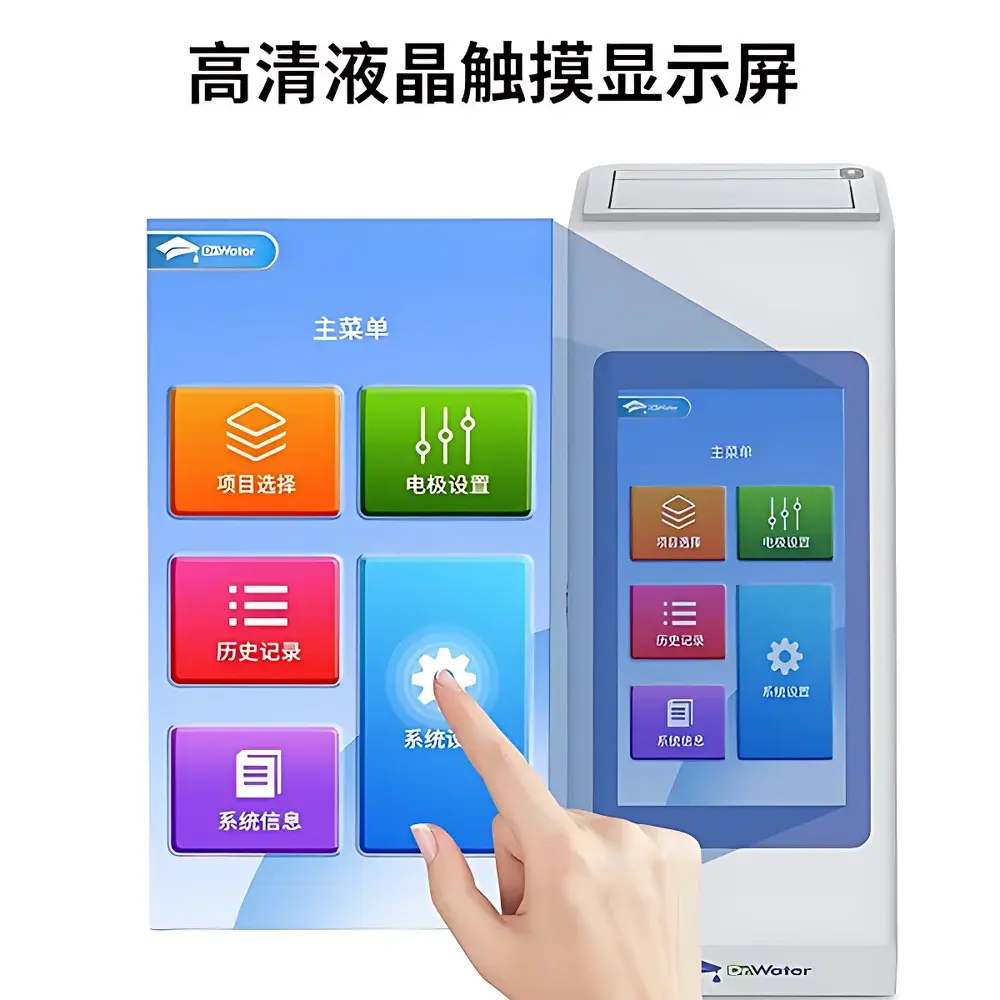
| Display | 5-inch HD color TFT touchscreen |
| Data Storage | Up to 1,000,000 records |
| Power Supply | Rechargeable Li-ion battery + USB-C AC adapter |
| Electrode Protection Rating | IP68 |
| Operating Environment | 0–50 °C, ≤85% RH (non-condensing) |
| Electrode Cable Length | Standard 3–5 m (customizable) |
| Multi-parameter Capability | Supports simultaneous or sequential measurement of DO, pH, EC, TDS, ORP, turbidity, temperature, salinity, chlorophyll-a, phycocyanin, suspended solids, free chlorine, COD, ammonia nitrogen, oil-in-water |
Overview
The Doctor Water Dr-M1204P Portable Dissolved Oxygen Meter is an electrochemical field-deployable instrument engineered for high-fidelity, real-time quantification of dissolved oxygen (DO) concentration in aqueous environments. It employs a Clark-type polarographic sensor with a solid-state electrolyte and integrated temperature thermistor, enabling direct amperometric detection of molecular oxygen diffusion across a gas-permeable membrane. This principle eliminates the need for chemical reagents, avoids sample contamination, and ensures stable baseline performance across extended deployments. Designed for regulatory-grade environmental monitoring, the Dr-M1204P delivers trace-level resolution (0.001 mg/L) and full-scale accuracy of ±1%, meeting foundational data quality objectives outlined in EPA Method 360.5 and ISO 5814:2012. Its ruggedized architecture supports both unattended field surveys and controlled laboratory validation workflows—making it suitable for routine compliance monitoring, ecological assessment, and process control applications where DO dynamics directly influence biological activity, oxidation-reduction potential, and treatment efficacy.
Key Features
- Electrochemical sensor platform with factory-calibrated digital electrode interface—no manual gain adjustment required; automatic recognition and parameter mapping upon insertion.
- Integrated automatic temperature compensation (ATC) using a high-stability NTC thermistor embedded within the DO probe; compensates for solubility and diffusion coefficient variations across 0–50 °C.
- Dual power architecture: long-life rechargeable lithium-ion battery (≥16 h continuous operation) plus universal USB-C input for AC/DC adaptability—enabling seamless transition between remote field sites and fixed-lab settings.
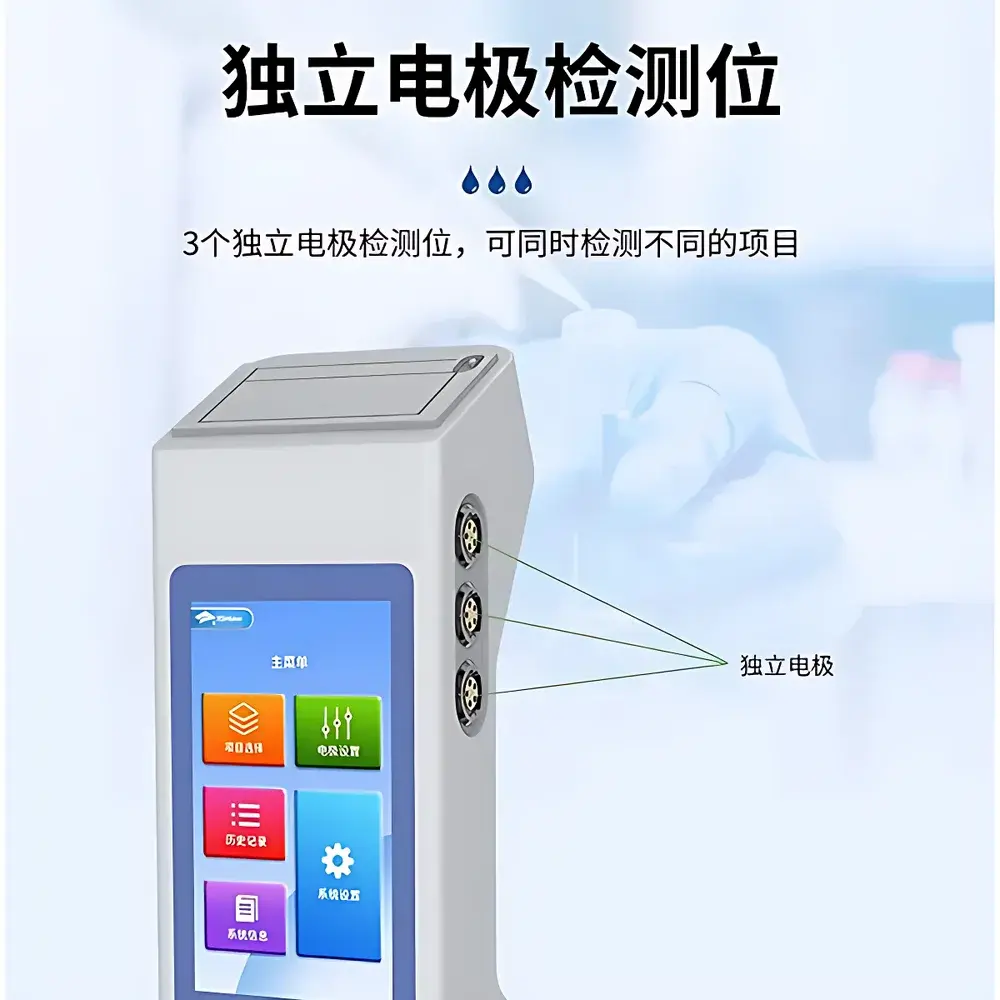
- Triple independent electrode ports support concurrent or sequential multi-parameter analysis (e.g., DO/pH/ORP or DO/conductivity/turbidity), reducing cross-contamination risk and field sampling time.
- Intelligent reading modes—including real-time dynamic display, timed endpoint capture (1–999 s), and programmable interval logging (1 min–24 h)—optimized for BOD incubation tracking, diel oxygen profiling, and wastewater aeration basin optimization.
- IP68-rated probe housing and corrosion-resistant titanium/stainless-steel wetted materials ensure reliable operation in brackish, acidic, or sediment-laden matrices common in riverine, estuarine, and industrial effluent monitoring.
Sample Compatibility & Compliance
The Dr-M1204P is validated for use with natural waters (freshwater, seawater, estuarine), treated and raw wastewater, aquaculture systems, cooling tower circuits, and bioreactor influents/effluents. Its electrochemical design conforms to fundamental performance criteria specified in ASTM D888-22 (Standard Test Methods for Dissolved Oxygen in Water) and supports traceable calibration per ISO/IEC 17025:2017 requirements when used with certified reference standards. While not FDA 21 CFR Part 11–compliant out-of-the-box, audit-ready data export (CSV/TXT) and timestamped metadata (operator ID, location tag, calibration history) facilitate integration into GLP/GMP-aligned QA/QC documentation frameworks. The instrument’s zero-reagent operation eliminates hazardous waste generation—aligning with ISO 14001 environmental management system objectives.
Software & Data Management
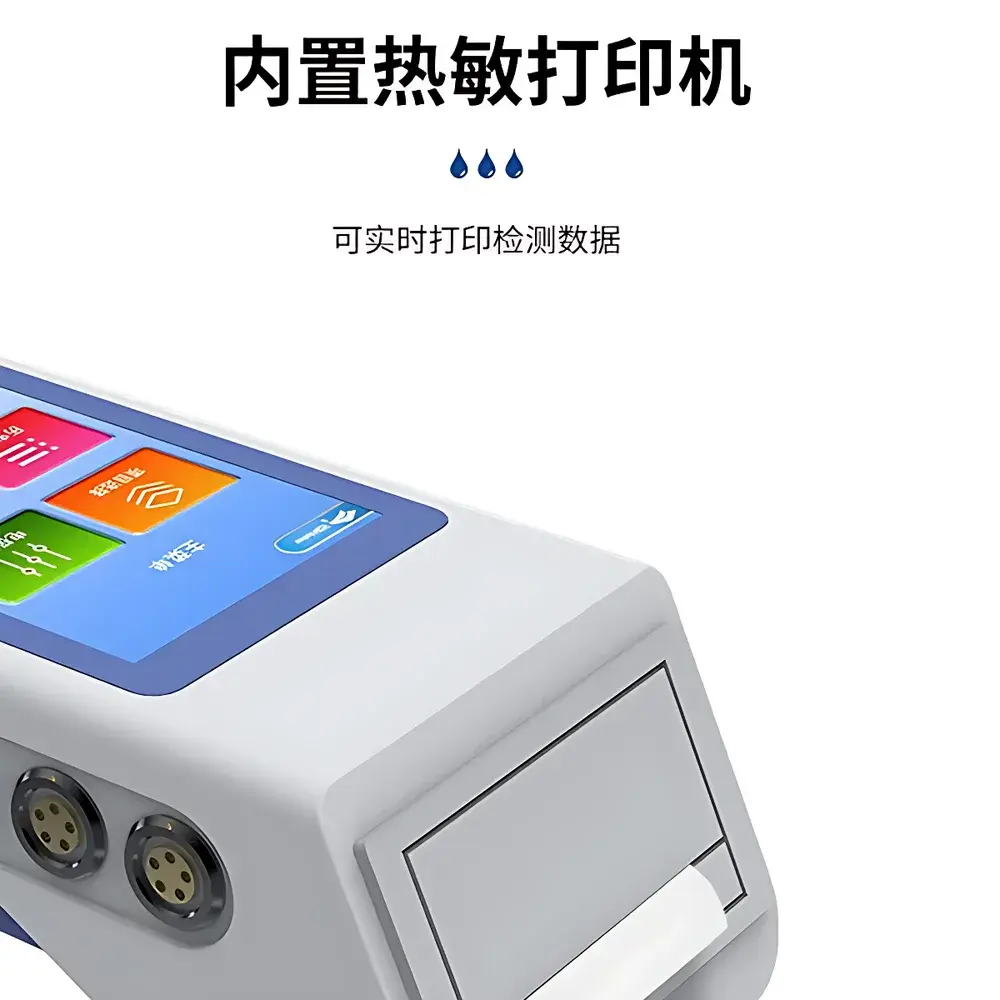
Embedded firmware provides full local control via a 5-inch capacitive touchscreen with dual-language UI (English/Chinese). All measurements are timestamped, geotagged (via optional Bluetooth GNSS module), and stored with full metadata: calibration coefficients, electrode serial IDs, ambient temperature/humidity, and operator-defined site codes. Internal memory retains up to one million records with searchable filtering by date range, parameter type, or location tag. Data export occurs via USB-C interface in open-format CSV files compatible with LIMS platforms (e.g., LabWare, Thermo Fisher SampleManager) and statistical analysis tools (R, Python pandas). No proprietary software license or cloud subscription is required; all firmware updates are delivered as signed binary packages via secure USB transfer.
Applications
- Regulatory surface water monitoring programs (EPA Region 4, EU WFD reporting)
- Wastewater treatment plant process control—especially activated sludge DO setpoint verification and anoxic zone profiling
- Aquaculture farm health surveillance, including cage-based hypoxia early warning and feed-response DO kinetics
- Drinking water distribution system integrity assessment (e.g., stagnation-induced DO depletion in dead-end mains)
- Environmental impact assessments for hydropower, dredging, or coastal development projects
- Academic limnology and marine biology field studies requiring portable, low-drift DO profiling
- Pharmaceutical clean-in-place (CIP) rinse water verification per USP and EP 2.2.45
FAQ
What calibration standards are required for two-point DO calibration?
A saturated air-water standard (≈8.26 mg/L at 25 °C, 1 atm) and a sodium sulfite zero-oxygen standard (prepared per ASTM D888 Annex A1) are recommended. The instrument stores calibration slopes and offsets with audit-trail timestamps.
Can the Dr-M1204P measure DO in high-salinity seawater (>35 ppt)?
Yes—the built-in salinity correction algorithm applies the Garcia & Gordon (1992) solubility model; users may input measured salinity or enable auto-compensation if a conductivity electrode is connected.
Is electrode replacement user-serviceable?
Yes—digital electrodes feature plug-and-play connectors and field-replaceable membranes and electrolyte cartridges; no soldering or recalibration is needed post-replacement.
Does the device support external GPS synchronization?
Not natively, but optional Bluetooth 5.0 GNSS receivers (e.g., Bad Elf GPS Pro+) can pair via serial emulation mode to inject NMEA 0183 GGA strings into logged records.
How is data integrity ensured during power interruption?
All writes to flash memory are atomic and journal-protected; partial records are discarded on unexpected shutdown, preserving database consistency without manual recovery.
Related Products







